
Find the right fireplace for Duval County.
With just a brief, mild winter each year, Duval County homes need ambiance and occasional warmth more than serious heating capacity. Here's where to find gas and electric fireplace dealers serving San Diego, Freer, and Benavides.
Every Project Starts From One of These Five Situations
Mild-winter heating in Duval County, Texas.
Duval County sits in the South Texas brush country, where winter lows average 47°F and the heating season is short—a handful of cold fronts push through between December and February, but nothing close to the sustained cold of a place like Bismarck ND or Fargo ND. With such a light, brief winter, this is a climate built for occasional-use fireplaces rather than primary heat sources. Homes here are more likely to run a gas log set for a few weeks a year than a wood stove built to hold overnight fires.
What you'll find on this hub: gas and electric fireplace retailers, service technicians, and fuel suppliers serving communities across the county, from the county seat of San Diego to Freer and Benavides. Wood-burning appliances are uncommon here given the mild winters and lack of a real heating-season demand, and pellet fuel isn't part of the local supply chain either—so this hub focuses on the two fuels that actually make sense for Duval County homes. Pick your fuel below for local dealers, install costs, and unit recommendations.
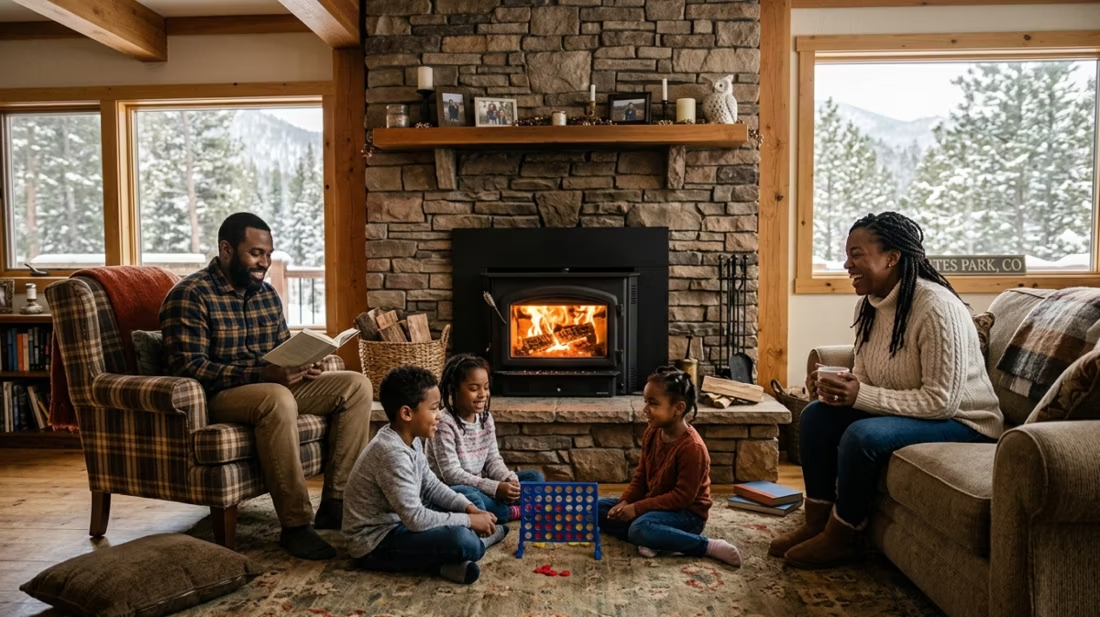
Four fuels. One honest answer for Duval County.
Three steps. No salesperson until you're ready.
Tell us about your project
Your zip code, your situation, and the fuel you're leaning toward—or let the answers point you to one.
See what's actually available
The brands dealers within 100 miles genuinely carry—real options, never a catalog mirage.
Get your dealer & Project Guide
A trusted local dealer, plus the free Project Guide & Parts List that names every component of the job.
Frequently Asked Questions
Does wood heat make sense in Duval County?
Not really, and it's honest to say so. With winter lows averaging 47°F and only a brief, mild winter each year, Duval County doesn't have the sustained cold that justifies a wood stove or insert as a real heat source—this isn't a place that needs the kind of overnight-burn capacity homeowners in Bozeman MT or Duluth MN rely on. That said, oak, pecan, and mesquite are all locally available if someone wants an occasional wood fire for atmosphere at a ranch house or weekend property. Most Duval County homeowners looking for fireplace heat go with gas or electric instead—both are better suited to a climate where you might only want a fire lit a dozen nights a year.
Is pellet fuel available in Duval County?
Pellet stoves aren't part of the local hearth market here, and pellet fuel supply reflects that—you won't find dedicated pellet retailers stocking product locally. If someone specifically wants a pellet appliance, bags from regional brands like Forest Energy or Lignetics can sometimes be sourced through farm-and-ranch supply stores or ordered online, but expect to plan ahead rather than pick some up at a local hearth shop. Given the mild climate, most homeowners here who want easy, low-maintenance heat go with gas or electric instead of pellet.
What's the difference between gas and electric fireplaces for a Duval County home?
Gas fireplaces—whether run on natural gas in San Diego or propane elsewhere in the county—give you real flame and genuine supplemental heat for the cold-front days when temperatures drop into the 30s. Electric fireplaces skip the venting and gas line work entirely; they plug in, provide adjustable flame effect, and add a little space heat, which is often all a Duval County home actually needs given how short the cold season runs. If you want something that feels like a real fire on the rare hard freeze, gas is the better fit. If you mainly want ambiance in a living room or bedroom with minimal installation cost, electric usually wins.
Do I need a permit for a gas fireplace installation in Duval County?
In most cases, yes—gas fireplace, insert, and stove installations typically require a building permit plus a separate gas line permit for the connection work, whether you're inside San Diego city limits or in unincorporated county land. A licensed gas-fitter should handle the propane or natural gas hookup. Electric fireplaces generally skip the permit process unless it's a built-in unit that requires new wiring or a dedicated circuit, in which case an electrical permit applies. Most local dealers handle the permitting as part of the installation, so you're not filing paperwork yourself.
Are there any air quality restrictions on fireplace use in Duval County?
No—Duval County has no air quality non-attainment designations or wood-burning curtailment programs like you'd find in areas prone to winter inversions. Since wood-burning appliances are rare here to begin with, air quality hasn't been a driver of local regulation the way it is in places with heavier wood-heat use. Gas and electric fireplaces don't carry any burn-restriction concerns regardless of location in the county.
What does gas or electric fireplace installation typically cost in Duval County?
Gas fireplace, insert, or stove installation typically runs $4,000–$9,000, with propane conversions often landing on the higher end if there's no existing gas line and a tank needs to be set. Where natural gas service is already available, closer to San Diego, costs trend lower. Electric fireplace installation is far less involved—$200–$3,000 for the unit itself, plus $400–$1,200 in labor if it's a built-in requiring an electrician rather than a simple plug-and-play insert. For local pricing tied to specific dealers, see the county + fuel pages above.
Wood, gas, pellet, or electric—how do I choose?
Match the fuel to your life, not the other way around. Wood: lowest fuel cost and total power-outage independence, but you're hauling and stacking. Gas: press a button, set a thermostat, no maintenance to speak of. Pellet: wood economics with automatic feeding, in exchange for weekly cleaning and a need for electricity. Electric: plugs in anywhere with honest supplemental heat. Nobody regrets the fuel that fits how they actually live.
What is an in-home preview and do I need one?
It's a visit where a hearth professional measures your space, confirms the model you picked actually works in your home, and walks the specs—framing, gas line, venting, finish work—before anything is ordered. Some details you just can't know until you see the house. Never make a down payment without one; it's the single most-skipped step that burns buyers.
Should the dealer who sells my fireplace also install it?
Ideally, yes. A fireplace project involves vent pipe, gas line, electrical, and often tile or stone. Hire three or four separate trades and you own the liability and the game of telephone between them. One company selling and installing means one accountable party, start to finish—ask about factory training, on-time completion records, and what happens if an inspection fails.
Can a fireplace actually lower my heating bill?
Yes—by creating a comfort zone. A furnace heats every square foot of the house just to warm the one room you're in; a gas fireplace on low burns roughly a sixth of the gas a typical furnace does. Set the furnace around 55–60 degrees as a baseline, then heat the rooms your family actually uses. Families who heat this way commonly save $20–$60 a month.
Stove and Fireplace Dealers in Duval County
Listings include WhyFire partner dealers, dealers we have verified as authorized for the brands we recommend, and established local businesses that carry hearth products. Every listing shows which one it is. The ones marked Preferred run on WhyFire's software, so they can show you real pricing and book your appointment right here. No manufacturer pays for placement. How we verify dealers →
Martini Brick
C.c. Chimney
Get matched with a Duval County dealer.
Tell us about your gas or electric fireplace project and we'll match you with a trusted local dealer and send a free Project Guide & Parts List—the exact parts, including the vent kit if needed, for your home.
Find Your Fireplace →