
Steady pellet heat for Delta County's mild winters and occasional ice storms.
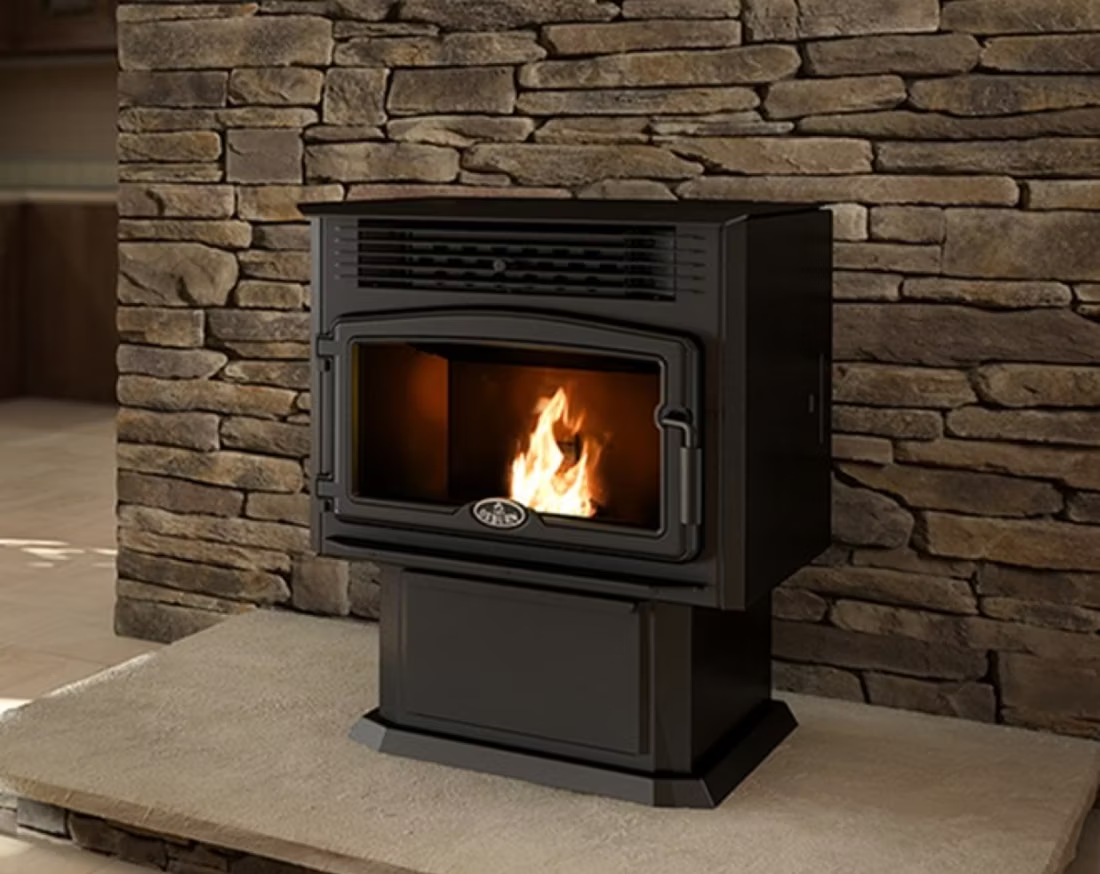
Delta County's winters are short and mild—average lows around 34°F—but ice storms and grid strain can still knock the power out for days. Find the right pellet stove for your farmhouse or lake place near Cooper Lake, and connect with a trusted local dealer.
Every Project Starts From One of These Five Situations
A small county with big swings in winter weather.
Delta County is the smallest county in Texas by population—just over 2,100 residents spread across farmland and pastureland along the Sulphur River, with Cooper as the county seat. The climate here is mild by any national standard: Climate Zone 3A, winter lows averaging 34°F, and only a light winter heating load each year—a fraction of what a place like Duluth, Minnesota sees. Most homes get by on a central heat pump or electric furnace for the handful of genuinely cold weeks each winter.
What pushes Delta County homeowners toward a pellet stove usually isn't the cold—it's the grid. Rural electric cooperatives serve most of the county, and the same ERCOT-wide strain that caused rolling outages during past winter storms can still leave farmhouses and lake places near Cooper Lake without power for a day or two at a time. A pellet stove burns clean—there's no local air-quality restriction pushing anyone toward it—and it delivers steady, low-maintenance heat with minimal ash, using hardwood pellets from regional brands like Forest Energy and Lignetics that are easy to find at farm-supply stores in nearby Sulphur Springs, Commerce, and Greenville.
Three steps. No salesperson until you're ready.
Tell us about your project
Your zip code, your situation, and the fuel you're leaning toward—or let the answers point you to one.
See what's actually available
The brands dealers within 100 miles genuinely carry—real options, never a catalog mirage.
Get your dealer & Project Guide
A trusted local dealer, plus the free Project Guide & Parts List that names every component of the job.
Frequently Asked Questions
How much does a pellet stove installation cost in Delta County?
Most pellet stove installations in small rural counties like Delta run somewhere between $3,000 and $6,000, depending on the unit, whether you're venting through an existing wall or need new penetration, and whether electrical work is needed for the hopper and blower circuit. Because Delta County itself has very little retail hearth presence, most installers travel in from Sulphur Springs, Commerce, or Greenville—factor a modest trip charge into your quote if you're out in Pecan Gap, Enloe, or Ben Franklin. A local dealer can give you a firm number after seeing your home.
What size pellet stove do I need for my home?
Because Delta County's heating season is short—a light winter heating load each year, versus a much heavier one in a place like Fargo, North Dakota—most homes here don't need a whole-house pellet stove. A small-to-medium unit sized for one or two main living areas is usually plenty, used to supplement a central heat pump during the coldest stretches or to keep a farmhouse warm and cozy during a power outage. Homeowners near Cooper Lake using a stove in a cabin or weekend place often go even smaller. A local dealer can size it properly based on your square footage and how the space is used.
Do I need a permit to install a pellet stove in Delta County?
Requirements vary by whether you're inside a city limit or in unincorporated Delta County, so check with your local building official before installation—most pellet stove installs require at minimum an electrical permit for the dedicated circuit the hopper and blower need, and some jurisdictions require a mechanical or building permit as well. A local hearth dealer who installs regularly in Delta County will know exactly what's required and typically handles the paperwork as part of the job.
What pellet brands are available near Delta County?
Forest Energy and Lignetics are the two regional brands most commonly stocked at farm-supply and feed stores serving Delta County, including outlets in Sulphur Springs and Commerce. Both are hardwood-based pellets that burn clean with low ash—a good match for the oak, pecan, and mesquite that already grow throughout the county's farmland. Buying a pallet or two ahead of the first cold front is smart, since small-town retailers don't always keep large stock on hand once demand picks up during an ice storm forecast.
Pellet stove vs. wood stove—which makes more sense in Delta County?
With oak, pecan, and mesquite common on local farmland, plenty of Delta County households already have access to wood, and a wood stove works fine without electricity—a real advantage during a grid outage. A pellet stove trades that off for convenience: load the hopper, set the thermostat, and it runs itself with far less ash and no chimney creosote to manage. The catch is that pellet stoves need electricity to run the auger and blower, so if backup heat during outages is your main goal, pair a pellet stove with a small generator or battery backup, or consider a wood stove instead.
Should I just use electric heat instead of a pellet stove?
For most Delta County homes, a central electric heat pump handles day-to-day heating just fine given how mild the winters are—average lows only around 34°F. Where a pellet stove earns its keep is as backup and zone heat: during an ERCOT-strained cold snap or an ice storm that trips the local co-op's lines, a pellet stove (paired with a small battery backup) keeps one room warm and livable even when the heat pump is dead. If you're heating a detached shop, a lake cabin near Cooper Lake, or a room addition without ductwork, pellet is often simpler to run than extending electric baseboard or ductwork.
How much maintenance does a pellet stove need?
Pellet stoves need the ash pan emptied every few days to weekly depending on use, the hopper refilled, and the burn pot and glass cleaned periodically—all a homeowner can do without special tools. A full professional cleaning and inspection once a season, typically before the first cold front hits Delta County in late fall, keeps the auger, blower, and venting running properly. Compared to a wood stove and chimney, it's a fraction of the upkeep—no annual chimney sweep required, since pellet stoves vent through a smaller-diameter pipe rather than a full masonry or Class A chimney.
What kind of venting does a pellet stove need?
Pellet stoves vent through a small-diameter pipe—typically 3 or 4 inches—that can run horizontally through an exterior wall in most cases, which makes them considerably easier to retrofit into an existing Delta County farmhouse than a wood stove requiring a full masonry chimney or Class A pipe run through the roof. This lower-profile venting is also part of why pellet installs tend to run less than comparable wood stove installs. Your local dealer will confirm the exact venting path based on where the stove sits in your home.
Where can I buy pellet fuel near Delta County?
Farm-supply and feed stores in Sulphur Springs, Commerce, and Greenville typically stock Forest Energy and Lignetics pellets, usually sold by the 40-pound bag or by the pallet (roughly 50 bags per pallet). Since Delta County's population is small—just over 2,100 people countywide—don't expect big-box selection right in Cooper; most residents plan ahead and buy a season's supply, or at least a few bags, before the first hard freeze rather than waiting until an ice storm is forecast and shelves empty out.
Why is a fireplace insert so efficient?
An insert does two things: it seals the chimney completely, so you stop losing air you already paid to heat, and it radiates warmth into the room through the firebox and glass. Most add a heat-exchange fan that pulls cool room air underneath, wraps it around the hot firebox, and pushes it back out warm. Your home is more efficient before you've even lit the first fire.
What's the difference between an insert and a zero-clearance fireplace?
An insert is a fireplace that slides into a pre-existing wood-burning fireplace—if you don't have one, there's nothing to insert it into. A zero-clearance fireplace is built into a framed wall, which makes it the answer for remodels and new construction. Simple test: existing masonry fireplace means insert; blank or framed wall means zero-clearance.
Can I install a fireplace myself?
If you're putting a fire in your house on purpose, it's best to work with an expert. Unless you're genuinely experienced in framing, gas line, vent pipe, and the national code on clearances to combustibles, have a professional do it—and ideally the same company that sells you the fireplace, so warranty, service, and liability all live under one roof.
How much should I budget for a fireplace?
For an average home—covering the fireplace, the vent pipe, and basic installation—a budget between $3,900 and $5,500 gives you a lot of options across wood, gas, and pellet. By the time you add finish work, gas line, and electrical, the average complete installation lands between $5,000 and $12,000 all-in. In a remodel or new build, a good rule is to put about 2.5% of the total project cost toward the fireplace.
Stove and Fireplace Dealers in Delta County
Listings include WhyFire partner dealers, dealers we have verified as authorized for the brands we recommend, and established local businesses that carry hearth products. Every listing shows which one it is. The ones marked Preferred run on WhyFire's software, so they can show you real pricing and book your appointment right here. No manufacturer pays for placement. How we verify dealers →
Youngs Brothers Buck Stove
Cooper Propane
Pellet Brands Stocked Around Delta County
Manufacturers will point you to the nearest stocking dealer.
Find your pellet stove in Delta County.
Tell us about your home and how you plan to use it—daily supplemental heat, backup during outages, or a cabin near Cooper Lake—and we'll match you with a trusted local dealer and a free Project Guide & Parts List for your pellet stove project in Delta County.
Find Your Fireplace →