
Real Flame Look, No Venting, No Waiting.
With winter lows averaging 38°F across Dallas County, most homes need ambiance and zone warmth more than a furnace replacement. Electric delivers both, in a high-rise, a 1960s ranch, or new construction, with no gas line and no chimney required.
Every Project Starts From One of These Five Situations
Short winters still call for instant ambiance.
Dallas County's climate zone (3A) and heating degree day count of roughly 1,992 put it in a different category entirely from a place like Duluth, MN, where HDD counts run three to four times higher. Winters here are short, and central HVAC handles the actual heat load in most homes. What Dallas County has instead is density: 7.4 million people spread across Dallas, Irving, Garland, Mesquite, Grand Prairie, Richardson, DeSoto, Duncanville, and dozens of other cities, a huge share of them in condos, high-rises (Uptown Dallas, Victory Park, Las Colinas), and HOA-governed neighborhoods where venting a chimney or running a gas line isn't practical or permitted.
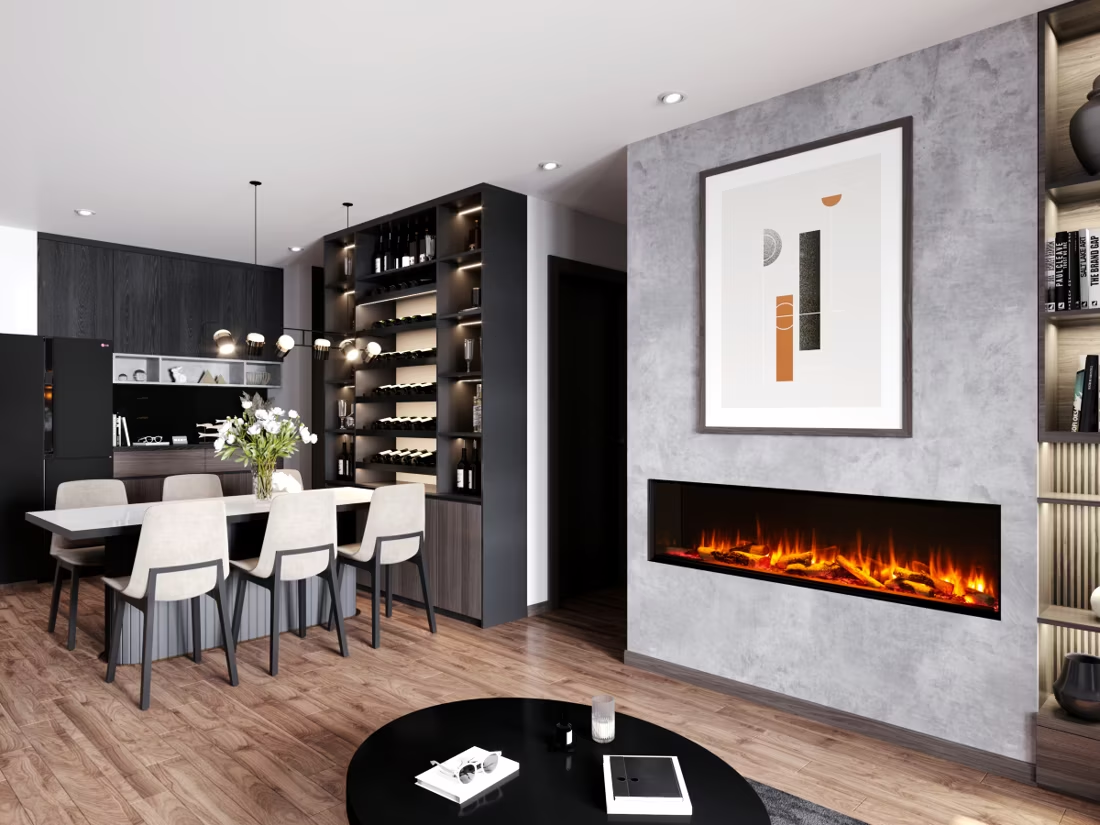
That's the gap electric fills. A plug-in or wall-mounted electric fireplace needs no combustion, no venting, and often no dedicated circuit for smaller units, which is why it shows up as often in a downtown apartment as it does in a Preston Hollow primary bedroom. Oncor Electric Delivery serves most of the county, though a handful of cities, including Garland with Garland Power & Light, run their own municipal electric utilities. Either way, the appliance itself is the same: instant heat and a realistic flame at the flip of a switch, sized for supplemental warmth rather than whole-home heating.
Three steps. No salesperson until you're ready.
Tell us about your project
Your zip code, your situation, and the fuel you're leaning toward—or let the answers point you to one.
See what's actually available
The brands dealers within 100 miles genuinely carry—real options, never a catalog mirage.
Get your dealer & Project Guide
A trusted local dealer, plus the free Project Guide & Parts List that names every component of the job.
Frequently Asked Questions
How much does an electric fireplace installation cost in Dallas County?
Plug-in freestanding and mantel-style electric fireplaces typically run $150 to $600 for the unit itself, with no installation cost beyond plugging into a standard outlet. Built-in wall units and electric inserts that require a dedicated 20-amp circuit, in-wall wiring, or a custom surround usually land between $1,000 and $3,500 once an electrician is involved. Costs climb toward the higher end for larger linear units, custom millwork surrounds, or older Dallas County homes where the electrical panel needs upgrading before a new circuit can be added.
Do I need a permit to install an electric fireplace in Dallas County?
A plug-in electric fireplace that uses an existing outlet doesn't require a permit anywhere in Dallas County. A built-in unit that needs a new dedicated circuit or any wiring modification does need an electrical permit, pulled through whichever city building department covers your address, Dallas Development Services, Irving Development Services, Garland Building Inspections, or the equivalent office in smaller cities like DeSoto or Duncanville. Most licensed electricians and hearth retailers handle that paperwork as part of the installation.
Is an electric fireplace a good fit for a Dallas condo or high-rise apartment?
It's usually the only realistic option. Buildings in Uptown Dallas, Victory Park, and Las Colinas generally prohibit venting through shared walls or exterior facades, which rules out gas and wood units for most units above the ground floor. A wall-mounted or recessed electric fireplace solves that entirely, no venting, no gas line, no structural changes, and most HOAs approve them without objection since there's no fire code exposure. Compact wall-mount and mantel styles are the most common choice in these buildings.
Electric vs. gas fireplace, which makes more sense for a Dallas County home?
With heating degree days around 1,992, most Dallas County homes don't need a fireplace to carry real heat load, central HVAC does that job. Gas is the better pick when you want a fireplace that can genuinely warm a room during the occasional hard freeze and still put on a convincing, higher-heat-output flame. Electric is the better pick when the goal is ambiance, flexibility, and installation simplicity, especially in homes without a gas line or in condos where venting isn't an option. A lot of Dallas County homeowners choose electric specifically because it can go anywhere in the house without touching plumbing or exterior walls.
Will my electric fireplace work if the power goes out?
No, and it's worth being direct about that. An electric fireplace is entirely dependent on grid power, so during an outage, it won't run unless you have it on a battery backup or generator circuit. Dallas County residents who lived through the February 2021 winter storm and the ERCOT grid failure know this firsthand. If backup heat during outages is a real priority, a vented gas fireplace with battery-backed ignition is worth considering alongside an electric unit rather than instead of it.
What's the difference between a built-in electric fireplace, an insert, and a mantel unit?
A built-in electric fireplace is recessed into a wall cavity for a flush, framed-in look, common in new construction and remodels across Dallas County. An electric insert is sized to slide into an existing masonry or zero-clearance firebox, a popular option for older Dallas homes with a wood-burning fireplace that's rarely used. A mantel or freestanding unit is fully self-contained, plugs into a standard outlet, and can be relocated, which makes it the default choice for renters and condo owners.
How much does it cost to run an electric fireplace in Dallas County?
Most electric fireplaces draw around 1,500 watts on the heat setting. At Oncor's typical residential rate, that works out to roughly 18 to 23 cents per hour of heated operation. Given the county's short heating season, running one most evenings from December through February typically adds somewhere in the range of $15 to $40 a month to an electric bill, far less than most homeowners expect, and on flame-only mode with no heat, the cost is negligible.
Can an electric fireplace actually heat a room in Dallas County, or is it just for looks?
It can genuinely heat a room, within limits. A 1,500-watt unit will comfortably take the chill off a bedroom, home office, or media room, which covers the vast majority of what Dallas County winters actually demand given the mild HDD count. It's not sized to replace central heat for an entire house, and nobody in the county needs it to. Think of it as targeted, on-demand zone heat for the room you're actually sitting in, rather than a furnace substitute.
Why don't I see more wood or pellet stove options in Dallas County?
Wood and pellet heating are essentially non-factors here, and that's a function of the climate, not availability. With HDD around 1,992 and winter lows averaging 38°F, there's little practical need for a wood-burning heat source, and dense urban and suburban development across cities like Irving, Mesquite, and Grand Prairie leaves little room for cordwood storage or chimney installations. Oak, pecan, and mesquite, the wood species most associated with this region, are prized locally for barbecue smoking rather than home heating. Gas and electric are the two fuels that actually make sense for Dallas County homes, which is why this site focuses on those options here.
Can I put a TV above my fireplace?
Yes—with an asterisk. Fireplaces are hot and TVs don't like heat. Either put a mantel between them to deflect rising warmth, or choose a fireplace with heat-management technology that creates a cool zone on the wall above—the wall stays around 125 degrees, barely warm, while the room still gets full heat. If you like clean lines and don't want a mantel, heat management is the answer.
Do electric fireplaces actually produce heat?
Yes—most put out around 4,800–5,000 BTUs from a standard outlet, which comfortably warms a bedroom, office, or den as a comfort-zone heater. What they won't do is carry a whole house the way wood, gas, or pellet can. Think of electric as ambiance-first with honest supplemental heat: flames on with no heat in July, flames plus warmth in January.
How much should I budget for a fireplace?
For an average home—covering the fireplace, the vent pipe, and basic installation—a budget between $3,900 and $5,500 gives you a lot of options across wood, gas, and pellet. By the time you add finish work, gas line, and electrical, the average complete installation lands between $5,000 and $12,000 all-in. In a remodel or new build, a good rule is to put about 2.5% of the total project cost toward the fireplace.
Can a fireplace actually lower my heating bill?
Yes—by creating a comfort zone. A furnace heats every square foot of the house just to warm the one room you're in; a gas fireplace on low burns roughly a sixth of the gas a typical furnace does. Set the furnace around 55–60 degrees as a baseline, then heat the rooms your family actually uses. Families who heat this way commonly save $20–$60 a month.
Stove and Fireplace Dealers in Dallas County
Listings include WhyFire partner dealers, dealers we have verified as authorized for the brands we recommend, and established local businesses that carry hearth products. Every listing shows which one it is. The ones marked Preferred run on WhyFire's software, so they can show you real pricing and book your appointment right here. No manufacturer pays for placement. How we verify dealers →
Jacksons Home & Garden
Cosentino – Dallas
EarthCore Industries
Fuego Fireplaces
Overhead Door Co. Of Dallas
Golden Blount
Distrinctive Outdoor Environments, LLC
Pittman Supply Company
Elegant Fireside & Patio, LLC
Acme Brick Tile & Stone
Fireside Innovations
Bbq Outfitters
Flames Fireplaces & Gas Grills
Yard Art Patio & Fireplace - Allen
Find your electric fireplace in Dallas County.
Tell us a bit about your home and we'll match you with the right electric fireplace, insert, or wall unit, plus a free Project Guide & Parts List and a trusted local dealer to install it.
Find Your Fireplace →