
Reliable gas heat for Van Horn and the Culberson County high desert.
Culberson County's winters are mild on paper—a 30°F average low and 2,584 heating degree days—but high-desert nights around Van Horn and the Guadalupe Mountains can still drop hard and fast. A gas fireplace gives you instant, no-hassle heat on those nights without tending a fire. We'll match you with a trusted local dealer who knows what's installable here.
Every Project Starts From One of These Five Situations
Instant heat for a county built around long distances.
At roughly 3,800 square miles with a population of just over 2,000, Culberson County is one of the largest and least densely populated counties in Texas. Van Horn anchors the county seat, with the rest of the landscape stretching out toward the Guadalupe Mountains, Sierra Diablo, and Delaware Basin. Climate zone 3B keeps winters generally mild—nowhere close to the deep freezes of a place like Bismarck, ND—but elevation across the county sits well above 4,000 feet in places, and clear desert nights can send temperatures well below that 30°F average low even when daytime highs feel like fall. Local oak, pecan, and mesquite show up plenty in grills and smokers, but with only 2,584 heating degree days a year, full-time wood heat has never taken hold here the way it does in colder parts of the state.
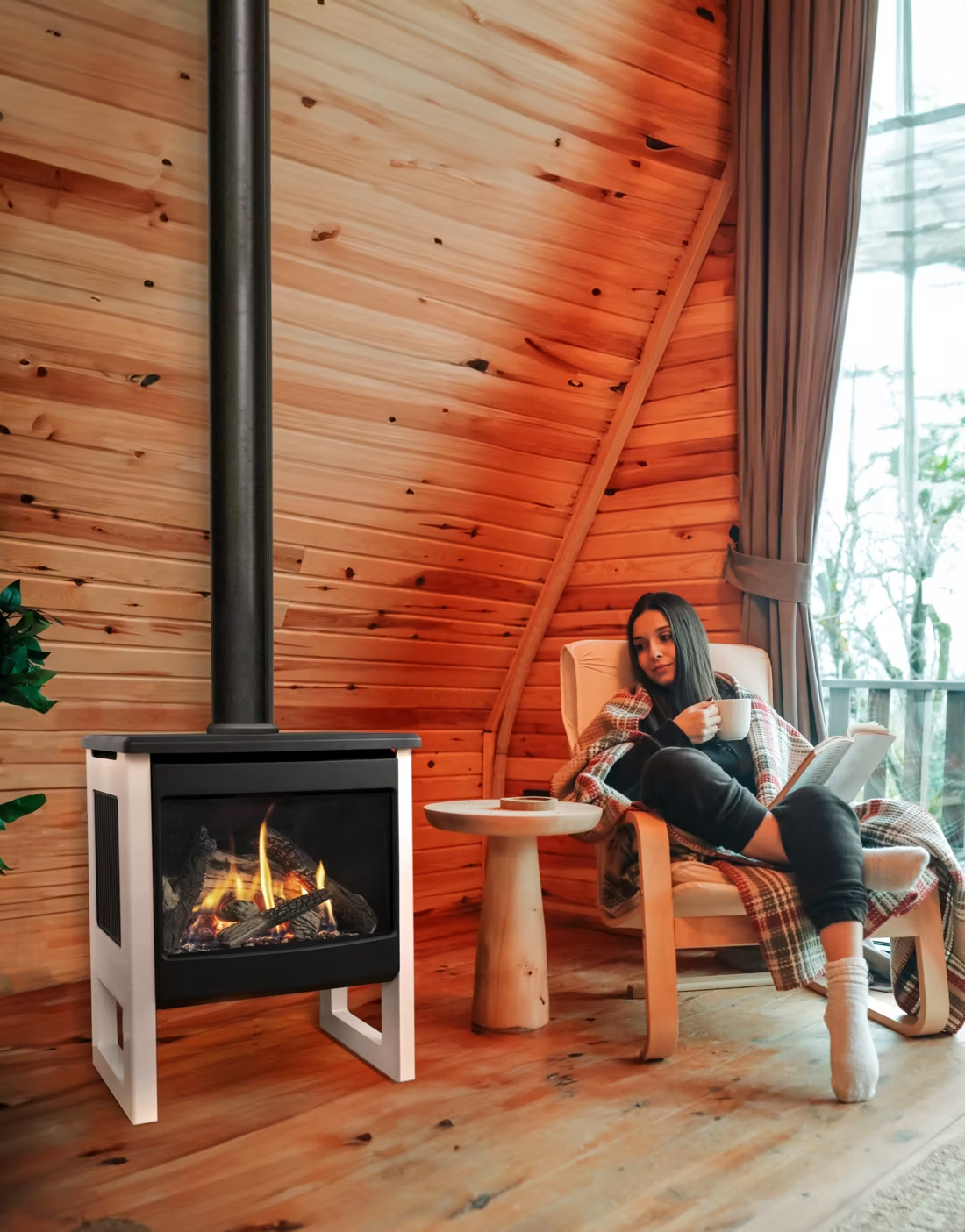
That's exactly the gap a gas fireplace fills. Because Culberson County is so sparsely populated and spread out, natural gas mains are limited mostly to in-town service around Van Horn—most rural homes and ranches run on propane instead, with a tank on the property feeding the appliance. Either fuel works fine in a modern direct-vent gas fireplace or insert: flip a switch, get heat in seconds, and skip the wood-hauling and ash cleanup entirely. It's a practical fit for a county where the nearest hearth retailer or gas-fitter might be an hour's drive away—you want an appliance that doesn't need constant attention.
Three steps. No salesperson until you're ready.
Tell us about your project
Your zip code, your situation, and the fuel you're leaning toward—or let the answers point you to one.
See what's actually available
The brands dealers within 100 miles genuinely carry—real options, never a catalog mirage.
Get your dealer & Project Guide
A trusted local dealer, plus the free Project Guide & Parts List that names every component of the job.
Frequently Asked Questions
How much does a gas fireplace installation cost in Culberson County?
Most direct-vent gas fireplace or insert installations in a rural West Texas county like Culberson run in the $4,000 to $9,000 range, with the low end covering a straightforward insert into an existing masonry fireplace with a propane tank already on site, and the higher end covering new construction, longer gas line runs from the tank, or ranch properties requiring a new propane tank installation altogether. Because Van Horn is the only real town in the county, expect installers to factor in some travel time for jobs out toward the Guadalupe Mountains or more remote ranch roads.
Can I convert an existing wood-burning fireplace to gas?
Yes, and it's a common request even in a county like Culberson where full-time wood heat was never the norm. Older homes around Van Horn sometimes have a masonry fireplace that's rarely used because the mild climate—a 30°F average winter low and only 2,584 heating degree days—doesn't demand daily fires. A gas insert converts that fireplace into an on-demand heat source using the existing chimney with a stainless liner, giving you real heat on the occasional hard-freeze night without the upkeep of burning oak or mesquite cordwood.
Should I plan on natural gas or propane for my fireplace?
For most of Culberson County, propane is the practical answer. Natural gas service tends to be concentrated in town around Van Horn, while ranch properties and outlying homes across the county's 3,800 square miles typically run on a propane tank. Nearly every gas fireplace and insert on the market can be set up for either fuel—your installer swaps the orifice and regulator to match—so the fuel choice comes down to what's already at the property, not what unit you can buy.
Will my gas fireplace still work if the power goes out?
In most cases, yes. Gas fireplaces with IPI (intermittent pilot ignition) run on a battery backup that kicks in automatically when the power drops, so the unit lights and operates just like normal. Given how spread out Culberson County is—with utility crews sometimes covering long distances to restore power after a storm—that battery backup matters more here than in a dense city. Valor fireplaces take it a step further with a self-generating pilot system that needs no batteries at all. Ask your local dealer about the ignition system on any unit before you buy.
What's the difference between a gas fireplace, gas insert, and gas stove?
A gas fireplace is a fully built-in unit framed into a wall, typically chosen for new construction or a remodel. A gas insert slides into an existing masonry fireplace opening and vents through the existing chimney with a liner—the common choice for older Van Horn-area homes that already have a hearth. A gas stove is a freestanding unit, similar in footprint to a wood stove, that can go almost anywhere with proper clearances and venting. For most Culberson County homeowners with an existing fireplace, an insert is the simplest upgrade.
Do I need a permit to install a gas fireplace in Culberson County?
Generally yes—new gas appliance installations require a building permit, and any gas line work (including a new propane line run from a tank) needs to be done by a licensed gas-fitter. Requirements can vary depending on whether the property is inside Van Horn's city limits or out in unincorporated Culberson County, so confirm specifics with the county's permitting office before work begins. A reputable local installer will typically handle this paperwork as part of the job rather than leaving it to you.
Vented vs. vent-free gas fireplaces—which should I choose?
Vented (direct-vent) gas fireplaces draw combustion air from outside and exhaust it back outside through a sealed vent—they're the cleanest and most universally recommended option, and what most local dealers will steer you toward. Vent-free units burn directly into the room and are legal in Texas, but they release some combustion byproducts indoors and come with strict room-sizing and ventilation rules. For a full-time or frequently used fireplace in a Culberson County home, a direct-vent unit is the safer, more straightforward choice.
How often does a gas fireplace need servicing?
Plan on an annual inspection, ideally before the first cold snap of the season. A technician checks the burner, pilot assembly, venting, and gas connections, and cleans the glass and interior—a fairly quick visit that typically runs $150 to $250. Because service providers are concentrated in and around Van Horn, ranch and outlying homeowners sometimes schedule this alongside other maintenance trips to town to avoid a separate service call.
Is a wood stove or fireplace even a realistic option in Culberson County?
Not really as primary heat, and it's worth being upfront about that. With only 2,584 heating degree days and a 30°F average winter low, Culberson County's climate doesn't generate the kind of sustained cold that makes wood heat practical the way it is in places like Duluth, MN or Bismarck, ND. Some homeowners still keep a wood-burning fireplace for ambiance or the occasional cold-front evening, often burning local oak, pecan, or mesquite, but it's a supplemental or aesthetic choice rather than a heating strategy. For actual reliable heat on the county's colder nights, a gas fireplace or insert is the far more practical option—and an electric fireplace is worth considering too if you want zero venting and occasional warmth in a room that doesn't get much use.
Can I put a TV above my fireplace?
Yes—with an asterisk. Fireplaces are hot and TVs don't like heat. Either put a mantel between them to deflect rising warmth, or choose a fireplace with heat-management technology that creates a cool zone on the wall above—the wall stays around 125 degrees, barely warm, while the room still gets full heat. If you like clean lines and don't want a mantel, heat management is the answer.
Why is a fireplace insert so efficient?
An insert does two things: it seals the chimney completely, so you stop losing air you already paid to heat, and it radiates warmth into the room through the firebox and glass. Most add a heat-exchange fan that pulls cool room air underneath, wraps it around the hot firebox, and pushes it back out warm. Your home is more efficient before you've even lit the first fire.
Does a fireplace add value to my home?
On average, a fireplace adds back to the home about the same amount you spent installing it. Add the monthly savings from heating the rooms you actually use instead of the whole house—often hundreds of dollars a year—and the value case is strong before you even count what a fire does for how your family uses the room.
How much should I budget for a fireplace?
For an average home—covering the fireplace, the vent pipe, and basic installation—a budget between $3,900 and $5,500 gives you a lot of options across wood, gas, and pellet. By the time you add finish work, gas line, and electrical, the average complete installation lands between $5,000 and $12,000 all-in. In a remodel or new build, a good rule is to put about 2.5% of the total project cost toward the fireplace.
Find your gas fireplace in Culberson County.
Tell us about your home in Culberson County and we'll match you with a trusted local dealer and send you a free Project Guide & Parts List—a real plan for your gas fireplace or insert, including the exact vent kit and parts needed, before you spend a dollar.the offer: Project Guide & Parts List with a local dealer match.
Find Your Fireplace →