
Find your fireplace in Culberson County.
Fireplace resources for one of Texas's largest and least populated counties—from Van Horn out past the Guadalupe Mountains. Get matched with a trusted local dealer who knows what actually works in this high desert climate, and skip the guesswork of shopping alone.
Every Project Starts From One of These Five Situations
Mild desert winters, 2,584 heating degree days, and a county built around gas and electric heat.
Culberson County is Texas's third-largest county by land area and one of its smallest by population—just 2,075 residents spread across high desert and the Guadalupe Mountains, home to Guadalupe Peak, the tallest point in Texas. Van Horn, the county seat along I-10, sits at roughly 4,010 feet, and winters here are mild by heating standards: an average low of 30°F and 2,584 heating degree days, a heating load closer to El Paso than to anywhere in the Panhandle or the northern Rockies. Oak, pecan, and mesquite grow in the county's canyons and creek bottoms, but mesquite here is more often reached for on the grill than loaded into a stove—the heating season is short enough that most households don't build their winter routine around wood.
That combination—sparse population, mild climate, and no natural gas mains reaching most of the county—shapes which fireplace fuels actually make sense here. Propane-fired gas units are the practical stand-in for natural gas across Culberson County, and electric fireplaces have picked up ground for supplemental warmth on the county's cold desert nights, when temperatures can still drop hard after sunset even on a mild winter day. Wood and pellet stoves are technically available—regional pellet brands like Forest Energy and Lignetics do reach West Texas distributors—but with a population this small, there's essentially no local dealer network for either, and demand doesn't support one. This hub rolls up the retailers, technicians, and suppliers who actually serve Culberson County, most of them based out of El Paso, roughly 120 miles west, and willing to travel in for the right project.
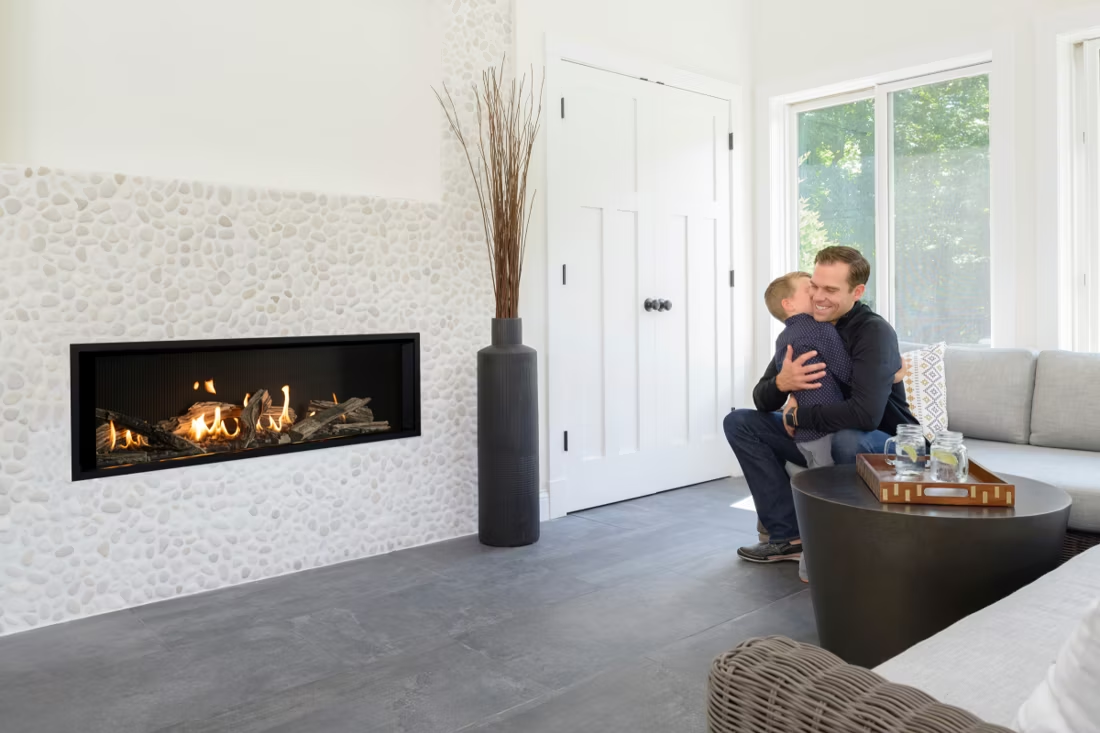
Four fuels. One honest answer for Culberson County.
Three steps. No salesperson until you're ready.
Tell us about your project
Your zip code, your situation, and the fuel you're leaning toward—or let the answers point you to one.
See what's actually available
The brands dealers within 100 miles genuinely carry—real options, never a catalog mirage.
Get your dealer & Project Guide
A trusted local dealer, plus the free Project Guide & Parts List that names every component of the job.
Frequently Asked Questions
Which fireplace fuel actually makes sense in Culberson County?
Gas and electric are the two fuels most Culberson County homeowners land on. There's no natural gas main service across most of the county, so 'gas fireplace' here usually means a propane-fired unit fed by a tank, which works well for primary or supplemental heat given the mild winter load—2,584 heating degree days and an average low of 30°F, roughly the same heating demand as El Paso. Electric fireplaces have become popular for bedrooms, casitas, and supplemental warmth on cold desert nights when temperatures swing hard after sunset. Wood and pellet stoves are technically available but genuinely uncommon; the county's small population doesn't support a local dealer network for either fuel.
Can I install a wood-burning stove even though wood isn't common here?
You can, and a handful of Culberson County homeowners do—usually on ranch properties or for the ambiance of a working fireplace rather than as a daily heat source. Oak, pecan, and mesquite all grow in the county's canyons and along its creek bottoms, so fuel is available if you're willing to cut and season it yourself. But with only 2,584 heating degree days and mild average lows, most households don't need a wood stove to get through winter, which is why you won't find a dedicated wood-stove dealer or chimney sweep based in the county—any installer taking on a wood project here is typically coming out of El Paso.
Are pellet stoves an option in Culberson County?
In practice, no local dealer stocks or installs them. Regional pellet brands like Forest Energy and Lignetics are distributed to West Texas markets and could reach a retailer in El Paso, but Culberson County's population of roughly 2,075 doesn't generate enough demand to support pellet stove sales, service, or fuel delivery locally. Anyone set on a pellet appliance here should expect to source both the unit and the pellets from an El Paso-area dealer and plan on hauling fuel back to the county themselves.
Do I need a permit to install a gas fireplace in Culberson County?
It depends on where you're building. Culberson County doesn't enforce a county-wide residential building code outside incorporated limits, so a propane fireplace install on rural county land often isn't subject to a formal permit review the way it would be in a larger Texas county. Inside Van Horn city limits, though, permitting still applies, and any propane tank installation has to meet state propane safety code regardless of location—tank setback distances, licensed installer sign-off, and proper regulator sizing aren't optional just because the county is rural. A licensed propane installer handles this as part of the job in almost every case.
What does a fireplace installation cost in a county this remote?
Expect the unit and labor costs to land in line with typical Texas pricing—propane fireplace inserts and stoves generally run $4,000–$9,000 installed, and electric fireplaces range from $200–$3,000 for the unit plus $400–$1,200 in labor for anything beyond a simple plug-in placement—but budget for a trip charge on top. Because Culberson County has no resident hearth dealers, installers typically drive out from El Paso, roughly 120 miles west, or from Pecos to the east, and that travel is usually built into the quote for a rural Van Horn or Kent-area job.
What utility serves Culberson County homes, and does it change my fireplace decision?
Rio Grande Electric Cooperative provides electric service across most of Culberson County, and because there's no natural gas main network reaching the county's homes, propane delivery fills the role natural gas plays in bigger Texas cities. That combination is exactly why gas fireplaces here run on propane tanks rather than piped gas, and why electric fireplaces—which need only a standard or dedicated circuit from the co-op's existing service—are often the simpler retrofit for an existing home.
Does a fireplace add value to my home?
On average, a fireplace adds back to the home about the same amount you spent installing it. Add the monthly savings from heating the rooms you actually use instead of the whole house—often hundreds of dollars a year—and the value case is strong before you even count what a fire does for how your family uses the room.
How much should I budget for a fireplace?
For an average home—covering the fireplace, the vent pipe, and basic installation—a budget between $3,900 and $5,500 gives you a lot of options across wood, gas, and pellet. By the time you add finish work, gas line, and electrical, the average complete installation lands between $5,000 and $12,000 all-in. In a remodel or new build, a good rule is to put about 2.5% of the total project cost toward the fireplace.
What is an in-home preview and do I need one?
It's a visit where a hearth professional measures your space, confirms the model you picked actually works in your home, and walks the specs—framing, gas line, venting, finish work—before anything is ordered. Some details you just can't know until you see the house. Never make a down payment without one; it's the single most-skipped step that burns buyers.
Wood, gas, pellet, or electric—how do I choose?
Match the fuel to your life, not the other way around. Wood: lowest fuel cost and total power-outage independence, but you're hauling and stacking. Gas: press a button, set a thermostat, no maintenance to speak of. Pellet: wood economics with automatic feeding, in exchange for weekly cleaning and a need for electricity. Electric: plugs in anywhere with honest supplemental heat. Nobody regrets the fuel that fits how they actually live.
Get matched with a local dealer serving Culberson County.
Tell us about your home and we'll put together a free Project Guide & Parts List—the right unit for Van Horn's high desert climate, the parts it needs, and the dealer we recommend, even if they're driving in from El Paso to do the work.
Find Your Fireplace →