
Comfort heat built for mild Tarrant County winters.
With winter lows averaging 34°F and only about 2,482 heating degree days a year, Crowley doesn't need a furnace-grade fireplace—it needs one that looks good and lights instantly on the handful of genuinely cold nights. I'll match you with a trusted local dealer who knows what's actually installable in your home.
Every Project Starts From One of These Five Situations
Ambiance most of the year, real heat when a front rolls through.
At 761 feet in southern Tarrant County, Crowley's climate is a world away from places like Fargo ND or Duluth MN—the numbers say so plainly. An average winter low of 34°F and roughly 2,482 heating degree days mean most homes here lean on central HVAC for the bulk of the season, with a fireplace serving as a focal point and occasional backup rather than a primary heat source. That's a very different calculation than a homeowner in a 6,000-HDD climate is making, and it shows up in what people ask for: instant-on convenience and a clean look over raw BTU output.
Older homes around Crowley and the surrounding Fort Worth suburbs were often built with wood-burning masonry fireboxes, but with oak, pecan, and mesquite better suited to backyard smokers than daily heating in this climate, most owners converting an old firebox go straight to a gas log set or insert rather than keeping it wood-burning. Natural gas service in this part of Tarrant County typically runs through Atmos Energy, though homes further outside city limits sometimes rely on propane instead. Either way, a direct-vent gas fireplace gives you real warmth on the occasional 20-degree morning and—with the right ignition system—keeps working through the ice-storm outages that have hit ONCOR's grid in past winters.
Three steps. No salesperson until you're ready.
Tell us about your project
Your zip code, your situation, and the fuel you're leaning toward—or let the answers point you to one.
See what's actually available
The brands dealers within 100 miles genuinely carry—real options, never a catalog mirage.
Get your dealer & Project Guide
A trusted local dealer, plus the free Project Guide & Parts List that names every component of the job.
Frequently Asked Questions
How much does a gas fireplace installation cost in Crowley?
Most Crowley installs fall between roughly $3,500 and $8,500. A gas log set or insert going into an existing masonry fireplace—common in the older sections of town—sits at the lower end since the firebox and chimney chase are already there. A new direct-vent fireplace built into a wall for a remodel or addition, requiring fresh gas line and venting, runs toward the upper end. Homes outside Atmos Energy's natural gas footprint that need a propane tank set will add a bit more. A local dealer will confirm the number once they've seen your space.
Can I convert my existing wood-burning fireplace to gas?
Yes, and it's a common upgrade in Crowley. A lot of the wood fireboxes in older homes here were designed decades ago around oak or pecan, back when a real wood fire made more sense as a heat source. With today's mild winters, most owners drop in a gas log set or insert using a liner run through the existing chimney, which is typically the fastest and least invasive path—no new venting through a wall or roof required. Expect the conversion to land in the lower half of the $3,500-$8,500 range in most cases.
Do I need natural gas service, or should I plan on propane?
It depends on your address. Most of Crowley proper falls within Atmos Energy's natural gas service area, and if your water heater or range already runs on gas, adding a fireplace is straightforward. Homes further out in unincorporated Tarrant County, where gas lines haven't been extended, typically run on propane with a tank on the property instead. Either fuel works fine in a modern direct-vent fireplace—your installer will configure the unit for whichever one reaches your house.
Will my gas fireplace still work if the power goes out?
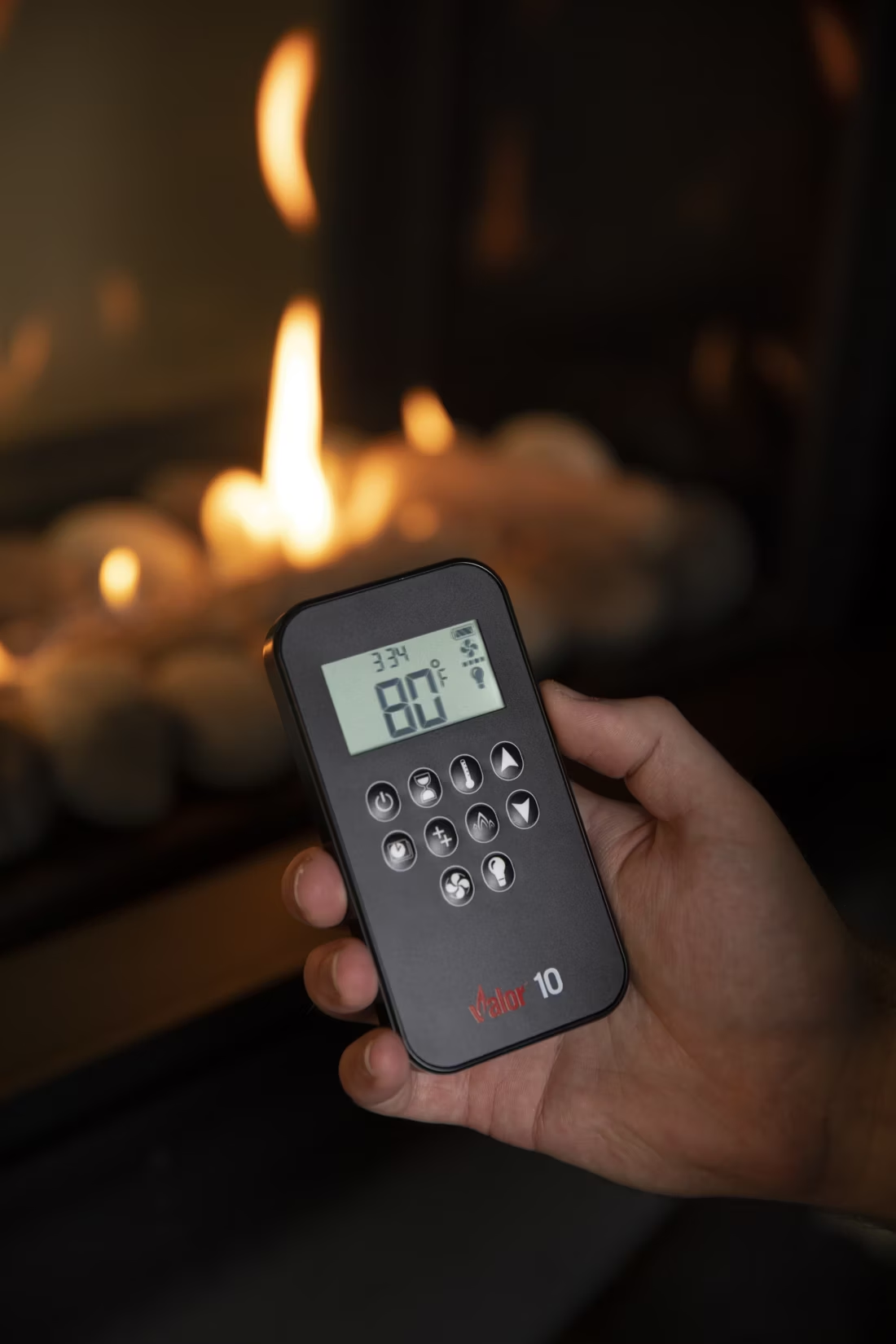
Most will, and that matters in this area given how ONCOR's grid has performed during severe winter weather in past years. Units with IPI (intermittent pilot ignition) run their pilot and controls off a small battery backup that kicks in the moment power drops, so the fireplace keeps working. Some models, like Valor, use a thermocouple that generates its own electricity from the pilot flame, skipping the battery altogether. If having heat during an outage is a real priority for your household, ask your dealer specifically about the ignition system on any unit you're considering.
What's the difference between a gas fireplace, insert, and log set?
A gas log set is the simplest option—realistic logs that drop into an existing wood-burning firebox, often vent-free or vented through the current flue. A gas insert is a sealed, direct-vent unit that slides into that same firebox but runs far more efficiently and puts out real usable heat. A gas fireplace is a built-in unit framed into a wall, typically chosen for new construction or a remodel where there's no existing firebox at all. For most Crowley homeowners working with an older masonry fireplace, a log set or insert is the natural fit; new builds usually call for a built-in unit.
Do I need a permit to install a gas fireplace in Crowley?
Yes. You'll pull a building permit through the City of Crowley's building inspections department, and any new gas line work requires a licensed gas-fitter and a separate mechanical/gas permit. Established local hearth dealers handle this coordination routinely—building permit, gas line, and final inspection—so you're not managing multiple inspections yourself on a project this size.
Vented vs. vent-free gas fireplaces—which is right for my home?
Vented (direct-vent) units draw combustion air from outside and exhaust it back outside through sealed venting, which is the more efficient and widely recommended option for daily use. Vent-free units burn directly into the room and are legal to install in Texas, provided the room meets minimum size requirements—a workable option for a bedroom or den in an older Crowley home where running new venting isn't practical. Since Crowley isn't in a designated air-quality nonattainment area, either type is on the table here; most dealers will still walk you through the tradeoffs in moisture and combustion byproducts before you decide.
How often does a gas fireplace need servicing?
Once a year is the standard recommendation, ideally in early fall before the first cold front comes through in October or November. A technician checks the burner, pilot assembly, and gas connections, and cleans the glass—a much lighter lift than a wood chimney sweep. Given how sporadically most Crowley households actually run their fireplace, a pre-season check is what catches a pilot or igniter problem before the one week a year you actually need the heat. Plan on roughly $150-$250 for a standard visit.
Gas, wood, or electric—what actually makes sense for a Crowley home?
Given Crowley's mild climate—2,482 heating degree days and winter lows averaging 34°F—a full wood-burning setup is overkill for most households here; it's why wood isn't a fuel we typically match homeowners with in this area, even though oak, pecan, and mesquite are all locally available for grilling and smoking. Gas gives you real instant heat on the occasional cold front without tending a fire. Electric fireplaces, running through ONCOR, United Electric Cooperative, or Denton County Electric Cooperative depending on your street, are the simplest and cheapest to install (often under $1,200) and make sense for supplemental warmth in a bedroom or den, though they won't produce the same heat output as a vented gas unit. Most Crowley homeowners land on gas for the main living space and consider electric for secondary rooms.
Can I put a TV above my fireplace?
Yes—with an asterisk. Fireplaces are hot and TVs don't like heat. Either put a mantel between them to deflect rising warmth, or choose a fireplace with heat-management technology that creates a cool zone on the wall above—the wall stays around 125 degrees, barely warm, while the room still gets full heat. If you like clean lines and don't want a mantel, heat management is the answer.
Why is a fireplace insert so efficient?
An insert does two things: it seals the chimney completely, so you stop losing air you already paid to heat, and it radiates warmth into the room through the firebox and glass. Most add a heat-exchange fan that pulls cool room air underneath, wraps it around the hot firebox, and pushes it back out warm. Your home is more efficient before you've even lit the first fire.
Does a fireplace add value to my home?
On average, a fireplace adds back to the home about the same amount you spent installing it. Add the monthly savings from heating the rooms you actually use instead of the whole house—often hundreds of dollars a year—and the value case is strong before you even count what a fire does for how your family uses the room.
Can I install a fireplace myself?
If you're putting a fire in your house on purpose, it's best to work with an expert. Unless you're genuinely experienced in framing, gas line, vent pipe, and the national code on clearances to combustibles, have a professional do it—and ideally the same company that sells you the fireplace, so warranty, service, and liability all live under one roof.
Nearby Dealers
Hearth shops serving Crowley and the surrounding area. Every listing shows whether it is a WhyFire partner, a dealer we have verified as authorized for the brands we recommend, or a local business carrying hearth products. No manufacturer pays for placement. How we verify dealers →
Rodak's Coffee And Bbq Grills
Texas Building Supply
Brothers Supply Co.
Fireside Innovations
David's Stove Shop Inc
Acme Brick Tile & Stone
Alliance Materials, Inc.
Bbq Outfitters
Get your free Project Guide & Parts List for a gas fireplace in Crowley.
Tell me about your home and your gas access—Atmos Energy or propane—and I'll match you with a trusted local dealer and send a free Project Guide & Parts List with the exact vent kit and parts your project needs.
Find Your Fireplace →