
Keep Your Family Warm and Safe—No Matter What
With about 2,507 heating degree days and average winter lows near 33°F, Crandall doesn't need wood heat to get through the season—but plenty of homeowners here still want a real fire for backup power outages and cold-snap evenings.
Every Project Starts From One of These Five Situations
Wood heat exists here for two reasons: ambiance and backup.
Crandall sits in Kaufman County on the Blackland Prairie, part of the Dallas-Fort Worth exurbs, at just 412 feet of elevation. Winters here are mild—average lows sit around 33°F and the area logs roughly 2,507 heating degree days a year, a fraction of what a place like Duluth, Minnesota racks up in a single winter. Central heat pumps and gas furnaces handle nearly all day-to-day heating in Crandall's roughly 4,000-person community, and a wood stove or fireplace is rarely anyone's only source of warmth.
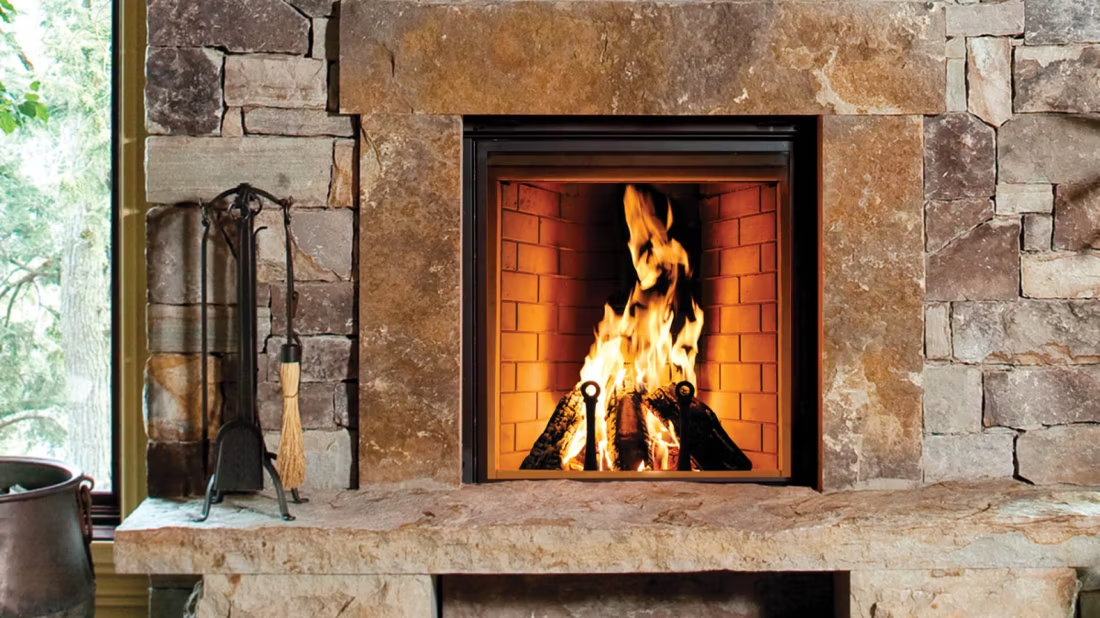
That said, wood still has a real place in a lot of Crandall homes. Local oak, pecan, and mesquite—the same species many households already split for the smoker—burn well in a fireplace or stove, and interest in wood heat spikes after events like Winter Storm Uri in February 2021, when ERCOT-related outages left parts of North Texas without power for days. A wood-burning unit that doesn't depend on ONCOR, Trinity Valley Electric Cooperative, or Farmers Electric Cooperative stays lit when the grid doesn't. For most Crandall households, though, wood is a deliberate secondary choice—for ambiance on a cool evening, or for peace of mind the next time the power goes out.
Three steps. No salesperson until you're ready.
Tell us about your project
Your zip code, your situation, and the fuel you're leaning toward—or let the answers point you to one.
See what's actually available
The brands dealers within 100 miles genuinely carry—real options, never a catalog mirage.
Get your dealer & Project Guide
A trusted local dealer, plus the free Project Guide & Parts List that names every component of the job.
Frequently Asked Questions
Does it even make sense to install a wood stove in Crandall's climate?
For pure heating economics, not really—with only about 2,507 heating degree days a year and average lows around 33°F, a gas furnace or electric heat pump will out-earn a wood stove on cost-per-BTU almost every winter. Where wood makes sense in Crandall is as a secondary system: backup heat that works without ONCOR or your local electric co-op, or a real fire for the handful of genuinely cold nights each year. Go in expecting a supplemental unit, not a primary heat source, and you'll be happy with the result.
What does a wood fireplace or stove installation cost in Crandall?
For a market like Crandall, a freestanding EPA-certified wood stove with Class A chimney runs roughly $3,500 to $7,000 installed, depending on the model and whether you're running new pipe through a roof versus using an existing masonry chimney. A factory-built zero-clearance wood fireplace for new construction or a remodel typically lands in a similar range once framing and venting are included. Because wood installs are less common here than gas, expect the local dealer to walk you through venting options carefully—a trusted installer will size the flue correctly rather than reusing a generic big-box template.
Do I need a permit to install a wood stove in Crandall?
Most likely yes—new wood-burning appliances and chimney penetrations typically require a building permit through the City of Crandall or Kaufman County, depending on your address. Crandall is small enough that permitting isn't standardized the way it is in a big metro building department, so your best move is confirming requirements with City Hall before work starts. A local hearth dealer who's pulled permits in Kaufman County before can usually handle this step for you.
What firewood works best around Crandall?
Oak and pecan are the two most common hardwoods burned locally, and both are already familiar to Crandall households that use them for smoking brisket and ribs—dense, long-burning, and easy to source from area ranches and tree services. Mesquite is also plentiful in Kaufman County and burns hot, but it pops and throws sparks more than oak or pecan, so it's better suited to a stove with a solid door than an open fireplace. Whatever you burn, make sure it's seasoned at least six to twelve months—green mesquite in particular smokes heavily and builds creosote fast.
Can a wood stove keep my house warm if the power goes out?
Yes, and this is the single biggest reason Crandall homeowners install one. Unlike a gas furnace (which needs electricity to run the blower and ignition) or a heat pump, a wood stove or fireplace needs nothing but the wood you feed it. After Winter Storm Uri knocked out power to parts of North Texas for days in February 2021, a lot of homeowners on ONCOR, Trinity Valley Electric Cooperative, and Farmers Electric Cooperative lines started looking at wood stoves specifically for that scenario. An EPA-certified freestanding stove sized for one or two main rooms is usually enough to keep a family comfortable through a multi-day outage.
Should I get a wood fireplace or a gas fireplace in Crandall?
For most Crandall homes, gas is the more practical everyday choice—natural gas or propane service is widely available in Kaufman County, gas fireplaces light instantly, and they don't require chimney sweeping or firewood storage. Wood is worth choosing when backup heat during a power outage matters to you, when you want a real flame and the smell of oak or pecan burning, or when you already have a masonry chimney sitting unused. Some households here end up with both: gas for daily convenience, wood as the fallback plan.
Where can I buy firewood in Crandall?
Given Crandall's population of around 4,000, firewood here comes mostly from local tree services, ranch operations clearing oak and mesquite, and word-of-mouth sellers rather than dedicated firewood retailers. Expect to pay roughly $200 to $300 for a full cord of seasoned oak or pecan, delivered, with mesquite sometimes priced lower since it's so abundant in Kaufman County. Buying a season ahead and stacking it off the ground is worth the effort in this humid climate—unseasoned wood in North Texas humidity takes longer to dry than people expect.
How often should a wood-burning fireplace be inspected in Crandall?
The CSIA recommends an annual inspection for any wood-burning appliance regardless of how often it's used, and that holds even for a backup-only unit in Crandall. Because most local units get occasional rather than daily use, creosote buildup is usually slower here than in a primary-heat home further north—but rodents, debris, and settling masonry can still cause problems in a chimney that sits idle most of the year. Plan on a sweep and inspection each fall before the first cold front, especially if the fireplace hasn't been used since last winter.
What kind of wood-burning unit makes the most sense for occasional or backup use?
For a Crandall home, a freestanding EPA-certified wood stove is usually the better pick over an open masonry fireplace—it holds heat far more efficiently, which matters if you're ever relying on it during a multi-day power outage rather than just enjoying a fire. If you already have an unused masonry fireplace, a wood-burning insert converts it into something that actually throws real heat instead of losing most of it up the flue. Given that Crandall has no local wood-smoke air quality restrictions to work around, the choice really comes down to how you plan to use it—ambiance, backup, or both—and a local dealer can size the unit accordingly.
Why is my open fireplace making my house colder?
Open fireplaces suck—literally. As the fire burns, it consumes air your furnace already paid to heat and pulls it out through the chimney, so the house is actually colder after the fire goes out than before you lit it. An insert fixes this: it seals the chimney, puts fixed glass across the front, and turns that hole in your house into a real heat source.
Why is a fireplace insert so efficient?
An insert does two things: it seals the chimney completely, so you stop losing air you already paid to heat, and it radiates warmth into the room through the firebox and glass. Most add a heat-exchange fan that pulls cool room air underneath, wraps it around the hot firebox, and pushes it back out warm. Your home is more efficient before you've even lit the first fire.
How much should I budget for a fireplace?
For an average home—covering the fireplace, the vent pipe, and basic installation—a budget between $3,900 and $5,500 gives you a lot of options across wood, gas, and pellet. By the time you add finish work, gas line, and electrical, the average complete installation lands between $5,000 and $12,000 all-in. In a remodel or new build, a good rule is to put about 2.5% of the total project cost toward the fireplace.
Should the dealer who sells my fireplace also install it?
Ideally, yes. A fireplace project involves vent pipe, gas line, electrical, and often tile or stone. Hire three or four separate trades and you own the liability and the game of telephone between them. One company selling and installing means one accountable party, start to finish—ask about factory training, on-time completion records, and what happens if an inspection fails.
Nearby Dealers
Hearth shops serving Crandall and the surrounding area. Every listing shows whether it is a WhyFire partner, a dealer we have verified as authorized for the brands we recommend, or a local business carrying hearth products. No manufacturer pays for placement. How we verify dealers →
Fuego Fireplaces
The Chimney Guy -Seven Points
Clay Structures Inc
Find your wood fireplace in Crandall.
Tell us about your home and how you'd use a wood fireplace—ambiance, backup heat, or both—and we'll match you with a trusted local dealer and a free Project Guide & Parts List built for your Crandall address.
Find Your Fireplace →