
Keep Your Family Warm and Safe—No Matter What
With winter lows averaging 37°F and only a short, mild heating season each year, wood isn't how Comal County homes stay warm. But from New Braunfels to Canyon Lake to the ranches off FM 306, plenty of homeowners still want a real oak or pecan fire on a cool evening. We'll help you figure out if it's worth it, and connect you with a local dealer who won't oversell you.
Every Project Starts From One of These Five Situations
Winters here don't ask much of a fireplace.
Comal County sits in climate zone 2A—hot, humid, and mild through most of the year, with an average winter low of 37°F and a short, light heating season overall. Compare that to a place like Duluth, Minnesota, which has a long, brutal winter, and it's clear why wood heat never became the backbone of how Hill Country homes stay warm. Central HVAC handles the occasional 30s-and-40s night without effort, and most new construction in New Braunfels, Bulverde, and Canyon Lake is built around gas or electric systems from the start. Wood-burning fireplaces and stoves land here as a not-applicable category for primary heat, and that's worth saying plainly rather than pretending otherwise.
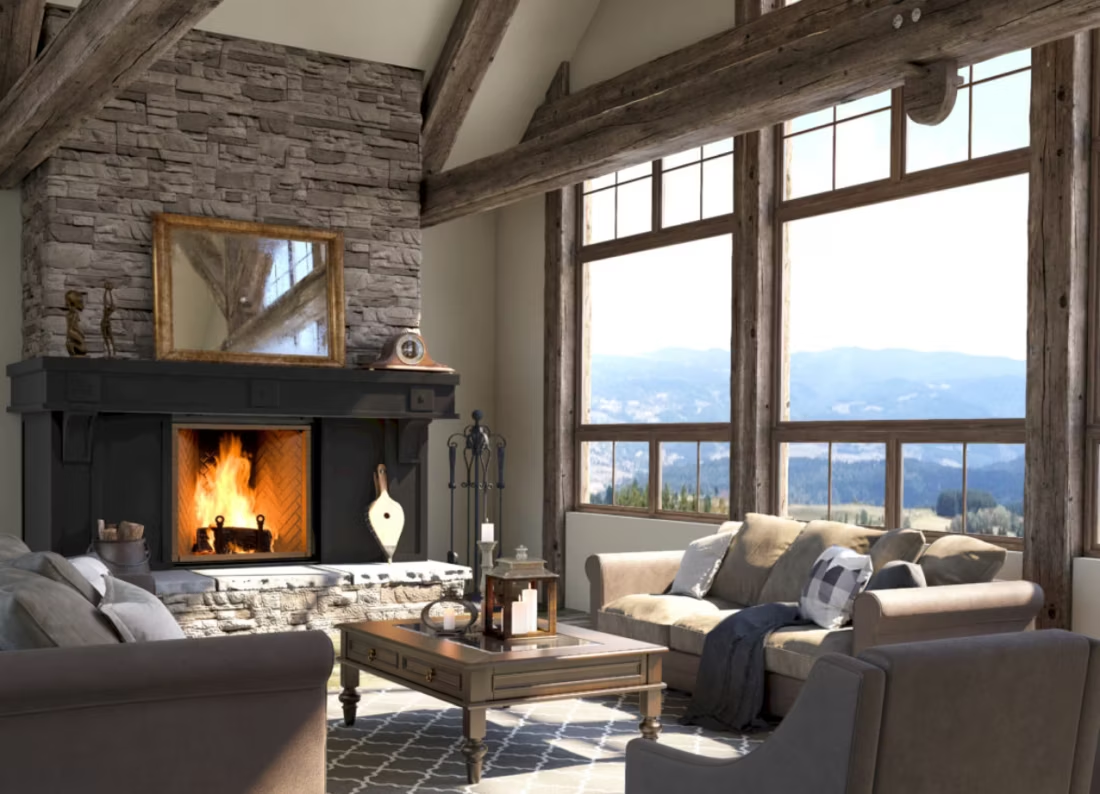
That said, wood still has a place. Comal County sits in oak, pecan, and mesquite country—the same trees Hill Country pitmasters prize for barbecue smoke also make solid, dense firewood when seasoned properly. Custom home builders in the area still install decorative masonry or zero-clearance wood fireplaces for the ambiance of a real fire, especially on rural acreage where a chimney fits the aesthetic. Air quality concerns are minimal here (no non-attainment status, no winter inversion issues), so if you do want a wood-burning setup, you're not fighting local emissions rules the way you would in a place like the Klamath Basin. What you are managing is realistic expectations: this is a fireplace for enjoyment on a cold snap, not a heating system for January.
Three steps. No salesperson until you're ready.
Tell us about your project
Your zip code, your situation, and the fuel you're leaning toward—or let the answers point you to one.
See what's actually available
The brands dealers within 100 miles genuinely carry—real options, never a catalog mirage.
Get your dealer & Project Guide
A trusted local dealer, plus the free Project Guide & Parts List that names every component of the job.
Frequently Asked Questions
Is a wood-burning fireplace or stove practical for heating in Comal County?
Not as a primary heat source. With such a short, mild heating season and winter lows averaging in the high 30s, a wood stove would sit unused most of the winter. Where it does make sense is as a secondary, ambiance-driven feature—a masonry fireplace in a great room, or a small stove in a casita or guest house on rural acreage near Canyon Lake or Bulverde, used on the handful of nights each year that actually get cold. If your goal is reliable heat, gas or electric will serve this climate far better; if your goal is a real wood fire on a January evening, that's a different (and reasonable) ask, and local dealers can help you scope it honestly.
What wood species burn well locally—oak, pecan, mesquite?
All three grow throughout Comal County and all three can be burned indoors once properly seasoned, but they behave differently. Oak, especially live oak and red oak, is dense and burns slow and steady—the best all-around choice for an indoor fireplace or stove. Pecan burns hot with a pleasant aroma, similar to what you'd smell at a local smokehouse, and works well for shorter evening fires. Mesquite pops and throws sparks more than the others, which makes it popular for outdoor fire pits and smokers but less ideal for an open hearth without a well-fitted screen or glass doors. Whatever species you choose, Hill Country humidity means wood needs a full season—six months to a year—stacked off the ground and covered on top before it's ready to burn clean.
What does it cost to install a wood-burning fireplace or stove in Comal County?
Costs here tend to run toward the lower end of national averages, since most Comal County homes are single-story with straightforward roof lines, which simplifies chimney and venting work compared to multi-story cold-climate builds. A freestanding wood stove with a new chimney typically falls in the $3,500–$7,500 range, while a masonry wood-burning fireplace built into new construction can run higher depending on stonework and design. Because wood heat is a specialty request here rather than the norm, get quotes from a dealer who regularly installs wood-burning units rather than one who mostly handles gas—the venting and clearance details differ, and experience matters.
Do I need a permit to install a wood-burning fireplace in Comal County?
Generally yes. If the home is within city limits—New Braunfels, Bulverde, or another incorporated area—the permit runs through that city's building department. In unincorporated parts of Comal County, permitting goes through the county's building permit process. Either way, most reputable hearth dealers handle the permit application as part of the installation, so you're not tracking it down yourself. Given how uncommon wood installs are in this market compared to gas, it's worth confirming your installer has actually pulled wood-burning permits before, not just gas line permits.
Are there burn bans or air quality restrictions I should know about?
Comal County has no ozone non-attainment designation and no winter inversion issues like you'd see in a mountain basin, so there's no routine wood-smoke curtailment to worry about. The real restriction to watch for is drought-driven burn bans, which Comal County and surrounding Hill Country counties issue periodically—these typically restrict outdoor burning (brush piles, fire pits) rather than an indoor fireplace with a proper chimney, but it's worth checking current county burn ban status if you're planning outdoor wood burning alongside an indoor install.
Wood vs. gas vs. electric—which fits Comal County homes best?
For this climate, gas and electric are the practical choices, and both are rated standard relevance here for good reason. A direct-vent gas fireplace gives instant, controllable heat with no wood handling, which suits a mild-winter market where the fireplace gets occasional use rather than daily reliance. Electric fireplaces work well for supplemental ambiance in bedrooms or secondary living spaces with minimal install cost. Wood is the right call only if the experience of a real fire—the smell of seasoned oak, the visual of an actual flame—matters more to you than heating efficiency. Plenty of Comal County homeowners choose wood anyway, purely for that reason, and that's a legitimate reason to build one.
What type of wood-burning unit makes sense for a Hill Country home?
For most Comal County homeowners who want wood despite the mild climate, a masonry or zero-clearance wood-burning fireplace built into a great room during new construction is the most common route—it reads as a design feature as much as a heat source. For an existing home without a fireplace, a small freestanding wood stove in a den, casita, or guest cabin is a lower-cost way to get the same experience without reworking the main house. Full-time wood-heating setups like catalytic stoves designed for 20-hour overnight burns—the kind you'd spec for a place with regular sub-zero nights—are overkill here and not something local dealers typically stock in volume.
Where can I get local firewood, and how should I season it in this climate?
Oak, pecan, and mesquite are all harvested and sold locally by Hill Country firewood suppliers and tree services, often as a byproduct of land clearing on the area's ranches and developing subdivisions. Because Comal County's humidity is higher than in drier wood-burning regions, freshly cut wood needs a longer seasoning period—plan on six months to a full year, split and stacked off the ground with airflow on all sides and the top covered. Wood that looks dry on the outside can still be wet inside in this climate, so a moisture meter reading under 20% is worth checking before you burn it indoors.
Does a wood fireplace work as backup heat during a winter storm like Uri?
It can, and that's actually the strongest practical argument for wood in a climate this mild. The February 2021 freeze knocked out power and gas supply to large parts of Texas for days, including areas around New Braunfels and Canyon Lake, and homes with a working wood-burning fireplace or stove had a heat source that didn't depend on the grid. For most Comal County homeowners this isn't a daily-use feature, but if backup resilience during a rare deep freeze is part of your reasoning for wanting wood, that's a sound one—just make sure the unit is a real heat-producing stove or fireplace insert, not a decorative-only unit, if resilience is the goal.
Why is my open fireplace making my house colder?
Open fireplaces suck—literally. As the fire burns, it consumes air your furnace already paid to heat and pulls it out through the chimney, so the house is actually colder after the fire goes out than before you lit it. An insert fixes this: it seals the chimney, puts fixed glass across the front, and turns that hole in your house into a real heat source.
What's the difference between an insert and a zero-clearance fireplace?
An insert is a fireplace that slides into a pre-existing wood-burning fireplace—if you don't have one, there's nothing to insert it into. A zero-clearance fireplace is built into a framed wall, which makes it the answer for remodels and new construction. Simple test: existing masonry fireplace means insert; blank or framed wall means zero-clearance.
What is an in-home preview and do I need one?
It's a visit where a hearth professional measures your space, confirms the model you picked actually works in your home, and walks the specs—framing, gas line, venting, finish work—before anything is ordered. Some details you just can't know until you see the house. Never make a down payment without one; it's the single most-skipped step that burns buyers.
How much should I budget for a fireplace?
For an average home—covering the fireplace, the vent pipe, and basic installation—a budget between $3,900 and $5,500 gives you a lot of options across wood, gas, and pellet. By the time you add finish work, gas line, and electrical, the average complete installation lands between $5,000 and $12,000 all-in. In a remodel or new build, a good rule is to put about 2.5% of the total project cost toward the fireplace.
Stove and Fireplace Dealers in Comal County
Listings include WhyFire partner dealers, dealers we have verified as authorized for the brands we recommend, and established local businesses that carry hearth products. Every listing shows which one it is. The ones marked Preferred run on WhyFire's software, so they can show you real pricing and book your appointment right here. No manufacturer pays for placement. How we verify dealers →
Parrish & Company Inc - San Antonio
Pico Propane Operating
Home & Patio
Bbq Outfitters
Find your wood fireplace in Comal County.
Tell us about your home and what you're hoping to get from a wood fireplace or stove—ambiance, backup heat, or both—and we'll match you with a trusted local dealer and send over a free Project Guide & Parts List with the exact parts and vent kit your project needs.
Find Your Fireplace →