
Electric warmth built for Colorado County's short, mild winters.
From Columbus to Weimar to Eagle Lake, most homes here need a little supplemental warmth on the coldest nights—not a full heating system. An electric fireplace or insert delivers that without a chimney, a gas line, or a permit headache. We match you with a trusted local dealer who installs it right.
Every Project Starts From One of These Five Situations
Mild winters, modest heating needs.
Colorado County sits in climate zone 2A along the I-10 corridor between Houston and San Antonio, stretching from the Colorado River bottomlands near Columbus and Alleyton out to Eagle Lake, Garwood, and Frelsburg. Winters here average a low of 39°F, and the county has a short, mild winter heating season—a fraction of what a place like Fargo, ND or Duluth, MN racks up in a single cold month. Most local homes never need a heating appliance capable of carrying a whole house through winter. What they need is something to take the chill off a January morning or add ambiance to a living room or primary suite.
That's exactly the gap an electric fireplace fills. No chimney, no gas line, no venting—plug it in or have an electrician add a dedicated circuit, and it's producing heat and flame effect the same day. It's also a natural fit for the county's older housing stock: plenty of homes in downtown Columbus and Weimar have existing masonry fireboxes that no longer see regular wood fires, and an electric insert drops into that opening without any chimney work. One honest caveat worth knowing up front: electric units run on grid power, so during a widespread outage—the kind Texas saw during Winter Storm Uri in February 2021—an electric fireplace won't provide backup heat the way a wood stove or vented gas unit can. For most Colorado County winters, that trade-off is a non-issue; for the rare hard freeze, it's worth planning around.
Three steps. No salesperson until you're ready.
Tell us about your project
Your zip code, your situation, and the fuel you're leaning toward—or let the answers point you to one.
See what's actually available
The brands dealers within 100 miles genuinely carry—real options, never a catalog mirage.
Get your dealer & Project Guide
A trusted local dealer, plus the free Project Guide & Parts List that names every component of the job.
Frequently Asked Questions
How much does an electric fireplace installation cost in Colorado County?
A plug-in electric insert or wall-mounted unit that uses an existing standard outlet typically runs $300 to $800 installed, including a surround or mantel if you want one. A built-in electric fireplace or a larger insert that needs a dedicated 20-amp circuit run by a licensed electrician usually lands between $1,200 and $2,800, depending on wall access and whether you're finishing out a mantel surround at the same time. Because Colorado County's mild climate doesn't demand a high-BTU heating appliance, most homeowners here choose mid-range units focused on flame realism and room ambiance rather than maximum heat output—which keeps costs on the lower end of what you'd see in a colder region.
Do I need a permit to install an electric fireplace in Colorado County?
A plug-in unit that simply sits in an existing outlet generally doesn't require a permit. If your installer is running a new dedicated circuit, cutting into drywall for a built-in unit, or wiring the fireplace into a wall-mounted position, that electrical work typically needs a permit through the county or the applicable city (Columbus, Weimar, or Eagle Lake, depending on where you're located), and it should be pulled by a licensed electrician. Most local hearth and electrical contractors handle this as part of the install, so you're not the one filing paperwork.
What size electric fireplace do I actually need here?
Given Colorado County's mild winters—a short, mild heating season and average lows in the high 30s—most homeowners are better served sizing for the room, not the whole house. A compact wall-mounted or insert unit (750–1,500 watts) comfortably takes the edge off a bedroom, sunroom, or living area on a cold front. There's rarely a reason to size up to a whole-home electric heating solution the way you might in a colder climate zone. If you're retrofitting an existing masonry firebox in an older Columbus or Weimar home, the insert size is generally dictated by the opening itself rather than the square footage of the house.
Will my electric fireplace work if the power goes out?
No—and this is worth being upfront about. Electric fireplaces run entirely on grid power, so during an outage, including the kind of statewide strain the ERCOT grid experienced during Winter Storm Uri in February 2021, an electric unit will not produce heat or flame. For most Colorado County winters this is a non-issue since true cold snaps are brief and infrequent. But if backup heat during an outage is a priority for your household, a vented gas or wood-burning unit is the better fit for that specific need—an electric fireplace is best thought of as everyday ambiance and supplemental warmth, not off-grid emergency heat.
Can I put an electric insert into my existing wood-burning fireplace?
Yes, and it's one of the more common projects local dealers handle in Colorado County's older homes—plenty of houses in Columbus, Alleyton, and Weimar have masonry fireboxes that were built for wood but haven't seen a fire in years. An electric insert slides into that existing opening, usually with a surround kit to fill any gap, and requires no chimney work, no liner, and no cleaning of decades-old flues. It's a straightforward way to bring a dormant fireplace back into daily use without the maintenance that comes with burning oak, pecan, or mesquite.
Electric vs. gas vs. wood—which is right for my Colorado County home?
Wood still has a real following here—oak, pecan, and mesquite are all common locally, and plenty of rural properties keep a wood-burning fireplace or stove going through the handful of genuinely cold nights each winter. Gas offers instant flame and slightly more heat output without the ash and smoke, but it requires a gas line or propane tank. Electric is the lowest-friction option: no fuel to source, no venting, no combustion byproducts, and it can go almost anywhere in the house with an outlet or a simple circuit. For a climate with such a short, mild winter heating season, electric covers the ambiance and occasional-warmth use case most Colorado County households actually have, without the ongoing maintenance of the other two fuels.
What will an electric fireplace add to my electric bill?
Most electric fireplaces run on 1,500 watts at full heat output, which costs somewhere in the range of 15 to 25 cents per hour depending on your rate through your local provider—whether that's AEP Texas, GVEC, or Fayette Electric Cooperative, all of which serve parts of Colorado County. Because most local homeowners run these units for ambiance or occasional supplemental warmth rather than as a primary heat source, the added cost tends to be modest—a few dollars a month rather than a meaningful line item, especially compared to running central HVAC heat strips through the same cold front.
What style of electric fireplace works best in a Gulf Coast climate home?
Wall-mounted units and mantel packages are popular in Colorado County because they don't require any masonry or venting changes—a good fit for the ranch-style and post-war homes common in Columbus and Eagle Lake. For homes with an existing wood-burning firebox, an insert with a surround kit is usually the cleaner option since it uses an opening that's already there. One local consideration: in this humid Gulf Coast climate, placement away from exterior walls prone to moisture and away from AC condensate lines helps avoid long-term wiring issues—your local dealer will flag this during a walk-through.
How long does an electric fireplace installation take?
A plug-in unit or simple insert swap can often be installed in a single afternoon. If new electrical work is needed—a dedicated circuit, in-wall wiring for a flush-mount unit, or a custom mantel surround—plan on scheduling the electrician and the hearth dealer's install crew separately, which usually stretches the project to a few days from start to finish. Local dealers serving Colorado County typically coordinate both trades so you're not managing two separate schedules yourself.
Can I put a TV above my fireplace?
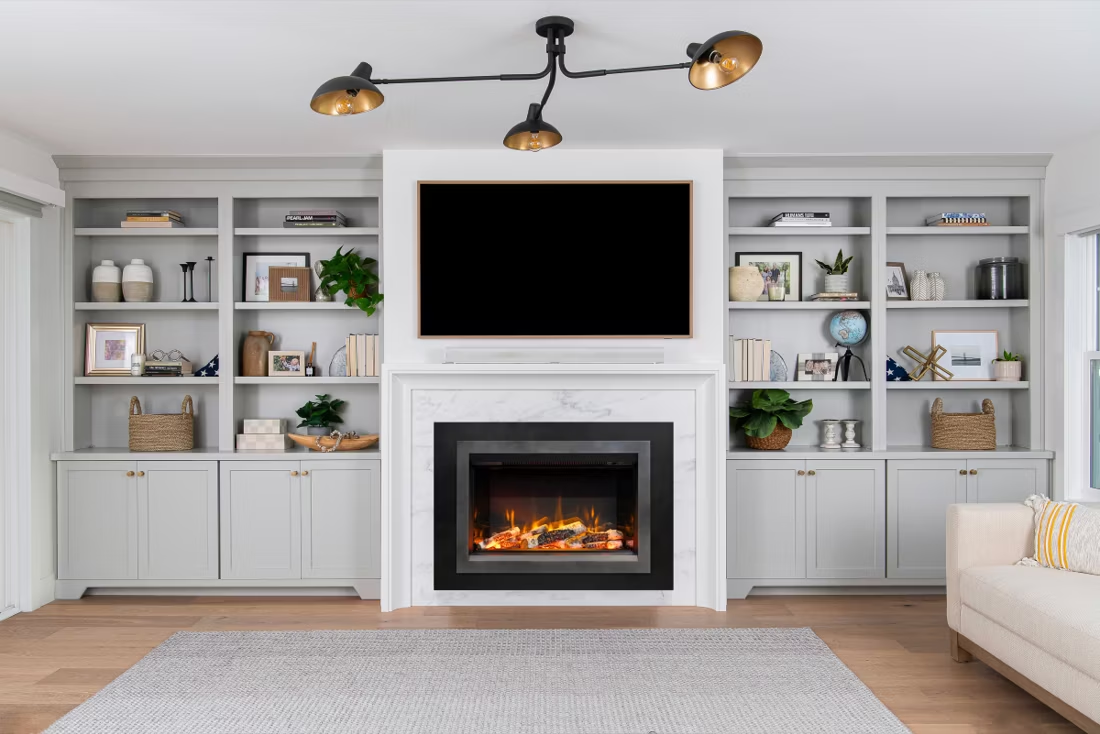
Yes—with an asterisk. Fireplaces are hot and TVs don't like heat. Either put a mantel between them to deflect rising warmth, or choose a fireplace with heat-management technology that creates a cool zone on the wall above—the wall stays around 125 degrees, barely warm, while the room still gets full heat. If you like clean lines and don't want a mantel, heat management is the answer.
Do electric fireplaces actually produce heat?
Yes—most put out around 4,800–5,000 BTUs from a standard outlet, which comfortably warms a bedroom, office, or den as a comfort-zone heater. What they won't do is carry a whole house the way wood, gas, or pellet can. Think of electric as ambiance-first with honest supplemental heat: flames on with no heat in July, flames plus warmth in January.
Can I install a fireplace myself?
If you're putting a fire in your house on purpose, it's best to work with an expert. Unless you're genuinely experienced in framing, gas line, vent pipe, and the national code on clearances to combustibles, have a professional do it—and ideally the same company that sells you the fireplace, so warranty, service, and liability all live under one roof.
How much should I budget for a fireplace?
For an average home—covering the fireplace, the vent pipe, and basic installation—a budget between $3,900 and $5,500 gives you a lot of options across wood, gas, and pellet. By the time you add finish work, gas line, and electrical, the average complete installation lands between $5,000 and $12,000 all-in. In a remodel or new build, a good rule is to put about 2.5% of the total project cost toward the fireplace.
Stove and Fireplace Dealers in Colorado County
Listings include WhyFire partner dealers, dealers we have verified as authorized for the brands we recommend, and established local businesses that carry hearth products. Every listing shows which one it is. The ones marked Preferred run on WhyFire's software, so they can show you real pricing and book your appointment right here. No manufacturer pays for placement. How we verify dealers →
Patio 1
Find your electric fireplace in Colorado County.
Tell us about your home and we'll match you with a trusted local dealer and send over a free Project Guide & Parts List—the exact parts, including any wiring needs, for your electric fireplace project in Colorado County.
Find Your Fireplace →