
Find the right fireplace for Colorado County's mild winters.
Wood, gas, pellet, and electric fireplace resources for Columbus, Eagle Lake, Weimar, and every community along the Colorado River. Connect with a trusted local hearth dealer and get a free Project Guide & Parts List for your home.
Every Project Starts From One of These Five Situations
Mild winters, real cold snaps, and hearth heat along the Colorado River.
Colorado County sits in the Gulf Coast Prairies of southeast Texas, split by the Colorado River between Columbus and Eagle Lake. Winters here are mild by national standards—the average January low sits around 39°F, and the county logs roughly 1,556 heating degree days a year, a fraction of what a place like Bismarck, ND racks up in a single hard winter. But mild doesn't mean irrelevant: Gulf moisture combined with occasional Arctic fronts can still drop temperatures into the teens overnight, and events like the February 2021 freeze (Winter Storm Uri) knocked out power to homes across the county for days. A wood stove or propane insert that can run without electricity is less about daily heating and more about having reliable backup when the grid fails. Local hardwoods—oak, pecan, and mesquite from the river bottomland and post-oak country—remain the go-to firewood species, doubling as fuel for the smokers and pits that are as much a part of county life as the hearth.
This hub rolls up every hearth resource in Colorado County—retailers, chimney sweeps and gas techs, and fuel suppliers—serving Columbus, Eagle Lake, Weimar, Alleyton, Glidden, Garwood, and the smaller communities along Highway 90 and the river. Pick a fuel below to see local dealers, typical installation costs, and recommended units for your specific project. Whether you're adding ambiance to a river-view home near Columbus or want backup heat for the next hard freeze, this is the starting point.
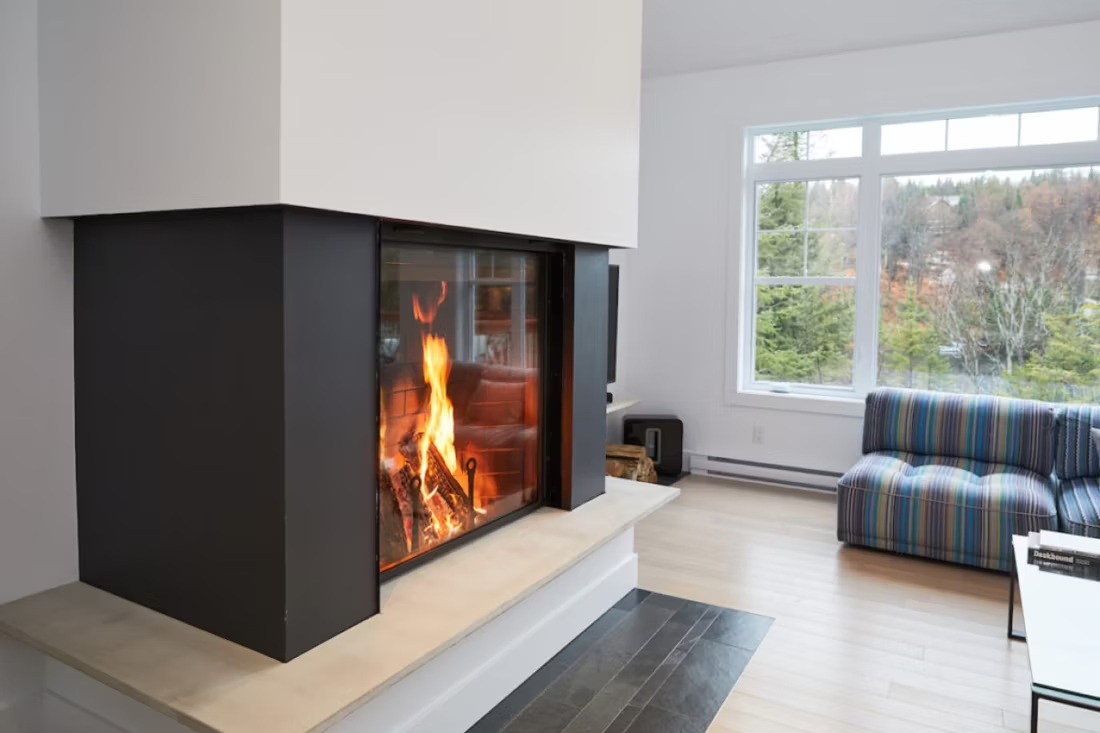
Four fuels. One honest answer for Colorado County.
Three steps. No salesperson until you're ready.
Tell us about your project
Your zip code, your situation, and the fuel you're leaning toward—or let the answers point you to one.
See what's actually available
The brands dealers within 100 miles genuinely carry—real options, never a catalog mirage.
Get your dealer & Project Guide
A trusted local dealer, plus the free Project Guide & Parts List that names every component of the job.
Frequently Asked Questions
Which fuel works best in Colorado County?
It comes down to what you want the fireplace to do. Gas is the most popular choice for county homeowners who want instant, reliable ambiance without babysitting a fire—and with propane the norm outside Columbus and Eagle Lake city limits, a propane fireplace or insert also functions as backup heat if the grid goes down, which mattered during the February 2021 freeze. Wood is still common, especially where oak, pecan, or mesquite are already being cut and split for the smoker—a wood stove or insert doubles as no-electricity heat during ice events. Pellet is a smaller niche here than in a colder climate—Forest Energy and Lignetics pellets are available through regional suppliers, but with only about 1,556 heating degree days a year, most owners run pellet stoves for supplemental warmth rather than primary heat. Electric fireplaces work well for ambiance in bedrooms and sunrooms, or wherever a full masonry chimney doesn't make sense given how few nights actually call for real heat.
Do I need a permit to install a fireplace in Colorado County?
Usually, yes, if the work involves new venting, a chimney, or a gas line. Inside Columbus, Eagle Lake, or Weimar city limits, permits are pulled through the city; in unincorporated parts of the county, they go through the Colorado County building permit process. Gas fireplace or insert installs typically require a separate gas line permit and a licensed installer for the propane connection, since most of the county runs on propane rather than piped gas. Wood stove and insert installs need to meet current EPA emissions standards for new units. Electric fireplaces are usually permit-free unless you're hardwiring a built-in unit into a new circuit. Most local dealers handle the paperwork as part of the installation quote.
Are there air quality restrictions on wood burning in Colorado County?
No—Colorado County isn't a nonattainment area and doesn't have the winter inversion or wildfire-smoke issues that trigger burn advisories in places like the Klamath Basin or California's Central Valley. There's no county-wide mandatory or voluntary no-burn day program here. That said, common sense still applies: seasoned oak, pecan, or mesquite burns cleaner and hotter than green wood, and a well-maintained EPA-certified stove or insert produces far less smoke than an old, uncertified unit—worth considering if you're replacing an older wood stove.
Can one local hearth retailer handle all four fuel types?
It depends on where you look. A county with just over 11,000 residents doesn't support a large number of full-line hearth showrooms, so many Colorado County homeowners end up working with a dealer based in Columbus or Eagle Lake for straightforward wood and gas installs, and pulling in a retailer from Houston, San Antonio, or Austin for a bigger project or a wider selection of pellet and electric units. Ask upfront which fuels a dealer stocks and installs regularly—a shop that mainly does propane conversions may not be your best source for a catalytic wood stove, and vice versa.
How does service work in rural areas of Colorado County?
Most chimney sweeps and gas technicians serving Colorado County travel in from Houston, San Antonio, or Austin, or from larger towns along I-10, and cover Columbus, Eagle Lake, Weimar, Alleyton, and the farm and ranch roads in between on a route basis. Expect a modest trip charge for rural calls outside the main towns. Scheduling in late summer or early fall—before the first real cold front—is easier than trying to book a technician during or right after a winter freeze, when demand for gas and wood service spikes across the region.
What's the typical cost range for fireplace installation across all fuel types in Colorado County?
Wood stove or insert: roughly $3,500–$8,000 installed, depending on chimney work—often lower than colder-climate counties since venting runs are simpler here. Gas fireplace, insert, or stove: $3,500–$9,000, with propane tank and line work adding to the higher end for homes without existing service. Pellet stove or insert: $4,000–$7,000 for a typical install. Electric fireplace: $200–$2,500 for the unit itself, plus $300–$1,000 in labor for anything beyond a plug-and-play wall unit. Exact pricing depends on the dealer and the specifics of your home—the county + fuel pages above break down costs by fuel type in more detail.
What is an in-home preview and do I need one?
It's a visit where a hearth professional measures your space, confirms the model you picked actually works in your home, and walks the specs—framing, gas line, venting, finish work—before anything is ordered. Some details you just can't know until you see the house. Never make a down payment without one; it's the single most-skipped step that burns buyers.
Does a fireplace add value to my home?
On average, a fireplace adds back to the home about the same amount you spent installing it. Add the monthly savings from heating the rooms you actually use instead of the whole house—often hundreds of dollars a year—and the value case is strong before you even count what a fire does for how your family uses the room.
Can a fireplace actually lower my heating bill?
Yes—by creating a comfort zone. A furnace heats every square foot of the house just to warm the one room you're in; a gas fireplace on low burns roughly a sixth of the gas a typical furnace does. Set the furnace around 55–60 degrees as a baseline, then heat the rooms your family actually uses. Families who heat this way commonly save $20–$60 a month.
Should the dealer who sells my fireplace also install it?
Ideally, yes. A fireplace project involves vent pipe, gas line, electrical, and often tile or stone. Hire three or four separate trades and you own the liability and the game of telephone between them. One company selling and installing means one accountable party, start to finish—ask about factory training, on-time completion records, and what happens if an inspection fails.
Stove and Fireplace Dealers in Colorado County
Listings include WhyFire partner dealers, dealers we have verified as authorized for the brands we recommend, and established local businesses that carry hearth products. Every listing shows which one it is. The ones marked Preferred run on WhyFire's software, so they can show you real pricing and book your appointment right here. No manufacturer pays for placement. How we verify dealers →
Patio 1
Find your fireplace in Colorado County.
Tell us about your project and we'll match you with a trusted local dealer and send a free Project Guide & Parts List—the exact parts, including the vent kit, and our recommended dealer for your fuel and your home in Colorado County.
Find Your Fireplace →