
Warmth on Demand for Colleyville's Mild Winters.
Colleyville rarely sees hard freezes, but a gas fireplace still earns its keep—instant ambiance on a 34-degree evening and real zone heat if the power grid has a bad week. Find the right unit and a trusted local dealer.
Every Project Starts From One of These Five Situations
Built for design and comfort, not survival heat.
Colleyville sits in Tarrant County at 631 feet elevation, in climate zone 3A, with an average winter low around 34°F and roughly 2,437 heating degree days a year. Compare that to a place like Burlington, Vermont, which racks up more than 7,000—and it's clear why wood stoves and pellet appliances never caught on here. Nobody in Colleyville is burning cordwood to survive January. What they are doing is installing gas fireplaces and inserts as design statements and supplemental comfort in the master-planned neighborhoods and custom builds that define this DFW suburb.
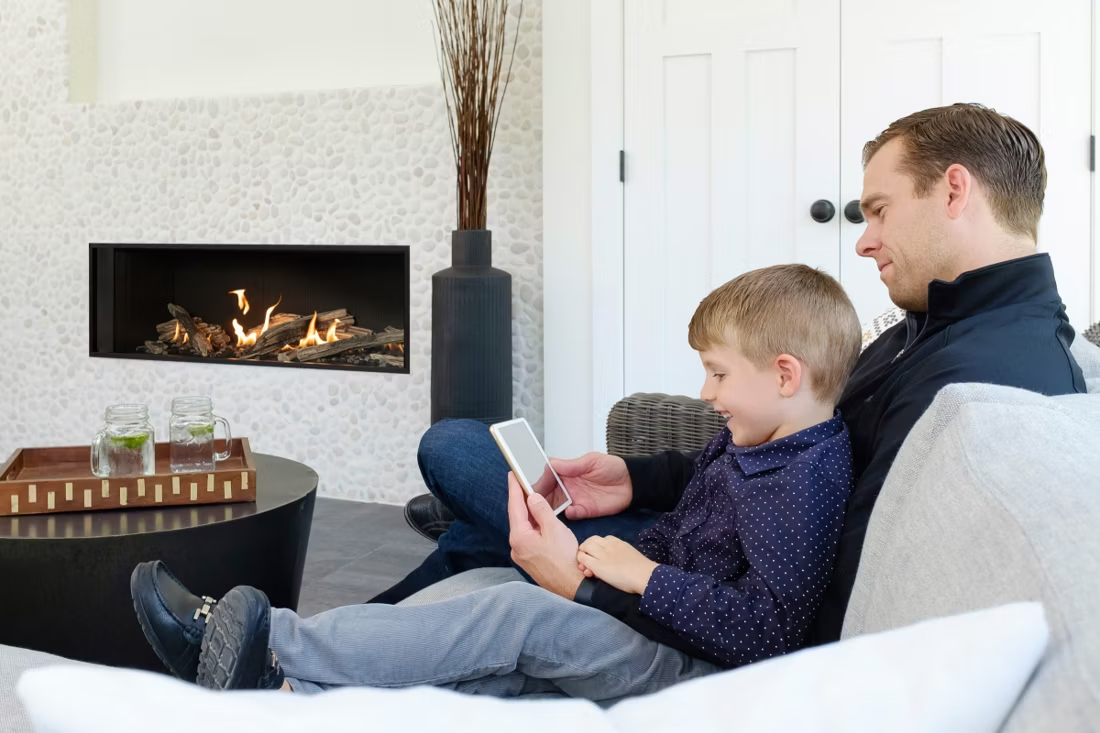
Most Colleyville homes, especially newer construction in communities off Glade Road and State Highway 26, already have natural gas plumbed to the house, which makes adding or upgrading a fireplace straightforward. Contemporary linear units with wide glass fronts have become popular in the area's newer custom builds, often anchoring a great room or media wall rather than sitting in a traditional brick surround. And after the February 2021 winter storm knocked out power across Tarrant County for days, more than a few homeowners here started asking specifically about gas fireplaces that keep running when Oncor, United Electric Cooperative, or Denton County Electric Cooperative service goes down.
Three steps. No salesperson until you're ready.
Tell us about your project
Your zip code, your situation, and the fuel you're leaning toward—or let the answers point you to one.
See what's actually available
The brands dealers within 100 miles genuinely carry—real options, never a catalog mirage.
Get your dealer & Project Guide
A trusted local dealer, plus the free Project Guide & Parts List that names every component of the job.
Frequently Asked Questions
How much does a gas fireplace installation cost in Colleyville?
Costs vary widely based on the unit and the venting path. A gas log set or basic insert into an existing masonry fireplace with a gas line already stubbed in is the least expensive route. A full direct-vent gas fireplace built into a new wall—with framing, venting through the roof or an exterior wall, and a new gas line run—costs considerably more, and that's where a lot of Colleyville's newer builds and remodels land given the popularity of wide linear units. A local installer will give you a firm number after seeing your space, but venting distance and whether you need new gas line work are the two biggest cost drivers either way.
Can I convert my existing wood-burning fireplace to gas?
Yes, and it's a common request in Colleyville's older neighborhoods with traditional brick fireplaces built in the 1980s and 90s. In most cases, a gas insert or vented log set goes into the existing masonry opening using the current chimney as the venting path, sometimes with a stainless liner. Since wood heat was never a practical necessity here given the mild winters, most of these conversions are driven by convenience and cleanliness rather than a need for more heat—homeowners want the look of a fire without hauling oak, pecan, or mesquite logs and cleaning out ash afterward.
Do I need natural gas, or should I use propane?
Most homes within Colleyville city limits already have natural gas service, which makes a direct-vent gas fireplace or insert a simple addition if you already run gas to a water heater, range, or furnace. Propane is really only a consideration for properties on the rural edges of Tarrant or Denton County that fall outside the gas utility footprint. Nearly every gas fireplace model on the market can be configured for either fuel—your installer sets the correct orifice and regulator—so the fuel choice usually comes down to what's already available at the house, not the equipment itself.
Will my gas fireplace work during a power outage?
Most modern gas fireplaces with intermittent pilot ignition (IPI) include a battery backup—typically standard AA batteries—that keeps the unit lighting on demand even when the grid is down. That mattered to a lot of Colleyville homeowners during the February 2021 winter storm, when ERCOT-driven outages left parts of Tarrant County without power for days in freezing temperatures. Valor takes a different approach: their units generate their own electricity through the pilot's thermocouple, so there's no battery to remember or replace. Given how quickly a cold snap can knock out power here, it's worth asking your local dealer about the ignition system on any model you're considering.
What's the difference between a gas fireplace, gas insert, and gas stove?
A gas fireplace is a fully built-in unit, framed into a wall—this is the route most new construction and remodels in Colleyville take, especially for the wide linear units popular in newer great rooms. A gas insert drops into an existing masonry firebox, turning an old wood-burning fireplace into a sealed, efficient gas unit. A gas stove is a freestanding cabinet-style unit that sits on the floor. For the many Colleyville homes with an existing brick fireplace, an insert is usually the fastest upgrade; for new builds or a fireplace-free room, a built-in unit gives more design flexibility.
Do I need a permit to install a gas fireplace in Colleyville?
Yes—the City of Colleyville's Building Inspections Department requires a permit for new gas fireplace installations, along with a separate gas line permit whenever new piping is run. The gas line work has to be done by a licensed gas fitter, which is one reason it's worth using an established hearth dealer rather than a handyman: a good local installer coordinates the gas line, venting, and inspection sign-off as one job instead of leaving you to manage separate trades.
What's the difference between vented and vent-free gas fireplaces?
Vented gas fireplaces, including direct-vent models, pull combustion air from outside and exhaust it back outside through sealed venting—they're the cleanest, safest option and what most installers recommend for a primary fireplace. Vent-free units burn fuel directly into the room air with no external venting; they're legal in Texas but come with strict room-size requirements and oxygen depletion sensors, and they add moisture and combustion byproducts to indoor air. Vent-free log sets do get used in Colleyville homes where an interior room has no access to an exterior wall or roof line for venting, but for a primary living space, a direct-vent unit is almost always the better call.
How often should my gas fireplace be serviced?
Plan on an annual inspection, ideally in early fall before the fireplace sees regular use through a Texas winter. A technician checks the burner, pilot assembly, venting, and gas connections, and cleans the glass and interior—this is quick compared to wood-stove chimney sweeping, but it matters just as much for safety and keeping the warranty intact. Local hearth service providers typically charge in the $150 to $250 range for a standard annual visit.
Gas vs. wood—which makes sense in Colleyville?
Wood heat is genuinely not-applicable here in any practical sense. With an average winter low around 34°F and only about 2,437 heating degree days a year, Colleyville homes just don't need a wood stove for backup or primary heat the way a home in Fargo, North Dakota or Burlington, Vermont might. The oak, pecan, and mesquite common to North Texas are prized for smoking briskets more than for heating rooms, and you won't find cutting permits or wood-stove installers doing much business in this market. Gas is the practical and popular choice locally—instant on-off operation, no ash or smoke, and (with the right ignition system) heat that keeps working through the kind of grid outages Texas winters occasionally deliver.
Why is my open fireplace making my house colder?
Open fireplaces suck—literally. As the fire burns, it consumes air your furnace already paid to heat and pulls it out through the chimney, so the house is actually colder after the fire goes out than before you lit it. An insert fixes this: it seals the chimney, puts fixed glass across the front, and turns that hole in your house into a real heat source.
What's the difference between an insert and a zero-clearance fireplace?
An insert is a fireplace that slides into a pre-existing wood-burning fireplace—if you don't have one, there's nothing to insert it into. A zero-clearance fireplace is built into a framed wall, which makes it the answer for remodels and new construction. Simple test: existing masonry fireplace means insert; blank or framed wall means zero-clearance.
How much should I budget for a fireplace?
For an average home—covering the fireplace, the vent pipe, and basic installation—a budget between $3,900 and $5,500 gives you a lot of options across wood, gas, and pellet. By the time you add finish work, gas line, and electrical, the average complete installation lands between $5,000 and $12,000 all-in. In a remodel or new build, a good rule is to put about 2.5% of the total project cost toward the fireplace.
Can I install a fireplace myself?
If you're putting a fire in your house on purpose, it's best to work with an expert. Unless you're genuinely experienced in framing, gas line, vent pipe, and the national code on clearances to combustibles, have a professional do it—and ideally the same company that sells you the fireplace, so warranty, service, and liability all live under one roof.
Nearby Dealers
Hearth shops serving Colleyville and the surrounding area.
Find your gas fireplace in Colleyville.
Tell us about your home and we'll match you with a trusted local dealer and send over a free Project Guide & Parts List—the exact fireplace, venting, and parts your Colleyville project needs, plus who to call to install it.
Find Your Fireplace →