
The Right Electric Fireplace for Brazos County's Mild Winters.
No chimney, no gas line, no venting—just the ambiance and supplemental warmth that actually fits College Station's climate. Find the right unit and connect with a trusted local dealer.
Every Project Starts From One of These Five Situations
Built for warmth you actually need, not warmth you're stuck heating for months.
College Station sits in climate zone 2A at just 286 feet of elevation, with an average winter low of 41°F and only about 1,545 heating degree days a year. Compare that to a cold-climate city like Fargo, ND, which racks up that many heating degree days in a single cold month, and the picture is clear: this is not a place where a home needs to run a furnace, let alone a wood stove, for half the year. Wood-burning fireplaces are largely absent from College Station's newer housing stock, and there's no local air quality program flagging wood smoke the way non-attainment areas out west do—wood heat here just doesn't match the climate or the housing.
What does match is electric. With Texas A&M University driving a market full of rentals, condos, student housing, and newer subdivisions, electric fireplaces and inserts fit the way people actually live here: plug-in or simple hardwired installs, no chimney or gas line to maintain, and no combustion byproducts to worry about in a tightly sealed apartment. Depending on your address you'll be served by Entergy Texas, Navasota Valley Electric Cooperative, or Mid-South Electric Cooperative Association—residential rates run from about 13.7¢ to 15.8¢ per kWh across the three—and an electric unit gives you ambiance year-round plus real supplemental heat for the handful of nights each January when it actually gets cold.
Three steps. No salesperson until you're ready.
Tell us about your project
Your zip code, your situation, and the fuel you're leaning toward—or let the answers point you to one.
See what's actually available
The brands dealers within 100 miles genuinely carry—real options, never a catalog mirage.
Get your dealer & Project Guide
A trusted local dealer, plus the free Project Guide & Parts List that names every component of the job.
Frequently Asked Questions
How much does an electric fireplace installation cost in College Station?
Plug-in electric inserts, freestanding stoves, and mantel packages generally run $300 to $1,200 for the unit itself, and many homeowners install these without an electrician since they run off a standard 120V outlet. Built-in wall units or full mantel-surround installations that require a dedicated circuit typically run $1,500 to $4,000 once you factor in an electrician's time to run new wiring, especially in older homes around Southside or Wolf Pen Creek where panel capacity can be tight. New construction and remodels in newer College Station subdivisions are usually the cheaper end of that range since wiring is easier to route before drywall goes up.
Will an electric fireplace actually heat my house in College Station?
Not as a whole-home solution, and that's fine—with only about 1,545 heating degree days a year and an average winter low of 41°F, College Station doesn't need one. Most electric fireplace inserts put out 4,600 to 9,000 BTU on their heat setting, which is plenty to take the chill off a living room, home office, or bedroom during the occasional 30s-and-40s cold snap in January. Think of it as zone heating for the handful of genuinely cold nights each winter, not a replacement for your central HVAC system, which will still handle the bulk of your heating and cooling load here.
Electric vs. gas fireplace—which is right for a College Station home?
Gas is common here too, particularly in homes already served by natural gas or propane, and it delivers stronger, sustained heat output plus the option to keep running during a power outage with the right ignition system. Electric skips the gas line and venting entirely, which matters in apartments, condos, and rental properties near campus where landlords and HOAs often won't allow a vented appliance. For most College Station homeowners the deciding factor isn't heat output—given the mild climate here, either fuel provides plenty—it's whether you want the simplicity and low upfront cost of electric or the more traditional flame and higher heat capacity of gas.
Does it matter which electric utility serves my home?
It affects your running cost, not your installation. College Station is split between Entergy Texas (about 13.66¢ per kWh), Mid-South Electric Cooperative Association (about 14.08¢), and Navasota Valley Electric Cooperative (about 15.75¢) depending on your exact address. A typical electric fireplace insert draws around 1,500 watts on its heat setting, so running one for five hours costs roughly $1.02 on Entergy Texas territory versus about $1.18 on Navasota Valley Electric Cooperative—a modest but real difference if you plan to use the fireplace regularly through the winter.
What's the difference between an electric insert, wall-mount, and mantel package?
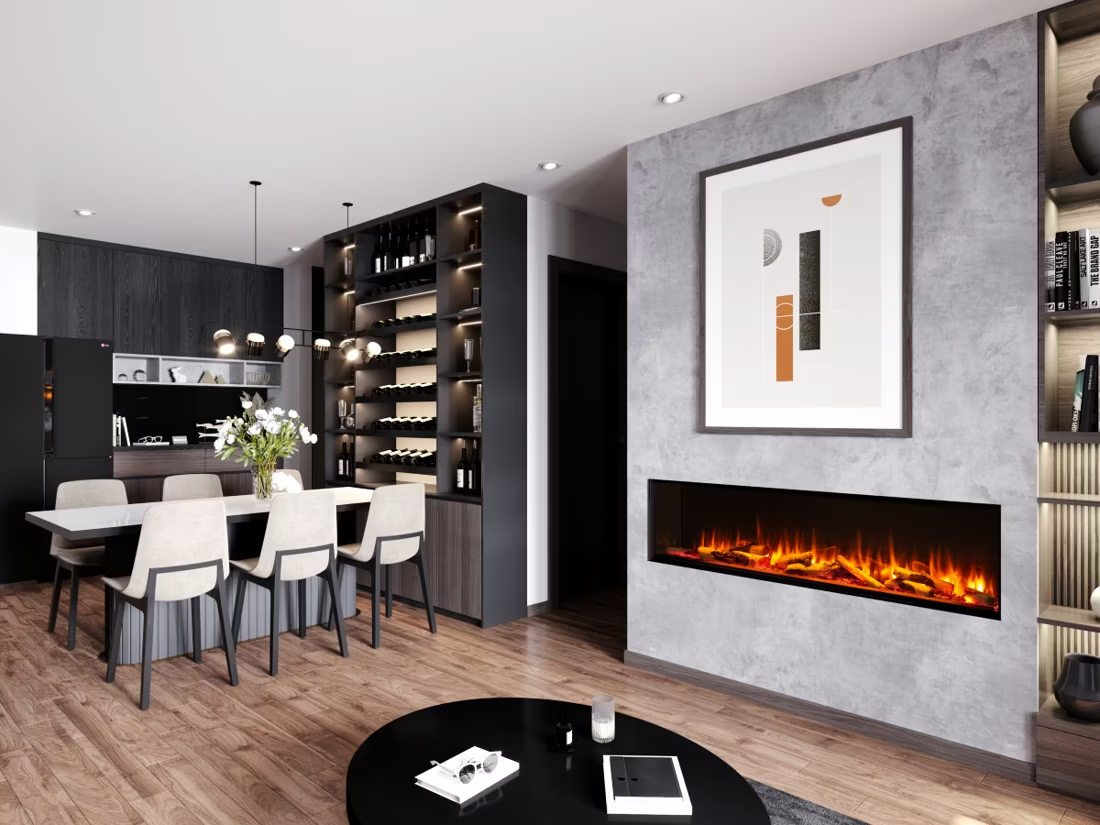
An electric insert is built to slide into an existing masonry or zero-clearance firebox opening—a common upgrade if a College Station home has an old, rarely-used wood-burning fireplace shell. A wall-mount unit hangs flush against drywall like a flat-screen TV, popular in newer condos and apartments near Northgate and the Wellborn corridor where floor space is tight. A mantel package pairs an electric firebox with a surrounding mantel and hearth for a more traditional living-room focal point in single-family homes. All three plug into standard outlets in most cases, with larger built-in models sometimes needing a dedicated 20-amp circuit.
Do I need a permit to install an electric fireplace in College Station?
A plug-in electric fireplace that uses an existing outlet doesn't require a permit. If your installation needs a new dedicated circuit or any panel work, that electrical work falls under the City of College Station's Building Development Services permitting for homes inside city limits, or Brazos County's permitting office for homes outside city limits. Most licensed electricians who install these units pull the permit as part of the job, so it's rarely something you have to manage yourself.
Are electric fireplaces a good fit for rentals and apartments near Texas A&M?
Yes—this is one of the strongest use cases in College Station given how much of the local housing stock is rental property, student apartments, and condos. Electric units have no open flame, no venting, and no combustion byproducts, which means most landlords and HOAs approve them where a gas or wood-burning appliance would be a nonstarter. Freestanding and wall-mount models are also portable enough to take with you when a lease ends, which matters in a market with as much annual student turnover as College Station's.
What does it cost to run an electric fireplace day to day?
A typical 1,500-watt electric fireplace running on its heat setting for five hours costs about $1.02 to $1.18 depending on whether you're served by Entergy Texas, Mid-South Electric Cooperative Association, or Navasota Valley Electric Cooperative—the three providers covering College Station's zip codes. Running it on flame-only mode with the heater off draws closer to 50 to 100 watts, which costs pennies a day. Given how few genuinely cold days College Station sees each winter, most owners run these units far more for ambiance on flame-only mode than for heat.
Why not just install a wood-burning fireplace instead?
Wood heat isn't really practical here. Brazos County has plenty of oak, pecan, and mesquite growing locally, but with only 1,545 heating degree days a year and winter lows averaging 41°F, there's little need for the kind of sustained wood heat that makes sense in a place like Duluth, MN. Most newer College Station homes also don't have masonry chimneys to retrofit, and running a wood-burning appliance in student housing or a rental isn't something most property owners want to insure or maintain. Electric delivers the fireplace look and occasional supplemental warmth without the chimney, the ash, or the liability.
Can I put a TV above my fireplace?
Yes—with an asterisk. Fireplaces are hot and TVs don't like heat. Either put a mantel between them to deflect rising warmth, or choose a fireplace with heat-management technology that creates a cool zone on the wall above—the wall stays around 125 degrees, barely warm, while the room still gets full heat. If you like clean lines and don't want a mantel, heat management is the answer.
Do electric fireplaces actually produce heat?
Yes—most put out around 4,800–5,000 BTUs from a standard outlet, which comfortably warms a bedroom, office, or den as a comfort-zone heater. What they won't do is carry a whole house the way wood, gas, or pellet can. Think of electric as ambiance-first with honest supplemental heat: flames on with no heat in July, flames plus warmth in January.
What is an in-home preview and do I need one?
It's a visit where a hearth professional measures your space, confirms the model you picked actually works in your home, and walks the specs—framing, gas line, venting, finish work—before anything is ordered. Some details you just can't know until you see the house. Never make a down payment without one; it's the single most-skipped step that burns buyers.
Can I install a fireplace myself?
If you're putting a fire in your house on purpose, it's best to work with an expert. Unless you're genuinely experienced in framing, gas line, vent pipe, and the national code on clearances to combustibles, have a professional do it—and ideally the same company that sells you the fireplace, so warranty, service, and liability all live under one roof.
Nearby Dealers
Hearth shops serving College Station and the surrounding area. Every listing shows whether it is a WhyFire partner, a dealer we have verified as authorized for the brands we recommend, or a local business carrying hearth products. No manufacturer pays for placement. How we verify dealers →
Lyne Home Products
Aaa Overhead Door Company
Electric Service in College Station
An electric fireplace's heater draws about 1,500 watts—pennies per hour at local rates.
Entergy Texas Inc.
Navasota Valley Elec Coop, Inc
Mid-South Electric Coop Assn
Find your electric fireplace in College Station.
Tell us a bit about your home and we'll match you with the right electric fireplace, insert, or wall unit—and connect you with a trusted local dealer who can size the circuit and handle the install.
Find Your Fireplace →