
Electric fireplace heat, built for Brazos Valley's mild winters.
From College Station apartments near Texas A&M to established neighborhoods in Bryan, electric fireplaces deliver ambiance and zone warmth without a chimney or gas line. Find the right unit and connect with a trusted local dealer.
Every Project Starts From One of These Five Situations
The easiest heat upgrade for a mild, humid-subtropical climate.
Brazos County sits in climate zone 2A with an average winter low around 41 degrees and a light overall heating load a year—a fraction of what a genuinely cold-climate city like Fargo, ND racks up. With winters this mild, most Bryan and College Station homes lean on central HVAC or a heat pump for the handful of truly cold nights, and a fireplace becomes more about atmosphere and supplemental warmth in one room than survival heat. That's exactly the niche electric fireplaces fill well.
Brazos County's housing stock skews young thanks to Texas A&M—a huge share of College Station units are apartments, rental houses, and student housing where landlords and property managers favor plug-in electric inserts precisely because they require no venting, no gas line, and usually no permit. Bryan and College Station's building departments still require an electrical permit for hardwired built-ins, but a freestanding or wall-mount plug-in unit is often as simple as finding an outlet. And because Brazos County occasionally sees hard freezes—the February 2021 winter storm knocked out power across much of Texas—it's worth knowing upfront that an electric fireplace, unlike a wood stove, won't provide heat if the grid goes down. For most winters here, that trade-off is a non-issue.
Three steps. No salesperson until you're ready.
Tell us about your project
Your zip code, your situation, and the fuel you're leaning toward—or let the answers point you to one.
See what's actually available
The brands dealers within 100 miles genuinely carry—real options, never a catalog mirage.
Get your dealer & Project Guide
A trusted local dealer, plus the free Project Guide & Parts List that names every component of the job.
Frequently Asked Questions
How much does an electric fireplace installation cost in Brazos County?
Electric fireplaces have one of the widest price ranges of any hearth product because installation complexity varies so much. A basic freestanding or plug-in insert can start around $300 to $600 installed, since it just needs an outlet. A wall-mounted unit with a licensed electrician running a dedicated circuit typically lands between $800 and $2,000. Built-in electric fireplaces with custom mantels, cabinetry, or a media wall surround in a Bryan or College Station home can run $2,500 to $4,500 or more once carpentry and finish work are included. A local dealer can give you a firm number after seeing your space and whether you want a plug-in or hardwired unit.
How much heat does an electric fireplace actually put out?
Most electric fireplaces are built around a standard 1,500-watt heating element on a 120-volt circuit, which works out to roughly 5,000 BTU—enough to noticeably warm a single room, but not a whole house. In a climate like Brazos County's, where the average winter low is around 41 degrees and true cold snaps are the exception rather than the rule, that's usually plenty. Homeowners looking for whole-home backup heat during a hard freeze are typically better served by a gas unit or a heat pump upgrade; electric is the right call when the goal is comfortable zone heat in a living room, bedroom, or den plus year-round flame ambiance.
Do I need an electrician to install an electric fireplace?
It depends on the unit. A plug-in freestanding or insert-style electric fireplace just needs a standard outlet—no electrician required, and many homeowners install these themselves. A wall-mounted or built-in unit that needs a dedicated circuit, in-wall wiring, or connects to a media wall generally calls for a licensed electrician, both for safety and because Bryan and College Station require an electrical permit for that kind of hardwired work. Hearth dealers serving Brazos County typically coordinate the electrician as part of a built-in installation, which is worth it if you're doing custom cabinetry or a mantel surround.
What's the difference between an electric fireplace, insert, and wall-mount unit?
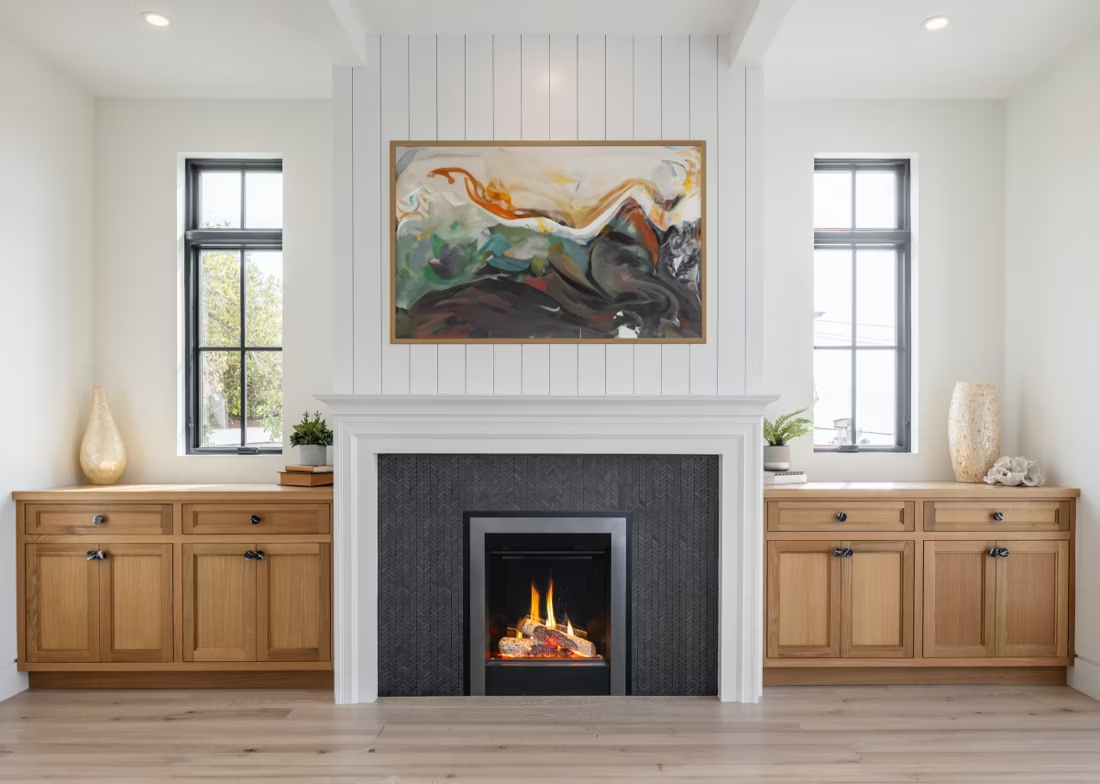
A freestanding electric fireplace looks like a stove or mantel package and can go almost anywhere with an outlet nearby—a popular choice for College Station rentals since it requires zero modification to the home. An electric insert is sized to slide into an existing wood or gas fireplace opening, instantly converting a dead or unused masonry fireplace into working ambiance and supplemental heat. A wall-mount unit hangs flush on the wall like a flat-screen TV and is usually the choice for a media wall or a modern remodel in newer College Station and Bryan construction. All three run off standard household power—the difference is really about how you want the unit to look and fit your space.
Do I need a permit to install an electric fireplace in Brazos County?
A plug-in unit that draws power from an existing outlet typically doesn't require a permit anywhere in Brazos County. If you're having a hardwired unit installed—a dedicated circuit for a wall-mount, or wiring inside new cabinetry—that electrical work falls under the building permit process through the City of Bryan or the City of College Station, depending on where the home sits; unincorporated parts of the county go through Brazos County's building department. Most licensed electricians and hearth dealers pull that permit as part of the job, so it's rarely something a homeowner has to manage directly.
What's the best electric fireplace for a Brazos County home?
Since heat output matters less here than in a genuinely cold climate, prioritize flame realism and controls over raw BTUs. Brands like Dimplex and Napoleon make units with layered flame effects and LED ember beds that look convincing even with the heater switched off—useful in a Texas climate where you'll want the flame running through the summer without adding heat to the room. Look for a unit with an independent flame/heat switch so you can enjoy the visual year-round and only run the heater on the occasional 30-degree night. For built-ins going into a media wall or existing fireplace opening, a local dealer can match the insert size to your opening or framing.
How much maintenance does an electric fireplace need?
Very little—this is one of the biggest advantages over wood or gas. There's no chimney to sweep, no gas line to inspect, and no combustion byproducts to vent. Basic upkeep is dusting the unit, occasionally wiping the glass front, and eventually replacing the LED flame bulbs, which on most modern units are rated for 20,000+ hours of use—often a decade or more of typical evening use before they need attention. There's no annual inspection requirement the way there is for wood stoves or gas fireplaces in Brazos County.
Can renters install an electric fireplace in a College Station or Bryan apartment?
Yes, and it's one of the more common reasons electric fireplaces sell well in Brazos County given how much of the local housing stock serves Texas A&M students and staff. A freestanding or plug-in insert requires no permanent modification, no venting, and no permit—you plug it in, and it comes with you when the lease ends. Wall-mounted units are also renter-friendly if you skip the hardwired circuit and use a plug-in model instead, though you'll want to check with a landlord before mounting anything to drywall. This is generally the easiest fireplace option for apartment living in Bryan or College Station.
Electric vs. gas fireplace—which is right for my Brazos County home?
Gas fireplaces put out real, substantial heat and are the better choice if you want a fireplace that can meaningfully back up your heating system during a hard freeze like the one Texas saw in February 2021—though gas requires a gas line, venting, and permitting through Bryan or College Station's building departments. Electric fireplaces are simpler, cheaper to install, and require no venting or gas work at all, but they max out around 5,000 BTU and won't run without grid power. For most Brazos County homes, where winters are mild and a fireplace is mainly about ambiance and occasional supplemental warmth, electric is often the more practical and lower-cost choice. For homes prioritizing real backup heat, gas is worth the extra installation complexity.
Do electric fireplaces actually produce heat?
Yes—most put out around 4,800–5,000 BTUs from a standard outlet, which comfortably warms a bedroom, office, or den as a comfort-zone heater. What they won't do is carry a whole house the way wood, gas, or pellet can. Think of electric as ambiance-first with honest supplemental heat: flames on with no heat in July, flames plus warmth in January.
Can I put a TV above my fireplace?
Yes—with an asterisk. Fireplaces are hot and TVs don't like heat. Either put a mantel between them to deflect rising warmth, or choose a fireplace with heat-management technology that creates a cool zone on the wall above—the wall stays around 125 degrees, barely warm, while the room still gets full heat. If you like clean lines and don't want a mantel, heat management is the answer.
What is an in-home preview and do I need one?
It's a visit where a hearth professional measures your space, confirms the model you picked actually works in your home, and walks the specs—framing, gas line, venting, finish work—before anything is ordered. Some details you just can't know until you see the house. Never make a down payment without one; it's the single most-skipped step that burns buyers.
Does a fireplace add value to my home?
On average, a fireplace adds back to the home about the same amount you spent installing it. Add the monthly savings from heating the rooms you actually use instead of the whole house—often hundreds of dollars a year—and the value case is strong before you even count what a fire does for how your family uses the room.
Stove and Fireplace Dealers in Brazos County
Listings include WhyFire partner dealers, dealers we have verified as authorized for the brands we recommend, and established local businesses that carry hearth products. Every listing shows which one it is. The ones marked Preferred run on WhyFire's software, so they can show you real pricing and book your appointment right here. No manufacturer pays for placement. How we verify dealers →
Aaa Overhead Door Company
Lyne Home Products
Find your electric fireplace in Brazos County.
Tell us a bit about your home and we'll match you with the right electric fireplace, insert, or wall-mount unit—plus a free Project Guide & Parts List and a trusted local dealer serving Bryan and College Station.dev_extra_ignore_placeholder
Find Your Fireplace →