
Warm up Coke County without a chimney or a gas line.
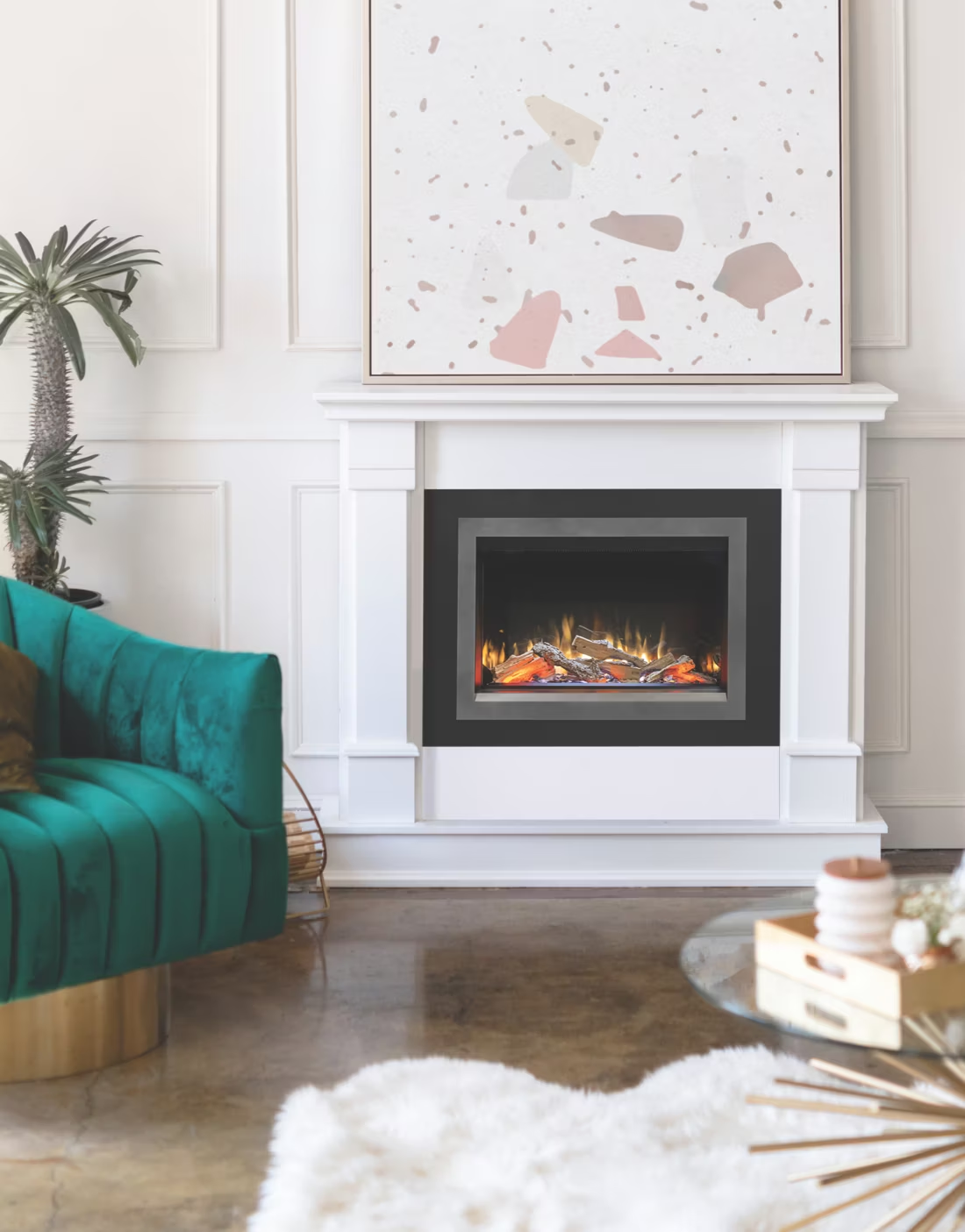
From Robert Lee to Bronte, Coke County's mild West Texas winters rarely call for a full wood or gas heating system. An electric fireplace adds real ambiance and supplemental warmth without venting, without a flue, and without waiting on propane delivery. Find the right unit and get matched with a trusted local dealer.
Every Project Starts From One of These Five Situations
The simplest way to add a fire to a ranch-country home.
Coke County sits in the Concho Valley region of West Texas, climate zone 3B—hot summers, short and generally mild winters, with cold fronts that can drop overnight lows into the 20s but rarely hold there for long. With roughly 2,100 residents spread across Robert Lee, Bronte, and a lot of open ranchland in between, most households here run central HVAC for cooling and only need supplemental heat for a handful of cold nights a year. That's exactly the situation an electric fireplace is built for.
Natural gas service is thin to nonexistent across most of unincorporated Coke County, and propane means a tank and a delivery schedule. Electric sidesteps both. Much of the county is served by rural electric cooperatives, and a plug-in or hardwired electric insert simply taps into existing household power—no chimney, no gas line trenching, no roof penetration. That makes electric a natural fit for the manufactured and modular homes common in ranching communities here, where retrofitting a vented wood or gas unit into an existing wall is often more work than the homeowner wants.
Three steps. No salesperson until you're ready.
Tell us about your project
Your zip code, your situation, and the fuel you're leaning toward—or let the answers point you to one.
See what's actually available
The brands dealers within 100 miles genuinely carry—real options, never a catalog mirage.
Get your dealer & Project Guide
A trusted local dealer, plus the free Project Guide & Parts List that names every component of the job.
Frequently Asked Questions
How much does an electric fireplace installation cost in Coke County?
A plug-in electric insert or mantel unit typically runs $200 to $800 for the unit itself, with little to no installation cost beyond mounting since it plugs into a standard outlet. A built-in electric fireplace or a unit that needs a dedicated 240V circuit runs higher—generally $1,200 to $3,000 once an electrician is involved, and older ranch homes in Coke County with dated panels sometimes need a panel upgrade to support the new circuit. Local dealers will confirm your home's electrical capacity before recommending a specific model.
Do I need a permit for an electric fireplace in Coke County?
Usually not for a plug-in unit—it's treated like any other appliance on an existing outlet. If you're installing a built-in electric fireplace that requires new wiring or a dedicated circuit, that electrical work typically needs a permit and inspection through Coke County. Most licensed electricians handling that kind of install will pull the permit as part of the job, so it's worth asking upfront rather than assuming.
What size electric fireplace do I need for my home?
Most electric fireplaces are sized for a single room rather than whole-home heating—a standard unit puts out around 4,600 to 5,000 BTU (roughly 1,500 watts), enough to comfortably warm a living room or den in the 300 to 400 square foot range. Given Coke County's short, mild heating season, that's usually plenty even as a home's main supplemental heat source. For larger open floor plans common in newer ranch-style builds, a dealer may recommend two zones or a larger built-in unit rather than a single small insert.
Will an electric fireplace work during a power outage?
No—electric fireplaces need grid power to run, which is worth thinking through given West Texas's exposure to winter grid strain, as many Coke County residents remember from the February 2021 statewide freeze. If backup heat during an outage matters to you, some homeowners here pair an electric fireplace for everyday convenience with a small wood stove or fireplace for true grid-down heat, since oak, pecan, and mesquite are all locally available for burning. A local dealer can talk through that combination if resilience is a priority for your household.
What's the difference between an electric insert, a mantel package, and a wall-mounted unit?
An electric insert is built to slide into an existing fireplace opening—a good option if you have an old masonry fireplace you want to modernize without the cost of a gas or wood conversion. A mantel package pairs a freestanding electric firebox with a surrounding cabinet, useful where there's no existing fireplace opening at all. A wall-mounted unit hangs like a large flat panel, popular in newer or remodeled living rooms where floor space is limited. For most Coke County homes with an existing hearth, an insert is the straightforward upgrade; for new construction or additions, mantel and wall-mount options are more common.
Is an electric fireplace just for looks, or does it actually put out heat?
Most electric fireplaces genuinely heat a room—the flame effect is separate from the heater, so you can run the visual flame with the heat off in warmer months, which matters given how hot Coke County summers run. On heat mode, expect a real, noticeable temperature bump in the room it's installed in, comparable to a space heater. It won't replace central heat for the whole house, but for the occasional cold front that pushes overnight lows into the 20s, it's usually enough to keep the main living space comfortable.
Electric vs. wood—which makes more sense in Coke County?
Wood heat has real roots here—oak, pecan, and mesquite are all common locally, and a wood stove or fireplace provides genuine off-grid backup heat during outages. But Coke County's mild winter climate means most households don't need a full-time wood heating system, and wood requires chimney maintenance, ash cleanup, and a fuel supply. Electric skips all of that: no venting, no permits in most cases, no combustion byproducts, and instant on-off control. For a household that mainly wants ambiance and light supplemental warmth without the upkeep, electric is usually the simpler answer; for households prioritizing self-sufficiency during grid outages, wood still has an edge.
Can an electric fireplace go in a manufactured or modular home?
Yes—and it's often the best option for exactly that housing type, which is common throughout Coke County's ranch communities. Manufactured homes typically can't support the roof penetrations and clearance requirements that vented wood or gas units need, but an electric insert or wall-mounted unit installs with no venting at all, just standard household wiring. Confirm the home's electrical panel has available capacity before choosing a built-in model, since older manufactured homes sometimes run tighter panels than site-built houses.
Electric vs. pellet stove—which is right for my home?
Pellet stoves burn compressed wood pellets—brands like Forest Energy and Lignetics are available regionally—and offer a real, efficient flame with automated feed, but they still require venting, an electrical connection to run the auger and blower, and a steady fuel supply you have to buy and store. Electric fireplaces need only a power source, no venting, and no fuel handling at all. Given Coke County's mild winters, most households don't need the heat output a pellet stove is built for, which makes electric the lower-maintenance choice for ambiance and light supplemental heat. Pellet stoves make more sense for a household that wants a stronger, sustained heat source and doesn't mind managing bags of pellets.
Can I put a TV above my fireplace?
Yes—with an asterisk. Fireplaces are hot and TVs don't like heat. Either put a mantel between them to deflect rising warmth, or choose a fireplace with heat-management technology that creates a cool zone on the wall above—the wall stays around 125 degrees, barely warm, while the room still gets full heat. If you like clean lines and don't want a mantel, heat management is the answer.
Do electric fireplaces actually produce heat?
Yes—most put out around 4,800–5,000 BTUs from a standard outlet, which comfortably warms a bedroom, office, or den as a comfort-zone heater. What they won't do is carry a whole house the way wood, gas, or pellet can. Think of electric as ambiance-first with honest supplemental heat: flames on with no heat in July, flames plus warmth in January.
Can a fireplace actually lower my heating bill?
Yes—by creating a comfort zone. A furnace heats every square foot of the house just to warm the one room you're in; a gas fireplace on low burns roughly a sixth of the gas a typical furnace does. Set the furnace around 55–60 degrees as a baseline, then heat the rooms your family actually uses. Families who heat this way commonly save $20–$60 a month.
Does a fireplace add value to my home?
On average, a fireplace adds back to the home about the same amount you spent installing it. Add the monthly savings from heating the rooms you actually use instead of the whole house—often hundreds of dollars a year—and the value case is strong before you even count what a fire does for how your family uses the room.
Stove and Fireplace Dealers in Coke County
Listings include WhyFire partner dealers, dealers we have verified as authorized for the brands we recommend, and established local businesses that carry hearth products. Every listing shows which one it is. The ones marked Preferred run on WhyFire's software, so they can show you real pricing and book your appointment right here. No manufacturer pays for placement. How we verify dealers →
Area – San Angelo, Tx
Unlimited Air
Find your electric fireplace in Coke County.
Tell us a bit about your home and we'll match you with the right electric fireplace or insert—plus a free Project Guide & Parts List and a trusted local dealer to install it.
Find Your Fireplace →