
Heating Solutions for Every Corner of Coke County.
Wood, gas, pellet, and electric fireplace resources for Robert Lee, Bronte, and the ranch country in between. Get matched with a trusted local hearth dealer who knows what actually works in West Texas winters.
Every Project Starts From One of These Five Situations
Mild winters, sudden freezes: heating in Coke County, Texas.
Coke County sits in the Concho Valley of West Texas, home to about 2,100 residents spread across ranch and farm country around Robert Lee, the county seat on the E.V. Spence Reservoir. Climate zone 3B here means winters are generally mild—most days stay above freezing—but the county isn't immune to the Arctic blue northers that sweep down from the Panhandle and drop temperatures into the single digits, as they did during the February 2021 freeze. Ranch families have long relied on oak, pecan, and mesquite cut from their own land—mesquite burns hot and fast for a quick evening fire, oak holds coals through a long overnight cold snap, and pecan gives a milder, slower burn that's easy to manage in a wood stove or open fireplace.
This hub rolls up hearth retailers, service technicians, and fuel suppliers serving every community in the county—Robert Lee, Bronte, and the smaller crossroads of Silver, Tennyson, Sanco, and Edith. Because Coke County is small and rural, most full-service hearth retailers are actually based 25 to 40 miles away in San Angelo (Tom Green County) and travel into the county for consultations and installs—we've noted that below wherever it applies. Pick your fuel to see local dealers, typical installation costs, and the resources that fit a Coke County ranch house, ranchette, or lake place on the Spence.
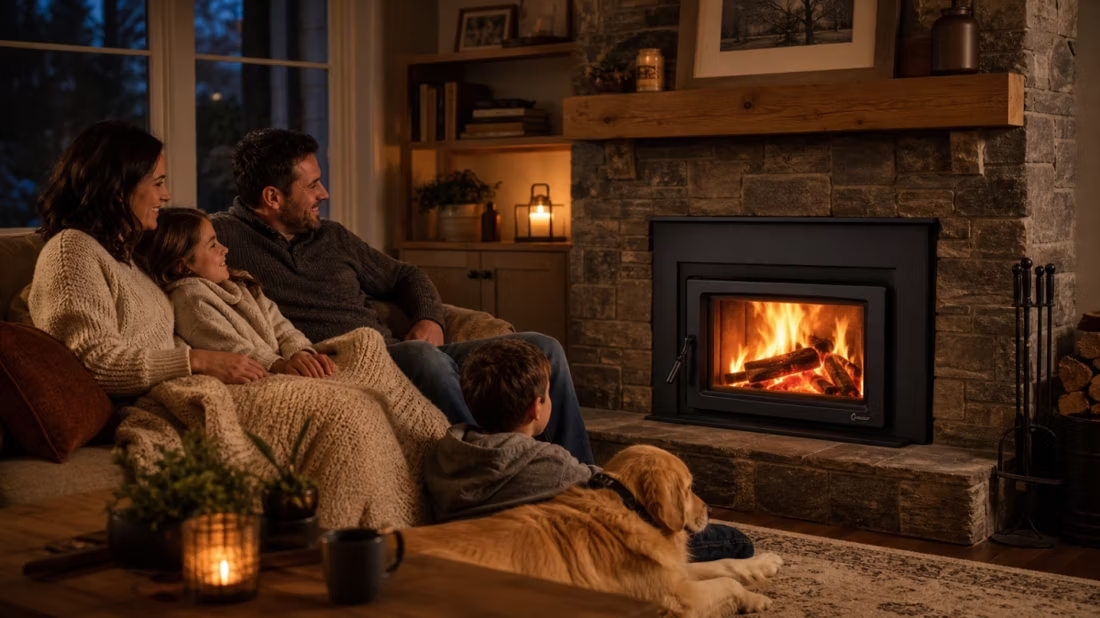
Four fuels. One honest answer for Coke County.
Three steps. No salesperson until you're ready.
Tell us about your project
Your zip code, your situation, and the fuel you're leaning toward—or let the answers point you to one.
See what's actually available
The brands dealers within 100 miles genuinely carry—real options, never a catalog mirage.
Get your dealer & Project Guide
A trusted local dealer, plus the free Project Guide & Parts List that names every component of the job.
Frequently Asked Questions
Which fuel works best for a home in Coke County?
It depends on how your property is set up. Wood is the traditional choice on Coke County ranches—most families already have oak, pecan, or mesquite on hand from clearing or storm-downed trees, and a good wood stove will get a ranch house through a blue norther even if the power goes out. Gas is usually propane out here rather than piped natural gas, since gas line infrastructure is thin outside Robert Lee and Bronte—a propane fireplace or insert gives you instant, thermostat-controlled heat without hauling wood. Pellet stoves work fine mechanically, but bag supply is the real constraint: you'll likely be ordering Forest Energy or Lignetics pellets through a San Angelo dealer and stocking up rather than picking bags up locally on short notice. Electric fireplaces are a reasonable supplemental option given how mild most winters run in zone 3B—they're popular for guest rooms and lake houses on the Spence Reservoir where you don't need a primary heat source, just ambiance and a little extra warmth.
Do I need a permit to install a fireplace or stove in Coke County?
It depends on whether you're inside city limits. Robert Lee and Bronte both require building permits for wood stove, insert, and gas fireplace installations within city limits, along with a separate permit for any new gas line work. Outside those city limits—which is most of Coke County—Texas counties generally don't have the authority to enforce residential building codes, so a stove or fireplace install on unincorporated ranch land typically doesn't require a county permit. That said, gas connections should still be done by a licensed propane technician to code, and most homeowner's insurance policies expect a certified, professionally installed unit regardless of whether a permit was pulled—worth confirming with your carrier before you install.
Are there any air quality or burning restrictions in Coke County?
Coke County has no ozone non-attainment designation and no winter wood-smoke advisories like the inversion-prone basins you'll find in parts of the Mountain West—indoor wood stoves and fireplaces can operate without the seasonal curtailment periods some other counties impose. The one restriction to know about is outdoor burning: during dry stretches, which are common in this part of West Texas, the county judge can issue an outdoor burn ban covering brush piles, debris, and agricultural burning. That ban doesn't apply to a properly installed indoor wood stove or fireplace, only to open outdoor fires.
Can one local dealer handle wood, gas, pellet, and electric in Coke County?
Most likely, yes, but that dealer probably isn't based in Coke County itself—with a population around 2,100, the county doesn't support a standalone hearth showroom. The full-service retailers that cover Robert Lee and Bronte are based in San Angelo, about 30 to 40 minutes east, and most of them carry all four fuel types along with working showroom displays. That's actually an advantage if you're undecided: you can compare a wood stove, a propane insert, and a pellet unit side by side before deciding what fits your ranch house or lake place.
How does installation and service work if I'm out on a ranch road, not in Robert Lee or Bronte?
Technicians serving Coke County are used to rural routes—most trips out from San Angelo cover long stretches of county road to reach ranch headquarters and lake properties around the Spence Reservoir. Expect a modest trip fee for anything outside Robert Lee or Bronte proper, and plan ahead: booking chimney sweeps and pellet stove service in late summer, before dove and deer season traffic picks up on the ranch roads, is easier than trying to get someone out during the first cold snap in November.
What does fireplace installation typically cost across fuel types in Coke County?
Wood stove or insert: roughly $4,000–$8,500 installed, depending on chimney condition and whether you're running new stovepipe through an existing ranch-house fireplace. Propane fireplace, insert, or stove: about $4,000–$9,500, with cost driven mostly by whether you already have a propane tank and line run to the room or need new supply piping. Pellet stove or insert: typically $4,000–$7,000, plus factoring in that you'll likely be buying pellets by the pallet from a San Angelo supplier rather than picking up individual bags nearby. Electric fireplace: $200–$2,500 for the unit itself, with $300–$1,000 in labor for anything beyond a simple plug-in install. A local dealer can give you an exact number once they've seen your chimney, gas access, or wall setup.
How much should I budget for a fireplace?
For an average home—covering the fireplace, the vent pipe, and basic installation—a budget between $3,900 and $5,500 gives you a lot of options across wood, gas, and pellet. By the time you add finish work, gas line, and electrical, the average complete installation lands between $5,000 and $12,000 all-in. In a remodel or new build, a good rule is to put about 2.5% of the total project cost toward the fireplace.
What is an in-home preview and do I need one?
It's a visit where a hearth professional measures your space, confirms the model you picked actually works in your home, and walks the specs—framing, gas line, venting, finish work—before anything is ordered. Some details you just can't know until you see the house. Never make a down payment without one; it's the single most-skipped step that burns buyers.
What are the biggest mistakes people make buying a fireplace?
Five come up constantly: budgeting for the unit but not the full job (vent, gas line, electrical, finish work); drowning in options instead of starting from style and fuel; buying without an in-home preview; handing installation to a handyman instead of a pro; and giving up out of sheer indecision. Every one is avoidable with a clear plan—step one, step two, step three.
Can a fireplace actually lower my heating bill?
Yes—by creating a comfort zone. A furnace heats every square foot of the house just to warm the one room you're in; a gas fireplace on low burns roughly a sixth of the gas a typical furnace does. Set the furnace around 55–60 degrees as a baseline, then heat the rooms your family actually uses. Families who heat this way commonly save $20–$60 a month.
Stove and Fireplace Dealers in Coke County
Listings include WhyFire partner dealers, dealers we have verified as authorized for the brands we recommend, and established local businesses that carry hearth products. Every listing shows which one it is. The ones marked Preferred run on WhyFire's software, so they can show you real pricing and book your appointment right here. No manufacturer pays for placement. How we verify dealers →
Area – San Angelo, Tx
Unlimited Air
Find your fireplace in Coke County.
Tell us your fuel and your Coke County address, and we'll match you with a trusted local dealer and send over a free Project Guide & Parts List—the exact parts, including the vent kit, for your specific home.
Find Your Fireplace →