
Find your pellet stove in Cherokee County.
Clean, low-maintenance heat for the Piney Woods of East Texas—from Rusk and Jacksonville to Alto and the rural stretches between. Find the right unit and get matched with a trusted local dealer.
Every Project Starts From One of These Five Situations
Steady heat for East Texas's mild, unpredictable winters.
Cherokee County sits in the Piney Woods of East Texas, with the county seat of Rusk surrounded by Jacksonville, Alto, New Summerfield, and Wells across roughly 1,000 square miles of forest and farmland. Winters here are mild by national standards—average lows hover around 34 degrees, and the county logs about 2,300 heating degree days a year, a fraction of what a place like Duluth, Minnesota or Burlington, Vermont sees. That means most homes here don't need a heating system built to survive weeks of hard freeze; they need something that can knock the chill off a living room on a 40-degree morning and hold steady through the occasional ice event.
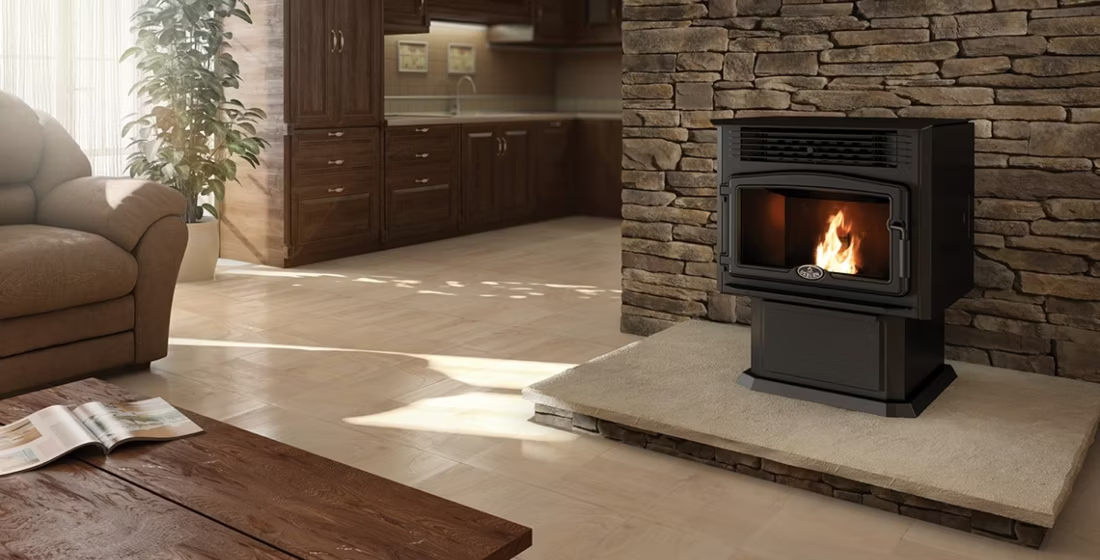
That's exactly where pellet stoves fit into Cherokee County life. Local hearth dealers stock bagged pellets from regional producers like Forest Energy and Lignetics, and a pellet stove or insert gives homeowners a cleaner, lower-fuss alternative to hauling and splitting the oak, pecan, and mesquite that grow throughout the county. You get a thermostat-controlled fire without stacking cordwood, and without the smoke and ash management that comes with an open wood-burning hearth. For most homes here, a pellet stove is supplemental heat for the den or living room rather than the sole source of warmth for the house—and that's a fine, practical fit for the climate.
Three steps. No salesperson until you're ready.
Tell us about your project
Your zip code, your situation, and the fuel you're leaning toward—or let the answers point you to one.
See what's actually available
The brands dealers within 100 miles genuinely carry—real options, never a catalog mirage.
Get your dealer & Project Guide
A trusted local dealer, plus the free Project Guide & Parts List that names every component of the job.
Frequently Asked Questions
How much does a pellet stove installation cost in Cherokee County?
Pellet stove and insert installations in Cherokee County typically run in the $3,000 to $6,500 range, depending on the unit, whether it's a freestanding stove or an insert going into an existing masonry fireplace, and the length of the vent run out an exterior wall. Because pellet stoves vent through a smaller-diameter pipe than wood stoves and don't require full masonry chimney work, installs are often quicker and less expensive than a wood stove of comparable heat output. Homes in Jacksonville or Rusk with an existing fireplace opening usually land on the lower end; new installs requiring wall penetration and electrical work for the hopper and blower run higher. A local dealer will quote a firm number after seeing your space.
What size pellet stove do I need for my Cherokee County home?
With winter lows averaging in the mid-30s and a relatively short heating season, most Cherokee County homeowners don't need a pellet stove sized to carry the whole house—a small-to-medium unit (rated for 1,000 to 1,800 square feet) is usually enough to comfortably heat a main living area or den, with central HVAC handling the rest of the house. If you're in an older, less-insulated farmhouse outside Rusk or Alto, or you want the pellet stove to genuinely replace propane or electric heat in that room during cold snaps, size up slightly. A local dealer can walk through your square footage and insulation and recommend the right hopper capacity and BTU rating.
Where can I find certified pellet stove installers near me?
Look for installers with NFI (National Fireplace Institute) pellet-appliance certification—it signals training specific to hopper systems, auger feeds, and the exterior venting that pellet stoves use, which differs from wood stove chimney work. Local hearth dealers serving Cherokee County typically cover Rusk, Jacksonville, Alto, New Summerfield, and Wells, with a travel charge for more remote rural addresses. Since pellet stoves need a dedicated electrical outlet as well as proper venting, it's worth confirming your installer coordinates both the gas-appliance-style venting work and the electrical connection rather than leaving one to a separate contractor.
Pellet stove vs. wood stove—which makes more sense in Cherokee County?
Cherokee County sits in oak, pecan, and mesquite country, so self-cut or locally sourced firewood is genuinely cheap and plentiful if you've got land or a truck—that favors wood for homeowners who don't mind splitting and stacking. Pellet stoves trade that lower fuel cost for convenience: load the hopper, set the thermostat, and go days between refills, with far less ash and no chimney creosote to manage. Given how mild the winters run here, many homeowners lean pellet simply because they want occasional, easy supplemental heat rather than a wood-burning routine. The tradeoff is that pellet stoves need electricity to run the auger and blower, so they won't function as backup heat if the power's out—which matters here given occasional ice storms and remnant tropical systems that can knock out power for a day or two.
Do I need a permit to install a pellet stove in Cherokee County?
Most pellet stove installations require a building permit, and within city limits—Jacksonville, Rusk, or Alto—that permit is typically pulled through the city's building department; in unincorporated areas of the county, it runs through the Cherokee County Building Department. Because pellet stoves also draw electrical power for the hopper and blower, an electrical permit may be required alongside the mechanical permit if new wiring is involved. Most local dealers handle the permitting as part of the installation, so it's rarely something the homeowner has to manage directly.
What's the best pellet stove for Cherokee County's climate?
Because winters here are mild rather than brutally cold, extended overnight burn time matters less than it would in a northern climate—a mid-size hopper that gets you through an evening is usually plenty. What matters more locally is reliability during the occasional East Texas ice storm or tropical-remnant power outage, since a pellet stove won't run without electricity. If backup heat during outages is a priority, ask your local dealer about pairing the stove with a small battery backup or portable generator sized for the auger and blower load—a common setup for rural Cherokee County homes that lose power for a day or two a few times a year.
Where can I buy pellets in Cherokee County?
Regional brands like Forest Energy and Lignetics are the pellets most commonly stocked at farm and hardware stores serving Jacksonville and Rusk, typically sold in 40-pound bags running roughly $5 to $7 per bag depending on the season and supplier. Buying a full ton (usually 50 bags) ahead of the cold season, rather than picking up bags as needed, generally saves money and avoids the scramble that happens when a cold front is forecast. Your local hearth dealer can point you to the nearest stocked retailer and may offer seasonal pre-buy pricing directly.
How much maintenance does a pellet stove need?
Pellet stoves need the burn pot and ash pan cleaned every few days to weekly during regular use, and the glass wiped down as needed—far less involved than wood stove chimney maintenance. An annual professional service, ideally before the start of the heating season each fall, should include cleaning the exhaust venting, checking the auger motor and igniter, and inspecting the gaskets and seals. Because Cherokee County's heating season is short and mild, many homeowners here use their pellet stove intermittently rather than daily, which actually reduces overall maintenance frequency compared to a primary-heat household further north.
Pellet stove vs. gas fireplace—which is right for my home?
A gas fireplace gives you instant on-off heat at the flip of a switch or remote, with no fuel to store and no hopper to refill—a strong option if you already have natural gas or propane service to the house. A pellet stove trades that instant convenience for genuine radiant heat output and a real, visible fire, using bagged fuel you buy in bulk rather than a utility hookup. In Cherokee County, where propane is common in rural areas outside city gas service, the choice often comes down to whether you'd rather manage a fuel tank or a pellet hopper—both are low-maintenance compared to wood, and either works well as supplemental heat for a mild East Texas winter.
What's the difference between an insert and a zero-clearance fireplace?
An insert is a fireplace that slides into a pre-existing wood-burning fireplace—if you don't have one, there's nothing to insert it into. A zero-clearance fireplace is built into a framed wall, which makes it the answer for remodels and new construction. Simple test: existing masonry fireplace means insert; blank or framed wall means zero-clearance.
Why is my open fireplace making my house colder?
Open fireplaces suck—literally. As the fire burns, it consumes air your furnace already paid to heat and pulls it out through the chimney, so the house is actually colder after the fire goes out than before you lit it. An insert fixes this: it seals the chimney, puts fixed glass across the front, and turns that hole in your house into a real heat source.
Can a fireplace actually lower my heating bill?
Yes—by creating a comfort zone. A furnace heats every square foot of the house just to warm the one room you're in; a gas fireplace on low burns roughly a sixth of the gas a typical furnace does. Set the furnace around 55–60 degrees as a baseline, then heat the rooms your family actually uses. Families who heat this way commonly save $20–$60 a month.
Does a fireplace add value to my home?
On average, a fireplace adds back to the home about the same amount you spent installing it. Add the monthly savings from heating the rooms you actually use instead of the whole house—often hundreds of dollars a year—and the value case is strong before you even count what a fire does for how your family uses the room.
Stove and Fireplace Dealers in Cherokee County
Listings include WhyFire partner dealers, dealers we have verified as authorized for the brands we recommend, and established local businesses that carry hearth products. Every listing shows which one it is. The ones marked Preferred run on WhyFire's software, so they can show you real pricing and book your appointment right here. No manufacturer pays for placement. How we verify dealers →
East Texas Brick Co.
Tdi Air Conditioning
Fieldstone & Fireplaces
Pellet Brands Stocked Around Cherokee County
Manufacturers will point you to the nearest stocking dealer.
Get matched with a Cherokee County pellet stove dealer.
Tell us about your home and heating goals, and we'll match you with a trusted local dealer and send over a free Project Guide & Parts List—the exact parts, vent kit, and recommended installer for your pellet stove project.
Find Your Fireplace →