
Find the right electric fireplace for your Carson County home.
No gas line, no chimney, no permits to pull—just clean supplemental heat and ambiance for homes across Panhandle, White Deer, and Groom. We'll match you with a trusted local dealer who installs it right.
Every Project Starts From One of These Five Situations
Simple, flexible heat for a county without natural gas infrastructure in every neighborhood.
Carson County sits out on the Texas Panhandle, where winter lows average around 24°F and the county logs roughly 4,086 heating degree days a year—a real but moderate heating season, nothing like the deep-freeze totals of places such as Fargo, ND or Bismarck, ND, but enough that supplemental heat matters on the coldest January nights. Homes here range from ranch houses outside Panhandle to older brick construction in Groom and White Deer, and not every one of them has a fireplace, a chimney, or convenient gas access.
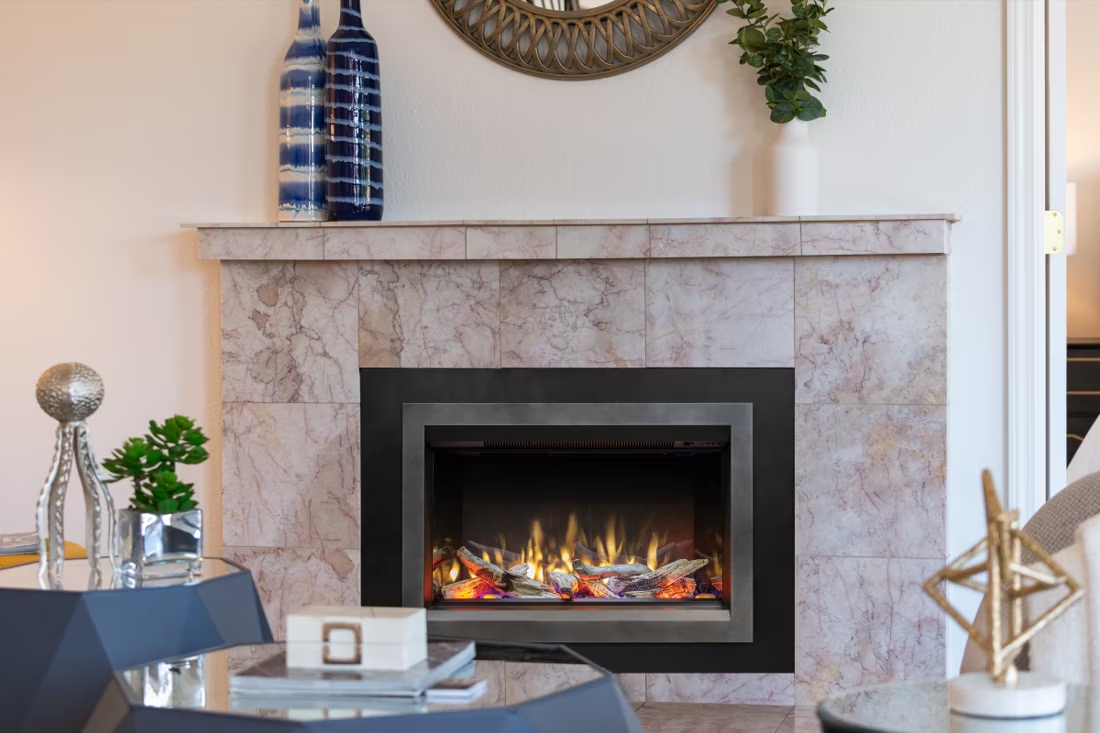
That's exactly where electric fireplaces and inserts fit in. There's no flue to inspect, no wood to split from the local oak, pecan, or mesquite stands, and no gas line permit to coordinate—just a unit that plugs in (or gets hardwired by an electrician for larger built-ins) and delivers instant, adjustable heat. For a county this size, with a population around 4,500 spread across small towns and rural acreage, electric is often the most practical way to add heat and ambiance to a bedroom, sunroom, or living area without the infrastructure commitment of wood or gas.
Three steps. No salesperson until you're ready.
Tell us about your project
Your zip code, your situation, and the fuel you're leaning toward—or let the answers point you to one.
See what's actually available
The brands dealers within 100 miles genuinely carry—real options, never a catalog mirage.
Get your dealer & Project Guide
A trusted local dealer, plus the free Project Guide & Parts List that names every component of the job.
Frequently Asked Questions
How much does an electric fireplace installation cost in Carson County?
Most electric fireplace and insert installations in Carson County run $400 to $1,200, and that range covers the vast majority of projects—a plug-in freestanding unit or a wall-mounted model needs almost nothing beyond the unit itself and a standard outlet. Larger built-in units or insert conversions into an existing masonry fireplace opening sometimes require a licensed electrician to run a dedicated 120V or 240V circuit, which adds to the cost but still keeps the total well below wood or gas installation figures. A local dealer can tell you within a few minutes of seeing your space whether you need new electrical work or not.
Do I need a permit to install an electric fireplace in Carson County?
For a plug-in electric fireplace or a simple wall-mounted unit, no permit is typically required—it's treated like any other appliance. If your project involves running a new dedicated circuit or doing a built-in insert conversion that requires electrical panel work, your electrician will pull the appropriate permit as part of that job. There's no equivalent to the building permits or EPA certification requirements that apply to wood stoves in this county—electric units sidestep that process almost entirely.
Will an electric fireplace actually heat my room, or is it just for looks?
Most electric inserts and fireplaces are rated for 400 to 1,500 square feet of supplemental heat, which covers a bedroom, den, or sunroom comfortably. In a Carson County winter, where lows average around 24°F rather than the sub-zero nights of a place like Duluth, MN, an electric unit set on a thermostat can genuinely take the edge off a chilly room and reduce reliance on central heat for that space. What it won't do is replace a furnace for a whole house—think of it as zone heating for the room you actually spend time in, with the flame effect as a bonus rather than the main event.
What's the difference between an electric fireplace and an electric insert?
A freestanding electric fireplace is a self-contained unit you place against a wall or in an entertainment center—no modification to the room required. An electric insert is sized to slide into an existing fireplace opening, whether that's a masonry firebox or a zero-clearance wood-burning unit that's no longer used. For Carson County homes with an old, rarely-used masonry fireplace, an insert is often the simplest upgrade: it fills the opening, plugs into a nearby outlet or gets hardwired, and turns a cold, drafty hole into a usable heat source without touching the chimney.
Can an electric fireplace run during a power outage?
No—electric fireplaces require power to operate, both for the heating element and the flame effect, so they go dark during an outage just like any other electric appliance. This is worth factoring into your decision if you're in a rural part of Carson County where outages can run longer during ice storms. Homeowners who want backup heat that works when the power is out typically pair an electric unit for everyday convenience with a wood stove or propane heater as a true emergency backup—ask a local dealer about that combination if outage resilience matters to you.
Are electric fireplaces cheaper to run than gas or wood?
It depends on how you use it. Electric units are generally cheap to purchase and install, but electricity is typically the most expensive way to generate heat per BTU compared to burning wood you cut yourself or running a propane unit. For occasional ambiance and light supplemental heat in a single room, the low upfront cost and simple operation of electric usually wins out over the higher cost per BTU. For homeowners planning to heat a larger area for hours every day through a Panhandle winter, wood or gas may end up more economical over the season—a local dealer can walk through the math based on your specific room and usage.
Do electric fireplaces need any maintenance?
Very little. There's no chimney to sweep and no annual gas line inspection required. Most maintenance is limited to occasionally dusting the heating element and vents, replacing an LED bulb in older flame-effect models, and checking that the unit's fan isn't clogged with dust—a five-minute job once or twice a year. This low-maintenance profile is one of the bigger appeals for Carson County homeowners who want fireplace ambiance without a service routine.
Can I install an electric fireplace myself, or do I need a professional?
A simple plug-in unit can usually be installed by a homeowner in an afternoon—set it in place, plug it in, mount it to the wall if it's a wall-hung model. Where you want a licensed electrician involved is any project that requires a new dedicated circuit, a hardwired connection for a built-in unit, or work inside an existing masonry firebox where clearances and existing wiring need to be checked. A local dealer can tell you which category your project falls into and connect you with someone qualified if electrical work is needed.
Electric vs. wood—which makes more sense for my Carson County home?
Wood remains a strong choice in this county—oak, pecan, and mesquite are all available locally, and a wood stove provides real heat output plus backup capability during power outages, which matters when Panhandle ice storms roll through. Electric wins on simplicity: no chimney, no wood handling, no permits, and a much lower installation cost, but it offers no heat when the power's out and costs more per BTU to run for extended heating. For a spare room, sunroom, or a home without an existing chimney, electric is often the practical answer. For a primary heat source or storm-outage backup, wood still has the edge. Plenty of Carson County homes end up with both.
Can I put a TV above my fireplace?
Yes—with an asterisk. Fireplaces are hot and TVs don't like heat. Either put a mantel between them to deflect rising warmth, or choose a fireplace with heat-management technology that creates a cool zone on the wall above—the wall stays around 125 degrees, barely warm, while the room still gets full heat. If you like clean lines and don't want a mantel, heat management is the answer.
How much does an electric fireplace cost to run?
With the heater on, a typical unit draws about 1,500 watts—at average electric rates that's roughly 20 cents an hour. Run the flame effect alone and it costs pennies; the flames are LED-driven and use about as much power as a light bulb. There's no pilot light, no fuel delivery, and essentially no maintenance.
Can a fireplace actually lower my heating bill?
Yes—by creating a comfort zone. A furnace heats every square foot of the house just to warm the one room you're in; a gas fireplace on low burns roughly a sixth of the gas a typical furnace does. Set the furnace around 55–60 degrees as a baseline, then heat the rooms your family actually uses. Families who heat this way commonly save $20–$60 a month.
Does a fireplace add value to my home?
On average, a fireplace adds back to the home about the same amount you spent installing it. Add the monthly savings from heating the rooms you actually use instead of the whole house—often hundreds of dollars a year—and the value case is strong before you even count what a fire does for how your family uses the room.
Stove and Fireplace Dealers in Carson County
Listings include WhyFire partner dealers, dealers we have verified as authorized for the brands we recommend, and established local businesses that carry hearth products. Every listing shows which one it is. The ones marked Preferred run on WhyFire's software, so they can show you real pricing and book your appointment right here. No manufacturer pays for placement. How we verify dealers →
West Texas Brick
Reid's Appliance Services
Panhandle Outdoor Living & Fireplaces
Boyd's Equipment
Get your Carson County electric fireplace Project Guide.
Tell us about your home and we'll match you with a trusted local dealer, plus send a free Project Guide & Parts List with the exact unit and parts recommended for your space.
Find Your Fireplace →