
Instant Warmth for Cool Hill Country Nights.
A propane or gas fireplace brings real heat and ambiance to Canyon Lake homes on the cool front evenings and rare hard freezes the Hill Country still gets. Find the right unit and connect with a trusted local dealer.
Every Project Starts From One of These Five Situations
Mild winters, real warmth when it counts.
Canyon Lake sits in Comal County's Texas Hill Country at just under 1,000 feet elevation, where winter lows average around 40°F and the area logs roughly 1,672 heating degree days a year—a fraction of what a place like Duluth, Minnesota sees in a single winter. Wood heat is essentially not a factor here: local oak, pecan, and mesquite are prized for grilling and smoking, not for stoking a stove overnight, and full wood-burning setups are rare around the lake. Gas is a different story. It's a genuinely standard choice for Canyon Lake homeowners who want real, on-demand heat for the handful of nights each winter that actually get cold, plus the reliability factor that matters most here: backup warmth when the power goes out.
Canyon Lake is unincorporated, and most of the area is served by Guadalupe Valley Electric Cooperative or Pedernales Electric Cooperative rather than a municipal gas utility—so propane, not piped natural gas, is the standard fuel for most fireplace installs here. Tanks are supplied by local propane companies and sized to the appliance. That setup pairs well with a direct-vent gas fireplace or insert: it lights instantly, doesn't depend on the grid the way a heat pump or electric fireplace does, and gives lake-house owners a reliable heat source during the ice storms and grid strain events that have hit Hill Country co-ops in recent winters.
Three steps. No salesperson until you're ready.
Tell us about your project
Your zip code, your situation, and the fuel you're leaning toward—or let the answers point you to one.
See what's actually available
The brands dealers within 100 miles genuinely carry—real options, never a catalog mirage.
Get your dealer & Project Guide
A trusted local dealer, plus the free Project Guide & Parts List that names every component of the job.
Frequently Asked Questions
How much does a gas fireplace installation cost in Canyon Lake?
Most propane or direct-vent gas fireplace installations around Canyon Lake run $3,500 to $9,000, depending on the unit, the venting path, and whether a new gas line or propane tank setup is needed. Homes with an existing propane tank and gas-ready plumbing land on the lower end. New propane tank installation, tank sizing for a larger appliance, or longer line runs from the tank to the fireplace can add $500 to $2,000. Because most of the area runs on propane rather than municipal natural gas, your local dealer will typically coordinate with a propane supplier as part of the install.
Does Canyon Lake have natural gas, or is it all propane?
Canyon Lake is unincorporated Comal County, and the area is served by electric cooperatives—Guadalupe Valley Electric Cooperative and Pedernales Electric Cooperative—rather than a citywide natural gas utility. That means propane is the standard fuel for the large majority of gas fireplace installs here, delivered and maintained by local propane suppliers with an above-ground or buried tank. Some newer developments closer to New Braunfels may have natural gas access, so it's worth confirming with your installer, but for most Canyon Lake addresses, plan on propane.
Do I need a permit to install a gas fireplace in Canyon Lake?
Yes—Comal County requires a building permit for new gas fireplace or insert installations, and any new gas line or propane line work needs to be run by a licensed gas-fitter. Most established local hearth dealers handle the permitting and coordinate the propane line work as part of the installation, so you're not left managing separate trades. If your home is within city limits of a nearby municipality rather than unincorporated Comal County, check with that city's building department, since requirements can differ slightly.
Will my gas fireplace still work if the power goes out?
It depends on the ignition system, and this matters more in Canyon Lake than in most places—Guadalupe Valley Electric Cooperative and Pedernales Electric Cooperative customers both saw multi-day outages during Winter Storm Uri in 2021. Fireplaces with IPI (intermittent pilot ignition) run on AA battery backup that kicks in automatically when grid power drops, so the unit lights and runs as normal off the batteries. Valor's gas fireplaces go a step further—the pilot's thermocouple generates its own electricity, so there's no battery to remember at all. For a lake home that might sit empty for stretches between visits, that's a real advantage worth asking your local dealer about.
What's the difference between a gas fireplace, gas insert, and gas stove?
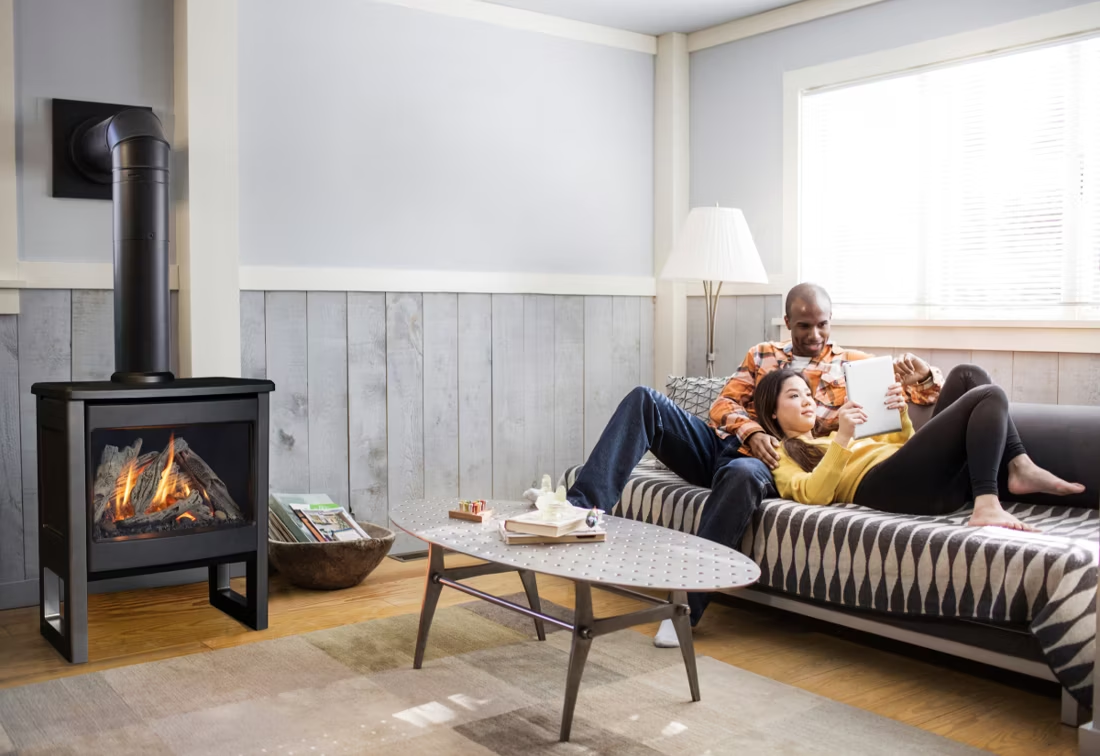
A gas fireplace is a fully built-in unit framed into a wall—the common choice for new lake-house construction or a full remodel. A gas insert drops into an existing masonry fireplace, which is common in older Canyon Lake homes with a stone hearth already in place, using the existing chimney as the vent path with a liner. A gas stove is a freestanding cabinet-style unit that sits on the floor and doesn't require an existing fireplace opening at all—a good option for a lake house den or bunk room without a chimney. Your local dealer can tell you which fits your existing structure without guesswork.
Should I get a vented or vent-free gas fireplace?
Vented (direct-vent) fireplaces draw combustion air from outside and exhaust it back outside through sealed venting—they're the most common and most universally recommended option, and they deliver real, sustained heat output. Vent-free units burn directly into the room without external venting; Texas permits them, but they come with strict room-size and ventilation requirements, and they're not a good fit for smaller rooms or bedrooms. For most Canyon Lake homes, especially larger great rooms common in lake properties, a direct-vent unit is the safer and more practical choice. Ask your local dealer to walk through both if you're weighing the tradeoff.
How often does a gas fireplace need servicing?
Plan on an annual inspection, ideally before the first cool front of the season. A technician checks the burner, pilot assembly, gas connections, and venting, and cleans the glass and interior. This is a much lighter lift than wood-stove chimney sweeping—most local gas service providers charge $150 to $250 for the visit—but it's worth keeping on schedule, especially for lake houses that sit unused for weeks at a time between visits.
Is a gas fireplace even worth it in a climate as mild as Canyon Lake's?
For a lot of homeowners here, yes—just not for the reason you'd expect in a colder state. With average winter lows around 40°F and only about 1,672 heating degree days a year, a gas fireplace in Canyon Lake isn't carrying the heating load the way it would in a place like Bozeman or Buffalo. Its value is in the handful of genuinely cold nights, the backup heat during grid outages tied to ERCOT strain and ice events, and the ambiance factor that matters a lot on a lake property built around evenings on the porch or in the great room. It's also a documented resale draw for Hill Country lake homes. If you're after primary heat, it's overkill; if you want reliable warmth for the nights that count and a strong focal point for the room, it's a solid fit.
Should I go with gas or a wood-burning fireplace in Canyon Lake?
For nearly all Canyon Lake homeowners, gas is the practical answer. Wood-burning setups are uncommon here—the mild Hill Country climate doesn't generate the demand for it, and local oak, pecan, and mesquite are far more likely to end up in a smoker than a wood stove. A small number of rural properties still keep a wood-burning fireplace for atmosphere or the occasional bonfire-style evening, but for actual heat performance, instant on-demand operation, and outage backup without hauling firewood, a propane or gas unit is the fit that matches how most people actually use a fireplace here.
What's the difference between an insert and a zero-clearance fireplace?
An insert is a fireplace that slides into a pre-existing wood-burning fireplace—if you don't have one, there's nothing to insert it into. A zero-clearance fireplace is built into a framed wall, which makes it the answer for remodels and new construction. Simple test: existing masonry fireplace means insert; blank or framed wall means zero-clearance.
Can I put a TV above my fireplace?
Yes—with an asterisk. Fireplaces are hot and TVs don't like heat. Either put a mantel between them to deflect rising warmth, or choose a fireplace with heat-management technology that creates a cool zone on the wall above—the wall stays around 125 degrees, barely warm, while the room still gets full heat. If you like clean lines and don't want a mantel, heat management is the answer.
Does a fireplace add value to my home?
On average, a fireplace adds back to the home about the same amount you spent installing it. Add the monthly savings from heating the rooms you actually use instead of the whole house—often hundreds of dollars a year—and the value case is strong before you even count what a fire does for how your family uses the room.
What is an in-home preview and do I need one?
It's a visit where a hearth professional measures your space, confirms the model you picked actually works in your home, and walks the specs—framing, gas line, venting, finish work—before anything is ordered. Some details you just can't know until you see the house. Never make a down payment without one; it's the single most-skipped step that burns buyers.
Nearby Dealers
Hearth shops serving Canyon Lake and the surrounding area.
Find your gas fireplace in Canyon Lake.
Tell us a bit about your home and we'll put together a free Project Guide & Parts List—the right gas or propane fireplace, the exact vent kit, and a trusted local Canyon Lake dealer to install it.
Find Your Fireplace →