
The warmth you want, without the wood pile or gas line.
Canyon Lake winters rarely demand a furnace-level fix. Find the right electric fireplace or insert for ambiance and easy supplemental heat, and connect with a trusted local dealer.
Every Project Starts From One of These Five Situations
A Hill Country lake town built for easy heat.
Canyon Lake sits at just under 1,000 feet in the Texas Hill Country along the Guadalupe River, where the average winter low hovers around 40°F and the area sees only a light, short heating season—a fraction of what a place like Duluth, MN or Bismarck, ND racks up in a single cold snap. Comal County simply doesn't demand the kind of heavy-duty heating infrastructure that colder climates do, which is exactly why electric fireplaces have found a real niche here.
Canyon Lake is also a community of lake houses, weekend cabins, and second homes as much as it is full-time residences, and electric units fit that pattern well: no chimney, no gas line, no permit hassle for a plug-in model, and instant ambiance for a property that might sit empty during the week. Local power comes through Guadalupe Valley Electric Cooperative and Pedernales Electric Cooperative, both running residential rates around 12.2 to 12.5 cents per kWh—cheap enough that running a fireplace insert on a chilly evening costs pocket change, not a heating bill spike.
Three steps. No salesperson until you're ready.
Tell us about your project
Your zip code, your situation, and the fuel you're leaning toward—or let the answers point you to one.
See what's actually available
The brands dealers within 100 miles genuinely carry—real options, never a catalog mirage.
Get your dealer & Project Guide
A trusted local dealer, plus the free Project Guide & Parts List that names every component of the job.
Frequently Asked Questions
How much does an electric fireplace installation cost in Canyon Lake?
A plug-in freestanding or mantel-style electric fireplace runs $300 to $1,200 installed, since most just need a standard outlet and a spot on the wall. A built-in electric fireplace or insert set into a wall or existing masonry opening—with a dedicated circuit, trim kit, and finish work—typically runs $1,200 to $2,800 depending on the model and whether an electrician needs to run new wiring. Because Canyon Lake has so many lake cabins and weekend properties, plug-in units are especially popular for their zero-construction install.
Is an electric fireplace actually enough heat for Canyon Lake winters?
For most homes here, yes. With an average winter low around 40°F and only a light, short heating season, Canyon Lake doesn't see the sustained deep cold that makes a fireplace someone's primary heat source. A 1,500-watt electric fireplace can comfortably take the chill off a living room, bedroom, or lake house den on a cold front, while your central HVAC (or a space heater for smaller cabins) handles the rare hard freeze. Think supplemental warmth and ambiance rather than whole-house heating.
Do I need a permit to install an electric fireplace in Canyon Lake?
Plug-in electric fireplaces that use a standard outlet don't require a permit. If you're installing a built-in unit that needs a new dedicated circuit or a licensed electrician running wire behind a wall, that electrical work falls under Comal County's permitting process since Canyon Lake is unincorporated. Most local dealers or the electrician they work with will pull that permit as part of the installation, so it's rarely something homeowners have to coordinate themselves.
Why electric instead of a wood or gas fireplace in Canyon Lake?
Wood-burning stoves and inserts are essentially not a fit here—with mild winters and minimal heating demand, cutting, hauling, and storing cordwood for a handful of cool nights a year doesn't pencil out for most homeowners, and it's simply not something the local market supports. Gas is a genuine option for homeowners who want a real flame and have a gas line or propane tank in place, and it remains a standard choice for primary living areas. Electric fills the gap for everyone else: lake cabins without existing gas service, rental or HOA properties where venting isn't allowed, and homeowners who want fire-look ambiance without adding fuel infrastructure to a part-time property.
What does it cost to run an electric fireplace with local utility rates?
Most electric fireplaces draw around 1,500 watts on the heat setting. At Guadalupe Valley Electric Cooperative's residential rate of about 12.49 cents per kWh, that's roughly 19 cents an hour, or under $1 for a full evening of use. Pedernales Electric Cooperative customers see almost identical costs at 12.22 cents per kWh. Running the flame effect alone, without heat, uses only 30 to 100 watts and costs pennies a night—which is why a lot of Canyon Lake homeowners leave the ambiance on well into the warmer months.
Built-in, insert, or freestanding—which type of electric fireplace should I get?
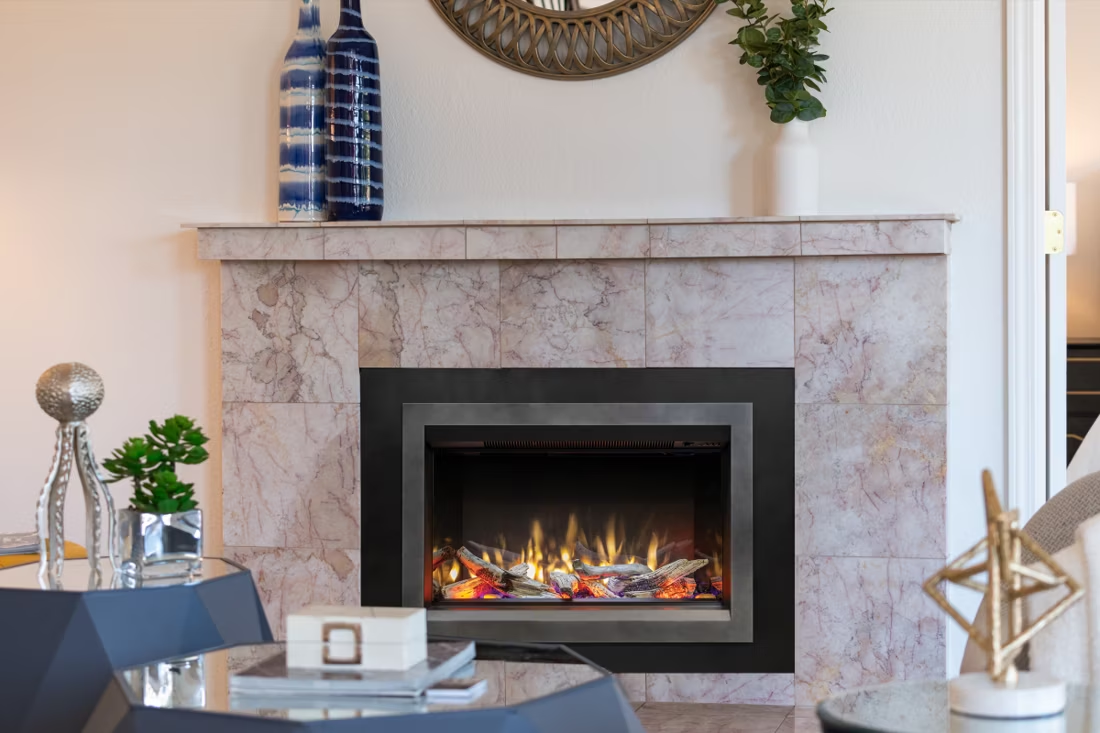
A freestanding or mantel-style unit is the easiest option—it plugs in, needs no construction, and can move with you if you sell the property, which matters for a lot of Canyon Lake's vacation and rental homes. An electric insert is built to slide into an existing fireplace opening (including an old wood-burning firebox some of the older lake homes still have), converting it to safe, ventless electric heat and ambiance. A built-in wall unit is framed into new construction or a remodel for a more custom, flush look. A local dealer can walk your space and tell you which fits your opening and budget.
Are electric fireplaces safe for a lake house or rental property?
Yes—that's actually one of the strongest arguments for electric in a market like Canyon Lake's, where a lot of housing stock is weekend cabins, short-term rentals, or HOA-managed properties. There's no open flame, no venting, no chimney to maintain, and no gas line to inspect. Most units include automatic shutoff and cool-touch glass, which matters for a property that might sit unattended for stretches or get used by renters unfamiliar with the house. It's a low-liability way to offer ambiance without the upkeep a wood or gas unit demands.
Can I convert an old wood-burning fireplace to electric in an existing Canyon Lake home?
Yes, and it's a common retrofit for the area's older lake homes and cabins that were built with a traditional masonry firebox. An electric insert slides into the existing opening, requires no chimney work or venting, and typically just needs a nearby outlet or a simple electrical hookup. It's a faster and cheaper conversion than a gas insert, since there's no gas line to run, and it eliminates any wood smoke or creosote concerns entirely—a relevant plus in a climate where the fireplace was probably barely used to begin with.
Electric vs. gas fireplace—which is right for my Canyon Lake home?
Gas gives you a real flame, higher heat output, and the ability to run during a power outage—a real consideration here given how often Hill Country storms knock out electric service. It's the better fit for a primary living area where you want a fireplace to double as genuine backup heat. Electric wins on simplicity and cost: no gas line or propane tank, no annual service call, pennies per hour to run at Guadalupe Valley EC or Pedernales EC rates, and an install that can happen in an afternoon. For most Canyon Lake homes—especially secondary living spaces, bedrooms, or lake cabins that only need occasional warmth—electric covers the need without the added infrastructure.
Do electric fireplaces actually produce heat?
Yes—most put out around 4,800–5,000 BTUs from a standard outlet, which comfortably warms a bedroom, office, or den as a comfort-zone heater. What they won't do is carry a whole house the way wood, gas, or pellet can. Think of electric as ambiance-first with honest supplemental heat: flames on with no heat in July, flames plus warmth in January.
Can I put a TV above my fireplace?
Yes—with an asterisk. Fireplaces are hot and TVs don't like heat. Either put a mantel between them to deflect rising warmth, or choose a fireplace with heat-management technology that creates a cool zone on the wall above—the wall stays around 125 degrees, barely warm, while the room still gets full heat. If you like clean lines and don't want a mantel, heat management is the answer.
What is an in-home preview and do I need one?
It's a visit where a hearth professional measures your space, confirms the model you picked actually works in your home, and walks the specs—framing, gas line, venting, finish work—before anything is ordered. Some details you just can't know until you see the house. Never make a down payment without one; it's the single most-skipped step that burns buyers.
Does a fireplace add value to my home?
On average, a fireplace adds back to the home about the same amount you spent installing it. Add the monthly savings from heating the rooms you actually use instead of the whole house—often hundreds of dollars a year—and the value case is strong before you even count what a fire does for how your family uses the room.
Nearby Dealers
Hearth shops serving Canyon Lake and the surrounding area.
Electric Service in Canyon Lake
An electric fireplace's heater draws about 1,500 watts—pennies per hour at local rates.
Guadalupe Valley Elec Coop Inc
Pedernales Electric Coop, Inc
Find your electric fireplace in Canyon Lake.
Tell us a bit about your home or lake property and we'll match you with the right electric fireplace or insert—plus a free Project Guide & Parts List and a trusted local dealer to install it.
Find Your Fireplace →