
A rare fit for Bullard's mild winters.
With only 2,017 heating degree days and winter lows that rarely dip below the high 30s, pellet stoves aren't the default choice here—but for the right home, one can still make sense. We'll help you find out.
Every Project Starts From One of These Five Situations
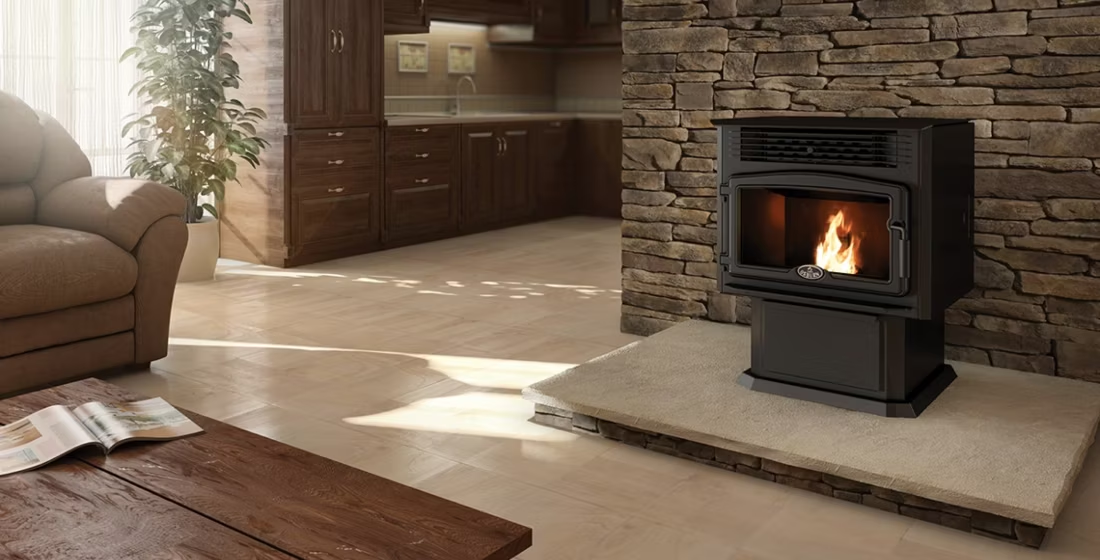
Pellet stoves are the exception here, not the rule.
Bullard sits in Smith County in the warm-humid climate zone (3A), where the average winter low hovers around 38°F and the town logs roughly 2,017 heating degree days a year—a fraction of what a place like Duluth, MN or Bismarck, ND sees. Most homes here are built and equipped for cooling first, heating second, and the majority run on central heat pumps or gas furnaces rather than a standalone hearth appliance. Pellet stoves were engineered for climates where a home needs 12+ hours of steady, thermostatically controlled heat for months at a stretch—that's simply not the Smith County reality most winters.
That said, pellet stoves haven't disappeared from Bullard entirely. Some homeowners install one in a hunting camp or lake property near Lake Palestine for cold-weather weekends, others want a low-maintenance, low-smoke alternative to a wood-burning fireplace for occasional ambiance, and a handful bought one after the February 2021 winter storm knocked out ERCOT-linked power across East Texas and left Oncor customers without heat for days. If you fall into one of those categories, pellets from regional suppliers like Forest Energy and Lignetics are available through hearth and farm-supply retailers around Tyler—you're just not going to find a dense local installer network the way you would in a colder market.
Three steps. No salesperson until you're ready.
Tell us about your project
Your zip code, your situation, and the fuel you're leaning toward—or let the answers point you to one.
See what's actually available
The brands dealers within 100 miles genuinely carry—real options, never a catalog mirage.
Get your dealer & Project Guide
A trusted local dealer, plus the free Project Guide & Parts List that names every component of the job.
Frequently Asked Questions
Does a pellet stove actually make sense for a home in Bullard?
For most Bullard homes, no—not as a primary heat source. With winter lows averaging 38°F and only about 2,017 heating degree days a year, the central HVAC or heat pump system already installed in most Smith County homes is more than adequate. Where a pellet stove does make sense is as a supplemental or backup source: a den or sunroom that runs cold, a detached workshop, or a hedge against the kind of multi-day ERCOT grid failures East Texas saw in February 2021. If your motivation is ambiance or backup rather than everyday primary heat, it's worth a conversation with a dealer rather than a hard no.
What does a pellet stove installation cost near Bullard?
Because so few pellet installs happen in Smith County, there isn't a deep local pricing history the way there is for gas fireplace conversions. Nationally, a pellet stove or insert installation typically runs $3,000 to $6,500 depending on the unit, whether you need a new exterior vent penetration, and electrical work for the hopper's auger and blower. In Bullard, expect to work with a dealer based out of Tyler rather than someone in town, and expect a bit more lead time for parts since pellet appliances aren't stocked in volume this far south.
What heats a typical Bullard home instead of a pellet stove?
Most Bullard homes rely on central electric heat pumps or gas-fired furnaces for primary heat, drawing power from Oncor Electric Delivery, Wood County Electric Cooperative, or Cherokee County Electric Cooperative depending on the address. At a residential rate around $0.1283 per kWh, running a heat pump through a mild East Texas winter costs a fraction of what it would in a place like Fargo, ND. Gas fireplaces and inserts, which have standard relevance here, are the more common hearth upgrade for homeowners wanting supplemental warmth and ambiance without the pellet stove's electrical dependency.
Can I even buy pellet fuel locally in Bullard or Smith County?
You can, though not from a dedicated hearth shop. Regional pellet brands like Forest Energy and Lignetics—both producing softwood pellets, typically pine rather than the oak, pecan, or mesquite that's common firewood around here—show up at farm-and-ranch retailers and some hardware stores in the greater Tyler area. Because demand is low, don't expect the bag-pallet inventory you'd see in a cold-climate market; calling ahead before burning season starts in earnest (which, in Bullard, is short) is a good idea.
Why would anyone install a pellet stove in a climate this mild?
The homeowners who do it in Bullard usually have a specific reason rather than a general heating need: a hunting or fishing cabin near Lake Palestine that needs occasional heat without a wood supply on hand, a homeowner with wood-smoke sensitivities who still wants real flame and radiant heat, or a family that lived through the February 2021 freeze and wants a heat source that doesn't depend entirely on the grid staying up. Pellet stoves do need electricity to run their auger and blower, so they're not a pure off-grid solution, but a small battery backup can keep one running through a short outage.
Pellet vs. gas—which makes more sense in Bullard?
For most homes here, gas wins. Gas fireplaces and inserts have standard relevance in Bullard's climate and market—natural gas or propane service is common, installation networks are well established, and a gas unit gives you instant, thermostat-controlled heat without hauling bags of pellets. Pellet stoves make more sense in the narrower case where you want the visual and radiant qualities of a real flame without a gas line, or where a hopper full of pellets feels more practical than propane delivery for a property you don't visit often, like a cabin.
Do pellet stoves need special venting or a chimney in a home like mine?
No masonry chimney required—pellet stoves vent through a small-diameter pipe straight out an exterior wall or the roof, which is one reason they're workable even in homes without an existing fireplace. What they do need is a nearby electrical outlet, since the auger that feeds pellets into the burn pot and the blower that distributes heat both run on standard household power. That electrical dependency is the main tradeoff against a wood stove, which will keep burning through a power outage with no help at all.
Where do I find someone to install or service a pellet stove near Bullard?
Because pellet installs are infrequent this far south, your realistic service radius stretches out to Tyler and the greater Smith County area rather than staying within Bullard itself. A trusted dealer serving this region can tell you honestly whether a pellet stove fits your situation or whether you'd be better served by a gas or electric option—that's exactly the kind of local matchmaking Find My Fireplace exists to do, rather than pushing a product that doesn't fit the market.
Pellet stove vs. a simple electric heater—what's the real difference?
An electric space heater or heat pump draws on Oncor's or your local co-op's grid power at roughly $0.1283 per kWh and gives you instant, low-maintenance heat with zero fuel handling—which is why electric has standard relevance in Bullard while pellet doesn't. A pellet stove costs more upfront, requires a hopper refill every day or two during use, and produces actual ash and a small amount of maintenance, but it delivers a visible flame and radiant heat that an electric unit can't replicate. If ambiance matters as much as warmth, pellet still has a case; if you just need to take the edge off a cold room, electric is simpler and cheaper here.
What's the difference between an insert and a zero-clearance fireplace?
An insert is a fireplace that slides into a pre-existing wood-burning fireplace—if you don't have one, there's nothing to insert it into. A zero-clearance fireplace is built into a framed wall, which makes it the answer for remodels and new construction. Simple test: existing masonry fireplace means insert; blank or framed wall means zero-clearance.
Why is a fireplace insert so efficient?
An insert does two things: it seals the chimney completely, so you stop losing air you already paid to heat, and it radiates warmth into the room through the firebox and glass. Most add a heat-exchange fan that pulls cool room air underneath, wraps it around the hot firebox, and pushes it back out warm. Your home is more efficient before you've even lit the first fire.
Can I install a fireplace myself?
If you're putting a fire in your house on purpose, it's best to work with an expert. Unless you're genuinely experienced in framing, gas line, vent pipe, and the national code on clearances to combustibles, have a professional do it—and ideally the same company that sells you the fireplace, so warranty, service, and liability all live under one roof.
Can a fireplace actually lower my heating bill?
Yes—by creating a comfort zone. A furnace heats every square foot of the house just to warm the one room you're in; a gas fireplace on low burns roughly a sixth of the gas a typical furnace does. Set the furnace around 55–60 degrees as a baseline, then heat the rooms your family actually uses. Families who heat this way commonly save $20–$60 a month.
Nearby Dealers
Hearth shops serving Bullard and the surrounding area. Every listing shows whether it is a WhyFire partner, a dealer we have verified as authorized for the brands we recommend, or a local business carrying hearth products. No manufacturer pays for placement. How we verify dealers →
East Texas Brick Co.
Tdi Air Conditioning
Pellet Brands Stocked Around Bullard
Manufacturers will point you to the nearest stocking dealer.
See what's realistic for pellet heat in Bullard.
Tell us about your home and how you'd actually use it, and we'll give you an honest read on whether pellet makes sense—plus a free Project Guide & Parts List with the exact equipment, venting, and a matched local dealer for whichever fuel truly fits your Bullard property.
Find Your Fireplace →