
Here's the honest picture on pellet stoves in Briscoe County.
With just over a thousand residents spread between Silverton and Quitaque, and mild 4B winters compared to true cold-climate country, Briscoe County has never developed much of a pellet-stove market. If you still want one—for a canyon-country cabin or a ranch house—we'll walk you through what's realistic and connect you with a dealer who serves this part of the Panhandle.
Every Project Starts From One of These Five Situations
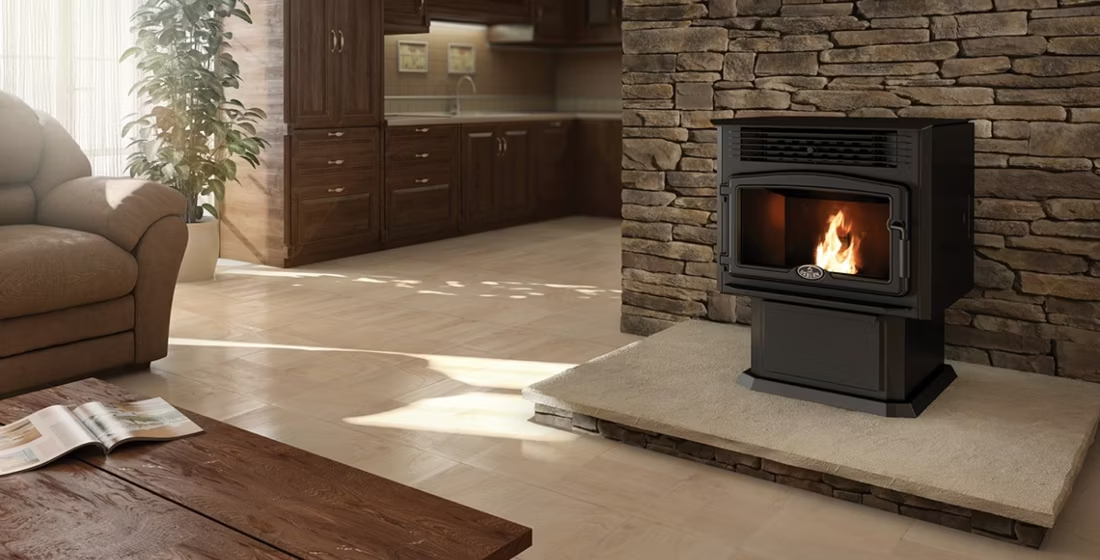
Pellet stoves are the exception in Briscoe County.
Briscoe County sits on the Caprock Escarpment in the Texas Panhandle, home to Caprock Canyons State Park, the official Texas State Bison Herd, and roughly 1,002 residents split mostly between Silverton, the county seat, and Quitaque near the canyon rim. Climate zone 4B means winters here are moderate by Panhandle standards—cold snaps and the occasional ice storm roll off the Caprock, but nothing close to the sustained deep-freeze stretches of Bismarck ND or Fargo ND. That modest heating demand, paired with a population this small, is the real reason a niche appliance like a wood pellet stove has never taken hold locally. Most homes here run on propane, since no natural gas main serves a county this sparsely populated, or on straightforward electric heat.
There's no hearth dealer in Silverton or Quitaque stocking bagged heating pellets, and that's not an oversight—it reflects real demand. If you want a pellet stove anyway, brands like Forest Energy and Lignetics do circulate through farm-and-ranch supply channels in Amarillo, Plainview, and Lubbock, but you'd be planning ahead and likely buying by the pallet rather than picking up a few bags on a whim. Wood is in the same boat here: oak, pecan, and mesquite are all around, mostly split for smoking meat rather than heating a house, since propane already does that job reliably. None of this means a pellet stove is off the table—it means going in with clear eyes about supply logistics before you commit.
Three steps. No salesperson until you're ready.
Tell us about your project
Your zip code, your situation, and the fuel you're leaning toward—or let the answers point you to one.
See what's actually available
The brands dealers within 100 miles genuinely carry—real options, never a catalog mirage.
Get your dealer & Project Guide
A trusted local dealer, plus the free Project Guide & Parts List that names every component of the job.
Frequently Asked Questions
Are pellet stoves actually used in Briscoe County?
Rarely, and that's a fair reflection of the local reality rather than a knock on the appliance. With about 1,002 people spread across Silverton and Quitaque, and a 4B climate that doesn't demand the aggressive, round-the-clock heat output that pellet stoves are built for, propane and electric heat cover nearly every home here. The handful of pellet stoves you'll find tend to be in weekend places near Caprock Canyons or ranch houses where someone wanted the ambiance and convenience of a hopper-fed fire more than a primary heat source.
Why hasn't pellet heat caught on in a ranching county like this?
Two things work against it. First, propane infrastructure is already well established across Briscoe County's ranches and homesteads—it's the default fuel, and there's no natural gas main to compete with it. Second, nobody local stocks bagged heating pellets, so running a pellet stove here means sourcing fuel from Amarillo, Plainview, or Lubbock and hauling or having it delivered in bulk. For a county this size, that supply chain math rarely pencils out against just running propane or electric.
Can I still get a pellet stove installed in Silverton or Quitaque if I really want one?
Yes. It's not a mainstream choice here, but it's a legitimate one, especially for a canyon-country cabin, a hunting property, or a ranch house where you want supplemental heat with less mess than cordwood. We match you with a trusted dealer from the broader Amarillo, Lubbock, or Plainview trade area who can size the unit correctly, handle venting, and be upfront about what regular pellet delivery will look like for your specific property.
Where would I actually buy pellets once the stove is installed?
Since no dealer in Briscoe County keeps bagged heating pellets on hand, plan on sourcing from farm-and-ranch supply retailers or big-box stores in Amarillo or Plainview, roughly an hour or more away. Forest Energy and Lignetics are the two brands you're most likely to find moving through this region, but availability isn't guaranteed on short notice—most owners buy several tons at a time in the fall rather than restocking bag by bag through the winter.
What heating fuels are actually standard for homes in Briscoe County?
Propane and electric heat are the two fuels that carry the load across the county. Propane is the default for most rural homes and ranch houses since there's no natural gas main serving a county this size, and it doubles as a reliable option during winter storms. Electric heat is common too, particularly in town in Silverton and Quitaque, and the local grid handles the moderate heating demand of a 4B climate without much strain most winters.
Is wood heat more practical than pellet in Briscoe County?
Not really more practical, just more familiar. Oak, pecan, and mesquite are all common locally, but they're cut and split far more often for smoking meat than for home heating, since propane already handles the job reliably. A few older ranch homes still have a wood-burning fireplace used for ambiance on cold nights, but wood as a primary heat source has the same limited footprint here that pellet does—this county's mild winters and small population just haven't generated the demand.
How should I store pellets given the local weather?
Keep them dry and off the ground, which matters more here than it sounds—the Caprock's spring dust storms and occasional heavy rain events can wreck a stack of bags left outside or in an open shed. A sealed storage area, whether that's a garage corner or a small dedicated shed, protects your fuel and your investment. Because restocking means a drive to Amarillo or Plainview, most owners buy enough at once to cover the whole season rather than making repeat trips.
Would a pellet stove work as backup heat during an ice storm or power outage?
Not on its own. Pellet stoves rely on an electric auger and blower to feed fuel and move heat, so when Panhandle ice storms knock out power, a pellet stove goes cold right along with everything else unless you've got a generator or battery backup running it. If backup heat during outages is your main concern, propane or a wood-burning appliance is the more dependable choice for Briscoe County's occasional winter power interruptions.
If pellet isn't standard here, why work with Find My Fireplace at all?
Because a niche install still deserves an honest plan, not guesswork. We're not a manufacturer or a store—we match you with a trusted local-region dealer who's straightforward about supply logistics for a county like Briscoe, and we hand you a free Project Guide & Parts List: the exact parts, including the vent kit, and the dealer we'd recommend for a pellet project in Silverton or Quitaque. If a dealer tells you propane or electric makes more sense for your situation, you'll hear that too—that's the point of a neutral match.
Why is my open fireplace making my house colder?
Open fireplaces suck—literally. As the fire burns, it consumes air your furnace already paid to heat and pulls it out through the chimney, so the house is actually colder after the fire goes out than before you lit it. An insert fixes this: it seals the chimney, puts fixed glass across the front, and turns that hole in your house into a real heat source.
What's the difference between an insert and a zero-clearance fireplace?
An insert is a fireplace that slides into a pre-existing wood-burning fireplace—if you don't have one, there's nothing to insert it into. A zero-clearance fireplace is built into a framed wall, which makes it the answer for remodels and new construction. Simple test: existing masonry fireplace means insert; blank or framed wall means zero-clearance.
Can a fireplace actually lower my heating bill?
Yes—by creating a comfort zone. A furnace heats every square foot of the house just to warm the one room you're in; a gas fireplace on low burns roughly a sixth of the gas a typical furnace does. Set the furnace around 55–60 degrees as a baseline, then heat the rooms your family actually uses. Families who heat this way commonly save $20–$60 a month.
How much should I budget for a fireplace?
For an average home—covering the fireplace, the vent pipe, and basic installation—a budget between $3,900 and $5,500 gives you a lot of options across wood, gas, and pellet. By the time you add finish work, gas line, and electrical, the average complete installation lands between $5,000 and $12,000 all-in. In a remodel or new build, a good rule is to put about 2.5% of the total project cost toward the fireplace.
Stove and Fireplace Dealers in Briscoe County
Listings include WhyFire partner dealers, dealers we have verified as authorized for the brands we recommend, and established local businesses that carry hearth products. Every listing shows which one it is. The ones marked Preferred run on WhyFire's software, so they can show you real pricing and book your appointment right here. No manufacturer pays for placement. How we verify dealers →
Boyd's Equipment
West Texas Brick
Reid's Appliance Services
Pellet Brands Stocked Around Briscoe County
Manufacturers will point you to the nearest stocking dealer.
Find your pellet stove option in Briscoe County.
Tell us about your home near Silverton or Quitaque and we'll give you a straight answer on pellet heat, plus a free Project Guide & Parts List and a match with a trusted regional dealer if it's the right fit.
Find Your Fireplace →