
Find out if a pellet stove makes sense in Belton.
With winter lows averaging 36°F and just over 2,000 heating degree days a year, Belton isn't pellet-stove country the way Duluth or Bozeman is. But for lake houses, sunrooms, and ranch cabins around Bell County, a pellet unit can still make sense—here's how to tell.
Every Project Starts From One of These Five Situations
Central Texas winters rarely call for it—but some homes still choose it.
Belton sits in climate zone 2A at 616 feet, with an average winter low of 36°F and roughly 2,032 heating degree days a year—a fraction of what a pellet-heavy market like Duluth, MN or International Falls, MN sees in a single January. The oak, pecan, and mesquite that fuel Bell County's smokers and BBQ pits do plenty of work in this region, just not in a pellet hopper for home heating. Most Belton homes get by on central HVAC and, when someone wants supplemental warmth or fireplace ambiance, a gas log set or electric insert covers it with far less hassle than sourcing and storing pellets in a humid Texas climate.
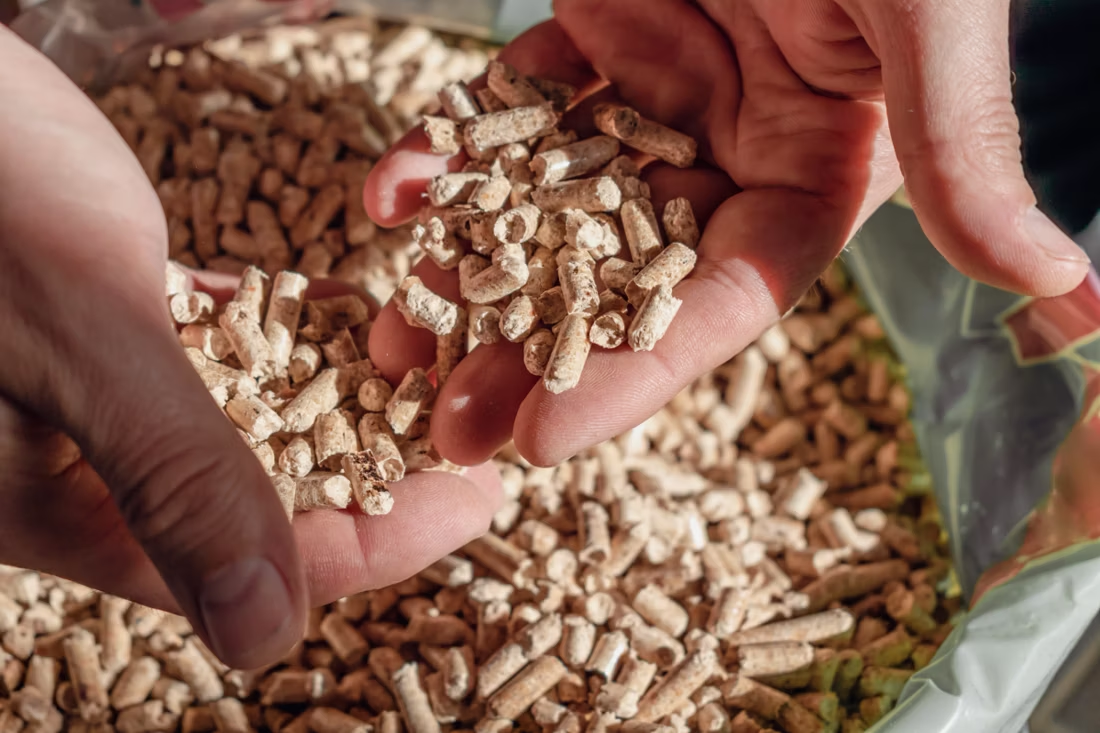
That said, pellet stoves aren't unheard of here. We see them go into lake houses on Lake Belton where owners want a real-flame look without a chimney, hunting cabins on Bell County ranch land off the electric grid's edge, and homes owned by transplants from colder states who simply prefer the look and feel of a pellet fire. Regional brands like Forest Energy and Lignetics do make their way into Central Texas through farm-supply retailers, so fuel isn't impossible to find—it's just not stocked the way it would be in a market where pellet heat is the norm rather than the exception.
Three steps. No salesperson until you're ready.
Tell us about your project
Your zip code, your situation, and the fuel you're leaning toward—or let the answers point you to one.
See what's actually available
The brands dealers within 100 miles genuinely carry—real options, never a catalog mirage.
Get your dealer & Project Guide
A trusted local dealer, plus the free Project Guide & Parts List that names every component of the job.
Frequently Asked Questions
Are pellet stoves actually practical in Belton, TX?
For most Belton homes, no—not as a primary heat source. With an average winter low of 36°F and only about 2,032 heating degree days a year, the case for a hopper-fed appliance running most of the winter just isn't there the way it is in Minnesota or Montana. Where pellet stoves do make sense here is as a secondary heat source or a design choice: a sunroom that runs cold on the handful of nights each winter that dip into the 20s, a lake cabin without central heat, or a homeowner who simply likes the look of a pellet fire more than a gas log set. If your goal is whole-home heat, a heat pump or gas furnace will outperform a pellet stove in this climate for less money.
Who in Belton actually installs pellet stoves?
The requests we see most often come from three groups: owners of lake properties around Lake Belton who want real-flame ambiance without running a masonry chimney, ranch or hunting cabin owners in rural Bell County who need occasional heat in a structure without ductwork, and transplants from northern states who grew up with pellet heat and want it again. It's a smaller, more specific buyer than in a cold-climate market, which is exactly why working with a dealer who actually stocks and services pellet units—rather than a big-box store that carries one floor model—matters here.
How much does a pellet stove installation cost in Belton?
Nationally, a pellet stove installation typically runs $3,000 to $6,500 depending on the unit, whether it vents through an existing chimney or a new wall penetration, and any hearth pad work required. Belton doesn't have the installer density that a high-demand pellet market does, so it's worth getting quotes from more than one dealer—pricing can run toward the higher end simply because fewer shops specialize in the install. A trusted local dealer will also tell you plainly if a gas or electric alternative would cost less and perform better for your specific use case, which is worth hearing before you commit.
Will a pellet stove keep my house warm if the power goes out?
This is the question we'd want a Belton homeowner to ask before buying. Pellet stoves need electricity to run the auger that feeds fuel and the blower that pushes heat into the room—no power, no fire, regardless of how many bags of pellets you have on hand. That matters here: Bell County customers on Oncor, Bartlett Electric Cooperative, and Pedernales Electric Cooperative all felt the effects of the February 2021 grid failure, and a pellet stove alone would not have helped during that event. If backup heat during a winter storm is the real goal, a battery backup or small generator paired with the stove solves this, or a wood-burning option (less common in this climate, but not impossible) would run without any power at all.
Where do I buy pellet fuel in Belton?
Pellets aren't stocked on every corner here the way they are in the upper Midwest. Regional brands like Forest Energy and Lignetics show up seasonally at farm-and-ranch supply retailers around Temple and Belton, and many owners order by the pallet online or through their dealer to guarantee supply for the winter. Expect to pay more per ton than you would in a market where pellet stoves are common—budget roughly $280–$380 per ton, and buy early in the fall since local stock can be thin once cold snaps hit.
Do I need a permit to install a pellet stove in Belton?
Most solid-fuel and pellet-burning appliance installs require a building permit through the City of Belton's building department, or through Bell County if your property is outside city limits. Permitting typically covers hearth clearances, wall or roof penetration for venting, and confirming the unit meets current EPA emissions standards. Because so few Bell County homes have pellet appliances, not every general contractor is familiar with the specifics—a dealer who regularly installs pellet units will already know the local permitting process and usually handles it as part of the install.
What size pellet stove do I need for a Belton home?
Given how mild Belton's winters run, most installs here are sized for a single room or supplemental use rather than whole-home heating—think a 30,000–42,000 BTU unit for a sunroom, lake house living area, or cabin, rather than the larger 60,000+ BTU units sold in colder markets. Oversizing is a common mistake: a unit sized for International Falls, MN winters will overheat a Belton sunroom and cycle constantly. A local dealer can size the unit to your actual square footage and how many nights a year you'll realistically use it.
Pellet stove or gas fireplace—which makes more sense in Belton?
For most Belton homes, gas wins. Natural gas and propane are both widely available locally, a gas fireplace or insert lights with the push of a button, needs no fuel storage, and handles Central Texas humidity without the pellet-quality issues that come from storing bags in a damp garage. Pellet stoves make more sense when you specifically want the look and radiant feel of a real biomass fire, or when you're heating a structure without a gas line, like a detached cabin. If convenience and low-hassle operation matter more than a wood-fire look, start with a gas quote instead.
Is a pellet stove worth it if I mainly want it for ambiance?
It can be, if the look matters to you. A pellet stove gives a more realistic flame than most gas units and produces genuine radiant heat on the handful of nights each winter when temperatures drop into the 20s—useful in a sunroom, converted garage, or lake house that otherwise runs cold. But if ambiance and occasional warmth are the only goals and cost matters, an electric insert costs a fraction to install and requires no fuel handling at all. It comes down to whether you want the specific character of a pellet fire or just the visual effect—a local dealer can show you both side by side.
What's the difference between an insert and a zero-clearance fireplace?
An insert is a fireplace that slides into a pre-existing wood-burning fireplace—if you don't have one, there's nothing to insert it into. A zero-clearance fireplace is built into a framed wall, which makes it the answer for remodels and new construction. Simple test: existing masonry fireplace means insert; blank or framed wall means zero-clearance.
Why is a fireplace insert so efficient?
An insert does two things: it seals the chimney completely, so you stop losing air you already paid to heat, and it radiates warmth into the room through the firebox and glass. Most add a heat-exchange fan that pulls cool room air underneath, wraps it around the hot firebox, and pushes it back out warm. Your home is more efficient before you've even lit the first fire.
How much should I budget for a fireplace?
For an average home—covering the fireplace, the vent pipe, and basic installation—a budget between $3,900 and $5,500 gives you a lot of options across wood, gas, and pellet. By the time you add finish work, gas line, and electrical, the average complete installation lands between $5,000 and $12,000 all-in. In a remodel or new build, a good rule is to put about 2.5% of the total project cost toward the fireplace.
Does a fireplace add value to my home?
On average, a fireplace adds back to the home about the same amount you spent installing it. Add the monthly savings from heating the rooms you actually use instead of the whole house—often hundreds of dollars a year—and the value case is strong before you even count what a fire does for how your family uses the room.
Nearby Dealers
Hearth shops serving Belton and the surrounding area.
Pellet Brands Stocked Around Belton
Manufacturers will point you to the nearest stocking dealer.
See if a pellet stove fits your Belton home.
Tell us about your home and how you'd use it, and we'll give you a straight answer on whether pellet makes sense here—plus a free Project Guide & Parts List with the exact parts, vent kit, and a trusted local Belton-area dealer if it does.
Find Your Fireplace →