
Gas fireplaces built for Bell County's short, mild winters.
From Killeen and Temple to Belton, Harker Heights, and the Fort Cavazos area, Bell County winters rarely demand serious heat—but they're cold enough on a December night to want a real flame at the flip of a switch. Find the right gas unit and get matched with a trusted local dealer.
Every Project Starts From One of These Five Situations
Heat on demand for a mild Central Texas winter.
Bell County sits in climate zone 2A—hot and humid, with an average winter low around 36 degrees and roughly 2,072 heating degree days a year. For comparison, a place like Fargo, ND racks up over 9,000 HDD annually; Bell County's heating season is short and rarely severe. Plenty of older homes in Belton and Temple were built with wood-burning masonry fireplaces, and oak, pecan, and mesquite are common backyard and smoker wood locally, but wood as an actual heating strategy is uncommon here—the county just doesn't get cold enough long enough to justify hauling firewood and sweeping a chimney every season. That's exactly the gap gas fireplaces fill.
Natural gas service through Atmos Energy covers most of Killeen, Temple, Belton, and Harker Heights, so homes that already have gas for a range or water heater can usually add a fireplace with a straightforward line tap. Out toward Moody, Rogers, Holland, and other unincorporated parts of the county, propane from a local supplier is the standard route instead. Either way, a gas insert dropped into an existing wood-burning masonry fireplace—common in older Temple and Belton neighborhoods—turns a fireplace that mostly sat unused into push-button heat for the handful of genuinely cold nights each winter, and a backup heat option for grid strain events like the one Central Texas saw during Winter Storm Uri.
Three steps. No salesperson until you're ready.
Tell us about your project
Your zip code, your situation, and the fuel you're leaning toward—or let the answers point you to one.
See what's actually available
The brands dealers within 100 miles genuinely carry—real options, never a catalog mirage.
Get your dealer & Project Guide
A trusted local dealer, plus the free Project Guide & Parts List that names every component of the job.
Frequently Asked Questions
How much does a gas fireplace installation cost in Bell County?
Most gas fireplace and insert installations in Bell County run somewhere between $3,500 and $9,000, depending on the unit, whether a gas line is already run to the room, and the venting path. A gas insert dropped into an existing masonry fireplace with a nearby gas line—common in older Belton and Temple homes—sits on the lower end. New construction or a remodel that requires framing a built-in unit and running new gas line from the meter costs more. Homes on propane that need a new tank installed will also see costs rise. A local dealer will give you a firm number after seeing the room.
Can I convert my existing wood fireplace to gas?
Yes, and it's one of the most common projects for older Bell County homes—plenty of houses in Belton, Temple, and Killeen were built with a traditional wood-burning masonry fireplace that's rarely used because the county's mild winters don't call for it. A gas insert uses that existing chimney as the venting path with a stainless liner, so you keep the look of the original fireplace while gaining instant, controllable heat. Cost typically lands in the $3,500 to $8,000 range depending on whether you're on natural gas from Atmos Energy or need propane service, and whether new gas line work is needed to reach the firebox.
Do I need natural gas, or can I use propane?
Either works. Atmos Energy provides natural gas service across most of Killeen, Temple, Belton, and Harker Heights, so if your home already has gas appliances, adding a fireplace is usually a simple tie-in. Outside those service areas—including many unincorporated stretches of Bell County toward Moody, Rogers, and Holland—propane from a local supplier is the standard alternative, either from an existing tank or a new one installed alongside the fireplace. Most gas fireplace models can be set up for either fuel; your installer configures the orifice and regulator to match.
Will my gas fireplace work during a power outage?
Most modern gas fireplaces will, which matters in a county that watched the ERCOT grid buckle during Winter Storm Uri in February 2021. Units with IPI (intermittent pilot ignition) run on a small battery backup that kicks in automatically when power drops, so the fireplace lights on demand just like normal. Valor fireplaces take a slightly different approach—they generate their own electricity through the pilot's thermocouple, so there are no batteries to remember at all. For a county where a hard freeze can knock out heat for days, that's worth asking your local dealer about when comparing units.
What's the difference between a gas fireplace, gas insert, and gas stove?
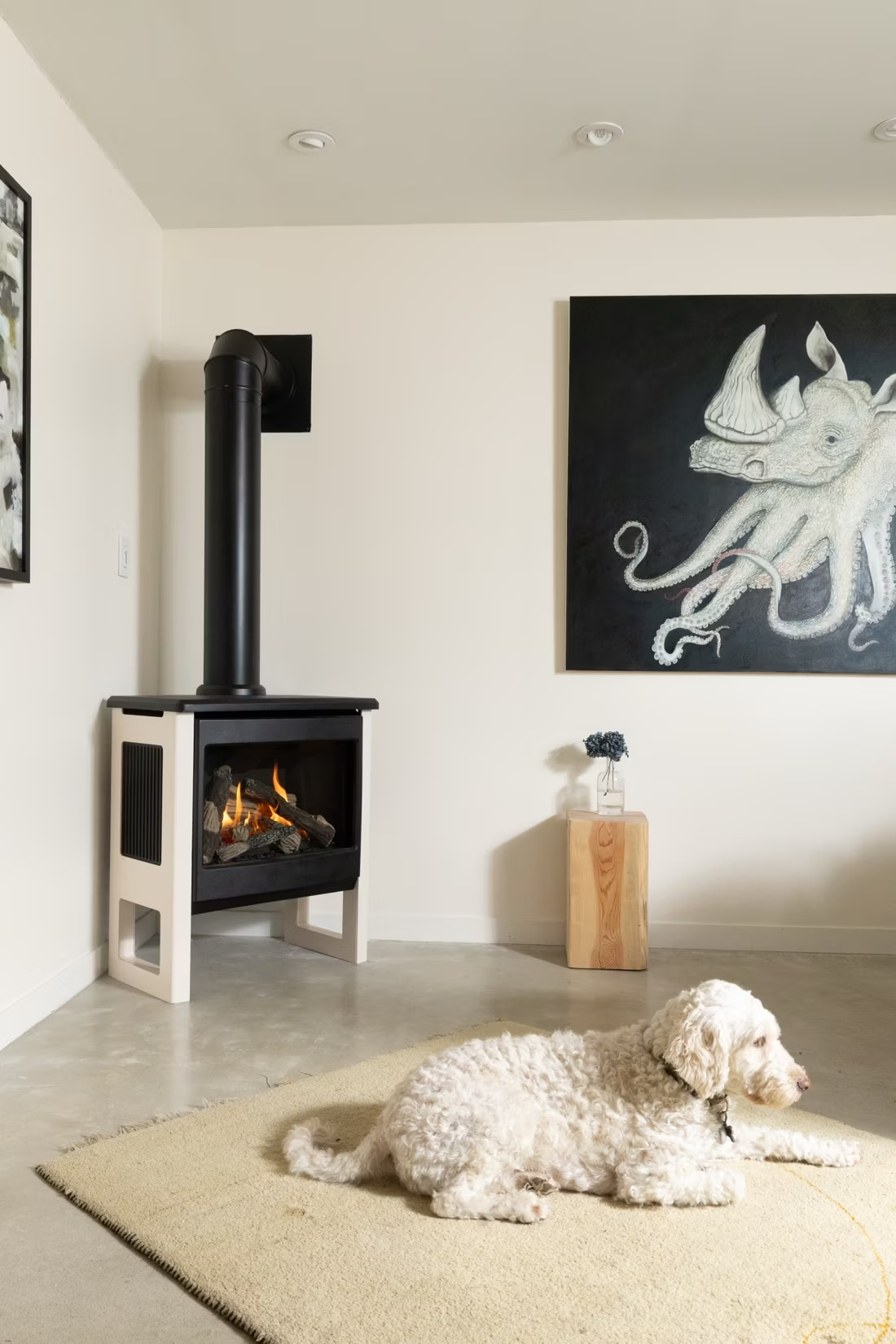
A gas fireplace is a fully built-in unit framed into a wall—typical for new construction or a remodel in newer Harker Heights or south Temple subdivisions that don't have an existing fireplace. A gas insert fits into an existing masonry firebox, which is the common route for older homes in Belton and downtown Temple. A gas stove is a freestanding unit that sits on the floor like a wood stove but burns gas, and works well in a room without any existing fireplace or chimney. For most Bell County homeowners upgrading an unused wood fireplace, an insert is the simplest and most cost-effective path.
Do I need a permit to install a gas fireplace in Bell County?
Generally yes—a building permit and a gas line permit are required for new gas fireplace installations. Inside city limits, that means going through your city's building department (Killeen, Temple, Belton, or Harker Heights); in unincorporated parts of the county, permits run through Bell County. Most established hearth dealers handle this paperwork as part of the installation, along with coordinating the licensed gas-fitter needed for any new line work, so you're not left managing multiple trades and inspections yourself.
What's the difference between vented and vent-free gas fireplaces?
Vented (direct-vent) gas fireplaces draw combustion air from outside and exhaust exhaust gases back outside through sealed venting—they're the most common, most flexible option and work in virtually any room. Vent-free units burn fuel directly into the room without external venting; they're legal in Texas but come with room-size minimums, oxygen depletion sensors, and stricter ventilation rules, and some states restrict them outright. For Bell County's well-sealed, newer-construction homes especially, direct-vent units are usually the better call for indoor air quality—a local dealer can walk through both options for your specific room.
How often should my gas fireplace be serviced?
Plan on an annual inspection, ideally before the first cold snap hits in late fall. A technician checks the burner, pilot assembly, venting, gas connections, and any electronic ignition components, and cleans the glass and interior. It's a lighter lift than sweeping a wood chimney, but it matters—gas fireplaces that sit unused for most of a mild Bell County year can develop pilot or ignition issues that only show up the first time you try to light it on a genuinely cold night.
Should I go with gas or stick with wood in Bell County?
For most Bell County homes, gas is the practical choice. Wood-burning here is largely a heritage feature—older homes in Belton and Temple have masonry fireplaces, and oak, pecan, and mesquite are locally available, but with only about 2,072 heating degree days a year and average winter lows around 36 degrees, wood as a heat source doesn't get much use and isn't something local dealers push as primary heat. Gas gives you instant, controllable warmth without firewood storage, ash cleanup, or chimney sweeping, and it converts cleanly into an existing wood fireplace if you have one. Wood still has a place for the occasional backyard fire pit or smoker, but for indoor heat in this climate, gas is the standard answer.
Why is a fireplace insert so efficient?
An insert does two things: it seals the chimney completely, so you stop losing air you already paid to heat, and it radiates warmth into the room through the firebox and glass. Most add a heat-exchange fan that pulls cool room air underneath, wraps it around the hot firebox, and pushes it back out warm. Your home is more efficient before you've even lit the first fire.
Is my gas fireplace wasting gas?
If it was installed more than 15 years ago, probably. Older gas fireplaces keep a standing pilot light burning all the time, and that little flame can cost a couple hundred dollars a year. Newer models use pilot-on-demand ignition—the pilot lights only when you use the fireplace and goes out when you turn it off.
Can I install a fireplace myself?
If you're putting a fire in your house on purpose, it's best to work with an expert. Unless you're genuinely experienced in framing, gas line, vent pipe, and the national code on clearances to combustibles, have a professional do it—and ideally the same company that sells you the fireplace, so warranty, service, and liability all live under one roof.
Does a fireplace add value to my home?
On average, a fireplace adds back to the home about the same amount you spent installing it. Add the monthly savings from heating the rooms you actually use instead of the whole house—often hundreds of dollars a year—and the value case is strong before you even count what a fire does for how your family uses the room.
Stove and Fireplace Dealers in Bell County
Listings include WhyFire partner dealers, dealers we have verified as authorized for the brands we recommend, and established local businesses that carry hearth products. Every listing shows which one it is. The ones marked Preferred run on WhyFire's software, so they can show you real pricing and book your appointment right here. No manufacturer pays for placement. How we verify dealers →
Tri-Supply - Temple
Tri-Co Propane
C&G Products
Find your gas fireplace in Bell County.
Tell us about your home in Killeen, Temple, Belton, Harker Heights, or elsewhere in Bell County, and we'll match you with a trusted local dealer and send over a free Project Guide & Parts List—the exact parts, including the vent kit, for your gas fireplace project.
Find Your Fireplace →