
Find your electric fireplace in Bell County.
Central Texas winters rarely demand real heat output, which makes electric fireplaces a natural fit from Killeen to Temple to Belton. Find the right unit and connect with a trusted local dealer—no chimney, no gas line, no smoke.
Every Project Starts From One of These Five Situations
Ambiance first, supplemental warmth second—built for a mild climate.
Bell County sits in climate zone 2A with an average winter low of 36°F and just 2,072 heating degree days a year—a fraction of what a place like Bismarck, ND or Duluth, MN racks up in a single cold snap. Homes here are built around cooling load, not heating load, and that changes what a fireplace needs to do. Rather than a primary heat source, electric fireplaces in Killeen, Temple, Belton, and Harker Heights function as ambiance and occasional supplemental warmth for the relatively small window of genuinely cold nights each winter.
Wood-burning is essentially a non-factor in Bell County's fireplace market—there's no meaningful cutting-permit infrastructure, no cold-weather driver for it, and most new construction around Fort Cavazos and the Temple-Belton growth corridor skips masonry chimneys entirely. Gas remains a standard option where natural gas or propane service reaches, but electric has become the default for renters, military families rotating through Fort Cavazos housing, and homeowners who want a fireplace look without venting, gas lines, or ash cleanup. A plug-in unit needs nothing more than a standard outlet; a built-in linear unit typically just needs a dedicated circuit, which a licensed electrician can pull permits for through the city (Killeen, Temple, Belton, or Harker Heights building departments) or Bell County Development Services in unincorporated areas.
Three steps. No salesperson until you're ready.
Tell us about your project
Your zip code, your situation, and the fuel you're leaning toward—or let the answers point you to one.
See what's actually available
The brands dealers within 100 miles genuinely carry—real options, never a catalog mirage.
Get your dealer & Project Guide
A trusted local dealer, plus the free Project Guide & Parts List that names every component of the job.
Frequently Asked Questions
How much does an electric fireplace installation cost in Bell County?
A plug-in electric fireplace insert or freestanding stove runs $300 to $800 installed, since it simply plugs into an existing outlet with no electrical work needed. A built-in linear electric fireplace—framed into a wall with a dedicated 20-amp circuit—typically runs $1,500 to $4,000 depending on the unit size, the wall framing involved, and whether a mantel or surround is added. Because there's no venting, chimney, or gas line to run, electric installs in Bell County are consistently the least expensive fireplace option on the market. Local dealers will quote a firm price after seeing the wall or space you're working with.
Will an electric fireplace actually provide heat in Bell County winters?
Yes, for the climate Bell County actually has. With an average winter low around 36°F and only about 2,072 heating degree days a year—well below cold-climate benchmarks like Fargo, ND or Minneapolis, MN—most homes here don't need a fireplace to carry the heating load. A standard 1,500-watt electric fireplace puts out roughly 5,000 BTU, which is plenty to take the chill off a living room in Killeen or Belton during the handful of nights that dip into the 20s and 30s. Think of it as supplemental warmth and ambiance rather than a whole-home heat source.
Do I need a permit to install an electric fireplace in Bell County?
For a plug-in insert or freestanding electric stove, no permit is required—it's treated like any other appliance you plug into a wall outlet. For a built-in electric fireplace that requires a dedicated circuit or new wiring, an electrical permit is typically needed, pulled through the city where the home sits (Killeen, Temple, Belton, or Harker Heights building departments) or through Bell County Development Services if the home is in an unincorporated part of the county. Most local dealers coordinate this with a licensed electrician as part of the installation, so you're not left tracking down the paperwork yourself.
What's the difference between an electric insert, a built-in linear unit, and a mantel package?
An electric insert is sized to slot into an existing fireplace opening—a common upgrade for older Bell County homes with an unused masonry firebox. A built-in linear electric fireplace is framed directly into a wall for a sleek, modern look and is popular in newer construction around Temple and Harker Heights. A mantel package pairs a smaller electric unit with a freestanding or wall-mounted surround, which suits renters or homeowners near Fort Cavazos who may need to take the unit with them on a future move. All three run on standard household power, and a local dealer can help match the option to your space and whether you're renting or own.
Electric vs. gas fireplace—which is right for my Bell County home?
Gas fireplaces deliver higher, more consistent heat output and a more realistic flame, and they remain a standard choice in Bell County homes with natural gas or propane service. Electric fireplaces cost less to install, need no venting or gas line, and can be added to nearly any wall or existing firebox in an afternoon. Given Bell County's mild winters—2,072 heating degree days versus several times that in a cold-climate market like Bozeman, MT—the heat-output gap matters less here than in colder states, which is a big reason electric has become the go-to for ambiance-focused installs in Killeen, Temple, and Belton.
Why don't more Bell County homes have wood-burning fireplaces?
Wood heat is essentially a non-factor in Bell County's climate and building patterns. With HDD around 2,072 and winter lows averaging in the mid-30s, there's little practical need for a wood-burning primary or supplemental heat source, and the county lacks the cutting-permit infrastructure and public forest land access common in wood-heating regions. Some rural Bell County properties still burn oak, pecan, or mesquite in an existing masonry fireplace for occasional ambiance, but it's the exception rather than the rule—most homeowners choose electric or gas instead.
Are electric fireplaces a good fit for rental homes and military families near Fort Cavazos?
Yes—this is one of the strongest use cases in Bell County. With Fort Cavazos driving significant housing turnover in Killeen and Harker Heights, a plug-in or mantel-mounted electric fireplace gives renters and PCS-cycle families a real fireplace look without any permanent modification to the property. There's no venting to remove, no gas line to cap, and the unit can move with the family to the next assignment. Local dealers see this as a common request and can point you toward models built for portability.
How much does it cost to run an electric fireplace in Bell County?
Bell County sits within the ERCOT grid, with Oncor Electric Delivery handling transmission and distribution across most of the county (Killeen, Belton, Harker Heights) while the City of Temple operates its own municipal electric utility. A typical 1,500-watt electric fireplace run on high costs a few cents per hour under most residential rate plans—running it for an evening rarely adds more than a small amount to a monthly bill. Most owners run their unit intermittently for ambiance rather than continuously, which keeps operating costs minimal compared to gas or wood fuel purchases.
What should I look for in an electric fireplace for Central Texas's humid climate?
Bell County's climate zone 2A means warm, humid summers and mild, occasionally damp winters, so look for units with sealed electronics and a solid-state LED flame system rather than older mechanical flicker mechanisms, which can be more sensitive to humidity over time. Brands like Dimplex, Amantii, and Napoleon are commonly stocked by dealers in this region and hold up well in Central Texas conditions. A local dealer can also advise on placement—away from direct HVAC condensation lines or exterior walls prone to moisture—during an in-home or in-showroom consultation.
Can I put a TV above my fireplace?
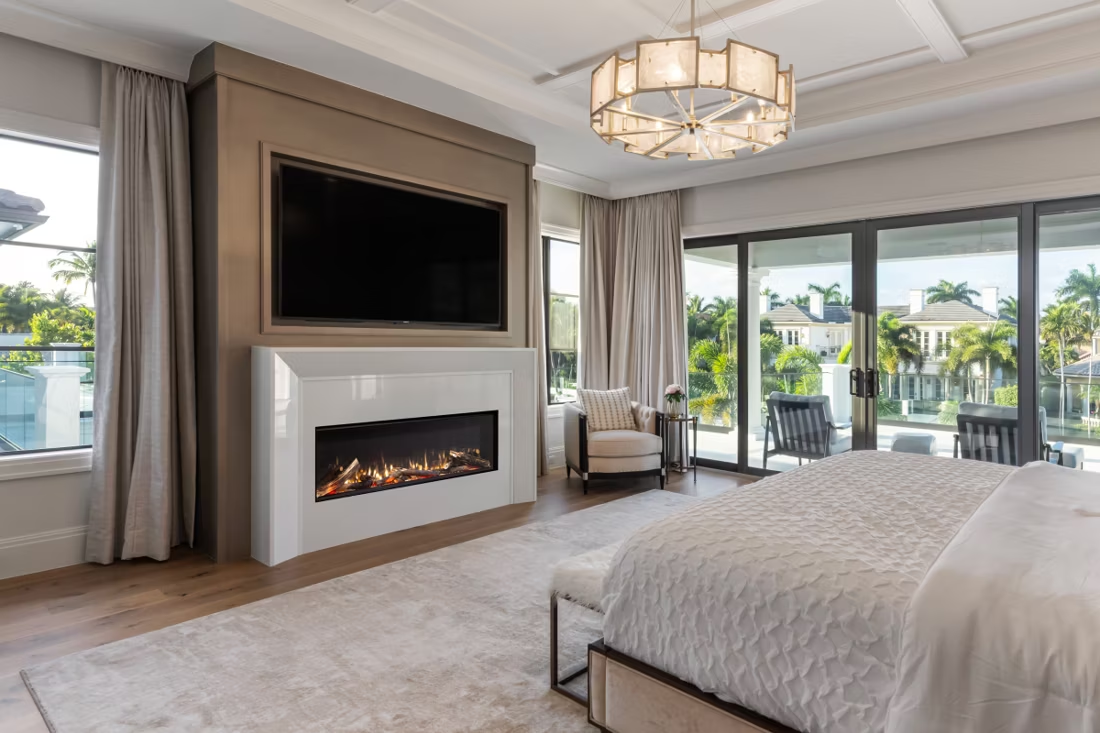
Yes—with an asterisk. Fireplaces are hot and TVs don't like heat. Either put a mantel between them to deflect rising warmth, or choose a fireplace with heat-management technology that creates a cool zone on the wall above—the wall stays around 125 degrees, barely warm, while the room still gets full heat. If you like clean lines and don't want a mantel, heat management is the answer.
Do electric fireplaces actually produce heat?
Yes—most put out around 4,800–5,000 BTUs from a standard outlet, which comfortably warms a bedroom, office, or den as a comfort-zone heater. What they won't do is carry a whole house the way wood, gas, or pellet can. Think of electric as ambiance-first with honest supplemental heat: flames on with no heat in July, flames plus warmth in January.
Does a fireplace add value to my home?
On average, a fireplace adds back to the home about the same amount you spent installing it. Add the monthly savings from heating the rooms you actually use instead of the whole house—often hundreds of dollars a year—and the value case is strong before you even count what a fire does for how your family uses the room.
What is an in-home preview and do I need one?
It's a visit where a hearth professional measures your space, confirms the model you picked actually works in your home, and walks the specs—framing, gas line, venting, finish work—before anything is ordered. Some details you just can't know until you see the house. Never make a down payment without one; it's the single most-skipped step that burns buyers.
Stove and Fireplace Dealers in Bell County
Listings include WhyFire partner dealers, dealers we have verified as authorized for the brands we recommend, and established local businesses that carry hearth products. Every listing shows which one it is. The ones marked Preferred run on WhyFire's software, so they can show you real pricing and book your appointment right here. No manufacturer pays for placement. How we verify dealers →
Tri-Supply - Temple
Tri-Co Propane
C&G Products
Get your free Project Guide & Parts List for an electric fireplace in Bell County.
Tell us a bit about your home and we'll match you with a trusted local dealer serving Killeen, Temple, Belton, and Harker Heights—plus a free Project Guide & Parts List with the exact components and your recommended installer.
Find Your Fireplace →