
Keep Your Family Warm and Safe—No Matter What
With winter lows averaging 42°F, wood-burning isn't a heating necessity in Barton Creek—but for homeowners who want the ambiance, we'll connect you with a local dealer who can do it right.
Every Project Starts From One of These Five Situations
A real fire, without the heating job to do.
Barton Creek sits in climate zone 2A at just 809 feet elevation, with only 1,442 heating degree days a year and winter lows that average 42°F. Compare that to a place like Fargo, ND, where HDD counts run into the eight or nine thousands—Barton Creek's heating season is short, mild, and mostly handled by central HVAC. A wood stove or wood-burning fireplace here isn't the load-bearing heat source it would be in a colder climate; it's a supplemental feature for the handful of genuinely cold nights each winter, or simply an aesthetic choice.
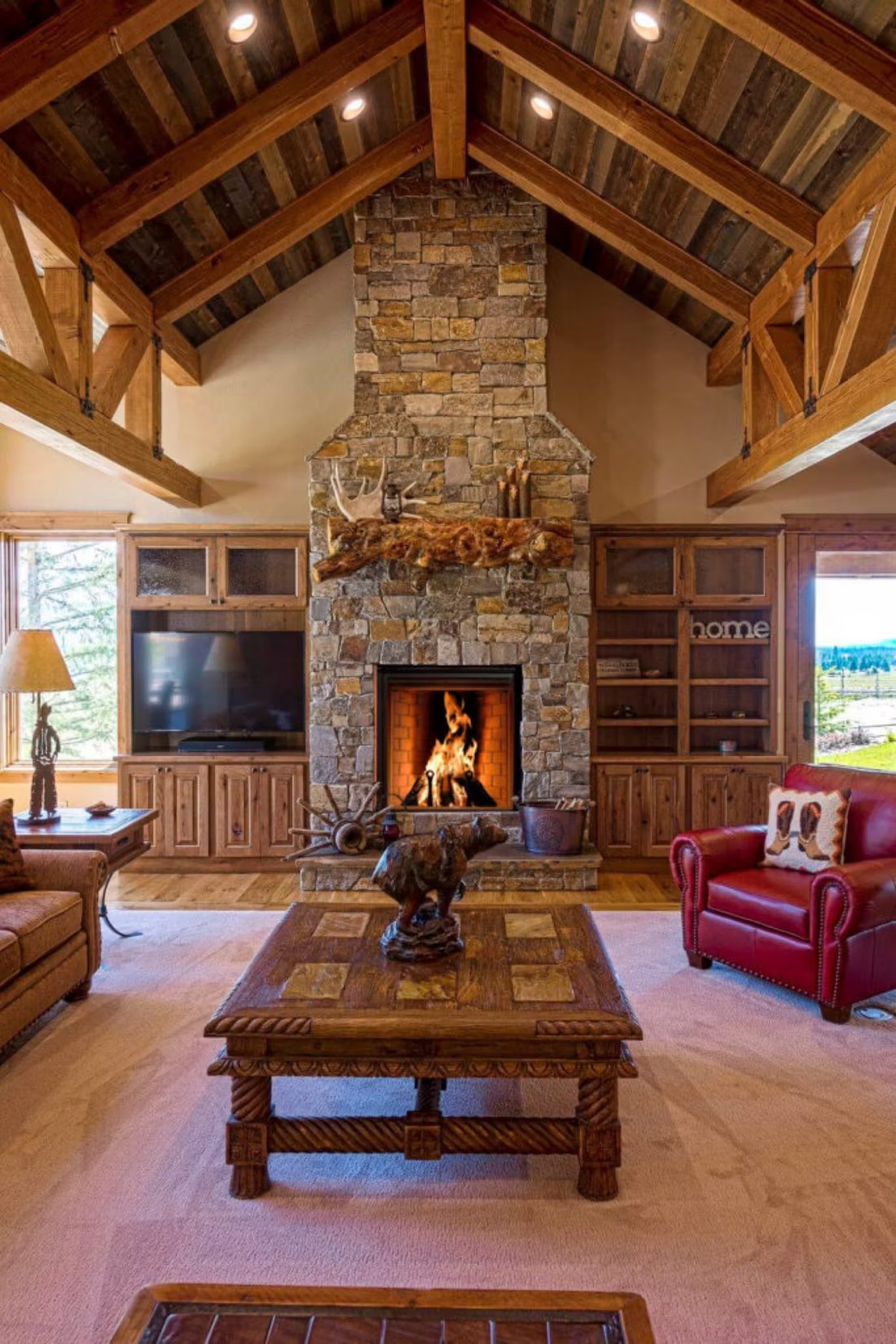
That said, wood-burning fireplaces do still get installed in this part of Travis County, usually as a traditional masonry fireplace in a custom Hill Country home, or a wood-burning insert added for atmosphere rather than necessity. Local oak, pecan, and mesquite are the wood species most commonly burned here, often sourced from tree removal or regional firewood suppliers rather than public land permits, since Travis County has no national forest cutting program nearby. If you're set on a real wood fire despite the mild climate, a trusted local dealer can tell you honestly whether it makes sense for your home and handle the masonry or venting work correctly.
Three steps. No salesperson until you're ready.
Tell us about your project
Your zip code, your situation, and the fuel you're leaning toward—or let the answers point you to one.
See what's actually available
The brands dealers within 100 miles genuinely carry—real options, never a catalog mirage.
Get your dealer & Project Guide
A trusted local dealer, plus the free Project Guide & Parts List that names every component of the job.
Frequently Asked Questions
Does a wood-burning fireplace even make sense in Barton Creek's climate?
For most homes, no—not as a heat source. With winter lows averaging 42°F and only about 1,442 heating degree days a year, central HVAC covers the vast majority of Barton Creek's heating needs, and a wood stove would sit unused most winters. Where wood-burning fireplaces do make sense here is aesthetics: a masonry fireplace as the visual centerpiece of a great room, or a wood-burning insert for the occasional cold front night. I'd rather tell you that upfront than have a local dealer talk you into a heating appliance you'll rarely fire up for warmth.
What does a wood fireplace installation cost in Barton Creek?
Because wood-burning installs are uncommon in this market, pricing is less standardized than in colder regions, but expect a comparable range to national averages for masonry or factory-built wood fireplaces—roughly $5,000 to $12,000 depending on whether it's a new masonry chimney built during construction versus a factory-built zero-clearance unit retrofitted into an existing wall. Custom Hill Country homes sometimes build the masonry fireplace in during framing, which is more cost-effective than adding one later. A local dealer can give you a firm number once they've seen your home.
Is firewood easy to get in Barton Creek?
Yes, though not through public land permits—Travis County doesn't have national forest land nearby with a cutting program the way parts of the Rocky Mountain West do. Local supply comes mainly from firewood dealers around Travis and Hays counties, along with wood from tree removal services. Oak and pecan are common and burn hot and long; mesquite is also popular locally and burns very hot but fast, which some homeowners like for quick ambiance fires rather than all-night burns.
Do I need a permit to install a wood-burning fireplace in Barton Creek?
Yes—new wood-burning fireplace or insert installations require a building permit, typically through the City of Barton Creek or Travis County depending on your exact address and whether the home is inside city limits. Since Travis County has no air-quality non-attainment designation and no local burn-curtailment program, the permitting here is mostly about structural and fire-code compliance—clearances, hearth extension, and chimney height—rather than emissions rules you'd see in wood-heavy Western states. A local installer who's pulled permits here before can tell you exactly which office to file with.
Wood vs. gas—which makes more sense for a Barton Creek home?
Gas is the more practical choice for most homes here, and it's reflected in what's actually being installed locally: gas fireplace relevance is standard in this market, while wood is not. A direct-vent gas fireplace gives you instant, consistent flame with no wood handling, no ash, and no chimney sweep to schedule—well suited to a climate where you might only want a fire a dozen nights a year. Wood still wins on ambiance and authenticity for homeowners who want a real crackling fire and don't mind the maintenance, but in a 1,442-HDD climate, most people find gas fits their actual usage pattern better.
What size wood fireplace or insert do I need?
In a mild climate like Barton Creek's, sizing is driven more by the room and the visual scale you want than by BTU heating requirements. A masonry fireplace in a large great room is often built to a scale that matches the ceiling height and room proportions rather than a specific heat-load calculation. If you're adding a factory-built wood insert, a small to mid-size unit is usually plenty since you're not relying on it to heat the whole house through a Texas winter. A local dealer can walk your space and recommend a size based on the room, not a cold-climate heat-load formula.
How often does a wood-burning fireplace need to be inspected here?
Annual inspection is still the right standard even in a mild climate, per CSIA guidelines—the risk from creosote buildup and chimney deterioration doesn't go away just because you only burn a handful of times a year. If anything, infrequent-use fireplaces in Barton Creek homes sometimes get overlooked precisely because they're not part of a daily winter routine. Plan on a sweep and inspection once a year, ideally before the first cold front rolls through in November or December.
Are there air quality restrictions on wood burning in Barton Creek?
No—Travis County has no wood-smoke non-attainment designation and no winter inversion or curtailment program like you'd see in parts of the Pacific Northwest or Western mountain towns. Given how infrequently most local wood fireplaces actually get used, air quality simply hasn't become the local issue it is in wood-heavy climates. That said, courteous burning around neighbors is still worth considering in a suburban setting like Barton Creek.
If wood isn't a great heating fit, why would I still choose it?
Plenty of Barton Creek homeowners choose wood purely for the experience—the sound, the smell of oak or mesquite burning, the look of a real masonry fireplace as a design feature in a Hill Country home. It's simply not the appliance you'd rely on to heat the house on a cold January night the way a homeowner in Bozeman, MT might. If that tradeoff—authenticity over heating efficiency—is what you're after, a local dealer can build or install it properly rather than leaving you with a fireplace that's more decorative afterthought than functioning appliance.
What's the difference between an insert and a zero-clearance fireplace?
An insert is a fireplace that slides into a pre-existing wood-burning fireplace—if you don't have one, there's nothing to insert it into. A zero-clearance fireplace is built into a framed wall, which makes it the answer for remodels and new construction. Simple test: existing masonry fireplace means insert; blank or framed wall means zero-clearance.
Why won't my new wood stove get going like my old one?
New wood stoves are 70%+ efficient, so far less heat goes up the flue—which also means less draft to get a fire established. The rule: build a genuinely hot fire for about 45 minutes before you choke it down. Skip that and you get smoke in the room, creosote in the chimney, and a fire that never takes off. Most performance complaints trace straight back to this.
Does a fireplace add value to my home?
On average, a fireplace adds back to the home about the same amount you spent installing it. Add the monthly savings from heating the rooms you actually use instead of the whole house—often hundreds of dollars a year—and the value case is strong before you even count what a fire does for how your family uses the room.
Can I install a fireplace myself?
If you're putting a fire in your house on purpose, it's best to work with an expert. Unless you're genuinely experienced in framing, gas line, vent pipe, and the national code on clearances to combustibles, have a professional do it—and ideally the same company that sells you the fireplace, so warranty, service, and liability all live under one roof.
Nearby Dealers
Hearth shops serving Barton Creek and the surrounding area. Every listing shows whether it is a WhyFire partner, a dealer we have verified as authorized for the brands we recommend, or a local business carrying hearth products. No manufacturer pays for placement. How we verify dealers →
Backyard & Patio Store - Austin
Jules Design Bar
EarthCore Industries
Tri-Supply - Austin
Crafted Flames
Webco Distributing Company, Inc.
Gas Logs Express & Bbq
Quality Fire
Parrish & Company Inc - Round Rock
Georgetown Energy
Get your Barton Creek wood fireplace Project Guide.
Tell us about your home and whether you want a real wood fire for warmth or ambiance—we'll match you with a trusted local dealer and send a free Project Guide & Parts List with the exact parts, vent kit, and recommended installer for your project.
Find Your Fireplace →