
Warmth and ambiance for Williamson County's newest homes.
No chimney, no gas line, no venting—just plug-in or hardwired warmth for the fast-growing subdivisions of Franklin, Brentwood, Spring Hill, and beyond. Find the right unit and connect with a trusted local dealer.
Every Project Starts From One of These Five Situations
Where mild winters meet modern construction.
Williamson County sits in climate zone 4A, with an average winter low around 29°F and a winter heating load noticeably lighter than the deep-freeze winters of places like Bozeman, MT or Duluth, MN. Homes here don't need a heat source that can carry a house through weeks of sub-zero nights. They need something that takes the edge off a 30-degree morning in Brentwood, adds a focal point to a great room in one of Franklin's newer builds, or warms a finished basement in Spring Hill without touching the HVAC system. That's exactly the gap an electric fireplace fills.
It also fits how Williamson County actually builds. Master-planned communities like Westhaven, Berry Farms, and Fieldstone are full of homes with zero-clearance framing, HOA rules that discourage wood smoke, and—especially in the newer developments pushing out past Nolensville and Thompson's Station—no natural gas line anywhere near the house. An electric fireplace needs neither a chimney nor a gas hookup, just a standard or dedicated circuit, which makes it the practical choice for condos, townhomes, and finished lower levels across the county. Power comes from Middle Tennessee Electric across most of the county, with Nashville Electric Service serving pockets near the Davidson County line.
Three steps. No salesperson until you're ready.
Tell us about your project
Your zip code, your situation, and the fuel you're leaning toward—or let the answers point you to one.
See what's actually available
The brands dealers within 100 miles genuinely carry—real options, never a catalog mirage.
Get your dealer & Project Guide
A trusted local dealer, plus the free Project Guide & Parts List that names every component of the job.
Frequently Asked Questions
How much does an electric fireplace cost to install in Williamson County?
It depends heavily on the unit type. A plug-in insert or mantel-style electric fireplace can be installed into an existing opening or media console with no electrical work at all—just an outlet. A built-in wall unit or a linear electric fireplace set into custom framing typically needs a dedicated 120V or 240V circuit run by a licensed electrician, plus finish carpentry for the surround, which pushes the total higher. Local dealers in Franklin and Brentwood can walk through the specific unit and installation path and give a firm number after seeing the space—there's a wide range between a simple drop-in insert and a full built-in feature wall.
Will an electric fireplace actually heat a room, or is it just for looks?
Most electric fireplaces include a real heating element—typically 1,500 watts—that can noticeably warm a single room, which is plenty of output for Williamson County's climate. With a 29°F average winter low and a winter heating load that's a bit above average for the region, most homes here don't need supplemental heat to run 24/7; an electric fireplace is well-suited to taking the chill off a bonus room, finished basement, or primary bedroom on the colder mornings of a Middle Tennessee winter. It's zone heat, not a furnace replacement—pair it with your existing HVAC rather than expecting it to carry the whole house.
Do I need a permit to install an electric fireplace in Williamson County?
A plug-in electric fireplace that runs off a standard outlet generally doesn't require a permit. A built-in unit that needs a new dedicated circuit does typically require an electrical permit, pulled by your licensed electrician. Depending on where you live, that permit goes through the City of Franklin Building & Neighborhood Services, the Brentwood Building Department, or the Williamson County Building Codes office for unincorporated areas, Nolensville, Thompson's Station, and Fairview. Most local dealers coordinate this as part of a built-in installation, so it's not something you have to track down yourself.
What's the difference between an electric fireplace, an electric insert, and a media console fireplace?
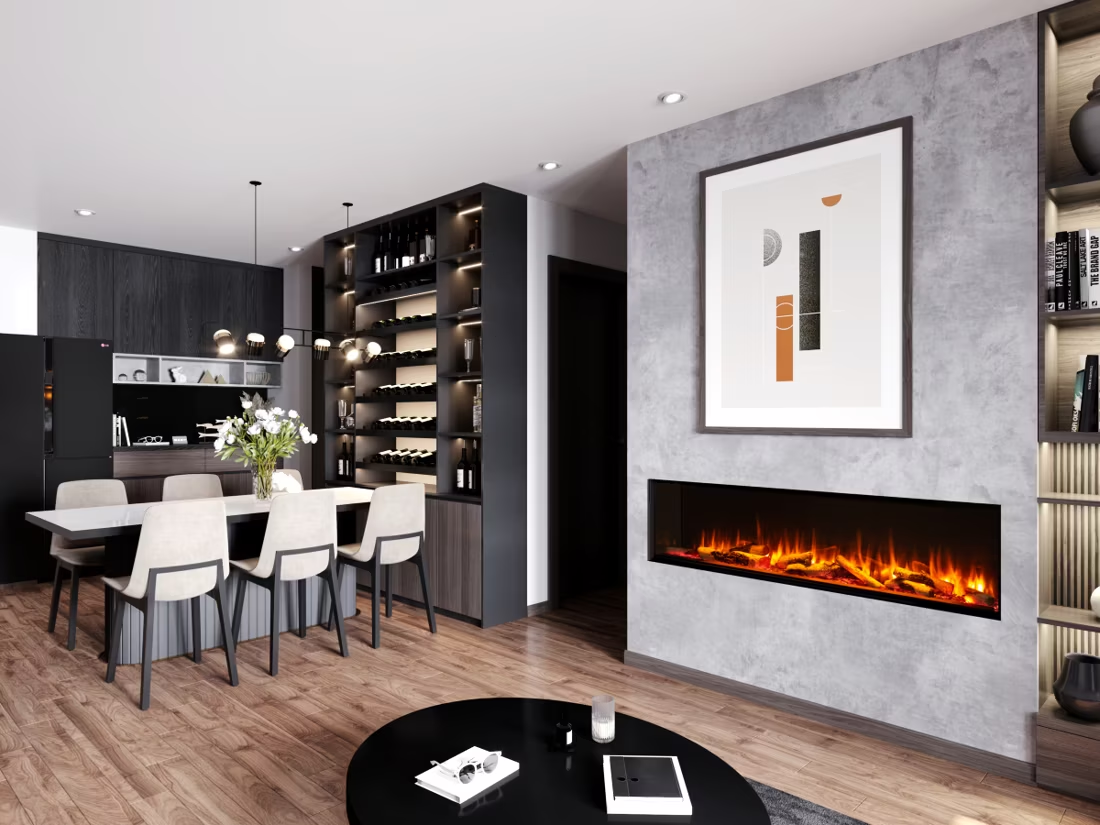
An electric insert is built to slide into an existing masonry or wood-burning fireplace opening, giving you flame effect and heat without touching your existing chimney. A built-in electric fireplace is a wall-mounted or recessed unit designed for new construction or a remodel, often flush with drywall for a linear, modern look popular in newer Williamson County builds. A media console (or mantel) fireplace is a standalone furniture piece with the heater built in—no installation beyond plugging it in, which makes it the easiest option for renters, townhomes, or anyone who wants flexibility to move later.
How much does it cost to run an electric fireplace in Williamson County?
Most electric fireplaces draw around 1,500 watts on the heat setting, and far less—often under 100 watts—when running the flame effect alone without heat. Run on Middle Tennessee Electric's residential rates, a few hours a day of heated use adds a modest amount to a monthly bill, considerably less than running a space heater of the same wattage continuously, since most homeowners use the fireplace for a few hours in the evening rather than as a primary heat source. Flame-only, ambiance-mode use costs only a few cents an hour.
What's the best electric fireplace for a finished basement in Williamson County?
Finished basements are one of the most common electric fireplace installs in this county, particularly in larger Brentwood and Franklin homes. A built-in linear unit set into a media wall or stone surround is the popular choice, since basements rarely have an existing chimney or masonry opening to retrofit. Look for a unit with a strong heating element if the space is used often in winter, and confirm the basement has (or can have) a dedicated circuit—most local dealers will check your electrical panel capacity before recommending a specific model.
Are electric fireplaces safe around kids and pets?
Yes—electric fireplaces are generally considered the safest hearth option for households with young kids or pets, which is a big part of their popularity in family-heavy Williamson County neighborhoods. There's no open flame, no hot glass in most models (many use cool-touch glass fronts), no combustion byproducts, and no ash or embers. Some models still generate real heat at the vents, so it's worth checking a specific unit's surface temperature if you have a crawling infant or a curious dog, but overall the safety profile is a major reason families choose electric over wood or gas for playrooms and family rooms.
Electric vs. gas fireplace—which is right for my Williamson County home?
Gas fireplaces are common throughout Williamson County too, especially in homes on Piedmont Natural Gas lines in established Franklin and Brentwood neighborhoods—they deliver stronger, furnace-like heat and a more realistic flame. Electric fireplaces skip the gas line and venting entirely, install almost anywhere with just power, and cost less upfront and to run occasionally. For homes already on natural gas with a masonry fireplace to convert, gas is often the better heat source. For newer all-electric subdivisions, condos, basements, or anywhere adding a gas line isn't practical, electric is usually the simpler and more cost-effective path. Local dealers carry both and can walk through which fits your specific house.
Can I put an electric fireplace anywhere in my house?
Almost—that's one of the main advantages over wood or gas. Since there's no venting or combustion, an electric fireplace can go on an interior wall, in a bedroom, in a home office, or in a basement with no exterior access at all, as long as there's power available. The only real constraints are electrical: plug-in units need a nearby outlet on an unshared circuit if you're running the heater, and built-in units need a dedicated circuit sized correctly by an electrician. Beyond that, placement is mostly a design decision rather than a code one, which is why electric fireplaces show up in such a wide range of rooms across Williamson County homes.
Can I put a TV above my fireplace?
Yes—with an asterisk. Fireplaces are hot and TVs don't like heat. Either put a mantel between them to deflect rising warmth, or choose a fireplace with heat-management technology that creates a cool zone on the wall above—the wall stays around 125 degrees, barely warm, while the room still gets full heat. If you like clean lines and don't want a mantel, heat management is the answer.
Do electric fireplaces actually produce heat?
Yes—most put out around 4,800–5,000 BTUs from a standard outlet, which comfortably warms a bedroom, office, or den as a comfort-zone heater. What they won't do is carry a whole house the way wood, gas, or pellet can. Think of electric as ambiance-first with honest supplemental heat: flames on with no heat in July, flames plus warmth in January.
How much should I budget for a fireplace?
For an average home—covering the fireplace, the vent pipe, and basic installation—a budget between $3,900 and $5,500 gives you a lot of options across wood, gas, and pellet. By the time you add finish work, gas line, and electrical, the average complete installation lands between $5,000 and $12,000 all-in. In a remodel or new build, a good rule is to put about 2.5% of the total project cost toward the fireplace.
Does a fireplace add value to my home?
On average, a fireplace adds back to the home about the same amount you spent installing it. Add the monthly savings from heating the rooms you actually use instead of the whole house—often hundreds of dollars a year—and the value case is strong before you even count what a fire does for how your family uses the room.
Stove and Fireplace Dealers in Williamson County
Listings include WhyFire partner dealers, dealers we have verified as authorized for the brands we recommend, and established local businesses that carry hearth products. Every listing shows which one it is. The ones marked Preferred run on WhyFire's software, so they can show you real pricing and book your appointment right here. No manufacturer pays for placement. How we verify dealers →
Ashbusters Chimney Service
Nashville Fireplace Dist.
Allegiance Chimney Solutions
Find your electric fireplace in Williamson County.
Tell us a bit about your home and we'll match you with the right electric fireplace, insert, or built-in unit—plus a free Project Guide & Parts List and a trusted local dealer to install it.
Find Your Fireplace →