
A Less Common Heat Source in Whiteville—But Still Worth Considering.
Hardeman County's mild winters mean pellet stoves aren't the default here, but for backup heat during ice-storm outages or a workshop that needs steady warmth, a properly matched local dealer can still make it a smart install.
Every Project Starts From One of These Five Situations
Mild winters keep pellet heat on the sidelines here.
Whiteville sits at 504 feet in Hardeman County, in a climate zone 3A pocket where winter lows average 28°F and the area sees a mild, short heating season—less than half the winter heating load of a genuinely cold-climate town like Duluth, Minnesota. That's mild enough that most homes here run on electric heat pumps through Bolivar Energy Authority (residential rates around $0.135/kWh) or natural gas, with wood or pellet appliances serving as backup rather than necessity.
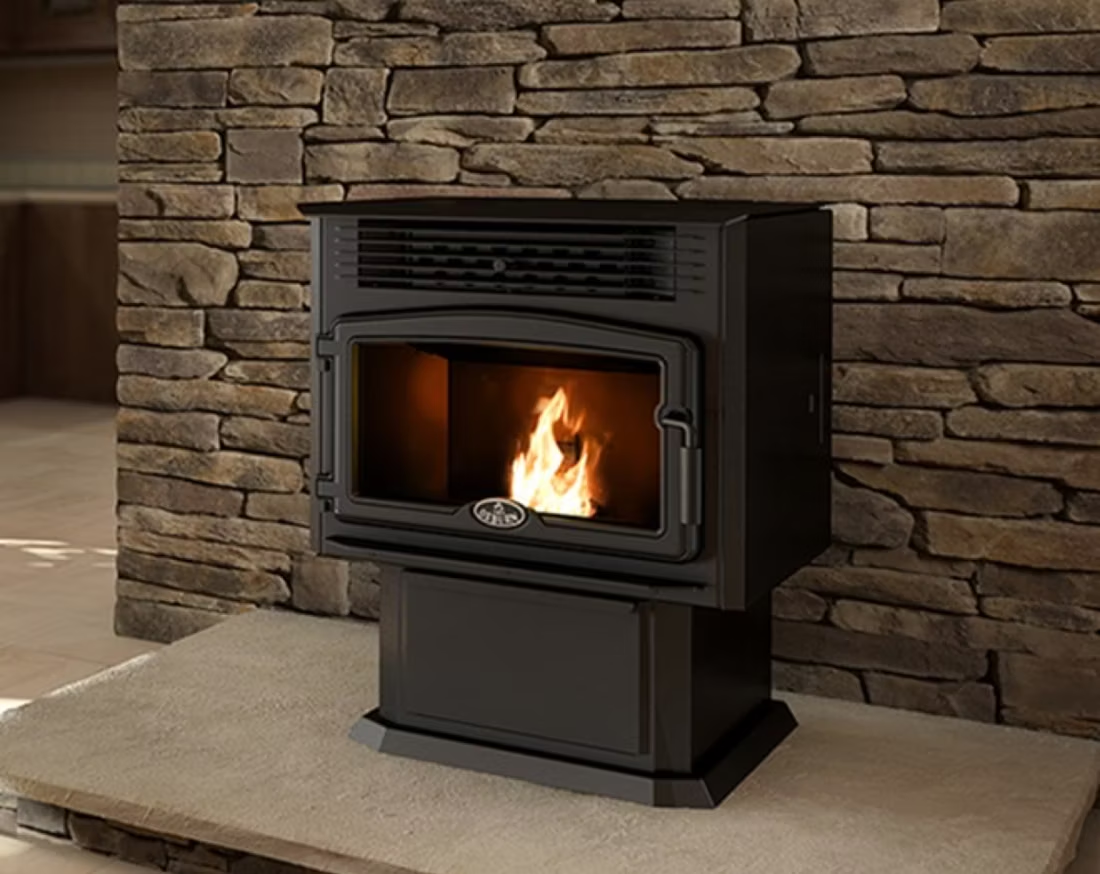
Because of that, Whiteville doesn't have the dense pellet-stove dealer network you'd find in a colder market—no rows of bagged pellets at every hardware store the way you'd see in New England or the upper Midwest. That said, pellets aren't unavailable: brands like Lignetics, Hamer Pellet Fuel, and Greenway Renewable Energy distribute through the region, typically sold by the pallet through farm supply stores rather than stocked shelf-by-shelf. A small number of Hardeman County homeowners still choose pellet stoves—for a detached shop, a room addition without ductwork, or as a hedge against the ice storms that occasionally knock out power in rural West Tennessee.
Three steps. No salesperson until you're ready.
Tell us about your project
Your zip code, your situation, and the fuel you're leaning toward—or let the answers point you to one.
See what's actually available
The brands dealers within 100 miles genuinely carry—real options, never a catalog mirage.
Get your dealer & Project Guide
A trusted local dealer, plus the free Project Guide & Parts List that names every component of the job.
Frequently Asked Questions
Does a pellet stove make sense in Whiteville's climate?
For most homes here, no—not as primary heat. With winter lows averaging 28°F and only a mild, short heating season, Whiteville's climate doesn't demand the kind of sustained solid-fuel heat output that pellet stoves are built for. Most homes rely on electric heat pumps or natural gas for whole-house heating. Where a pellet stove does make sense is supplemental use: a converted garage, a sunroom, a workshop without existing ductwork, or as backup heat for the handful of ice storms that hit West Tennessee most winters.
How much does a pellet stove installation cost?
Because pellet installs are uncommon in Hardeman County, pricing here tracks closer to regional averages than a hyper-local norm: expect roughly $3,500 to $6,500 for a freestanding pellet stove with proper venting, or somewhat less for an insert into an existing masonry opening if one is available. The bulk of that cost is the vent kit and any wall or roof penetration work—not the appliance itself. A local dealer serving the Jackson or Memphis corridor can give you a firm number after seeing your space.
Where can I buy pellet fuel near Whiteville?
You won't find pellets stocked at every hardware store the way you would in a colder market, but they are available. Lignetics, Hamer Pellet Fuel, and Greenway Renewable Energy all distribute into the region, typically through farm and feed supply retailers rather than dedicated hearth shops. Most Whiteville owners plan to buy by the pallet (roughly 50 forty-pound bags) once or twice a season rather than picking up a bag or two at a time, since local shelf stock is thin.
Do I need a permit to install a pellet stove in Whiteville?
Yes—a new solid-fuel or pellet-burning appliance typically requires a building permit through the Hardeman County building department, since it involves a wall or roof penetration for venting. Most licensed installers handle the permit application as part of the job. Because pellet installs are infrequent here, it's worth confirming directly with the county office rather than assuming the process mirrors a wood stove permit, since inspection requirements can differ slightly.
What's the difference between a pellet stove and a wood stove?
A pellet stove burns compressed hardwood pellets fed automatically from a hopper, so you set a thermostat and it maintains a steady burn without tending. A wood stove burns cordwood you load and manage by hand, and it will run without electricity—an advantage during outages. In Whiteville, neither is common as primary heat given the mild winters, but between the two, pellet stoves offer more consistent, hands-off heat for a workshop or bonus room, while wood stoves remain the more common choice for the rare household that wants a true backup heat source that doesn't depend on the grid.
Will a pellet stove work if the power goes out?
Not without a backup power source. Pellet stoves rely on an electric auger to feed fuel and a blower to distribute heat, so a power outage shuts the unit down along with everything else on the Bolivar Energy Authority grid. If backup heat during ice storms is your main reason for considering a pellet stove, plan on pairing it with a small battery backup or portable generator sized for the stove's low wattage draw—most units only need 100 to 400 watts to keep running.
What size pellet stove do I need?
Given how Whiteville homeowners typically use pellet stoves—as supplemental heat for a specific room, garage, or workshop rather than the whole house—most installs here fall into the small-to-medium range, covering 500 to 1,500 square feet. Sizing still depends on insulation, ceiling height, and how open the space is to the rest of the house. A local dealer can size it properly during an in-home or in-shop visit rather than guessing off square footage alone.
Should I get a pellet stove or just stick with gas or electric heat?
For whole-house heating in Whiteville, gas or an electric heat pump through Bolivar Energy Authority will almost always be more practical and less maintenance than a pellet stove—no fuel storage, no hopper to load, no auger to service. Where pellet still wins is in a specific supplemental scenario: a detached space without existing ductwork, or a household that wants a real flame and radiant heat as a hedge against outages, understanding that it still needs electricity to run. If you're weighing options for a single problem room, a local dealer can walk through gas, electric, and pellet side by side for your specific space.
Where do I find a pellet stove dealer near Whiteville?
Because pellet installs are infrequent in Hardeman County, most homeowners end up working with a hearth dealer based out of the larger Jackson or Memphis market rather than someone in Whiteville itself. That's not a downside—a dealer who regularly services a bigger territory has more installation experience with the venting and clearance details that matter for a safe setup. We'll match you with a trusted dealer who actually covers your zip code, rather than the nearest name on a map.
Why is my open fireplace making my house colder?
Open fireplaces suck—literally. As the fire burns, it consumes air your furnace already paid to heat and pulls it out through the chimney, so the house is actually colder after the fire goes out than before you lit it. An insert fixes this: it seals the chimney, puts fixed glass across the front, and turns that hole in your house into a real heat source.
Why is a fireplace insert so efficient?
An insert does two things: it seals the chimney completely, so you stop losing air you already paid to heat, and it radiates warmth into the room through the firebox and glass. Most add a heat-exchange fan that pulls cool room air underneath, wraps it around the hot firebox, and pushes it back out warm. Your home is more efficient before you've even lit the first fire.
Can I install a fireplace myself?
If you're putting a fire in your house on purpose, it's best to work with an expert. Unless you're genuinely experienced in framing, gas line, vent pipe, and the national code on clearances to combustibles, have a professional do it—and ideally the same company that sells you the fireplace, so warranty, service, and liability all live under one roof.
Can a fireplace actually lower my heating bill?
Yes—by creating a comfort zone. A furnace heats every square foot of the house just to warm the one room you're in; a gas fireplace on low burns roughly a sixth of the gas a typical furnace does. Set the furnace around 55–60 degrees as a baseline, then heat the rooms your family actually uses. Families who heat this way commonly save $20–$60 a month.
Nearby Dealers
Hearth shops serving Whiteville and the surrounding area. Every listing shows whether it is a WhyFire partner, a dealer we have verified as authorized for the brands we recommend, or a local business carrying hearth products. No manufacturer pays for placement. How we verify dealers →
31w - Mason, Tn
Walt Mestan Dba The Fireplace Center
Acme Brick Company
Hlc Cullipher LLC
Wells Building Supply
Acme Brick Company
Jones Mobile Home Service Inc
Pellet Brands Stocked Around Whiteville
Manufacturers will point you to the nearest stocking dealer.
Find your pellet stove in Whiteville, TN.
Tell us about your space and how you plan to use it, and we'll match you with a trusted local dealer and send over a free Project Guide & Parts List—the exact parts, vent kit, and installer recommendation for your project.
Find Your Fireplace →