
Electric heat that fits any room in Washington County.
No gas line, no chimney, no permit hassle—just plug in or hardwire a unit for supplemental warmth and year-round ambiance from Johnson City to Jonesborough. Find the right fit and connect with a trusted local dealer.
Every Project Starts From One of These Five Situations
Simple, flexible heat for Tri-Cities homes.
Washington County sits in the Blue Ridge foothills of northeast Tennessee, home to Johnson City and Jonesborough—the oldest town in the state—at elevations running roughly 1,600 to 2,200 feet. With around 4,300 heating degree days and winter lows averaging in the mid-20s, the climate here is real but moderate: nothing close to the sustained cold of a place like Burlington, VT or Duluth, MN. Most homes need supplemental heat for a genuine cold snap, not a primary heating system that has to run flat-out from October through April, and that's exactly the gap electric fireplaces fill well.
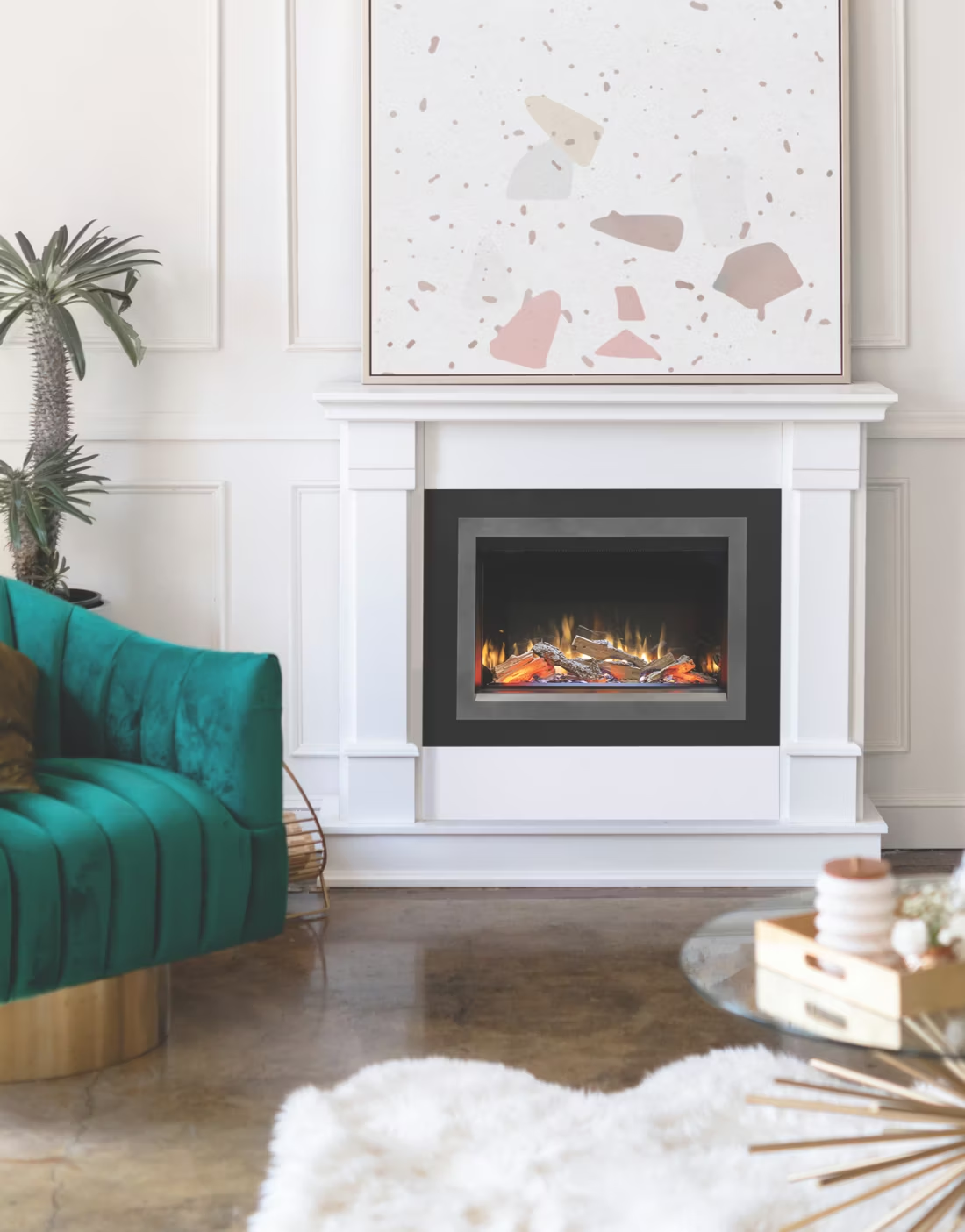
Electric units are especially practical in this county's mix of housing stock—historic homes around Jonesborough's downtown district where adding a masonry chimney or running a new gas line isn't realistic, newer construction in Johnson City subdivisions, and mountain cabins and rental properties throughout the county where simplicity matters more than raw BTU output. There's no venting to size, no combustion byproducts to manage, and most models plug into a standard outlet or connect through a local electrician for a dedicated 240V circuit. Power comes through BrightRidge, the local TVA power distributor, so running costs are predictable and installation timelines are short compared to wood or gas projects.
Three steps. No salesperson until you're ready.
Tell us about your project
Your zip code, your situation, and the fuel you're leaning toward—or let the answers point you to one.
See what's actually available
The brands dealers within 100 miles genuinely carry—real options, never a catalog mirage.
Get your dealer & Project Guide
A trusted local dealer, plus the free Project Guide & Parts List that names every component of the job.
Frequently Asked Questions
How much does an electric fireplace installation cost in Washington County?
Plug-in electric inserts and freestanding units typically run $300 to $1,500 installed, including basic trim work if it's going into an existing fireplace opening. Built-in wall units or larger linear models that require a dedicated 240V circuit run higher—usually $800 to $2,500—because they need an electrician to run new wiring, which is common in Johnson City and Jonesborough homes with older panels. Because there's no venting or masonry work involved, electric installs are consistently the fastest and least invasive fireplace project in the county, often completed in a single day.
What size electric fireplace do I need for my room?
Electric fireplaces are rated for supplemental heat, generally 400 to 1,500 square feet per unit depending on the model, so sizing is more about matching the visual scale to your room and picking the right heater wattage for how cold that specific space gets. A sunroom or converted porch in Washington County that catches a hard freeze a few nights a winter benefits from a unit with a stronger 1,500-watt heater; a living room with central HVAC already handling the bulk of the heating load can lean toward a smaller unit chosen mainly for the flame effect. A local dealer will walk through your room's insulation and existing heating setup before recommending a size.
Where can I find electric fireplace dealers near me in Washington County?
Hearth retailers serving Johnson City, Jonesborough, and the surrounding county carry electric inserts, mantels, and built-in linear units, and most can coordinate with a licensed electrician when a dedicated circuit is needed. Because electric units don't require the same certifications as wood or gas installs, you have more flexibility in who handles the work—but a dealer familiar with local electrical permitting through the Washington County Building Department still saves time and avoids code issues on larger installs.
What's the difference between an electric insert and a built-in wall unit?
An electric insert is sized to slot into an existing fireplace opening—masonry or zero-clearance—and is the fastest option for homeowners in older Jonesborough-area homes who want to retire a drafty wood-burning fireplace without tearing it out. A built-in wall unit is framed into new construction or a remodel, similar to how a linear gas fireplace would be installed, and offers a wider range of sizes and finishes since it isn't constrained by an existing opening. For most Washington County retrofits, an insert into an existing hearth is the simpler and less expensive path.
Do I need a permit to install an electric fireplace in Washington County?
A simple plug-in electric fireplace generally doesn't require a permit since it uses an existing outlet like any other appliance. If your installation requires a new dedicated circuit or panel work—common with larger built-in units—that electrical work typically needs to be pulled through the Washington County Building Department and performed by a licensed electrician. Most dealers handle this coordination as part of the installation quote, so you're not left tracking down permits yourself.
What's the best electric fireplace for Washington County's climate?
Because winters here are moderate—average lows around 26°F and roughly 4,300 heating degree days—most homeowners don't need maximum-output electric heaters; the priority is usually flame realism and fit within the room. Mid-range units from brands like Dimplex and Amantii cover the occasional harder freeze with a 1,500-watt heater while still running quietly on the flame-only setting most of the year. For sunrooms, additions, or older homes without central heat reaching every corner, a unit with a stronger heater rating is worth the small premium so it can genuinely take the edge off a cold January night.
How much does it cost to run an electric fireplace?
Running costs depend on wattage and how often you use the heater function versus flame-only mode. A typical 1,500-watt heater running on high costs roughly 15 to 25 cents per hour at current BrightRidge/TVA residential rates, similar to a space heater. Most owners in Washington County use the heater setting selectively—during a cold snap or in a room that doesn't get enough coverage from central HVAC—and run the flame effect without heat the rest of the time, which draws only a few watts.
Is electric a good fit if I don't have natural gas service?
Yes—this is one of the more common reasons homeowners in rural parts of Washington County choose electric. Natural gas service doesn't reach every corner of the county outside Johnson City, and propane requires tank installation and ongoing delivery. Electric fireplaces sidestep that entirely since they run off the same power already serving the home through BrightRidge. For a room that just needs supplemental warmth and ambiance rather than a full heating solution, that simplicity often outweighs the higher heat output of a gas or wood option.
Electric vs. wood—which is right for my home?
Wood is still common throughout Washington County—oak, hickory, and maple are widely available locally, and Forest Service permits through the Nantahala-Pisgah National Forests run about $20 per cord during the May-to-October cutting season. Wood delivers real heat output and works without power, which matters during an ice storm outage. Electric can't provide backup heat when the grid is down, but it wins on convenience: no ash, no chimney maintenance, no cutting or stacking, and installation that takes a day instead of a week. For a primary heat source in an older farmhouse, wood often makes sense; for a supplemental unit in a living room, sunroom, or bedroom, electric is usually the easier and cheaper answer.
Can I put a TV above my fireplace?
Yes—with an asterisk. Fireplaces are hot and TVs don't like heat. Either put a mantel between them to deflect rising warmth, or choose a fireplace with heat-management technology that creates a cool zone on the wall above—the wall stays around 125 degrees, barely warm, while the room still gets full heat. If you like clean lines and don't want a mantel, heat management is the answer.
Does an electric fireplace need a vent or chimney?
No—that's its superpower. An electric fireplace needs a wall and an outlet, period. No vent pipe, no gas line, no clearances to design around, which is why it works in bedrooms, offices, apartments, and walls where venting a gas or wood unit would be impractical or impossible. Installation is typically the simplest and least expensive of any fireplace type.
Can a fireplace actually lower my heating bill?
Yes—by creating a comfort zone. A furnace heats every square foot of the house just to warm the one room you're in; a gas fireplace on low burns roughly a sixth of the gas a typical furnace does. Set the furnace around 55–60 degrees as a baseline, then heat the rooms your family actually uses. Families who heat this way commonly save $20–$60 a month.
Can I install a fireplace myself?
If you're putting a fire in your house on purpose, it's best to work with an expert. Unless you're genuinely experienced in framing, gas line, vent pipe, and the national code on clearances to combustibles, have a professional do it—and ideally the same company that sells you the fireplace, so warranty, service, and liability all live under one roof.
Stove and Fireplace Dealers in Washington County
Listings include WhyFire partner dealers, dealers we have verified as authorized for the brands we recommend, and established local businesses that carry hearth products. Every listing shows which one it is. The ones marked Preferred run on WhyFire's software, so they can show you real pricing and book your appointment right here. No manufacturer pays for placement. How we verify dealers →
Builders First Source- Gray
Admiral Propane LLC
Marsh Lp Gas
Hammonds HVAC & Gas Services
Hammond's Heating And Air
Blossman Gas And Appliance
Holston Hardware Company
Roan Mountain Lawn & Garden
Gas House Inc
Find your electric fireplace in Washington County.
Tell us a bit about your home and we'll match you with the right electric fireplace or insert, plus a free Project Guide & Parts List—and connect you with a trusted local dealer.
Find Your Fireplace →