
Find the right hearth for your Washington County home.
Wood, gas, pellet, and electric fireplace resources for every city and community in Washington County—from Johnson City to Jonesborough to Gray. Find the right unit and connect with a trusted local hearth retailer.
Every Project Starts From One of These Five Situations
Moderate Appalachian winters across Washington County, Tennessee.
Washington County sits in the ridge-and-valley foothills of the Tennessee side of the Appalachians, with a moderate winter heating season and average winter lows around 26°F—milder than places like Bozeman or Burlington, but still cold enough that a working hearth matters from November through March. The county's hardwood forests—oak, hickory, and maple, with pine mixed in on the ridges—have supplied firewood to local homes for generations, and Tennessee's oldest town, Jonesborough, still has plenty of century-old houses with masonry fireplaces built around exactly that wood supply. There are no air quality non-attainment concerns here, so wood burning isn't restricted the way it is in western basin counties—it's simply a matter of picking the right fuel and appliance for your house.
What you'll find on this hub: hearth retailers, service technicians, and fuel suppliers serving every community in the county—from Johnson City's growing suburbs to Jonesborough's historic district, out to Gray, Telford, and the rural stretches near the Nantahala-Pisgah National Forests boundary. Pick your fuel below to drill into specifics—local dealers, installation costs, recommended units, and the resources that match your project. Whether you're heating a farmhouse near Boone Lake or a new build off I-26, this is the starting point.
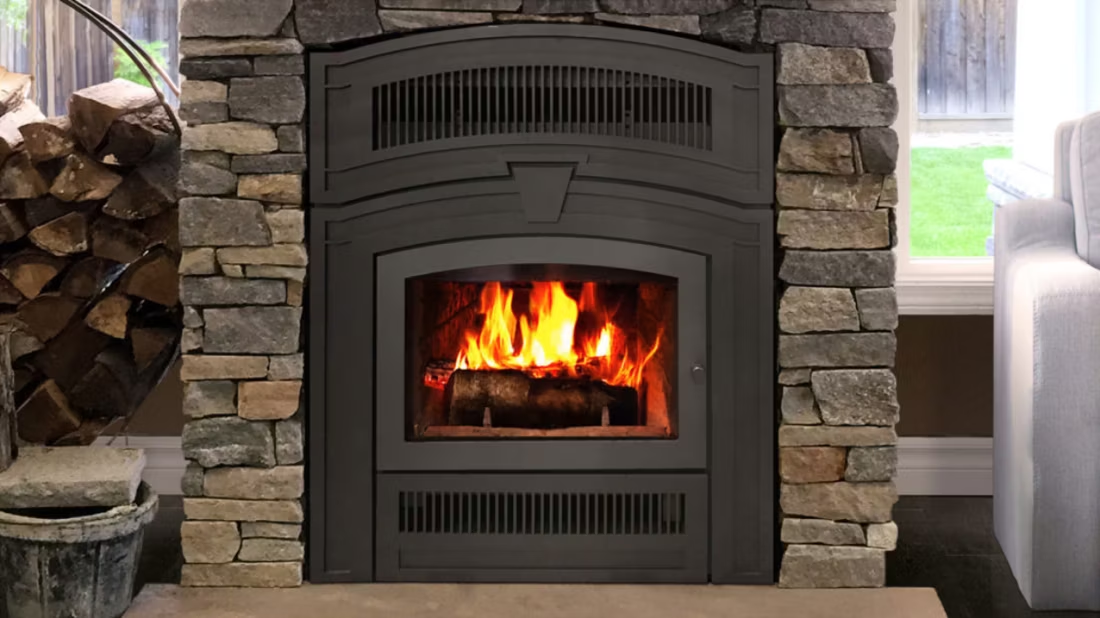
Four fuels. One honest answer for Washington County.
Three steps. No salesperson until you're ready.
Tell us about your project
Your zip code, your situation, and the fuel you're leaning toward—or let the answers point you to one.
See what's actually available
The brands dealers within 100 miles genuinely carry—real options, never a catalog mirage.
Get your dealer & Project Guide
A trusted local dealer, plus the free Project Guide & Parts List that names every component of the job.
Frequently Asked Questions
Which fuel works best in Washington County?
All four fuels are genuinely viable here, which is unusual—Washington County doesn't have the extreme cold that forces a single answer. Wood remains popular given the local oak and hickory supply and the county's rural character outside Johnson City; a mid-size cast iron or steel stove handles the moderate winter heating season without needing an all-night catalytic burner. Gas is the convenience pick for subdivisions in Gray and around Johnson City with natural gas service—instant heat, no wood stacking, easy to zone to a single room. Pellet splits the difference—you get a wood-like flame with hopper convenience, and regional brands like Lignetics and Hamer Pellet Fuel keep supply local. Electric works well as supplemental heat in bedrooms, basements, or historic Jonesborough homes where adding venting isn't practical. Most homeowners here choose based on lifestyle and existing house infrastructure rather than climate necessity.
Do I need a permit to install a fireplace in Washington County?
Generally, yes, for anything beyond a plug-in electric unit. New wood stoves, wood inserts, gas fireplaces, gas inserts, gas stoves, and pellet stoves typically require a building permit, and gas installations need a separate gas line permit completed by a licensed gas-fitter. Within Johnson City and Jonesborough, permits are handled through the respective city building departments; in unincorporated Washington County, the county building permit office handles it. Electric fireplaces usually skip the permit process unless you're doing a built-in installation with new electrical circuits or hardwiring. Most local hearth retailers pull the permit as part of the installation quote, so you rarely have to navigate it solo.
Are there air quality restrictions on wood burning in Washington County?
No—Washington County has no air quality non-attainment designation and no winter burn curtailment program, unlike basin or valley counties farther west that deal with temperature inversions. That said, new wood stove installations still need to meet EPA 2020 NSPS emissions standards to be sold and installed, which most current-production stoves already meet. Practically, this means the limiting factor on wood burning here is chimney condition and wood seasoning, not regulation—oak and hickory need six months to a year of seasoning to burn clean, and a poorly maintained flue is a bigger local concern than any regional smoke advisory.
Can one local hearth retailer handle all four fuel types?
Many Washington County retailers carry at least three of the four fuel types, and several carry all four—wood, gas, pellet, and electric—which is helpful if you're not sure yet what fits your house. Retailers based around Johnson City tend to have the broadest showrooms since they serve the county's largest population base; smaller shops closer to Jonesborough or out toward Telford may specialize more narrowly, often leaning wood and gas given the older housing stock and rural lot sizes in those areas. If you're cross-shopping fuels, a multi-fuel dealer can walk you through working displays and talk through the trade-offs for your specific home and chimney situation.
How does service work in the rural parts of Washington County?
Most chimney sweeps and gas/pellet technicians are based in or near Johnson City and travel out to Gray, Telford, Jonesborough's outskirts, and the rural stretches toward the Nantahala-Pisgah National Forests boundary. Because the county isn't large geographically, travel fees for rural calls tend to be modest compared to sprawling western counties—but scheduling still tightens up in fall as everyone tries to get an annual sweep or gas inspection done before the first cold snap. Booking in September or October, rather than waiting for a December cold spell, is the easiest way to get a convenient appointment.
What's the typical cost range for fireplace installation across all fuel types in Washington County?
Costs run roughly in line with regional Appalachian averages. Wood stove or insert installation: $3,800–$8,000 for typical installs, more for new masonry chimney construction. Gas fireplace, insert, or stove: $4,000–$10,000 depending on whether new gas line work is needed or an existing line is being tapped. Pellet stove or insert: $4,000–$7,000 for a typical install. Electric fireplace: $200–$2,800 for the unit itself, with $300–$1,000 in labor for anything beyond a simple plug-in placement. For fuel-specific breakdowns tied to local retailer pricing, see the county + fuel pages above.
How much should I budget for a fireplace?
For an average home—covering the fireplace, the vent pipe, and basic installation—a budget between $3,900 and $5,500 gives you a lot of options across wood, gas, and pellet. By the time you add finish work, gas line, and electrical, the average complete installation lands between $5,000 and $12,000 all-in. In a remodel or new build, a good rule is to put about 2.5% of the total project cost toward the fireplace.
What is an in-home preview and do I need one?
It's a visit where a hearth professional measures your space, confirms the model you picked actually works in your home, and walks the specs—framing, gas line, venting, finish work—before anything is ordered. Some details you just can't know until you see the house. Never make a down payment without one; it's the single most-skipped step that burns buyers.
Can a fireplace actually lower my heating bill?
Yes—by creating a comfort zone. A furnace heats every square foot of the house just to warm the one room you're in; a gas fireplace on low burns roughly a sixth of the gas a typical furnace does. Set the furnace around 55–60 degrees as a baseline, then heat the rooms your family actually uses. Families who heat this way commonly save $20–$60 a month.
Wood, gas, pellet, or electric—how do I choose?
Match the fuel to your life, not the other way around. Wood: lowest fuel cost and total power-outage independence, but you're hauling and stacking. Gas: press a button, set a thermostat, no maintenance to speak of. Pellet: wood economics with automatic feeding, in exchange for weekly cleaning and a need for electricity. Electric: plugs in anywhere with honest supplemental heat. Nobody regrets the fuel that fits how they actually live.
Stove and Fireplace Dealers in Washington County
Listings include WhyFire partner dealers, dealers we have verified as authorized for the brands we recommend, and established local businesses that carry hearth products. Every listing shows which one it is. The ones marked Preferred run on WhyFire's software, so they can show you real pricing and book your appointment right here. No manufacturer pays for placement. How we verify dealers →
Builders First Source- Gray
Admiral Propane LLC
Marsh Lp Gas
Hammonds HVAC & Gas Services
Hammond's Heating And Air
Blossman Gas And Appliance
Holston Hardware Company
Roan Mountain Lawn & Garden
Gas House Inc
Find your fireplace in Washington County.
Pick your fuel below, and we'll match you with a trusted local dealer and put together a free Project Guide & Parts List—the exact parts, vent kit included, and the dealer we recommend for your project.
Find Your Fireplace →