
Simple electric heat for every cabin on the Cumberland Plateau.
From Spencer to the rental cabins ringing Fall Creek Falls State Park, electric fireplaces bring zone heat and real ambiance to Van Buren County homes without a chimney, a gas line, or a permit fight. Find the right unit and connect with a trusted local dealer.
Every Project Starts From One of These Five Situations
Zone heat without new venting or gas lines.
Van Buren County is Tennessee's least populous county—about 1,469 residents spread across the Cumberland Plateau, anchored by Spencer and Fall Creek Falls State Park, which draws far more visitors each year than the county has full-time residents. Winters here are moderate by national standards: an average winter low around 25°F and a heating season that's just a fraction of what a place like Duluth, MN sees in a typical year. That's cold enough for real supplemental heat needs, but mild enough that a single electric unit can carry a room through most of the season without strain.
Piped natural gas isn't part of the picture in a county this rural, so most gas heat here runs on propane tanks, and most wood heat comes from oak, hickory, maple, and pine cut under Cherokee National Forest permits ($20 per cord, May through October). Electric fireplaces sidestep both of those systems entirely—no tank, no flue, no cutting season to plan around. That makes them a natural fit for the vacation cabins and short-term rentals near Fall Creek Falls, where owners want believable flame and real warmth without an open flame, a chimney to sweep, or a venting inspection. Power comes through Caney Fork Electric Cooperative's rural lines, and most electric fireplace installs run on a standard household circuit, which keeps the project simple for full-time homes and weekend cabins alike.
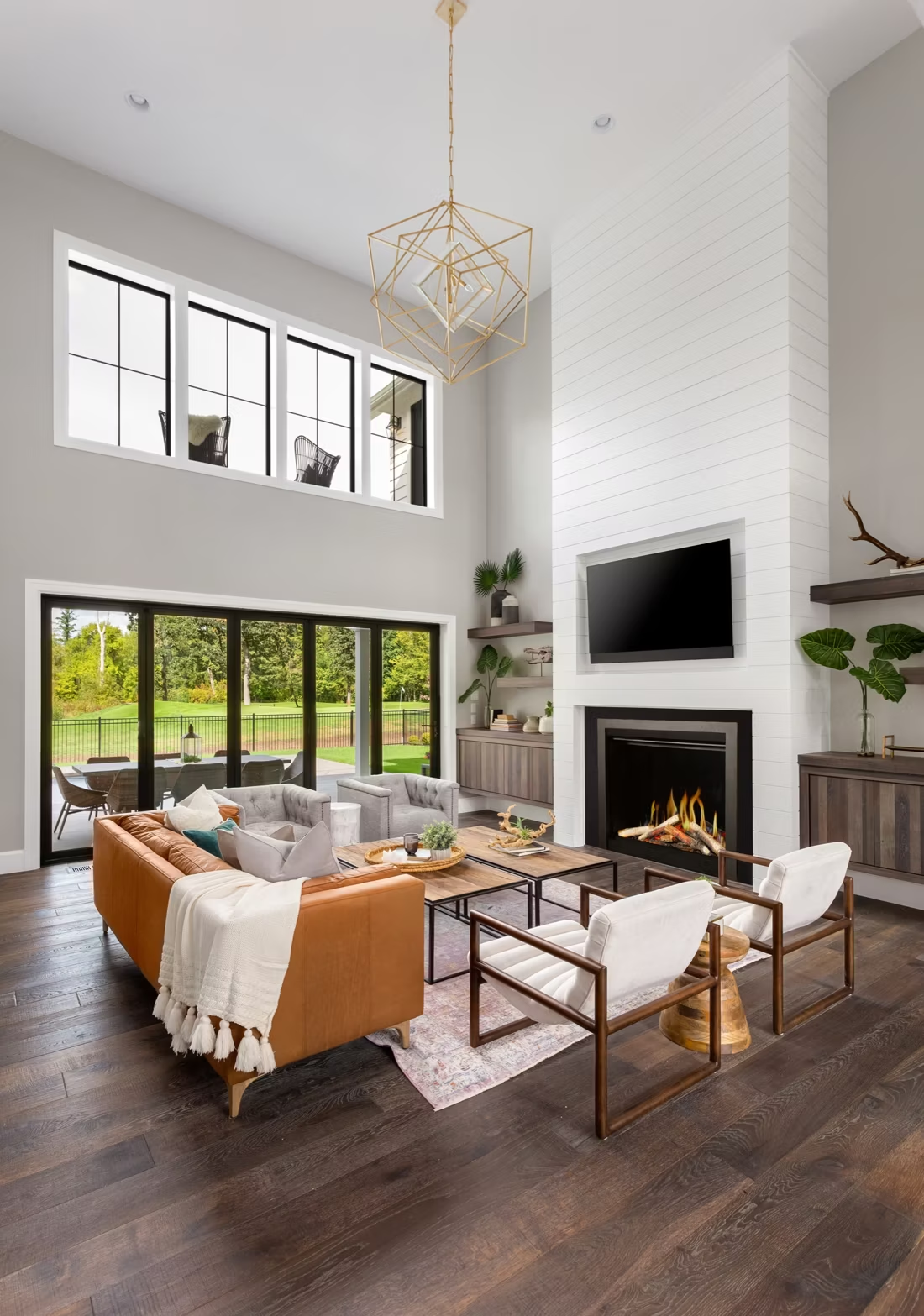
Three steps. No salesperson until you're ready.
Tell us about your project
Your zip code, your situation, and the fuel you're leaning toward—or let the answers point you to one.
See what's actually available
The brands dealers within 100 miles genuinely carry—real options, never a catalog mirage.
Get your dealer & Project Guide
A trusted local dealer, plus the free Project Guide & Parts List that names every component of the job.
Frequently Asked Questions
How much does an electric fireplace installation cost in Van Buren County?
Most electric fireplace projects in Van Buren County run $400 to $1,500. A plug-in insert or mantel unit that drops into an existing opening sits at the lower end—it's often a same-day install with no electrician needed. A built-in linear unit set into new framing, especially one that needs a dedicated 120V or 240V circuit run from the panel, lands toward the higher end once an electrician is involved. Because there's no chimney, gas line, or vent kit to size, electric projects are consistently the least expensive fireplace option available to homeowners and cabin owners in the county.
Will an electric fireplace actually keep a room warm in Van Buren County winters?
For most rooms, yes. Van Buren County's winter lows average around 25°F, and the overall winter heating load is modest compared to true cold-climate regions—nowhere near what a home in Duluth, MN or Fargo, ND has to handle. A properly sized electric insert or stove can comfortably supplement or even carry a single room, a cabin, or a rental unit through most of the season. Electric units aren't typically recommended as the sole heat source for a whole house during the county's coldest snaps, but as zone heat for a living room, bonus room, or seasonal cabin near Fall Creek Falls, they hold up well.
Do I need a permit to install an electric fireplace in Van Buren County?
Usually not. Because electric fireplaces don't involve combustion, venting, or a gas line, most plug-in inserts and mantel units don't trigger a building permit. If your project involves running a new dedicated circuit or doing electrical panel work, that portion of the job should be pulled through Van Buren County's building office and performed by a licensed electrician—most local dealers coordinate that step for you as part of the installation.
Electric vs. wood—which makes more sense for a Van Buren County home or cabin?
Wood heat has deep roots here—Cherokee National Forest cutting permits ($20 per cord, May through October) put oak, hickory, and maple within reach for self-sufficient heating, and wood works without grid power. Electric, on the other hand, requires zero maintenance, zero chimney cleaning, and zero smoke—which matters a lot for rental cabins around Fall Creek Falls, where owners can't count on guests to tend a fire safely. For a full-time home with wood access, wood often wins on cost per BTU. For a vacation property, a bonus room, or anyone who wants ambiance without the workload, electric is usually the simpler call.
Electric vs. propane—which fits better in a county without natural gas lines?
Since Van Buren County has no piped natural gas, gas fireplace options here mean propane—a tank, a regulator, and a vented or ventless appliance. Electric fireplaces skip all of that: no tank to keep filled, no delivery schedule, no venting to size or inspect. The tradeoff is heat output—propane units put out more raw BTUs for whole-room heating, while electric units are better suited to supplemental warmth and ambiance. For cabins and rentals where simplicity and safety matter more than maximum output, electric is often the lower-hassle choice.
What size electric fireplace or insert do I need?
Sizing depends on the room, not the whole house—electric units are built for zone heating. A compact insert or wall-mount unit (750-1,500 watts) comfortably supplements a bedroom or small living area. A larger linear or built-in unit (1,500 watts and up, often with a higher BTU rating) can carry a great room or an open cabin floor plan through most of a Van Buren County winter. For rental properties near Fall Creek Falls, many owners size slightly larger than the room strictly requires, since guests tend to run the unit on the highest setting regardless of actual need.
Can an electric fireplace be my only heat source?
It can work as a primary heat source for a small, well-insulated cabin or a single room, especially given Van Buren County's relatively moderate winter lows (averaging around 25°F). For a full-size, full-time home, most local dealers still recommend electric as a supplement to a central heat pump or furnace rather than a full replacement, particularly for the plateau's coldest overnight stretches. If backup heat during a grid outage matters to you, keep in mind an electric fireplace needs power to run—it's not an outage-proof option the way a wood stove is.
Why are electric fireplaces popular in cabins and rentals near Fall Creek Falls State Park?
Fall Creek Falls draws far more visitors each year than Van Buren County has residents, and a lot of that traffic ends up in short-term rental cabins. For owners, electric fireplaces solve a specific problem: guests want the look and warmth of a fire, but an open flame or a wood-burning appliance is a liability and a maintenance headache with unsupervised renters. Electric units give a realistic flame effect, cool-touch glass on most models, and none of the ash, creosote, or chimney inspection requirements that come with wood or gas—which is a big part of why they show up so often in the cabin listings around the park.
What happens to my electric fireplace during a power outage?
It stops working—electric fireplaces draw power directly from the wall, so an outage on Caney Fork Electric Cooperative's lines means no flame effect and no heat from that unit until power is restored. For most Van Buren County homes this is a minor inconvenience since electric fireplaces are typically supplemental heat anyway. If you're in an area prone to extended outages, especially during winter storms on the plateau, it's worth having a backup plan—a propane heater or a wood stove elsewhere in the home—rather than relying on the electric unit alone during an outage.
Can I put a TV above my fireplace?
Yes—with an asterisk. Fireplaces are hot and TVs don't like heat. Either put a mantel between them to deflect rising warmth, or choose a fireplace with heat-management technology that creates a cool zone on the wall above—the wall stays around 125 degrees, barely warm, while the room still gets full heat. If you like clean lines and don't want a mantel, heat management is the answer.
Do electric fireplaces actually produce heat?
Yes—most put out around 4,800–5,000 BTUs from a standard outlet, which comfortably warms a bedroom, office, or den as a comfort-zone heater. What they won't do is carry a whole house the way wood, gas, or pellet can. Think of electric as ambiance-first with honest supplemental heat: flames on with no heat in July, flames plus warmth in January.
How much should I budget for a fireplace?
For an average home—covering the fireplace, the vent pipe, and basic installation—a budget between $3,900 and $5,500 gives you a lot of options across wood, gas, and pellet. By the time you add finish work, gas line, and electrical, the average complete installation lands between $5,000 and $12,000 all-in. In a remodel or new build, a good rule is to put about 2.5% of the total project cost toward the fireplace.
Can a fireplace actually lower my heating bill?
Yes—by creating a comfort zone. A furnace heats every square foot of the house just to warm the one room you're in; a gas fireplace on low burns roughly a sixth of the gas a typical furnace does. Set the furnace around 55–60 degrees as a baseline, then heat the rooms your family actually uses. Families who heat this way commonly save $20–$60 a month.
Stove and Fireplace Dealers in Van Buren County
Listings include WhyFire partner dealers, dealers we have verified as authorized for the brands we recommend, and established local businesses that carry hearth products. Every listing shows which one it is. The ones marked Preferred run on WhyFire's software, so they can show you real pricing and book your appointment right here. No manufacturer pays for placement. How we verify dealers →
Spar Gas Inc.
Middle Tn Natural Gas - Sparta
Middle Tn Natural Gas - McMinnville
Get your Project Guide & Parts List for an electric fireplace in Van Buren County.
Tell us about your home or cabin and we'll put together a free Project Guide & Parts List—the right electric fireplace or insert, the exact parts needed, and a trusted local dealer to install it.
Find Your Fireplace →