
Find the right fireplace for your Cumberland Plateau home.
Wood, gas, pellet, and electric fireplace resources for Spencer and the rural communities scattered across Van Buren County—from the courthouse square to the ridges near Fall Creek Falls State Park. Find the right unit and connect with a local hearth dealer who actually covers this corner of the plateau.
Every Project Starts From One of These Five Situations
Small county, real winters, on the Cumberland Plateau.
Van Buren County is Tennessee's least-populated county—about 1,469 people spread across roughly 273 square miles of plateau terrain near Fall Creek Falls State Park. Sitting at elevation on the Cumberland Plateau, winters here are moderate compared to the upper Midwest—average lows around 25°F and a heating season on the milder side, far short of places like Bismarck, North Dakota, where winters demand more than twice the heating—but cold enough that homes still need a real primary or supplemental heat source for four to five months a year. The hardwood forests here run to oak, hickory, and maple, with pine mixed in on the drier ridges, and firewood cutting permits for national forest land route through the Cherokee National Forest office.
What you'll find on this hub: hearth retailers, service technicians, and fuel suppliers serving the whole county—Spencer, the county seat, plus the rural crossroads and lake-adjacent communities that make up most of Van Buren's geography. Because the county is so thinly populated, several of the businesses listed below are based in neighboring McMinnville, Sparta, or Crossville and travel in for installs and service calls. Pick your fuel below to see local dealers, installation costs, and the resources that match your project—whether you're heating a farmhouse near the plateau rim or a cabin close to the park.
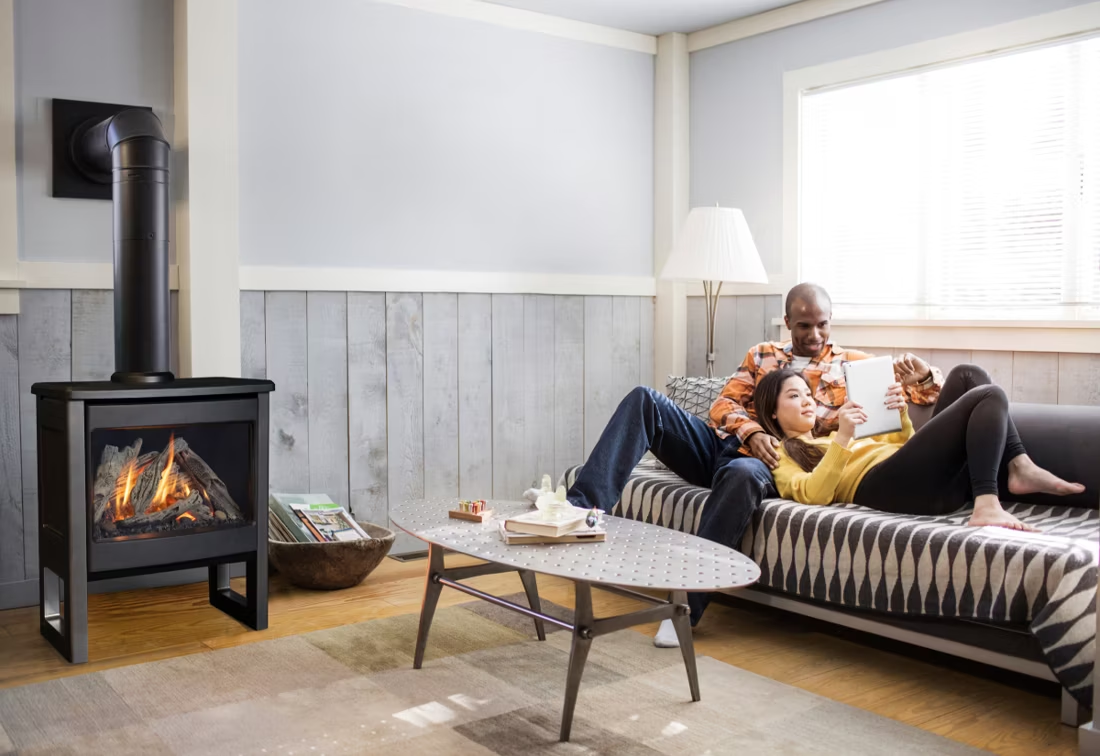
Four fuels. One honest answer for Van Buren County.
Three steps. No salesperson until you're ready.
Tell us about your project
Your zip code, your situation, and the fuel you're leaning toward—or let the answers point you to one.
See what's actually available
The brands dealers within 100 miles genuinely carry—real options, never a catalog mirage.
Get your dealer & Project Guide
A trusted local dealer, plus the free Project Guide & Parts List that names every component of the job.
Frequently Asked Questions
Which fuel works best for a home in Van Buren County?
It depends on your setup, but wood has deep roots here—oak and hickory from the surrounding plateau forests burn hot and long, and a lot of homeowners cut their own firewood under a Cherokee National Forest permit, which keeps fuel costs near zero. Propane is the practical choice for gas heat since the county has no widespread natural gas main service—propane fireplaces and inserts give you instant, thermostat-controlled heat without hauling wood. Pellet stoves are a solid middle ground if you want wood-style ambiance without splitting and stacking; Lignetics and Hamer Pellet Fuel bags are generally available through farm supply stores in the surrounding towns. Electric fireplaces work well as supplemental heat in bedrooms or additions, but given a heating season that runs several months most winters, they're rarely anyone's sole heat source here. Most Van Buren County homes lean on wood or propane as primary heat, with pellet or electric filling in secondary rooms.
Do I need a permit to install a fireplace in Van Buren County?
For most permanent installations, yes—new wood stoves, wood inserts, propane fireplaces, propane inserts, and pellet stoves generally require a county building permit, and any new propane tank or gas line work should be handled by a licensed installer. New wood-burning appliances also have to meet current EPA New Source Performance Standards regardless of local ordinance, so an old uncertified stove usually can't just be swapped in. If you're cutting your own firewood on national forest land, that's a separate matter—a permit through the Cherokee National Forest office. Electric fireplaces are typically permit-free unless you're doing a built-in installation with new wiring. Most local dealers who install here handle the permitting as part of the job.
Are there any burn restrictions or air quality rules in Van Buren County?
No—Van Buren County doesn't have any current air quality non-attainment designations or winter burn curtailment programs, unlike some western basin counties that see inversion-driven burn bans. That said, it's still worth installing an EPA-certified stove: they burn more efficiently, produce far less creosote in a chimney flue, and cut down on visible smoke for neighbors on tighter rural lots. With hardwoods like oak and hickory, proper seasoning (at least six months to a year, split and stacked) matters more for a clean, safe burn than any local ordinance does.
Can one dealer handle all four fuel types for a Van Buren County home?
Because the county's population is so small—under 1,500 residents countywide—very few hearth businesses are physically located inside Van Buren County itself. Most homeowners end up working with a multi-fuel dealer based in McMinnville, Sparta, or Crossville that regularly services the plateau. Those regional dealers often do carry wood, propane/gas, pellet, and electric lines, which is useful if you're still comparing fuels. Smaller local suppliers tend to focus on one category—firewood, or bagged pellets—rather than full installation and service. Find My Fireplace matches you with whichever trusted dealer actually covers your address and fuel.
How does installation or service work when so few businesses are based in the county itself?
Expect the retailer or technician to be driving in from a neighboring town, which is normal for a county this size. Book pre-season service (late summer through early fall) rather than waiting for a mid-winter breakdown, since travel schedules fill up fast once temperatures drop. A modest trip fee—often $40-$75—is common for service calls on top of standard labor. If you're in one of the more remote areas near the plateau rim or the lake, confirm the dealer's service radius before scheduling; some cap coverage around 25-35 miles from their home base.
What does fireplace installation typically cost across fuel types in Van Buren County?
Costs run close to regional Tennessee averages, sometimes with a small premium for the drive-in service. Wood stove or insert: roughly $4,000-$8,500 depending on chimney or liner work. Propane fireplace, insert, or stove: about $4,000-$9,500, with the higher end covering new tank placement and gas line runs since most of the county isn't on natural gas mains. Pellet stove or insert: typically $4,200-$7,000. Electric fireplace: $200-$2,800 for the unit itself, plus $300-$1,000 in labor for anything beyond a simple plug-in, such as a built-in or wall-mounted install. Exact numbers depend on your home's existing venting and electrical setup—a local dealer walkthrough will pin down specifics.
Does a fireplace add value to my home?
On average, a fireplace adds back to the home about the same amount you spent installing it. Add the monthly savings from heating the rooms you actually use instead of the whole house—often hundreds of dollars a year—and the value case is strong before you even count what a fire does for how your family uses the room.
Can a fireplace actually lower my heating bill?
Yes—by creating a comfort zone. A furnace heats every square foot of the house just to warm the one room you're in; a gas fireplace on low burns roughly a sixth of the gas a typical furnace does. Set the furnace around 55–60 degrees as a baseline, then heat the rooms your family actually uses. Families who heat this way commonly save $20–$60 a month.
What is an in-home preview and do I need one?
It's a visit where a hearth professional measures your space, confirms the model you picked actually works in your home, and walks the specs—framing, gas line, venting, finish work—before anything is ordered. Some details you just can't know until you see the house. Never make a down payment without one; it's the single most-skipped step that burns buyers.
Wood, gas, pellet, or electric—how do I choose?
Match the fuel to your life, not the other way around. Wood: lowest fuel cost and total power-outage independence, but you're hauling and stacking. Gas: press a button, set a thermostat, no maintenance to speak of. Pellet: wood economics with automatic feeding, in exchange for weekly cleaning and a need for electricity. Electric: plugs in anywhere with honest supplemental heat. Nobody regrets the fuel that fits how they actually live.
Stove and Fireplace Dealers in Van Buren County
Listings include WhyFire partner dealers, dealers we have verified as authorized for the brands we recommend, and established local businesses that carry hearth products. Every listing shows which one it is. The ones marked Preferred run on WhyFire's software, so they can show you real pricing and book your appointment right here. No manufacturer pays for placement. How we verify dealers →
Spar Gas Inc.
Middle Tn Natural Gas - Sparta
Middle Tn Natural Gas - McMinnville
Find your fireplace in Van Buren County.
Pick your fuel below and I'll match you with a trusted local dealer who actually covers the plateau, plus a free Project Guide & Parts List with the exact parts—including the vent kit—for your project.
Find Your Fireplace →