
Keep Your Family Warm and Safe—No Matter What
With a solid winter heating season and winter lows averaging around 27°F, Sullivan County's Tri-Cities winters call for real, sustained heat rather than occasional ambiance. We match you with a vetted local dealer who knows the region's building codes, venting requirements, and which stove actually holds a fire through a Holston Valley cold spell.
Every Project Starts From One of These Five Situations
A Tri-Cities tradition built on oak, hickory, and maple.
Sullivan County sits in the Tri-Cities region of Northeast Tennessee, tucked against the Virginia line along the Holston River and Boone Lake, and stretching from downtown Kingsport and Bristol out to the more rural stretches around Blountville, Bluff City, and Sullivan Gardens. The county's climate zone 4A winters are real but moderate—a solid winter heating season and average lows near 27°F mean the cold settles in for months without hitting the extremes you'd see farther north or at higher elevation. That's still more than enough heating load to make a wood stove worth its keep, whether it's the primary heat source in an older farmhouse outside Blountville or serious backup heat for a home in town. Oak, hickory, and maple are the workhorse species across the county's wooded ridges and bottomland, prized locally for their density and long burn times, with pine common as a faster-burning supplemental fuel.
Sullivan County has no air quality non-attainment designation and no winter inversion or curtailment rules to navigate, which puts it in a simpler regulatory position than parts of the West or the Pacific Northwest—you're not managing burn bans or advisory days here. What you do need to plan around is permitting and sourcing. There's no national forest within the county itself, so residents cutting their own firewood typically have to look toward the Nantahala-Pisgah National Forests, several hours away in western North Carolina, where personal-use cutting permits run about $20 per cord during the May-through-October season. In practice, most Sullivan County households source oak and hickory closer to home, through local firewood dealers, land-clearing operations, or tree services, and save the drive to public land for people already headed that direction.
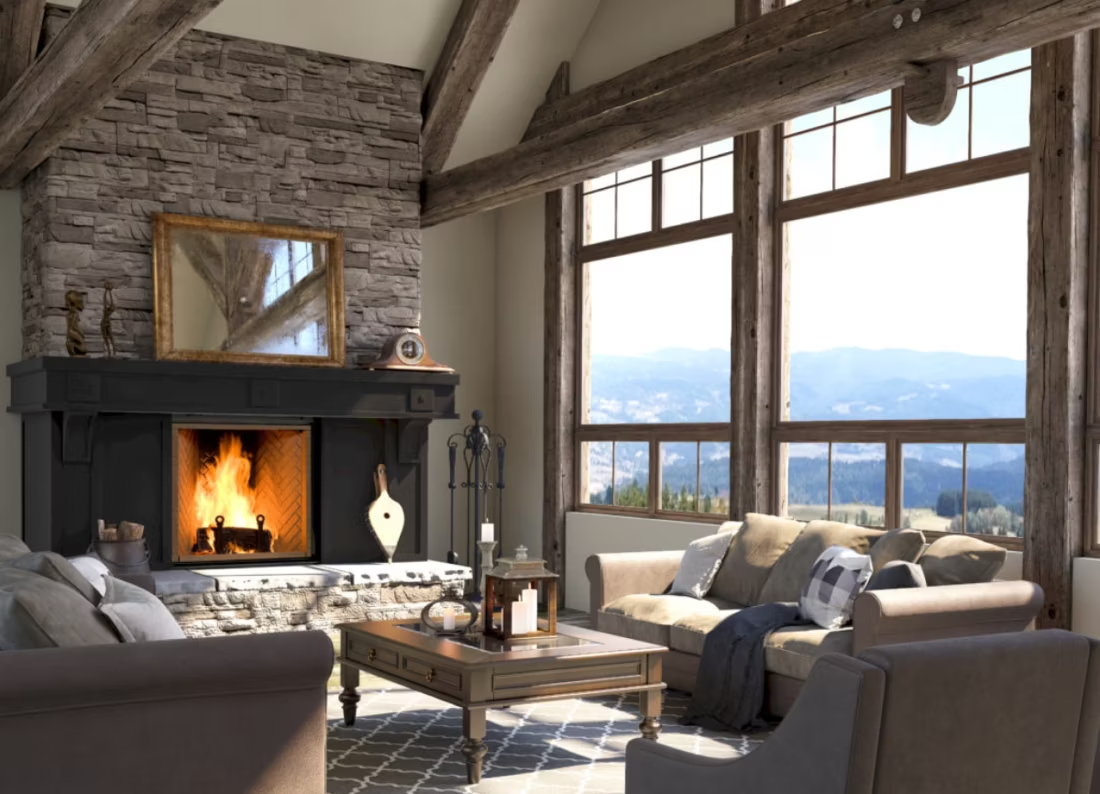
Firewood Cutting Permits Near Sullivan County
Three steps. No salesperson until you're ready.
Tell us about your project
Your zip code, your situation, and the fuel you're leaning toward—or let the answers point you to one.
See what's actually available
The brands dealers within 100 miles genuinely carry—real options, never a catalog mirage.
Get your dealer & Project Guide
A trusted local dealer, plus the free Project Guide & Parts List that names every component of the job.
Frequently Asked Questions
How much does a wood stove installation cost in Sullivan County?
Across the Tri-Cities region, a typical wood stove or insert installation runs roughly $3,000 to $7,000, depending on the unit and the venting work involved. Dropping a new insert into an existing masonry fireplace in an older Kingsport or Bristol home tends to land on the lower end, since much of the chimney structure is already in place. A freestanding stove installed where no chimney exists—common in newer construction or manufactured homes around Blountville and Bluff City—costs more once Class A pipe, roof or wall penetration, and a code-compliant hearth pad are added. Get a firm number from a local installer after they've seen the space; clearance requirements and floor protection needs vary more than most homeowners expect.
What size wood stove do I need for a Sullivan County home?
With a solid winter heating season and winter lows averaging around 27°F, most homes in the county do fine with a small-to-medium stove rated for the square footage of the main living area—this isn't a climate that demands the largest catalytic units built for sustained sub-zero nights. Older farmhouses around Blountville or Bluff City with less insulation and larger open floor plans often need a slightly bigger stove than a comparably sized, newer, well-sealed home in town. A stove sized correctly holds an even, moderate fire through the coldest overnight stretches; oversized units get damped down and smolder, which builds creosote faster—worth avoiding given how much oak and hickory locals tend to burn. A local dealer sizing the stove in person, rather than off a generic chart, gets this right the first time.
Do I need a permit to install a wood stove in Sullivan County?
In most cases, yes. If you're inside Kingsport, Bristol, or Bluff City limits, your project typically goes through that city's building department; in unincorporated parts of the county, it runs through Sullivan County's building codes office. Either way, the permit process checks clearance-to-combustibles, hearth pad sizing, and proper venting through the roof or wall. Most established local hearth dealers pull this permit as part of the installation, which is one reason to go through a full-service dealer rather than a DIY install—an unpermitted stove can also complicate a homeowner's insurance claim down the road if there's ever a fire.
Where can I get firewood in Sullivan County?
Sullivan County doesn't have national forest land within its own boundaries, so if you want a public-land cutting permit, the nearest option on record is the Nantahala-Pisgah National Forests in western North Carolina—about $20 per cord, with a cutting season that runs May through October. That's a real drive for most county residents, so in practice the more common route is buying seasoned oak, hickory, or maple from a local firewood dealer, or arranging with a land-clearing or tree service that's already taking hardwood off a property near Blountville, Bluff City, or the rural edges of Kingsport. Either way, plan to season hardwood at least six months to a year before burning it for a clean, efficient fire.
What's the best wood stove for Sullivan County's climate and fuel supply?
Because winter lows here average around 27°F rather than the deep sub-zero stretches of colder regions, most Sullivan County homes do well with a solid non-catalytic stove sized to the room, rather than the largest 20-plus-hour catalytic units built for extreme cold. Given how much local firewood comes from dense hardwoods—oak and hickory especially—a stove with a firebox and air control built to handle hot, hardwood fires without overfiring is worth prioritizing. If you're burning a lot of pine as supplemental fuel, look for a model with an easy-to-adjust air control, since pine burns faster and hotter than oak or hickory and needs more active damping. A local dealer can match the stove to your specific mix of species and home size.
Are there burn restrictions or air quality rules I need to worry about?
No—Sullivan County has no air quality non-attainment designation and no winter inversion pattern that triggers curtailment periods, unlike basin or valley regions out West. That means there's no advisory system dictating which days you can or can't burn. The main air-quality consideration here is just good practice: burn seasoned hardwood rather than green or wet wood, and keep the stove properly maintained, since a poorly tuned unit smokes more regardless of local regulation.
How often should my chimney be inspected in Sullivan County?
The CSIA recommends an annual inspection for any wood-burning system, and that's a good baseline here—plan the sweep for late summer or early fall, ahead of the first real cold snap. Households burning primarily oak or hickory tend to build creosote more slowly than those burning a lot of pine, since pine's resin content leaves more residue in the flue. If pine makes up a meaningful share of your wood supply, mention that to your sweep so they can check more closely for buildup, especially if the stove serves as a home's main heat source through the winter.
Is gas or propane a realistic alternative to wood heat in Sullivan County?
It depends on where you are in the county. In-town homes around Kingsport and Bristol often have access to natural gas service, making a gas fireplace or furnace a straightforward option. In the more rural stretches—around Blountville, Bluff City, and Sullivan Gardens—propane delivery or electric heat is more typical, and propane runs noticeably more expensive per BTU than firewood, especially hardwood sourced locally rather than shipped in. That cost gap is a big part of why wood remains a common primary or backup heat source in the county's rural areas, even as gas has become the default for many in-town homes.
Wood stove vs. pellet stove—which fits Sullivan County better?
Wood works without electricity, which matters during the ice storms that occasionally knock out power in the Tri-Cities region, and it pairs naturally with the oak and hickory that's abundant and relatively affordable locally. Pellet stoves burn cleaner and require less hands-on tending, but they need electricity to run the auger and blower, so they're not a fallback during an outage. Regional pellet brands like Lignetics, Hamer Pellet Fuel, and Greenway Renewable Energy are available through area dealers if convenience and consistent burn quality matter more to you than fuel independence. For a rural property where storm outages are a real concern, wood tends to be the more practical choice; for an in-town home focused on low-maintenance daily heat, pellet is worth a look.
What's the difference between an insert and a zero-clearance fireplace?
An insert is a fireplace that slides into a pre-existing wood-burning fireplace—if you don't have one, there's nothing to insert it into. A zero-clearance fireplace is built into a framed wall, which makes it the answer for remodels and new construction. Simple test: existing masonry fireplace means insert; blank or framed wall means zero-clearance.
Why is a fireplace insert so efficient?
An insert does two things: it seals the chimney completely, so you stop losing air you already paid to heat, and it radiates warmth into the room through the firebox and glass. Most add a heat-exchange fan that pulls cool room air underneath, wraps it around the hot firebox, and pushes it back out warm. Your home is more efficient before you've even lit the first fire.
How much should I budget for a fireplace?
For an average home—covering the fireplace, the vent pipe, and basic installation—a budget between $3,900 and $5,500 gives you a lot of options across wood, gas, and pellet. By the time you add finish work, gas line, and electrical, the average complete installation lands between $5,000 and $12,000 all-in. In a remodel or new build, a good rule is to put about 2.5% of the total project cost toward the fireplace.
Does a fireplace add value to my home?
On average, a fireplace adds back to the home about the same amount you spent installing it. Add the monthly savings from heating the rooms you actually use instead of the whole house—often hundreds of dollars a year—and the value case is strong before you even count what a fire does for how your family uses the room.
Stove and Fireplace Dealers in Sullivan County
Listings include WhyFire partner dealers, dealers we have verified as authorized for the brands we recommend, and established local businesses that carry hearth products. Every listing shows which one it is. The ones marked Preferred run on WhyFire's software, so they can show you real pricing and book your appointment right here. No manufacturer pays for placement. How we verify dealers →
Marsh Lp Gas
Admiral Propane LLC
Hammonds HVAC & Gas Services
Hammond's Heating And Air
Builders First Source- Gray
Holston Hardware Company
Blossman Gas And Appliance
Abingdon Gas
Get your free Sullivan County wood heat Project Guide & Parts List.
Tell us about your home, its current chimney or venting situation, and how you plan to use the stove, and we'll match you with a trusted local Sullivan County dealer and send a free Project Guide & Parts List—the exact parts, including the vent kit, for your wood heat project.
Find Your Fireplace →