
A Niche Fit for Middle Tennessee's Mild Winters.
Pellet heat isn't common in Maury County, but for the right home it still has a place. We'll match you with a real local dealer who can tell you honestly if it makes sense.
Every Project Starts From One of These Five Situations
Spring Hill's climate rarely demands it.
Spring Hill sits at 770 feet in Maury County with a Climate Zone 4A designation, average winter lows around 28°F, and a mild, fairly short heating season. That's a mild heating load compared to the pellet-stove strongholds of the Upper Midwest and Northeast—Duluth, MN has a winter heating load nearly three times what Spring Hill sees in a typical year. In a climate this moderate, natural gas and electric heat pumps handle most home heating needs without the fuss of hopper loading and ash removal.
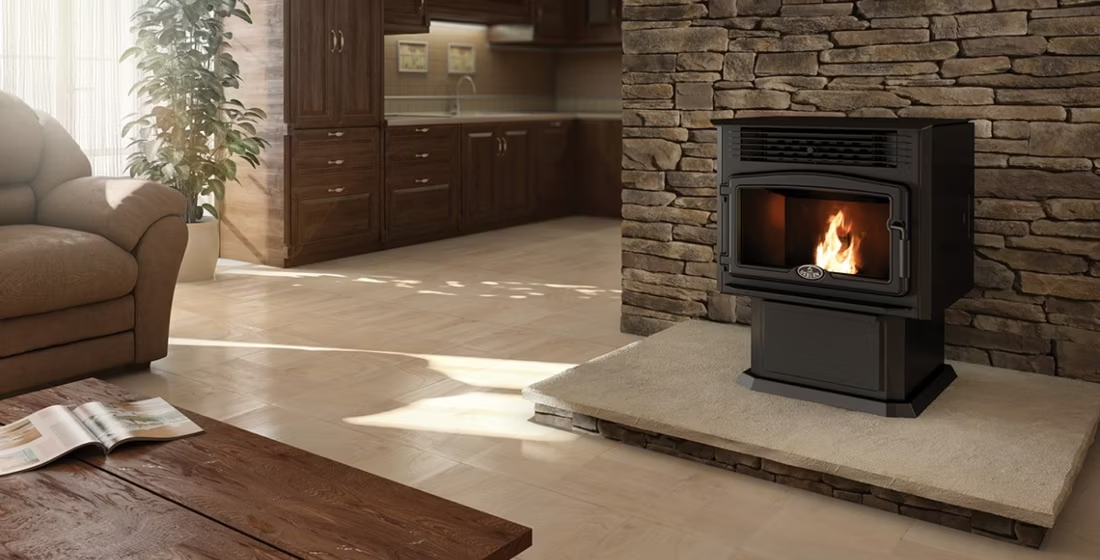
That said, a small number of Spring Hill and Maury County homeowners do install pellet stoves—often for a specific reason: a finished basement or shop that's hard to heat with ductwork, a backup heat source for winter storms, or simply a preference for the look and low-maintenance burn of a pellet appliance over a wood stove. Regional pellet fuel brands like Lignetics, Hamer Pellet Fuel, and Greenway Renewable Energy do circulate through farm supply and hardware stores in Middle Tennessee, so fuel sourcing isn't the obstacle—the limiting factor is simply that few local hearth dealers stock pellet units as a primary offering. If you're one of the homeowners for whom a pellet stove makes sense, we can still connect you with a dealer who carries and installs them.
Three steps. No salesperson until you're ready.
Tell us about your project
Your zip code, your situation, and the fuel you're leaning toward—or let the answers point you to one.
See what's actually available
The brands dealers within 100 miles genuinely carry—real options, never a catalog mirage.
Get your dealer & Project Guide
A trusted local dealer, plus the free Project Guide & Parts List that names every component of the job.
Frequently Asked Questions
Are pellet stoves actually available in Spring Hill?
Yes, but they're a specialty item rather than a stocked staple. Because Spring Hill's heating season is relatively short—average winter lows sit around 28°F and the area has a fairly light winter heating load, versus the much heavier, longer heating seasons in places like Duluth, MN or Burlington, VT—most Middle Tennessee hearth shops lean their showroom toward gas fireplaces and inserts, with pellet units available by special order or through a smaller subset of dealers. We work with local retailers who do carry pellet stoves and can tell you honestly whether one fits your specific heating goal.
How much does a pellet stove installation cost in Spring Hill?
Nationally, a pellet stove installation typically runs $3,000 to $6,500 depending on the unit, whether venting already exists, and hearth pad requirements. In the Spring Hill area, expect costs toward the higher end of that range if you need new through-wall venting installed, since fewer local crews specialize in pellet-specific installs compared to gas. Getting a firm number requires an in-home look—venting path and hearth clearances vary a lot house to house in the newer subdivisions around Spring Hill.
Where can I buy pellet fuel near Spring Hill?
Pellet fuel is easier to find than pellet stoves themselves. Regional producers including Lignetics, Hamer Pellet Fuel, and Greenway Renewable Energy supply bags of hardwood and softwood pellets to farm supply and hardware retailers throughout Middle Tennessee, and Tractor Supply locations in the Spring Hill/Columbia area typically stock bags seasonally. Because demand is lower here than in colder states, it's worth calling ahead in early fall to confirm stock before the first cold snap rather than assuming shelves will be full all winter.
Why do so many Spring Hill homes use gas instead of pellet?
Gas fireplaces and inserts are the standard choice locally, and for good reason: Spring Hill's mild winters favor instant, thermostat-controlled heat over a fuel that needs to be bagged, hauled, and loaded into a hopper. Gas units also don't depend on electricity to run an auger and combustion blower the way pellet stoves do. Pellet stoves still win in specific situations—heating a detached space without gas service, or wanting a fire-like flame with wood pellets instead of logs—but for whole-home comfort in this climate, gas remains the more common pick among Maury County homeowners we talk to.
Do I need a permit to install a pellet stove in Spring Hill?
Yes—a building permit is required through the City of Spring Hill Building & Codes Department if you're inside city limits, or the Maury County Building Department if you're in unincorporated areas of the county. Because pellet stove installs are less routine here than gas fireplace installs, it's worth confirming with the permitting office that they're familiar with pellet-specific vent-through-wall requirements before work begins. Most established hearth dealers will pull the permit as part of the installation.
Will a pellet stove work if the power goes out?
No—pellet stoves rely on an electric auger to feed fuel and a blower to distribute heat, so they shut down without power unless paired with a battery backup or generator. Duck River Electric Membership Corporation serves the Spring Hill area, and outages here tend to be shorter and less frequent than in states with harsher winter storm exposure, which is part of why backup-heat concerns weigh less heavily on the pellet-vs-wood decision locally than they would in, say, rural Maine or Montana. If reliable heat during outages is your main goal, a wood stove or a gas unit with battery-backup ignition is usually a better fit than pellet.
What size pellet stove do I need for a Spring Hill home?
Given the area's moderate heating load—winter lows averaging 28°F rather than the sub-zero stretches that demand a large, continuously-run appliance—most Spring Hill installations lean toward small to mid-size pellet stoves rated for supplemental or zone heating rather than whole-house duty. A stove sized for 1,000-1,500 square feet is often plenty for a bonus room, finished basement, or detached workshop. Oversizing wastes money and can cause a unit to short-cycle; a local dealer can size it correctly based on the specific room and insulation.
Pellet stove vs. electric heat—which makes more sense here?
With Duck River Electric Membership Corporation's residential rate around 12.5 cents per kWh and a mild heating season overall, electric heat pumps and electric space heaters are the default in most newer Spring Hill construction, and they're simpler to run than a pellet appliance—no fuel bags, no hopper, no ash pan. Pellet still has an edge if you want a visible flame, a supplemental heat source that doesn't rely solely on the grid's ductwork, or a lower operating cost than resistance electric heat in a specific room. For most whole-home heating decisions in this climate, though, electric or gas wins on convenience.
I'm moving to Spring Hill from a colder state and want to bring my pellet stove habit—is it worth it?
It can be, especially if you liked the ambiance and low-maintenance burn of pellet heat and have a specific space—a converted garage, sunroom, or basement—that benefits from zone heating. Just recalibrate expectations: with a much lighter winter heating load than the long, heavy heating seasons you may be used to in the Upper Midwest or New England, you'll burn far fewer bags of pellets per season, and finding a local installer experienced with pellet venting takes a bit more searching than it would have back home. We can match you with one of the Maury County-area dealers who does install and service pellet units.
What's the difference between an insert and a zero-clearance fireplace?
An insert is a fireplace that slides into a pre-existing wood-burning fireplace—if you don't have one, there's nothing to insert it into. A zero-clearance fireplace is built into a framed wall, which makes it the answer for remodels and new construction. Simple test: existing masonry fireplace means insert; blank or framed wall means zero-clearance.
Why is a fireplace insert so efficient?
An insert does two things: it seals the chimney completely, so you stop losing air you already paid to heat, and it radiates warmth into the room through the firebox and glass. Most add a heat-exchange fan that pulls cool room air underneath, wraps it around the hot firebox, and pushes it back out warm. Your home is more efficient before you've even lit the first fire.
What is an in-home preview and do I need one?
It's a visit where a hearth professional measures your space, confirms the model you picked actually works in your home, and walks the specs—framing, gas line, venting, finish work—before anything is ordered. Some details you just can't know until you see the house. Never make a down payment without one; it's the single most-skipped step that burns buyers.
Can I install a fireplace myself?
If you're putting a fire in your house on purpose, it's best to work with an expert. Unless you're genuinely experienced in framing, gas line, vent pipe, and the national code on clearances to combustibles, have a professional do it—and ideally the same company that sells you the fireplace, so warranty, service, and liability all live under one roof.
Pellet Brands Stocked Around Spring Hill
Manufacturers will point you to the nearest stocking dealer.
Find your pellet stove in Spring Hill.
Tell us about your space and heating goals—we'll match you with a local Maury County-area dealer who genuinely carries pellet stoves, and send over a free Project Guide & Parts List for your project.
Find Your Fireplace →