
Warmth that clicks on instantly atop Walden's Ridge.
Mild winters and some of the region's lower electric rates make electric fireplaces a natural fit for Signal Mountain homes. Find the right unit and connect with a trusted local dealer.
Every Project Starts From One of These Five Situations
Mild ridge-top winters, low-cost power.
Signal Mountain sits atop Walden's Ridge at 1,705 feet, overlooking Chattanooga and the Tennessee River valley below. Winters here are genuinely mild by national standards—average lows hover around 29°F and the area sees a winter heating load that's a fraction of what a place like Burlington, VT or Duluth, MN sees each winter. That climate reality shapes what makes sense for heat: few Signal Mountain homes need a wood stove or pellet appliance running around the clock, but plenty benefit from a fireplace that adds instant warmth to a sunroom, primary bedroom, or finished basement without extending ductwork.
Electric service comes through the City of Chattanooga's utility system, and the residential rate here—about 12.3 cents per kWh—runs below the national average, largely thanks to the TVA power mix serving the region. That makes electric fireplaces cheap to operate as supplemental heat or year-round ambiance, and it avoids the venting, gas line, and chimney work that other fuel types require. No masonry, no annual chimney sweep, no combustion byproducts—just a unit that plugs in or wires into a dedicated circuit and works the same day it's installed.
Three steps. No salesperson until you're ready.
Tell us about your project
Your zip code, your situation, and the fuel you're leaning toward—or let the answers point you to one.
See what's actually available
The brands dealers within 100 miles genuinely carry—real options, never a catalog mirage.
Get your dealer & Project Guide
A trusted local dealer, plus the free Project Guide & Parts List that names every component of the job.
Frequently Asked Questions
How much does it cost to install an electric fireplace in Signal Mountain?
Costs vary widely by unit type. A plug-in electric insert or freestanding unit that simply plugs into an existing outlet can run as little as a few hundred dollars installed. A built-in wall unit or linear electric fireplace that requires a dedicated 20-amp circuit and possibly some drywall or mantel work typically lands in the $1,000 to $3,000 range once you include the electrician's time. Because there's no venting, gas line, or chimney involved, electric installs in Signal Mountain are almost always faster and less invasive than wood or gas projects—often a single day from start to finish.
Do I need an electrician to install an electric fireplace?
For a plug-in unit, no—if it fits a standard 120V outlet, most homeowners handle it themselves. For a built-in or wall-mounted unit that draws more power or requires a dedicated circuit, yes: a licensed electrician should run that circuit, and in most cases the Town of Signal Mountain or Hamilton County building department will want a permit pulled for new circuit work. A local hearth dealer can usually coordinate the electrician as part of the installation.
How much does it cost to run an electric fireplace here?
At the City of Chattanooga's residential rate of about 12.3 cents per kWh, a standard 1,500-watt electric fireplace running on high costs roughly 18 cents an hour to operate—noticeably cheaper than the national average electric rate. Most owners run their unit on a lower heat setting or flame-only mode for ambiance, which cuts that cost further. Given how mild Signal Mountain winters are, an electric fireplace can comfortably supplement whole-home heat in a sunroom or bonus room without meaningfully moving the needle on your monthly bill.
Electric vs. gas fireplace—which is right for my home?
Both are common choices in Signal Mountain, and the decision usually comes down to the room. Gas fireplaces and inserts produce real, substantial heat and work well as a primary heat source for a living room or open floor plan—and models with intermittent pilot ignition keep working during a power outage. Electric units can't run without power, but they install in a fraction of the time, need no gas line or venting, and cost far less upfront—often under $2,000 installed versus $4,500 or more for a gas insert. For a converted sunroom, bedroom, or basement where running a gas line isn't practical, electric is usually the simpler and cheaper answer.
Why don't more Signal Mountain homes use wood stoves?
Wood heat is uncommon here, and it comes down to climate more than availability—winter lows around 29°F and a comparatively short, mild heating season mean most homes simply don't need the BTU output of a wood stove to stay comfortable. Homeowners who do want to burn wood locally can pull a cutting permit through the Cherokee National Forest for about $20 per cord during the May-to-October season, but that's typically for camping or rustic use rather than home heating. Electric and gas cover the vast majority of Signal Mountain's supplemental and primary heating needs.
What type of electric fireplace works best in a Signal Mountain home?
For ridge-top homes with sweeping views, a linear electric fireplace built into a wall gives you flame effect without blocking sightlines—popular in newer builds and remodels on the mountain. For an existing masonry fireplace that's rarely used, an electric insert is a simple retrofit that restores the look of a working fire without any venting. Freestanding electric stoves work well in a finished basement or home office where you want portable, zone-specific heat. A local dealer can walk through your specific room and recommend wattage and mounting based on the space.
Will my electric fireplace work during a power outage?
No—unlike a gas fireplace with battery-backup ignition or a wood stove that needs no power at all, an electric fireplace stops working the moment the power goes out. For most Signal Mountain homes that's a minor tradeoff given how mild the winters are, but if backup heat during outages matters to you—especially with the occasional ice storm that can knock out power on the mountain—a gas insert or a wood-burning option is worth considering alongside or instead of electric.
Do I need a permit for an electric fireplace in Signal Mountain?
A simple plug-in unit doesn't require a permit. A built-in unit that requires new electrical circuit work typically does need an electrical permit through Hamilton County or the Town of Signal Mountain building department, since it involves permanent wiring. There's no combustion, so none of the mechanical or gas permitting that applies to wood or gas installations comes into play—it's strictly an electrical inspection, and most licensed electricians handle that paperwork as part of the job.
How does electric heat output compare to gas or wood?
Electric fireplaces generally top out around 5,000 to 9,000 BTUs—enough to noticeably warm a single room but not a substitute for central heat in a larger home. Gas inserts commonly produce 20,000 to 40,000 BTUs, and a wood stove can produce even more sustained heat over hours. For Signal Mountain's mild climate, that lower output is rarely a problem—electric fireplaces here are typically chosen for zone heating and ambiance rather than as the sole heat source for a home.
Can I put a TV above my fireplace?
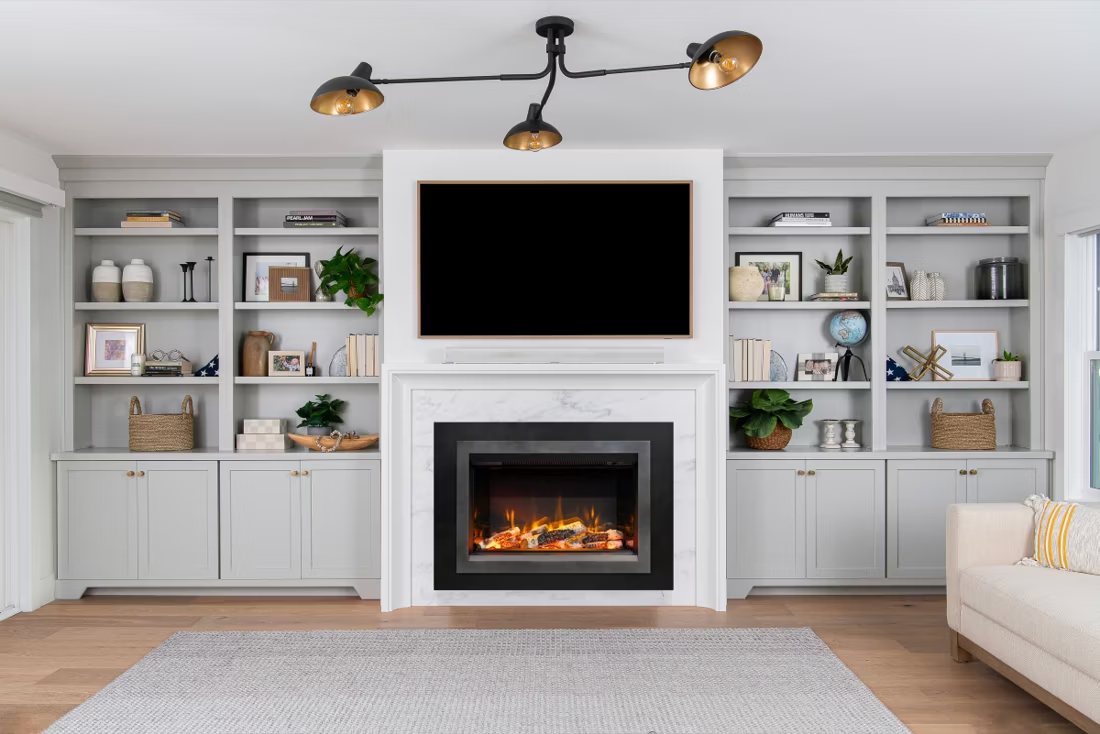
Yes—with an asterisk. Fireplaces are hot and TVs don't like heat. Either put a mantel between them to deflect rising warmth, or choose a fireplace with heat-management technology that creates a cool zone on the wall above—the wall stays around 125 degrees, barely warm, while the room still gets full heat. If you like clean lines and don't want a mantel, heat management is the answer.
Does an electric fireplace need a vent or chimney?
No—that's its superpower. An electric fireplace needs a wall and an outlet, period. No vent pipe, no gas line, no clearances to design around, which is why it works in bedrooms, offices, apartments, and walls where venting a gas or wood unit would be impractical or impossible. Installation is typically the simplest and least expensive of any fireplace type.
Can a fireplace actually lower my heating bill?
Yes—by creating a comfort zone. A furnace heats every square foot of the house just to warm the one room you're in; a gas fireplace on low burns roughly a sixth of the gas a typical furnace does. Set the furnace around 55–60 degrees as a baseline, then heat the rooms your family actually uses. Families who heat this way commonly save $20–$60 a month.
Does a fireplace add value to my home?
On average, a fireplace adds back to the home about the same amount you spent installing it. Add the monthly savings from heating the rooms you actually use instead of the whole house—often hundreds of dollars a year—and the value case is strong before you even count what a fire does for how your family uses the room.
Nearby Dealers
Hearth shops serving Signal Mountain and the surrounding area. Every listing shows whether it is a WhyFire partner, a dealer we have verified as authorized for the brands we recommend, or a local business carrying hearth products. No manufacturer pays for placement. How we verify dealers →
Smith's Ace Hardware
Therm-Con, Llc
America's Hearth & Patio Warehouse
Hearthside Fireplace Patio & Barbeque Center
Electric Service in Signal Mountain
An electric fireplace's heater draws about 1,500 watts—pennies per hour at local rates.
City Of Chattanooga - (Tn)
Find your electric fireplace in Signal Mountain.
Tell us about your room and we'll match you with a trusted local dealer and send over a free Project Guide & Parts List—the exact parts and recommended installer for your Signal Mountain home.
Find Your Fireplace →