
Reliable warmth for Shackle Island winters, without the wood pile.
Shackle Island's winters are mild by national standards, but a clean-burning gas fireplace or insert still earns its keep on the cold nights. Find the right unit for a propane-served home and connect with a trusted Sumner County dealer.
Every Project Starts From One of These Five Situations
Convenient heat for a mild, mostly-propane community.
Shackle Island is an unincorporated pocket of Sumner County between Hendersonville and Gallatin, sitting at about 516 feet in elevation with roughly 3,946 heating degree days a year—a fraction of what a place like Minneapolis, MN sees, and winter lows here average around 27°F rather than dipping into the single digits for weeks at a stretch. That milder profile means most homes don't need a whole-house wood-heating setup; instead, a single gas fireplace or insert in the main living space covers the coldest stretches of the year comfortably.
One local wrinkle worth knowing up front: Shackle Island sits outside the natural gas main lines that serve parts of nearby Hendersonville and Gallatin, so most gas fireplace installations here run on propane rather than piped utility gas. That's a different sizing and setup process than a natural-gas hookup, and it's one more reason to work with a dealer who installs regularly in this part of Sumner County rather than a big-box crew unfamiliar with the local fuel situation. Electric service comes from Nashville Electric Service at roughly 13.47 cents per kWh, which makes electric fireplaces a viable secondary option for homeowners who'd rather skip propane altogether.
Three steps. No salesperson until you're ready.
Tell us about your project
Your zip code, your situation, and the fuel you're leaning toward—or let the answers point you to one.
See what's actually available
The brands dealers within 100 miles genuinely carry—real options, never a catalog mirage.
Get your dealer & Project Guide
A trusted local dealer, plus the free Project Guide & Parts List that names every component of the job.
Frequently Asked Questions
How much does a gas fireplace installation cost in Shackle Island?
Most gas fireplace or insert installations in the Shackle Island area run $3,800 to $8,500. Homes that already have a propane tank and line in place—common if you heat water or cook with propane—land on the lower end. New propane tank installation, a longer line run to a fireplace location, or converting a masonry fireplace with new liner and venting pushes toward the higher end. A local hearth dealer will walk your home and give you a firm number rather than a phone-quote estimate.
Do I need natural gas, or will my gas fireplace run on propane?
For most Shackle Island addresses, propane is the answer. The community sits outside the natural gas main lines that reach nearby Hendersonville and Gallatin, so gas fireplaces here are typically fed by an above-ground or buried propane tank supplied by a regional propane company rather than piped utility gas. This isn't just a fuel swap—propane and natural gas units use different orifice sizes and regulator settings, so your installer will configure the unit specifically for propane rather than adapting a natural-gas model after the fact.
Do I need a permit to install a gas fireplace in Shackle Island?
Yes. As an unincorporated community, Shackle Island falls under the Sumner County Building & Codes Department, which requires a building permit for new gas fireplace and insert installations, along with sign-off on the propane line work by a licensed installer. Most hearth dealers handle this paperwork as part of the project, so homeowners rarely have to visit the county office themselves—but it's worth confirming your dealer is pulling the permit before work starts.
Will my gas fireplace still work if the power goes out?
It can, depending on the ignition system. Units with IPI (intermittent pilot ignition) run on AA batteries that kick in automatically during an outage, letting the fireplace light on demand just like normal. Winter lows around Shackle Island average a manageable 27°F, but Middle Tennessee ice storms do knock out power for a day or more some winters, so a battery-backed or self-powered unit is worth asking about. Valor's gas fireplaces take a different approach—the pilot's thermocouple generates its own electricity, so there's no battery to remember or replace. Ask any local dealer which ignition system a given model uses.
What's the difference between a gas fireplace, insert, and stove?
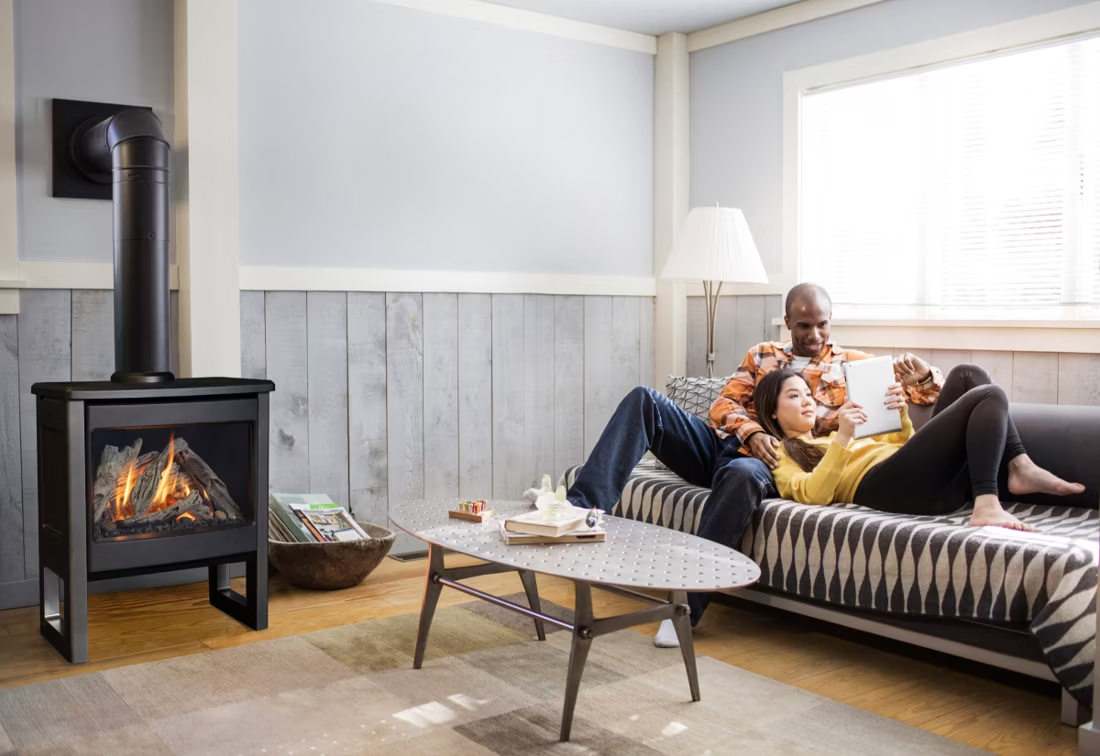
A gas fireplace is a fully built-in unit framed into a wall—the right choice for new construction or a remodel without an existing hearth. A gas insert slides into an existing masonry fireplace opening and uses the existing chimney as its vent chase, which suits the older farmhouses and ranch homes scattered around Shackle Island that still have an unused wood fireplace from decades past. A gas stove is a freestanding cabinet unit that sits on the floor, useful when there's no existing fireplace and you want a self-contained look rather than a built-in. Most local homeowners with an existing hearth choose the insert route.
Can I convert an old wood fireplace to gas?
Yes, and it's one of the more common projects local dealers handle around Shackle Island. Wood-burning fireplaces have fallen out of everyday use here in favor of gas and electric convenience, but plenty of houses still have the original masonry firebox from when the home was built. A gas insert fits into that existing opening, uses a stainless liner run through the old chimney, and gets connected to a propane line—giving you the look of the original hearth with push-button heat instead of hauling oak or hickory in from the woodpile.
Are vent-free gas fireplaces allowed in Tennessee?
Yes—Tennessee permits vent-free (ventless) gas fireplaces, and they show up in some Shackle Island homes as a lower-cost option for supplemental heat in a den or bonus room. Vented, direct-vent units are still the more common and generally recommended choice: they exhaust combustion byproducts outside through a sealed pipe rather than releasing them into the room, and they don't come with the room-size and ventilation restrictions that apply to vent-free models. A local dealer can walk you through both and help you weigh cost against air-quality trade-offs for your specific room.
How often does a gas fireplace need to be serviced?
Plan on an annual inspection, ideally in early fall before the fireplace sees regular use. A technician checks the burner, pilot assembly, propane connections, and any battery or ignition components, and cleans the glass and interior. This is a much lighter lift than wood-chimney sweeping—most service providers in the Sumner County area charge somewhere in the $150–$250 range for a standard annual visit.
Gas vs. electric fireplace—which makes more sense in Shackle Island?
Gas—typically propane here—delivers real, sustained heat output and works well as a primary or near-primary heat source in a main living area, though it does mean maintaining a propane tank and fuel deliveries. Electric fireplaces plug into an existing outlet, need no venting or fuel storage, and cost far less upfront to install, but they're best treated as supplemental or ambiance-focused heat rather than a serious cold-night heat source. With Nashville Electric Service billing around 13.47 cents per kWh, running an electric unit for a few hours an evening is inexpensive, but it won't carry a room the way a propane insert will on the coldest nights of the year. Many homeowners here choose gas for the main living space and consider electric for a bedroom or bonus room.
Is my gas fireplace wasting gas?
If it was installed more than 15 years ago, probably. Older gas fireplaces keep a standing pilot light burning all the time, and that little flame can cost a couple hundred dollars a year. Newer models use pilot-on-demand ignition—the pilot lights only when you use the fireplace and goes out when you turn it off.
Why is my open fireplace making my house colder?
Open fireplaces suck—literally. As the fire burns, it consumes air your furnace already paid to heat and pulls it out through the chimney, so the house is actually colder after the fire goes out than before you lit it. An insert fixes this: it seals the chimney, puts fixed glass across the front, and turns that hole in your house into a real heat source.
Can I install a fireplace myself?
If you're putting a fire in your house on purpose, it's best to work with an expert. Unless you're genuinely experienced in framing, gas line, vent pipe, and the national code on clearances to combustibles, have a professional do it—and ideally the same company that sells you the fireplace, so warranty, service, and liability all live under one roof.
How much should I budget for a fireplace?
For an average home—covering the fireplace, the vent pipe, and basic installation—a budget between $3,900 and $5,500 gives you a lot of options across wood, gas, and pellet. By the time you add finish work, gas line, and electrical, the average complete installation lands between $5,000 and $12,000 all-in. In a remodel or new build, a good rule is to put about 2.5% of the total project cost toward the fireplace.
Nearby Dealers
Hearth shops serving Shackle Island and the surrounding area. Every listing shows whether it is a WhyFire partner, a dealer we have verified as authorized for the brands we recommend, or a local business carrying hearth products. No manufacturer pays for placement. How we verify dealers →
31-W
Countryside Fireplaces & More
Find your gas fireplace in Shackle Island.
Tell us about your home and your propane setup, and we'll put together a free Project Guide & Parts List—the right gas fireplace or insert, the exact venting and line components, and a trusted local Sumner County dealer to install it.
Find Your Fireplace →