
Find the right fireplace fuel for your Sumner County home.
Gas and electric fireplaces are the practical choice for most homes in this fast-growing corner of the Nashville metro. Wood and pellet units exist for the rural minority who want them, but this hub is built around what actually gets installed here—and the local dealer who can install it correctly.
Every Project Starts From One of These Five Situations
Mild winters and growing suburbs shape heating choices across Sumner County, Tennessee.
Sumner County sits along the Kentucky border northeast of Nashville, anchored by Gallatin, Hendersonville, Portland, White House, and Westmoreland, with Old Hickory Lake running through the middle of it. With around 152,968 residents and one of the fastest population growth rates in Middle Tennessee, most of the county's housing stock is recent—subdivisions, not farmhouses. Climate zone 4A here means mixed-humid winters that are short by national standards: an average winter low of 27°F and roughly half the winter heating load of a place like Madison, Wisconsin. There's no non-attainment status, no winter inversion advisories, and no burn-ban infrastructure—the air quality picture here is simply not a driver of fireplace decisions the way it is in mountain basins.
That mild-climate, suburban-growth combination pushes the fuel mix toward gas and electric. Natural gas service reaches most incorporated parts of the county, and electric fireplaces are a routine builder-grade feature in new White House and Portland subdivisions. Wood is still burned here—oak, hickory, maple, and pine are all locally abundant firewood species—but it's mostly a choice on larger rural lots rather than the default heat source, and pellet stoves are close to absent as a primary heating appliance. Pick your fuel below and this hub routes you to local dealers, typical costs, and the resources that actually apply to a Sumner County installation.
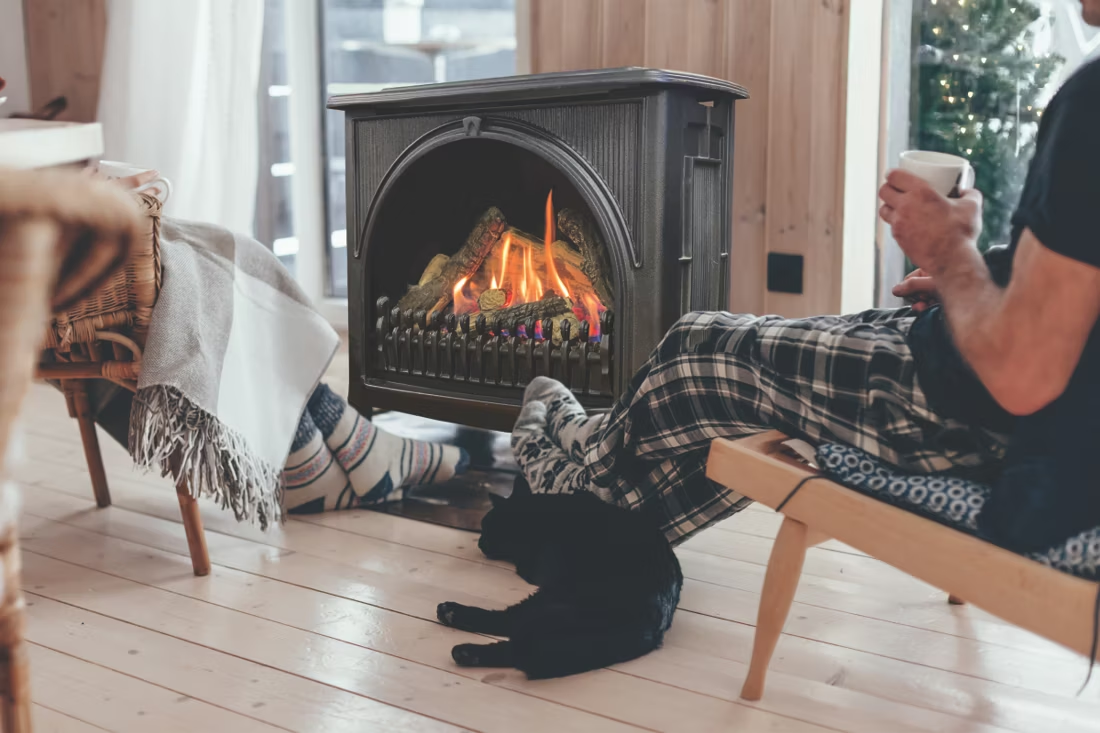
Four fuels. One honest answer for Sumner County.
Three steps. No salesperson until you're ready.
Tell us about your project
Your zip code, your situation, and the fuel you're leaning toward—or let the answers point you to one.
See what's actually available
The brands dealers within 100 miles genuinely carry—real options, never a catalog mirage.
Get your dealer & Project Guide
A trusted local dealer, plus the free Project Guide & Parts List that names every component of the job.
Frequently Asked Questions
Which fuel makes the most sense for a Sumner County home?
For most homes here, it's gas or electric. With Middle Tennessee Natural Gas Utility District reaching most of Gallatin, Hendersonville, Portland, and White House, gas fireplaces and inserts are the default choice for primary heat supplement—instant on, no fuel storage, and increasingly a standard builder feature in new subdivisions. Electric fireplaces cover secondary rooms, finished basements, and ambiance in homes without a gas line. Wood is a real but minority option, mostly on larger rural lots where oak and hickory firewood is cheap or free—it's a lifestyle choice more than a heating necessity given the mild, short winters here. Pellet stoves are essentially not part of the local market; the pellet brands available here (Lignetics, Hamer Pellet Fuel) mostly supply grills and smokers rather than home heating appliances, and few local dealers stock pellet units at all.
Do I need a permit for a gas or electric fireplace in Sumner County?
Yes, for gas. Gas fireplace, insert, and stove installations typically require a building permit plus a separate gas line permit, with the gas connection work done by a licensed gas-fitter. Depending on where you live, that permit is pulled through your city's building department—Gallatin, Hendersonville, Portland, and White House each run their own—or through the Sumner County Codes Department if you're in an unincorporated area. Electric fireplaces usually don't need a permit for plug-and-play units, but built-in electric fireplaces that require new wiring or a dedicated circuit typically do. Most local hearth retailers handle the permitting as part of the installation quote, so you're rarely filing paperwork yourself.
Is wood burning restricted in Sumner County?
No—there are no non-attainment designations, winter inversion advisories, or voluntary burn-curtailment days here, unlike counties in basin or mountain terrain. If you want a wood stove or fireplace and have the lot for it, there's no regulatory barrier beyond the standard building permit. Wood simply isn't common in Sumner County for practical reasons rather than air-quality rules: newer subdivisions in White House, Portland, and Hendersonville tend to have smaller lots, attached garages, and gas already piped to the home, which makes wood storage and chimney installation less convenient than it is on the larger rural parcels where you still see it used.
Can I still install a pellet stove in Sumner County?
You can, but expect a longer path than gas or electric. Pellet stoves are close to absent as a primary heat source here, and most local hearth retailers carry little to no pellet inventory—it's usually a special-order appliance rather than something on the showroom floor. Fuel itself isn't the bottleneck: Lignetics and Hamer Pellet Fuel both distribute in the region, though the bags on local shelves are more often bought for grills and smokers than for home heating. If a pellet stove is genuinely what you want, a multi-fuel dealer can usually order the unit and point you to a fuel source, but budget extra lead time compared to a gas or electric install.
How does hearth service work across Sumner County's growing suburbs?
Sumner County has grown fast—over 152,000 residents now, with new construction concentrated in White House, Portland, and the outer edges of Hendersonville and Gallatin. Most gas and electric service technicians are based near Gallatin or Hendersonville and cover the whole county, including newer subdivisions that didn't exist five years ago. Because the heating season here is short—winters average a 27°F low and wrap up well before spring—service demand clusters in the fall. Booking your annual gas inspection or pilot/ignition check in September or October, before the first cold snap, gets you a much easier appointment than waiting for a January cold spell.
What's the typical cost range for fireplace installation across fuel types in Sumner County?
Gas fireplace, insert, or stove: roughly $4,000–$10,000 depending on whether an existing gas line is in place or new gas piping is needed—most Gallatin and Hendersonville installs fall on the lower end when gas service is already at the house. Electric fireplace: $200–$3,000 for the unit itself, plus $300–$1,000 in labor for anything beyond a plug-and-play wall unit, which covers most builder-grade installs in newer subdivisions. Wood stove or insert: $4,000–$8,500 for a typical rural install with chimney work, though this is a smaller niche market with fewer dealers quoting it. Pellet stove: figure similar to wood, but expect fewer local quotes and longer lead times given how few dealers stock the appliance here.
How much should I budget for a fireplace?
For an average home—covering the fireplace, the vent pipe, and basic installation—a budget between $3,900 and $5,500 gives you a lot of options across wood, gas, and pellet. By the time you add finish work, gas line, and electrical, the average complete installation lands between $5,000 and $12,000 all-in. In a remodel or new build, a good rule is to put about 2.5% of the total project cost toward the fireplace.
Wood, gas, pellet, or electric—how do I choose?
Match the fuel to your life, not the other way around. Wood: lowest fuel cost and total power-outage independence, but you're hauling and stacking. Gas: press a button, set a thermostat, no maintenance to speak of. Pellet: wood economics with automatic feeding, in exchange for weekly cleaning and a need for electricity. Electric: plugs in anywhere with honest supplemental heat. Nobody regrets the fuel that fits how they actually live.
Can a fireplace actually lower my heating bill?
Yes—by creating a comfort zone. A furnace heats every square foot of the house just to warm the one room you're in; a gas fireplace on low burns roughly a sixth of the gas a typical furnace does. Set the furnace around 55–60 degrees as a baseline, then heat the rooms your family actually uses. Families who heat this way commonly save $20–$60 a month.
What is an in-home preview and do I need one?
It's a visit where a hearth professional measures your space, confirms the model you picked actually works in your home, and walks the specs—framing, gas line, venting, finish work—before anything is ordered. Some details you just can't know until you see the house. Never make a down payment without one; it's the single most-skipped step that burns buyers.
Stove and Fireplace Dealers in Sumner County
Listings include WhyFire partner dealers, dealers we have verified as authorized for the brands we recommend, and established local businesses that carry hearth products. Every listing shows which one it is. The ones marked Preferred run on WhyFire's software, so they can show you real pricing and book your appointment right here. No manufacturer pays for placement. How we verify dealers →
31-W
Countryside Fireplaces & More
Get matched with a trusted hearth dealer in Sumner County.
Tell us about your home and which fuel you're leaning toward—gas, electric, or the less common wood or pellet setup—and we'll match you with a trusted local dealer and send a free Project Guide & Parts List: the exact parts, including the vent kit, and the dealer we recommend for your project.
Find Your Fireplace →