
Pellet stoves in Seymour: a nice extra, not a necessity.
Seymour's mild Smoky Mountain winters rarely demand a dedicated pellet stove—but for cabin owners and rental properties around Sevier County, one can still make good sense. We'll help you figure out if it does, and connect you with a trusted local dealer.
Every Project Starts From One of These Five Situations
Mild winters, big cabin culture.
Seymour sits at about 1,213 feet in the foothills of the Great Smoky Mountains, just outside Sevierville and Pigeon Forge. Winters here are mild by national standards—average lows hover around 27°F, and the area's overall winter heating need comes to less than half of what a place like Duluth, MN or International Falls, MN racks up. In a Climate Zone 4A location like this, most homes heat adequately with a central heat pump or gas furnace, and a dedicated pellet-burning appliance simply isn't something the weather demands.
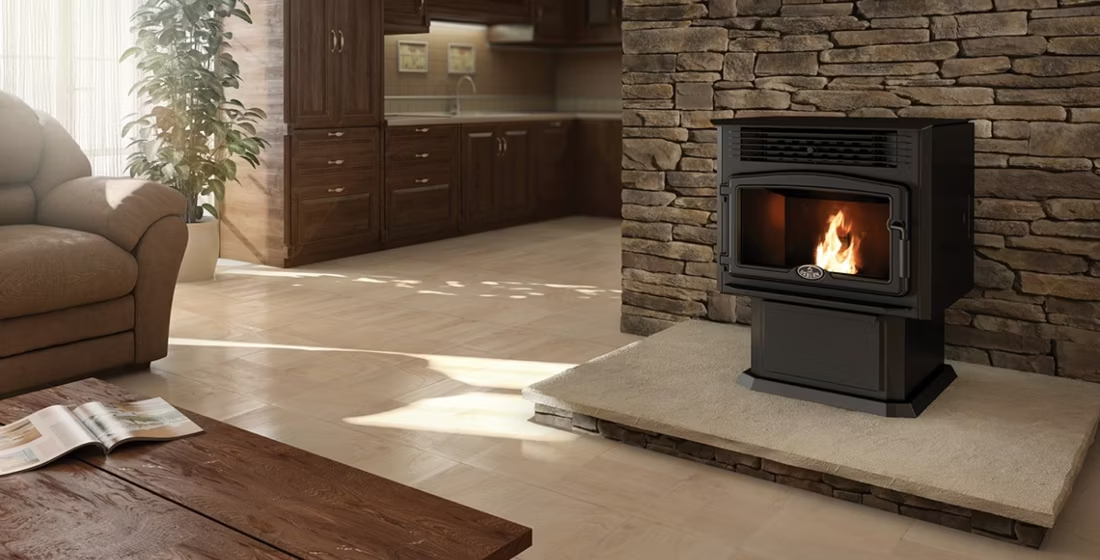
That said, pellet stoves do turn up around Seymour, mostly tied to Sevier County's enormous cabin and short-term-rental economy near the national park. Owners sometimes add a pellet stove or insert for a real-flame feature that guests can run safely with a thermostat, without the ash, creosote, or fire-tending know-how a wood stove requires. Regional pellet brands including Lignetics, Hamer Pellet Fuel, and Greenway Renewable Energy all distribute into East Tennessee, so fuel and parts aren't hard to find—the appliance itself is more a lifestyle and rental-amenity choice here than a heating necessity.
Three steps. No salesperson until you're ready.
Tell us about your project
Your zip code, your situation, and the fuel you're leaning toward—or let the answers point you to one.
See what's actually available
The brands dealers within 100 miles genuinely carry—real options, never a catalog mirage.
Get your dealer & Project Guide
A trusted local dealer, plus the free Project Guide & Parts List that names every component of the job.
Frequently Asked Questions
How much does a pellet stove installation cost in Seymour?
Because pellet heat isn't part of the everyday heating mix in Sevier County the way gas or heat pump systems are, there isn't a dense local network of pellet-only installers. Expect costs in line with the broader Southeast—typically $3,500 to $6,500 for a freestanding stove or insert, including exterior-wall venting. Most homeowners end up working with one of a handful of hearth dealers who cover the Sevierville-Knoxville corridor rather than a Seymour-specific specialist, so it's worth asking upfront whether they stock the model and venting parts you need.
Are pellet stoves practical for Seymour's climate?
Not really, and it's worth saying plainly. With winter lows averaging around 27°F and an overall winter heating need that's fairly light, Seymour's Climate Zone 4A is mild enough that most homes get by fine on a heat pump or gas furnace alone. Pellet stoves earn their keep in places with long, punishing winters—think Bozeman, MT or Burlington, VT—where a stove has to run for months on end. In Seymour, a pellet unit is more often installed for supplemental warmth on the coldest nights or backup heat during an ice storm than as anyone's primary heat source.
Why would anyone install a pellet stove in Seymour if it's not needed for heat?
The biggest local driver is Sevier County's cabin and vacation-rental economy. With thousands of short-term rental cabins scattered around Pigeon Forge, Gatlinburg, and the unincorporated county, owners often want a real fire feature guests can operate themselves without the mess or liability of a wood-burning unit. A pellet stove or insert offers a thermostat-controlled flame and automatic fuel feed with none of the ash and creosote upkeep of wood—a practical match for a property that has to run itself between guest turnovers.
Where can I buy pellet fuel near Seymour?
Pellet fuel is available through regional suppliers even though whole-house pellet heating isn't the local norm. Brands including Lignetics, Hamer Pellet Fuel, and Greenway Renewable Energy distribute into East Tennessee, and hearth retailers around the Knoxville-Sevierville area typically stock bags or can special-order pallets. Because demand is lower here than in colder states, it's smart to call ahead each fall and confirm current-season stock rather than assume year-round shelf inventory.
What's the difference between a pellet stove and a pellet insert?
A pellet stove is a self-contained, freestanding unit that vents through a wall and can go almost anywhere with power and a vent path. A pellet insert is built to slide into an existing masonry fireplace opening, which fits many of the older homes and cabins around Seymour that already have a wood fireplace sitting unused. For a cabin owner converting an existing fireplace, an insert usually makes more sense; for a new build or an addition without an existing chimney, a freestanding stove offers more placement flexibility.
Do pellet stoves work during a power outage?
This is one of the real tradeoffs to weigh before choosing pellet heat in a rural Sevier County setting: pellet stoves rely on an electric auger and blower to feed fuel and move heat, so they shut down the moment power fails—unlike a wood stove, which needs nothing but a match. Given Seymour's occasional winter ice storms, which can knock out power for a day or more, some homeowners pair a pellet unit with a battery backup or small generator, or lean on gas as their actual backup heat source.
Is natural gas or electric a better fit than pellet for Seymour homes?
For most Seymour homeowners, yes. Gas fireplaces and inserts are well-supported locally and deliver instant heat with no fuel storage, and electric heat pumps—the dominant system in this climate zone—run efficiently at Seymour's relatively mild winter lows. Knoxville Utilities Board serves electric customers here at a residential rate around 12.5 cents per kWh, which keeps electric backup heat inexpensive to run compared to colder markets. Pellet stays a reasonable choice mainly when the draw is the look and ritual of a real fire, not an actual heating gap.
Do I need a permit to install a pellet stove in Seymour?
Yes—a new solid-fuel or pellet-burning appliance typically requires a building permit through Sevier County, since the install involves a wall or roof penetration for venting. Because pellet installs are less common here than gas conversions, it's worth confirming with your installer that they're pulling the permit and that the unit carries current EPA certification, since inspectors locally handle far more gas and electric review than solid-fuel work.
Pellet vs. wood—which makes more sense around Seymour?
Around Seymour, neither is a heating necessity given the mild winters, but if the goal is a real, ambiance-driven fire, wood has the local edge: oak, hickory, and maple are abundant, cutting permits through the Nantahala-Pisgah National Forests run about $20 per cord from May through October, and there are no local air-quality burn restrictions. Pellet offers cleaner, hands-off operation and suits a rental cabin nobody tends daily, but it depends entirely on electricity and delivered fuel rather than something you can source from the woods yourself. Most Seymour buyers choosing between the two are deciding based on property type and lifestyle, not heat output.
What's the difference between an insert and a zero-clearance fireplace?
An insert is a fireplace that slides into a pre-existing wood-burning fireplace—if you don't have one, there's nothing to insert it into. A zero-clearance fireplace is built into a framed wall, which makes it the answer for remodels and new construction. Simple test: existing masonry fireplace means insert; blank or framed wall means zero-clearance.
Why is my open fireplace making my house colder?
Open fireplaces suck—literally. As the fire burns, it consumes air your furnace already paid to heat and pulls it out through the chimney, so the house is actually colder after the fire goes out than before you lit it. An insert fixes this: it seals the chimney, puts fixed glass across the front, and turns that hole in your house into a real heat source.
Can I install a fireplace myself?
If you're putting a fire in your house on purpose, it's best to work with an expert. Unless you're genuinely experienced in framing, gas line, vent pipe, and the national code on clearances to combustibles, have a professional do it—and ideally the same company that sells you the fireplace, so warranty, service, and liability all live under one roof.
How much should I budget for a fireplace?
For an average home—covering the fireplace, the vent pipe, and basic installation—a budget between $3,900 and $5,500 gives you a lot of options across wood, gas, and pellet. By the time you add finish work, gas line, and electrical, the average complete installation lands between $5,000 and $12,000 all-in. In a remodel or new build, a good rule is to put about 2.5% of the total project cost toward the fireplace.
Nearby Dealers
Hearth shops serving Seymour and the surrounding area. Every listing shows whether it is a WhyFire partner, a dealer we have verified as authorized for the brands we recommend, or a local business carrying hearth products. No manufacturer pays for placement. How we verify dealers →
American Fireplaces
East Tennessee Fireplace Co.
Archies Stone And Fireplaces
Englands Woodstove Store
Pool Warehouse
Area – Gatlinburg, Tn
Heritage Propane
Southern Flame
Smoky Mountain Buildings
Pellet Brands Stocked Around Seymour
Manufacturers will point you to the nearest stocking dealer.
Find your pellet fireplace in Seymour.
Tell us about your home and how you plan to use it—daily ambiance, a cabin rental, or backup heat—and we'll match you with a trusted local dealer and send a free Project Guide & Parts List with the exact parts, vent kit, and dealer recommendation for your Seymour project.
Find Your Fireplace →