
Electric heat built for Ripley's mild Delta winters.
With winter lows averaging 29°F and a modest winter heating season, Ripley doesn't need a whole-home wood-burning setup—it needs a clean, no-venting way to warm a room. I'll match you with a trusted local dealer who knows what actually fits Lauderdale County homes.
Every Project Starts From One of These Five Situations
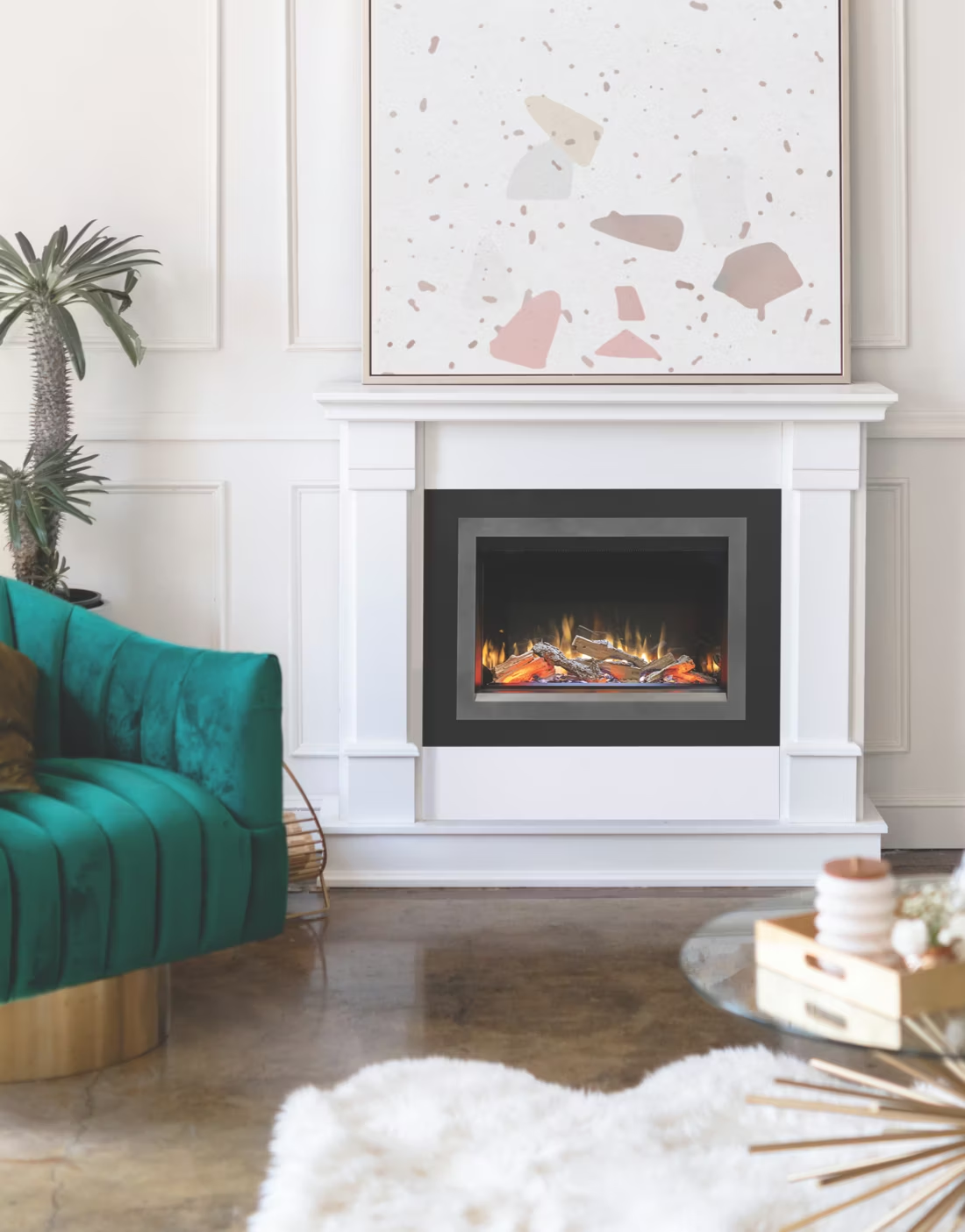
Convenient warmth without a chimney or gas line.
Ripley sits low and flat in the Mississippi Delta at 398 feet, and the climate numbers show it: a 3A mixed-humid zone with winter lows that average a comparatively mild 29°F and a moderate winter heating season—a fraction of what a place like Bismarck or Duluth deals with. That's a real heating season, but not a severe one, which is part of why wood-burning fireplaces and pellet stoves see so little demand here even though oak, hickory, maple, and pine all grow right along the Delta bottomlands. Most Lauderdale County homes lean on an electric heat pump for primary heat, and an electric fireplace slots in as the zone-heat, ambiance, or den upgrade that doesn't require a flue, a gas line, or combustion air.
City of Ripley runs its own municipal electric utility, and at roughly $0.1235 per kWh—below the national average—running a supplemental electric unit in a sunroom or living area for a few hours a night costs only a few dollars a month. That affordability, combined with the fact that a plug-in insert or built-in linear unit needs no chimney and no combustion venting, makes electric a practical fit for the manufactured and modular homes common on the farmland outside town, as well as for the older frame houses near downtown Ripley where owners want to retire a drafty, unused masonry firebox without ripping out the mantel.
Three steps. No salesperson until you're ready.
Tell us about your project
Your zip code, your situation, and the fuel you're leaning toward—or let the answers point you to one.
See what's actually available
The brands dealers within 100 miles genuinely carry—real options, never a catalog mirage.
Get your dealer & Project Guide
A trusted local dealer, plus the free Project Guide & Parts List that names every component of the job.
Frequently Asked Questions
How much does an electric fireplace installation cost in Ripley?
A plug-in insert or mantel package that runs off an existing 120-volt outlet typically costs $300 to $1,500 installed, since there's no venting or gas line to run. A larger built-in linear unit that needs a dedicated 240-volt circuit—the option a lot of Ripley homeowners choose for a remodel or new addition—usually lands between $1,800 and $3,500 depending on wall framing and whether you're recessing it into an existing masonry opening. Given how mild Ripley's winters run, most homeowners here go with the lower-cost plug-in route since the fireplace is supplemental, not a whole-home heat source.
Do I need a permit for an electric fireplace in Ripley?
A simple plug-in unit that uses an existing outlet generally doesn't need one. If an electrician is running a new dedicated circuit or you're doing built-in wall framing, you'll need an electrical permit through the City of Ripley Building Department, or the Lauderdale County Building Department if your property sits outside city limits. Most licensed electricians handle that paperwork as part of the installation.
What does it cost to run an electric fireplace on Ripley's electric rates?
City of Ripley's municipal electric utility bills residential customers around $0.1235 per kWh, which is noticeably cheaper than the national average. A typical 1,500-watt electric fireplace run about 5 hours an evening adds roughly $9 to $10 a month to your bill at that rate—cheap enough that a lot of Ripley homeowners run one in a den or sunroom through the cooler months without much thought, though it's meant to supplement, not replace, whole-home heat pump heating.
Insert, mantel package, or wall-mounted—which fits my Ripley home?
Older homes near downtown Ripley that still have an original masonry firebox usually do best with an insert, since it slides into the existing opening and reuses the surround. Homes without an existing fireplace—including a lot of the newer construction and manufactured housing spread across rural Lauderdale County farmland—typically go with a self-contained mantel package or a slim wall-mounted linear unit instead, since neither requires any masonry work at all.
Can an electric fireplace serve as primary heat in Ripley?
Not really, and most local homeowners don't ask it to. With a moderate winter heating season and average winter lows around 29°F, Ripley's heating season is real but moderate, and the standard primary system across Lauderdale County is an electric heat pump. An electric fireplace works well layered on top of that as zone heat for a specific room, cutting the thermostat setting elsewhere, but it isn't sized or intended to carry a whole house through a cold snap on its own.
Electric vs. gas—which makes more sense for a Ripley home?
Gas fireplaces are a genuine option in Ripley too, though many homes outside the immediate city core run on propane rather than piped natural gas, which adds tank and line costs to a gas install. Electric skips all of that: no fuel line, no venting, no combustion byproducts, and a much lighter permit lift. For homeowners who want flame-effect ambiance and simple zone heat without touching the gas company or a propane provider, electric is usually the faster, cheaper path—gas tends to win only when someone specifically wants a real flame and already has fuel service to the house.
Do electric fireplaces work in the manufactured and mobile homes common around Ripley?
Yes, and it's often the most realistic hearth option for them. Solid-fuel or vented gas installs can be complicated or restricted in manufactured housing due to wall construction and manufacturer warranty terms, but a plug-in electric insert or a compact 240-volt built-in unit installs cleanly without cutting into exterior walls or roof lines. For the manufactured homes spread across Lauderdale County's farmland, that makes electric the practical default rather than a compromise.
What size electric fireplace do I need?
Since electric units here are typically zone heat rather than whole-home heat, sizing is about the room, not the square footage of the house. A standard 4,600 to 5,000 BTU unit comfortably heats a 400 to 1,000 square foot room—plenty for most Ripley living rooms or dens. Larger open floor plans, common in newer construction outside downtown, sometimes call for two smaller units placed in separate zones rather than one oversized fireplace trying to heat the whole space.
Why don't more Ripley homeowners install wood or pellet stoves instead?
It comes down to climate and local supply. Ripley's heating demand—a moderate winter heating load and winter lows around 29°F—is mild compared to the Appalachian counties farther east in Tennessee, so cordwood heat never became the local standard the way it did in colder regions, even though oak, hickory, maple, and pine all grow in the surrounding Delta bottomlands. Pellet brands like Lignetics, Hamer Pellet Fuel, and Greenway Renewable Energy distribute across the broader region, but pellet stove installs are similarly uncommon here. Homeowners who want a wood-look flame for ambiance typically choose an electric unit with a realistic log or ember-bed display instead of sourcing a solid-fuel appliance that few local dealers stock or service.
Can I put a TV above my fireplace?
Yes—with an asterisk. Fireplaces are hot and TVs don't like heat. Either put a mantel between them to deflect rising warmth, or choose a fireplace with heat-management technology that creates a cool zone on the wall above—the wall stays around 125 degrees, barely warm, while the room still gets full heat. If you like clean lines and don't want a mantel, heat management is the answer.
Do electric fireplaces actually produce heat?
Yes—most put out around 4,800–5,000 BTUs from a standard outlet, which comfortably warms a bedroom, office, or den as a comfort-zone heater. What they won't do is carry a whole house the way wood, gas, or pellet can. Think of electric as ambiance-first with honest supplemental heat: flames on with no heat in July, flames plus warmth in January.
How much should I budget for a fireplace?
For an average home—covering the fireplace, the vent pipe, and basic installation—a budget between $3,900 and $5,500 gives you a lot of options across wood, gas, and pellet. By the time you add finish work, gas line, and electrical, the average complete installation lands between $5,000 and $12,000 all-in. In a remodel or new build, a good rule is to put about 2.5% of the total project cost toward the fireplace.
Can I install a fireplace myself?
If you're putting a fire in your house on purpose, it's best to work with an expert. Unless you're genuinely experienced in framing, gas line, vent pipe, and the national code on clearances to combustibles, have a professional do it—and ideally the same company that sells you the fireplace, so warranty, service, and liability all live under one roof.
Nearby Dealers
Hearth shops serving Ripley and the surrounding area. Every listing shows whether it is a WhyFire partner, a dealer we have verified as authorized for the brands we recommend, or a local business carrying hearth products. No manufacturer pays for placement. How we verify dealers →
31w - Mason, Tn
Hlc Cullipher LLC
Jones Mobile Home Service Inc
Acme Brick Company
Walt Mestan Dba The Fireplace Center
Electric Service in Ripley
An electric fireplace's heater draws about 1,500 watts—pennies per hour at local rates.
City Of Ripley - (Tn)
Get your free Project Guide & Parts List for an electric fireplace in Ripley.
Tell me about your room and your home's wiring, and I'll match you with a trusted local dealer and send a free Project Guide & Parts List—sized for supplemental zone heat and built around City of Ripley's electric rates.
Find Your Fireplace →