
Find the right hearth for your Lauderdale County home.
Wood, gas, pellet, and electric fireplace resources for Ripley, Halls, Henning, and every community along the Hatchie River bottomlands. Get matched with a trusted local dealer and a free planning packet for your project.
Every Project Starts From One of These Five Situations
Mississippi River bottomland heating in Lauderdale County, Tennessee.
Lauderdale County sits along the Mississippi River in West Tennessee, with the Hatchie River and its bottomland hardwood forests running through the middle of the county. This is farm country—cotton, soybeans, and the tomatoes Ripley is known for—and the same oak, hickory, maple, and pine that grow in the Hatchie bottoms have heated local homes for generations. Winters here are moderate by national standards: average lows sit around 29°F and the county sees a heating season that adds up to a fraction of the total cold a place like Madison, Wisconsin or Duluth, Minnesota sees. Zone 3A's mixed-humid climate means the real heating season runs from about November through March, with a handful of hard freezes rather than months of sustained cold.
That milder profile still adds up to a real heating bill, and it shapes what makes sense here—mid-size wood stoves and inserts rather than the all-night catalytic units built for sub-zero country, gas and propane units for convenience in town, and pellet stoves as a clean, low-labor middle ground. This hub rounds up hearth retailers, service technicians, and fuel suppliers covering the whole county—from the county seat in Ripley to Halls and Henning, birthplace of Alex Haley. Pick your fuel below for local dealers, installed cost ranges, and the resources that match your project.
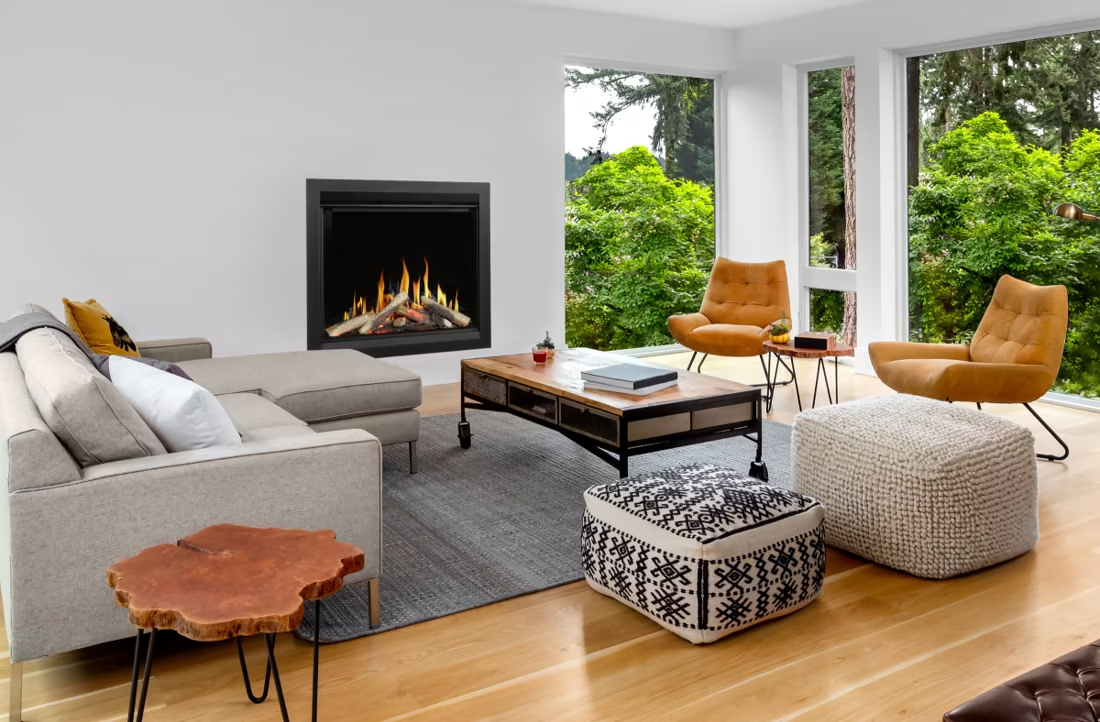
Four fuels. One honest answer for Lauderdale County.
Three steps. No salesperson until you're ready.
Tell us about your project
Your zip code, your situation, and the fuel you're leaning toward—or let the answers point you to one.
See what's actually available
The brands dealers within 100 miles genuinely carry—real options, never a catalog mirage.
Get your dealer & Project Guide
A trusted local dealer, plus the free Project Guide & Parts List that names every component of the job.
Frequently Asked Questions
Which fuel works best in Lauderdale County?
With winter lows averaging around 29°F and a heating season that's a fraction of what colder states rack up, Lauderdale County doesn't need the all-night, sub-zero-rated stoves you'd see in Bozeman or Fargo—but it still gets real cold snaps that call for dependable heat. Wood is a natural fit given the oak, hickory, maple, and pine common in the Hatchie River bottomlands; a mid-size wood stove or insert handles the coldest nights without needing marathon burn times. Gas fireplaces and inserts are popular in Ripley and Halls for their convenience—instant heat with no wood-splitting, running on propane or gas service depending on the property. Pellet stoves are a solid middle ground, with Lignetics, Hamer Pellet Fuel, and Greenway Renewable Energy all sold regionally. Electric fireplaces work well as supplemental heat in bedrooms, sunrooms, or ambiance installs, though they're not typically anyone's primary heat source here. Most homes end up pairing a wood or gas unit for primary heat with electric for secondary rooms.
Do I need a permit to install a fireplace in Lauderdale County?
In most cases, yes. New wood stoves, wood inserts, gas fireplaces, gas inserts, and pellet stoves generally require a building permit, and gas installations typically need a separate permit for the gas line work done by a licensed installer. Within Ripley or Halls city limits, permits are handled through the town; outside incorporated limits, they go through the county. Electric fireplace installs usually don't require a permit unless the project involves new wiring or a dedicated circuit for a built-in unit. Most local hearth retailers pull permits as part of the installation, so homeowners rarely have to handle the paperwork themselves.
Are there air quality restrictions on wood burning in Lauderdale County?
No—Lauderdale County doesn't have the winter inversion problems or wildfire smoke concerns that trigger burn advisories in places like the Klamath Basin or parts of the Mountain West. There's no local non-attainment designation and no mandatory or voluntary burn curtailment program here. That said, new wood stove installations still need to meet current EPA emissions standards, and a properly sized, well-seasoned-wood-fed stove burns cleaner and more efficiently than an older unit regardless of local rules.
Can one local hearth retailer handle all four fuel types?
Some do, some specialize. Multi-fuel dealers around Ripley—the kind that stock wood, gas, pellet, and electric units side by side—are worth visiting first if you're still comparing fuels, since you can see working displays and talk through the trade-offs for your specific home. Smaller shops in Halls or Henning may focus more narrowly on wood and gas, with pellet stoves as a secondary line. If you already know you're going pellet, ask specifically about local supply of Lignetics, Hamer Pellet Fuel, or Greenway Renewable Energy bags before you buy, since not every dealer stocks the same brands.
How does service work in rural areas of Lauderdale County?
Most chimney sweeps and gas technicians serving the county are based in or near Ripley and travel out to Halls, Henning, and the farm communities along the Hatchie bottoms. Expect a modest trip fee for calls outside Ripley, and know that pre-season service—scheduled in September or October before the first cold front—is far easier to book than a mid-winter emergency call. Given the moderate heating season here, an annual sweep and inspection before the county's coldest stretch (typically December through February) covers most homes.
What's the typical cost range for fireplace installation across all fuel types in Lauderdale County?
Costs vary by fuel and by how much venting or gas line work is involved. Wood stove or insert installation typically runs $3,800–$8,000, depending on chimney condition and whether new class-A chimney pipe is needed. Gas fireplace, insert, or stove installation runs roughly $4,000–$9,500, with cost depending on whether a new gas line or propane tank setup is required. Pellet stove or insert installation typically falls between $4,000–$7,000. Electric fireplaces run $200–$2,500 for the unit itself, plus $300–$1,000 in labor for anything beyond a simple plug-and-play setup, such as a built-in or wall-mount install. See the county + fuel pages above for cost detail tied to specific local retailers.
Can I install a fireplace myself?
If you're putting a fire in your house on purpose, it's best to work with an expert. Unless you're genuinely experienced in framing, gas line, vent pipe, and the national code on clearances to combustibles, have a professional do it—and ideally the same company that sells you the fireplace, so warranty, service, and liability all live under one roof.
Can a fireplace actually lower my heating bill?
Yes—by creating a comfort zone. A furnace heats every square foot of the house just to warm the one room you're in; a gas fireplace on low burns roughly a sixth of the gas a typical furnace does. Set the furnace around 55–60 degrees as a baseline, then heat the rooms your family actually uses. Families who heat this way commonly save $20–$60 a month.
Does a fireplace add value to my home?
On average, a fireplace adds back to the home about the same amount you spent installing it. Add the monthly savings from heating the rooms you actually use instead of the whole house—often hundreds of dollars a year—and the value case is strong before you even count what a fire does for how your family uses the room.
How much should I budget for a fireplace?
For an average home—covering the fireplace, the vent pipe, and basic installation—a budget between $3,900 and $5,500 gives you a lot of options across wood, gas, and pellet. By the time you add finish work, gas line, and electrical, the average complete installation lands between $5,000 and $12,000 all-in. In a remodel or new build, a good rule is to put about 2.5% of the total project cost toward the fireplace.
Stove and Fireplace Dealers in Lauderdale County
Listings include WhyFire partner dealers, dealers we have verified as authorized for the brands we recommend, and established local businesses that carry hearth products. Every listing shows which one it is. The ones marked Preferred run on WhyFire's software, so they can show you real pricing and book your appointment right here. No manufacturer pays for placement. How we verify dealers →
Hlc Cullipher LLC
31w - Mason, Tn
Jones Mobile Home Service Inc
Acme Brick Company
Walt Mestan Dba The Fireplace Center
Get matched with a Lauderdale County hearth dealer.
Tell us about your home and fuel preference, and we'll match you with a trusted local dealer and send a free Project Guide & Parts List—the exact parts, vent kit, and recommended dealer for your Lauderdale County project.
Find Your Fireplace →