
Instant heat for Rhea County homes, without the wood pile.
Clean, on-demand heat for Rhea County's mix of in-town Dayton homes and weekend places around Watts Bar Lake. Find the right fireplace, insert, or stove and get matched with a trusted local dealer.
Every Project Starts From One of These Five Situations
Convenience heat for a mild, mixed climate.
Rhea County sits in the Tennessee River Valley between Chattanooga and Knoxville, anchored by Dayton and stretching out to Spring City, Graysville, and the shoreline of Watts Bar Lake. At climate zone 4A with about 3,762 heating degree days and an average winter low near 28°F, the county's heating season is real but far milder than places like Duluth, MN or Burlington, VT—most winters bring a handful of hard freezes and the occasional arctic blast into the single digits rather than months of deep cold. That's a climate where gas fireplaces earn their keep less as survival heat and more as everyday convenience.
Natural gas service in Rhea County is limited mostly to pockets near Dayton's city center; outside that footprint, propane is the standard fuel for both full-time homes and the seasonal cabins scattered along Watts Bar Lake. A gas fireplace or insert lets a lake house warm up in minutes when a family arrives for the weekend, and it gives in-town homes a zone-heat option that doesn't require splitting or hauling wood—even though wood is plentiful and burns without restriction here, since Rhea County has no air quality non-attainment concerns.
Three steps. No salesperson until you're ready.
Tell us about your project
Your zip code, your situation, and the fuel you're leaning toward—or let the answers point you to one.
See what's actually available
The brands dealers within 100 miles genuinely carry—real options, never a catalog mirage.
Get your dealer & Project Guide
A trusted local dealer, plus the free Project Guide & Parts List that names every component of the job.
Frequently Asked Questions
How much does a gas fireplace installation cost in Rhea County?
Most gas fireplace installations in Rhea County run between roughly $3,500 and $9,000, depending on the unit, the venting path, and whether a propane tank or new gas line is part of the job. A direct-vent insert going into an existing masonry fireplace with fuel already run to the hearth sits on the lower end. A new built-in fireplace for a Watts Bar Lake cabin or new-construction home—with framing, venting, and a fresh propane tank setup—lands toward the higher end. A local dealer will confirm the exact number after seeing your home and chimney or wall situation.
Can I convert my existing wood fireplace to gas?
Yes, and it's a common request in older Dayton and Spring City homes with an existing masonry fireplace. A gas insert typically slides into that opening, using a stainless liner run through your current chimney as the vent path, and runs $3,800 to $7,500 depending on whether you're on propane or in one of the limited natural gas pockets near Dayton. Homes already set up with a propane tank or gas appliance are on the lower end; homes needing a new tank installed are higher. The conversion keeps the look of your original fireplace while giving you heat at the flip of a switch instead of a match.
Do I need natural gas, or should I plan on propane?
For most of Rhea County, plan on propane. Natural gas infrastructure only reaches limited areas close to Dayton's center, so homes in Spring City, Graysville, and around Watts Bar Lake are almost always propane. That's not a downside for fireplace performance—the same units run on either fuel, just with a different orifice and regulator setup—but it does mean budgeting for a tank if you don't already have propane service for your water heater, range, or furnace. Your local dealer can tell you quickly whether your address falls inside Dayton's gas service footprint.
Will my gas fireplace still work if the power goes out?
Most modern gas fireplaces will, which matters in Rhea County when winter ice or an arctic blast knocks out power along with the cold. Units with intermittent pilot ignition (IPI) run on a small battery backup that kicks in automatically, so the fireplace lights on demand even with the grid down—just remember to keep fresh batteries in the unit. Valor's gas fireplaces go a step further: the pilot's thermocouple generates its own electricity, so there's no battery to remember at all. Worth asking about directly if you're picking a unit for a lake cabin that sits empty for stretches at a time.
What's the difference between a gas fireplace, gas insert, and gas stove?
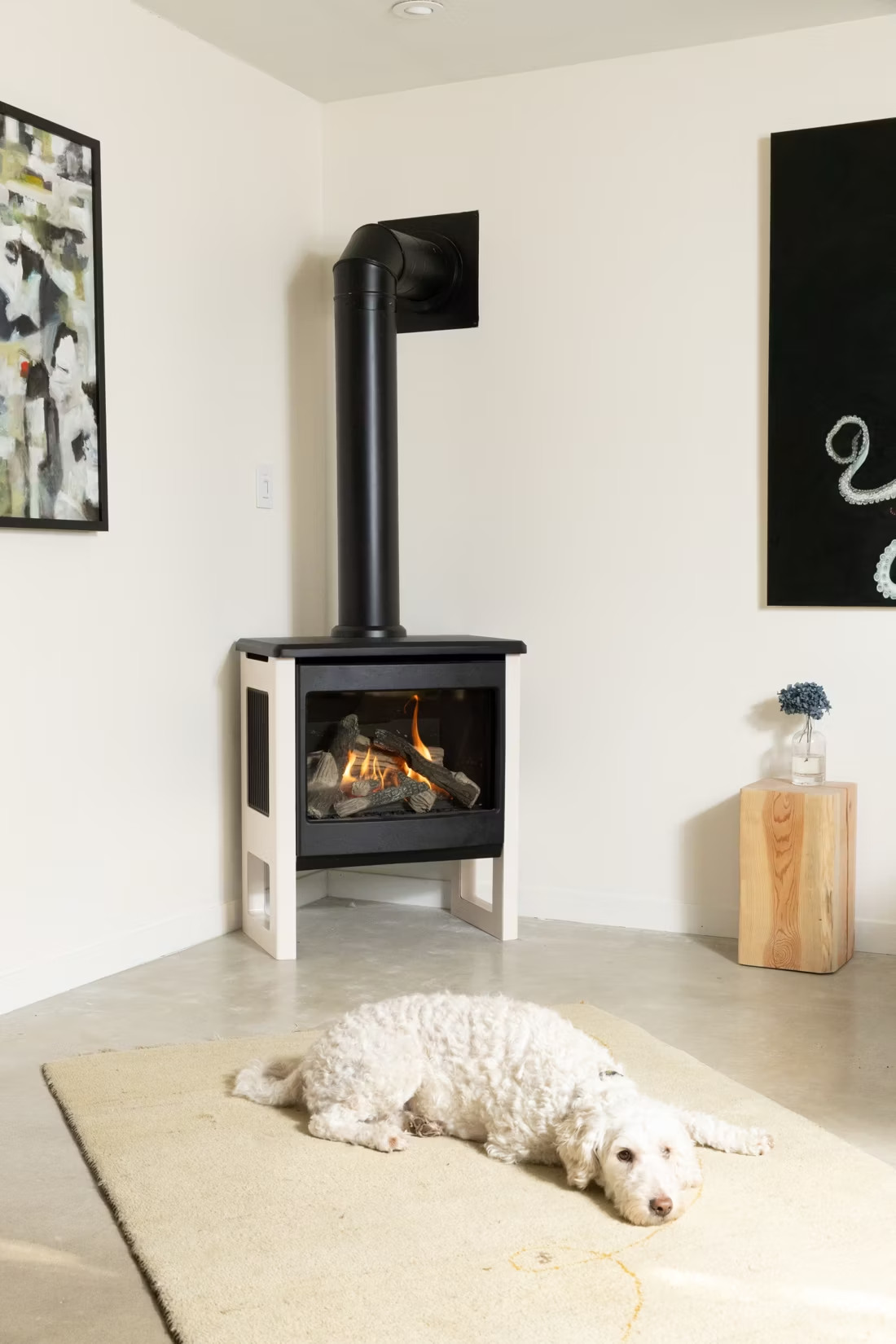
A gas fireplace is a fully built-in unit framed into a wall—the right call for new construction, like many of the newer homes going up around Watts Bar Lake. A gas insert drops into an existing masonry fireplace opening, which fits a lot of the older housing stock in Dayton and Spring City. A gas stove is a freestanding cast-iron or steel unit that sits out on a hearth pad, similar in footprint to a wood stove but running on gas. If you already have a working chimney and fireplace, an insert is usually the simplest and most cost-effective path.
Do I need a permit to install a gas fireplace in Rhea County?
Yes—a building permit is required through the Rhea County Building Department for new gas fireplace installations, and any propane or gas line work needs to be done by a licensed gas fitter as part of a separate gas permit. Most established hearth dealers handle both permits as part of the installation, coordinating the gas hookup, venting, and inspection so you're not managing multiple trades yourself.
What's the difference between vented and vent-free gas fireplaces?
Vented (direct-vent) gas fireplaces pull combustion air from outside and exhaust the byproducts back outside through sealed venting—they're the cleanest, safest, and most universally code-compliant option. Vent-free units burn without any external venting, releasing water vapor and small amounts of combustion byproducts into the room; they're legal in Tennessee but come with strict room-size and ventilation rules. Given Rhea County's humid climate, where extra indoor moisture from a vent-free unit can be more noticeable, most local dealers steer homeowners toward direct-vent models for both comfort and simplicity.
How often should my gas fireplace be serviced?
An annual inspection is the standard recommendation for any gas fireplace or insert—a technician checks the burner, pilot assembly, venting, and gas connections, and cleans the glass and interior. It's a quick job compared to wood chimney sweeping, and local service providers typically charge around $120 to $200 for the visit. For lake cabins that sit unused for months, it's worth having that inspection done before the first cold snap rather than assuming everything's fine after storage.
Gas vs. wood—which is right for my Rhea County home?
Wood is genuinely abundant here—oak, hickory, maple, and pine are all common locally, Cherokee National Forest cutting permits run about $20 per cord from May through October, and Rhea County has no air quality restrictions that would limit wood burning the way non-attainment areas elsewhere do. So the choice isn't about whether wood works here; it does. Gas wins on convenience: instant heat with no hauling, splitting, or ash cleanup, which is exactly why it's popular for weekend places around Watts Bar Lake and for homeowners in Dayton and Spring City who want reliable zone heat without tending a fire every evening.
What's the difference between an insert and a zero-clearance fireplace?
An insert is a fireplace that slides into a pre-existing wood-burning fireplace—if you don't have one, there's nothing to insert it into. A zero-clearance fireplace is built into a framed wall, which makes it the answer for remodels and new construction. Simple test: existing masonry fireplace means insert; blank or framed wall means zero-clearance.
Why is a fireplace insert so efficient?
An insert does two things: it seals the chimney completely, so you stop losing air you already paid to heat, and it radiates warmth into the room through the firebox and glass. Most add a heat-exchange fan that pulls cool room air underneath, wraps it around the hot firebox, and pushes it back out warm. Your home is more efficient before you've even lit the first fire.
Can I install a fireplace myself?
If you're putting a fire in your house on purpose, it's best to work with an expert. Unless you're genuinely experienced in framing, gas line, vent pipe, and the national code on clearances to combustibles, have a professional do it—and ideally the same company that sells you the fireplace, so warranty, service, and liability all live under one roof.
What is an in-home preview and do I need one?
It's a visit where a hearth professional measures your space, confirms the model you picked actually works in your home, and walks the specs—framing, gas line, venting, finish work—before anything is ordered. Some details you just can't know until you see the house. Never make a down payment without one; it's the single most-skipped step that burns buyers.
Stove and Fireplace Dealers in Rhea County
Listings include WhyFire partner dealers, dealers we have verified as authorized for the brands we recommend, and established local businesses that carry hearth products. Every listing shows which one it is. The ones marked Preferred run on WhyFire's software, so they can show you real pricing and book your appointment right here. No manufacturer pays for placement. How we verify dealers →
Middle Tn Natural Gas - Dayton
Volunteer Hearth & Home
Spar-Gas
Middle Tn Natural Gas - Crossville
Middle Tennessee Natural Gas
Hearthside Fireplace Patio & Barbeque Center
Therm-Con, Llc
Spar Gas Inc.
America's Hearth & Patio Warehouse
Smith's Ace Hardware
Middle Tn Natural Gas - Sparta
Find your gas fireplace in Rhea County.
Tell us about your Dayton-area home or Watts Bar Lake place, and we'll match you with a trusted local dealer and send over a free Project Guide & Parts List—the exact parts, including the vent kit, and a recommended installer for your gas fireplace project.
Find Your Fireplace →