
Warm up your Rhea County home without a chimney.
From lake houses on Watts Bar to farmhouses outside Dayton and Spring City, electric fireplaces give Rhea County homeowners real ambiance and supplemental warmth with no venting, no gas line, and no masonry work. Find the right unit and connect with a trusted local dealer.
Every Project Starts From One of These Five Situations
Mild winters, easy installs, and a lot of housing types.
Rhea County sits in climate zone 4A with a moderate winter heating season and an average winter low around 28°F—cold enough for regular fires, but nowhere near the brutal stretches you'd see in a place like Duluth or Fargo. That moderate profile is exactly where electric fireplaces earn their keep: they don't need to carry the whole heating load, they just need to make a room feel warm on the chilly nights and take the edge off a Dayton winter morning. For homeowners who want the visual and ambiance of a fire without committing to firewood, propane, or chimney upkeep, electric is often the simplest answer.
Rhea County's housing stock is a mix of older frame farmhouses, newer construction around Dayton and Spring City, and a substantial number of manufactured and modular homes and lake cabins around Watts Bar Lake—properties where running a masonry chimney or gas line isn't practical or worth the cost. An electric fireplace or insert plugs into a standard outlet or a dedicated 120V/240V circuit, requires zero clearance to combustibles, and can go into a mobile home, a finished basement, or a lakefront cabin with none of the structural work a wood or gas unit demands. Local electricians and hearth dealers serving the county handle the straightforward wiring, and most installs are a one-day job.
Three steps. No salesperson until you're ready.
Tell us about your project
Your zip code, your situation, and the fuel you're leaning toward—or let the answers point you to one.
See what's actually available
The brands dealers within 100 miles genuinely carry—real options, never a catalog mirage.
Get your dealer & Project Guide
A trusted local dealer, plus the free Project Guide & Parts List that names every component of the job.
Frequently Asked Questions
How much does an electric fireplace installation cost in Rhea County?
Most electric fireplace projects in Rhea County run in the $400 to $2,500 range. A plug-in electric insert dropped into an existing masonry fireplace opening sits at the low end—no wiring changes needed if there's already an outlet nearby. A built-in linear electric fireplace set into new framing, drywall, and a dedicated circuit for a living room remodel runs toward the higher end, especially in newer construction around Dayton where homeowners want a wall-mounted, TV-height unit. Because there's no chimney, no venting, and no gas line, electric installs are consistently the least expensive fireplace project a Rhea County homeowner can take on.
Can an electric fireplace actually heat a room in Rhea County's climate?
Yes, for the room it's in. Most electric fireplace inserts put out 4,000 to 5,000 BTUs—enough to comfortably heat a 400 to 500 square foot space, which covers most living rooms and bedrooms in the county. With Rhea County's average winter low around 28°F and a moderate winter heating season, an electric unit is well-matched as supplemental or zone heat rather than a whole-home replacement for a furnace or heat pump. It's a good fit for taking the chill off a sunroom, den, or lake cabin that only sees occasional weekend use, but it won't replace central heat on the coldest nights of the year.
Do I need a permit or licensed electrician to install an electric fireplace in Rhea County?
A simple plug-in electric fireplace that uses an existing outlet typically doesn't require a permit. If your install needs a new dedicated circuit—common with built-in linear units or higher-wattage inserts—that electrical work should go through a licensed electrician, and larger remodel projects (new framing, a mantel surround, or structural changes) may need a permit through the Rhea County Building & Codes Department or, if you're inside city limits, the City of Dayton or Spring City building office. Most local hearth dealers can tell you within a few minutes of looking at your setup whether your project needs a permit.
What's the difference between an electric fireplace, an electric insert, and an electric log set?
An electric fireplace is typically a built-in unit—recessed into a wall or framed into a mantel surround—designed for new construction or remodels. An electric insert is sized to slide into an existing masonry fireplace opening, converting an old wood-burning firebox into a heat source without touching the chimney. An electric log set is the simplest option: it drops directly onto the existing hearth or firebox floor and plugs in, with no permanent installation at all—a popular choice for renters and lake cabins around Watts Bar where a full remodel doesn't make sense. For most Rhea County homes with an existing fireplace they want to simplify, an insert is the middle-ground choice between the two.
Are electric fireplaces a good fit for mobile and manufactured homes in Rhea County?
Yes—electric is generally the safest and most practical fireplace option for manufactured housing, which makes up a meaningful share of homes in Rhea County. Because electric units require zero clearance to combustibles and no venting or roof penetration, they avoid the structural and fire-code complications that come with running a wood stove chimney or gas line through a manufactured home's walls and roof. Wall-mounted or insert-style electric units are the most common choice, and local dealers who work regularly in the county's mobile and modular home stock can recommend models sized correctly for those wall cavities.
How much will an electric fireplace add to my power bill?
Running costs depend on wattage and how often you use it, but a typical 1,500-watt electric fireplace costs roughly 15 to 25 cents an hour to run at current Volunteer Energy Cooperative residential rates—most homeowners who use one a few hours an evening during the winter see a modest bump on their bill, not a dramatic one. Because most units let you run the flame effect with the heater switched off, you can also get the visual ambiance essentially for free outside of the coldest months.
Do electric fireplaces need a chimney or venting?
No—this is the core advantage of electric over wood or gas. There's no combustion happening inside the unit, so there's no exhaust to vent and no chimney or flue required. That means an electric fireplace can go on any interior wall, in a basement, in a condo, or in a home without an existing chimney, and it eliminates the ongoing chimney inspection and cleaning that wood-burning units in the county require. It's the reason electric is often the fastest and least disruptive fireplace project a Rhea County homeowner can complete.
Electric vs. wood—which is right for my Rhea County home?
Wood remains a strong option in Rhea County—oak, hickory, and maple are common locally, and Cherokee National Forest cutting permits (about $20 per cord, May through October) make self-cut firewood an affordable heat source for homeowners with the space and willingness to season and store it. Wood also keeps working during a power outage, which electric cannot do. Electric wins on convenience: no wood handling, no ash, no chimney maintenance, and instant on-off operation with a remote or wall switch. For a primary residence where someone is home to feed a fire and values self-sufficiency, wood often makes sense. For a lake house, a rental, a bedroom, or anyone who wants ambiance without the upkeep, electric is usually the better fit. Plenty of Rhea County homes end up with both—wood for the main living space, electric elsewhere.
Where can I find someone to install an electric fireplace near me in Rhea County?
Look for a hearth dealer or licensed electrician with experience in fireplace-specific wiring—not just any handyman, since improper circuit sizing on higher-wattage built-in units can trip breakers or create a fire hazard over time. A trusted local dealer serving Dayton, Spring City, and the Watts Bar Lake area will size the unit to your room, confirm whether your existing outlet or panel can handle it, and install the surround or insert correctly the first time. That's the kind of local match Find My Fireplace makes—we don't sell or ship product ourselves, we connect you with the dealer who actually covers your part of the county.
Can I put a TV above my fireplace?
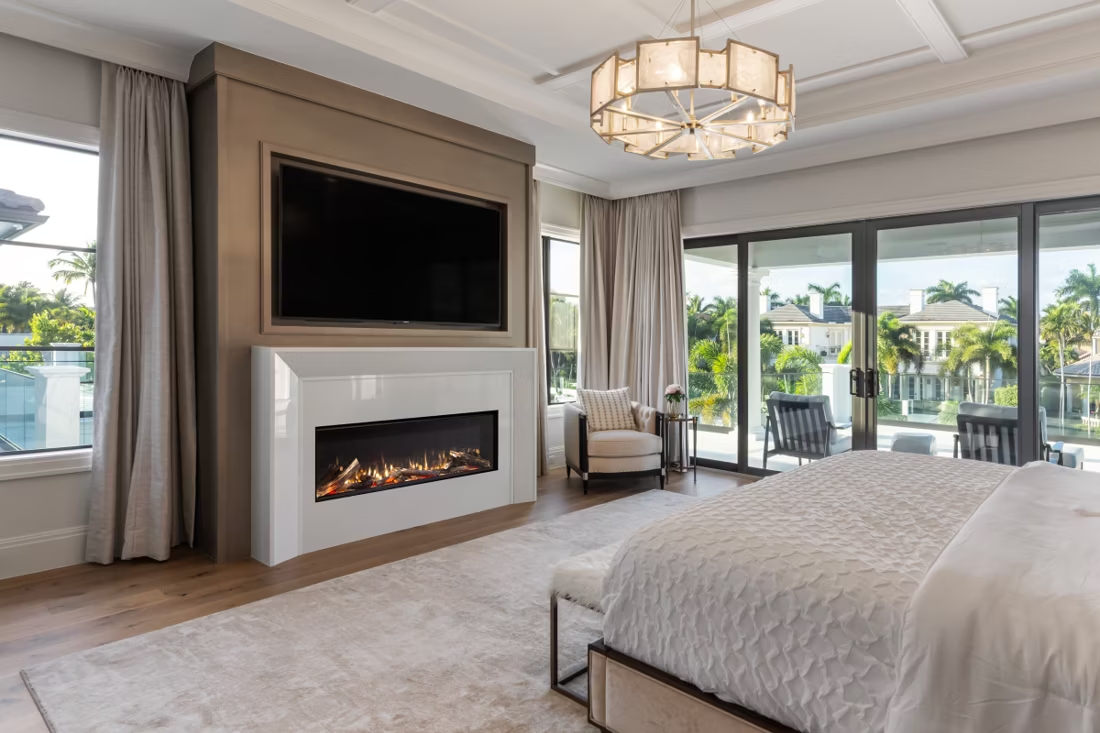
Yes—with an asterisk. Fireplaces are hot and TVs don't like heat. Either put a mantel between them to deflect rising warmth, or choose a fireplace with heat-management technology that creates a cool zone on the wall above—the wall stays around 125 degrees, barely warm, while the room still gets full heat. If you like clean lines and don't want a mantel, heat management is the answer.
Do electric fireplaces actually produce heat?
Yes—most put out around 4,800–5,000 BTUs from a standard outlet, which comfortably warms a bedroom, office, or den as a comfort-zone heater. What they won't do is carry a whole house the way wood, gas, or pellet can. Think of electric as ambiance-first with honest supplemental heat: flames on with no heat in July, flames plus warmth in January.
Does a fireplace add value to my home?
On average, a fireplace adds back to the home about the same amount you spent installing it. Add the monthly savings from heating the rooms you actually use instead of the whole house—often hundreds of dollars a year—and the value case is strong before you even count what a fire does for how your family uses the room.
How much should I budget for a fireplace?
For an average home—covering the fireplace, the vent pipe, and basic installation—a budget between $3,900 and $5,500 gives you a lot of options across wood, gas, and pellet. By the time you add finish work, gas line, and electrical, the average complete installation lands between $5,000 and $12,000 all-in. In a remodel or new build, a good rule is to put about 2.5% of the total project cost toward the fireplace.
Stove and Fireplace Dealers in Rhea County
Listings include WhyFire partner dealers, dealers we have verified as authorized for the brands we recommend, and established local businesses that carry hearth products. Every listing shows which one it is. The ones marked Preferred run on WhyFire's software, so they can show you real pricing and book your appointment right here. No manufacturer pays for placement. How we verify dealers →
Middle Tn Natural Gas - Dayton
Volunteer Hearth & Home
Spar-Gas
Middle Tn Natural Gas - Crossville
Middle Tennessee Natural Gas
Hearthside Fireplace Patio & Barbeque Center
Therm-Con, Llc
Spar Gas Inc.
America's Hearth & Patio Warehouse
Smith's Ace Hardware
Middle Tn Natural Gas - Sparta
Find your electric fireplace in Rhea County.
Tell us a bit about your home and we'll match you with the right electric fireplace or insert, plus a free Project Guide & Parts List—the exact parts and a recommended local Rhea County dealer to get it installed right.
Find Your Fireplace →