
Instant Heat for Tennessee Valley Winters.
Reliable, clean-burning warmth for Red Bank homes at the foot of Signal Mountain—find the right gas unit and get matched with a trusted local dealer.
Every Project Starts From One of These Five Situations
Steady warmth for a mild but real Tennessee winter.
Red Bank sits in the Tennessee Valley at the base of Signal Mountain and Walden Ridge, just north of downtown Chattanooga, at about 745 feet of elevation. The climate here is classified 4A, mixed-humid—winters average lows near 29°F and the area logs roughly 3,918 heating degree days a season, a fraction of what a place like Duluth, MN sees, but still enough cold snaps into the teens and 20s each January that a dependable secondary heat source matters.
Wood-burning setups are genuinely uncommon here—most Red Bank lots are suburban, firewood sourcing means a drive out to Cherokee National Forest, and the mild climate doesn't demand the all-night burn times a wood stove is built for. Gas fills that gap instead. Chattanooga Gas serves natural gas to much of Red Bank's in-town neighborhoods, and propane covers homes outside that footprint. A direct-vent gas fireplace or insert gives you heat at the flip of a switch, pairs cleanly with the central HVAC already running the rest of the house, and—with the right ignition system—keeps working even when the power along Dayton Boulevard flickers during a storm.
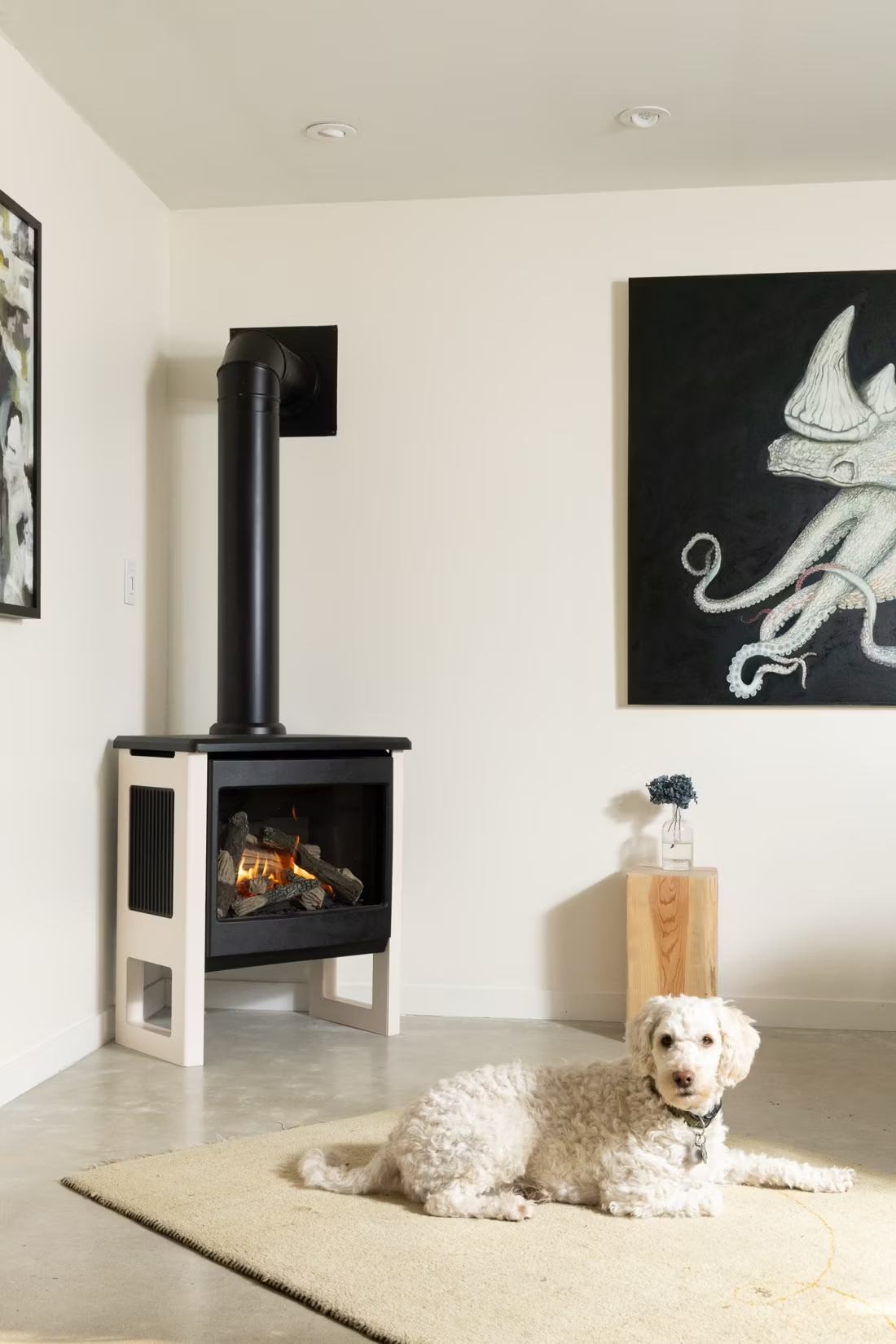
Three steps. No salesperson until you're ready.
Tell us about your project
Your zip code, your situation, and the fuel you're leaning toward—or let the answers point you to one.
See what's actually available
The brands dealers within 100 miles genuinely carry—real options, never a catalog mirage.
Get your dealer & Project Guide
A trusted local dealer, plus the free Project Guide & Parts List that names every component of the job.
Frequently Asked Questions
How much does a gas fireplace installation cost in Red Bank?
Most gas fireplace and insert installations in Red Bank run between roughly $3,800 and $9,500, depending on the unit, whether you're working with natural gas or propane, and how much venting or gas line work is involved. A direct-vent insert dropped into an existing masonry fireplace in one of Red Bank's older brick ranch homes—common through the Stringers Ridge and Dayton Boulevard neighborhoods—tends to land on the lower end if a gas line already reaches the house. New construction or a fireplace added where no gas line exists runs higher once trenching and a licensed gas-fitter are factored in. A local dealer will give you a firm number after seeing the space.
Can I convert my existing wood-burning fireplace to gas?
Yes, and it's one of the most requested projects among Red Bank homeowners with an older masonry fireplace that was never a great wood-burning setup to begin with. A gas insert slides into the existing firebox, a stainless liner runs up the flue, and the chimney becomes the vent path. Costs typically fall in the $3,800–$8,000 range locally, with homes already connected to Chattanooga Gas service coming in lower than those needing a new propane tank or gas line extension. The conversion keeps your fireplace's look while removing the ash, smoke, and creosote upkeep entirely.
Should I use natural gas or propane for a fireplace in Red Bank?
It depends on where in Red Bank you're located. Chattanooga Gas provides natural gas service to most of the city's core neighborhoods, and if your home already has a gas water heater, range, or furnace, adding a fireplace on that same line is usually the simplest and cheapest route. Homes on the edges of Hamilton County outside the natural gas footprint typically run on propane, either from an existing tank or a new one installed by a local propane supplier. Nearly every gas fireplace on the market can be configured for either fuel—your installer just sets the correct orifice and regulator.
Will a gas fireplace still work if the power goes out?
Most will, with the right ignition system. Units with IPI (intermittent pilot ignition) run on a small battery backup that kicks in automatically when power drops, so the fireplace still lights on demand. That matters in Red Bank during the occasional ice storm or summer thunderstorm outage that can knock out City of Chattanooga electric service for a stretch. Valor's gas fireplaces take a slightly different approach—they generate their own electricity through the pilot's thermocouple, so there's no battery to remember at all. Ask your local dealer which ignition system a given model uses before you decide.
What's the difference between a gas fireplace, gas insert, and gas stove?
A gas fireplace is a fully built-in unit framed into a wall—the right call for new construction or a remodel where no fireplace exists yet. A gas insert is sized to slide into an existing masonry firebox, which is the more common project in Red Bank's older brick homes since the chimney is already there to use as the vent path. A gas stove is a freestanding cast-iron or steel unit that sits on the floor, useful in a room without any existing hearth. For most Red Bank homeowners upgrading a fireplace they already have, an insert is the straightforward answer.
Do I need a permit to install a gas fireplace in Red Bank?
Yes—a building permit and a separate gas line permit are both required for a new gas fireplace or insert installation, coordinated through the City of Red Bank's Building and Codes Department alongside Hamilton County codes enforcement. The gas line portion has to be run or connected by a licensed gas-fitter, which is one reason it's worth using a certified hearth dealer rather than a general contractor—they handle the gas hookup, venting, and inspection sign-off as one coordinated job instead of three separate trades.
Are vent-free gas fireplaces allowed in Red Bank?
Tennessee permits vent-free (unvented) gas fireplaces as long as the unit includes an oxygen depletion sensor and the room meets minimum size requirements for the appliance's BTU output. Given Red Bank's relatively mild 4A climate and lower annual heating load, some homeowners use a vent-free unit for supplemental heat in a den or bonus room rather than a full-house solution. That said, direct-vent gas fireplaces remain the more common and more universally recommended choice locally—they exhaust combustion byproducts outside rather than into the room, and they deliver more consistent, real heat output. A local dealer can walk you through both options for your specific space.
How often does a gas fireplace need to be serviced?
Plan on an annual inspection, ideally before the first cold snap in late fall. A technician checks the burner, pilot assembly, gas connections, and venting, and cleans the glass and interior—a much quicker job than a wood chimney sweep, but just as important for safe operation. Local gas appliance service providers typically charge somewhere in the $150–$250 range for a standard annual inspection. Units that see heavy daily use through the winter, common in homes using a gas insert as their main living-area heat source, sometimes benefit from a mid-season glass cleaning as well.
Why is gas so much more common here than wood or pellet stoves?
Red Bank's suburban lot sizes, its position inside the Chattanooga metro, and a mild 3,918-HDD climate all work against wood and pellet setups being the practical choice. The nearest public cutting permits are through Cherokee National Forest, at $20 per cord during the May-to-October season—workable for a hobbyist, but not the kind of nearby, abundant supply that supports wood as a primary heat source the way it does in more rural parts of the region. Oak, hickory, and maple are the common local species if you do go that route, but for most Red Bank homes, a direct-vent gas fireplace delivers steadier heat with none of the wood storage, ash, or chimney maintenance.
Is my gas fireplace wasting gas?
If it was installed more than 15 years ago, probably. Older gas fireplaces keep a standing pilot light burning all the time, and that little flame can cost a couple hundred dollars a year. Newer models use pilot-on-demand ignition—the pilot lights only when you use the fireplace and goes out when you turn it off.
Why is my open fireplace making my house colder?
Open fireplaces suck—literally. As the fire burns, it consumes air your furnace already paid to heat and pulls it out through the chimney, so the house is actually colder after the fire goes out than before you lit it. An insert fixes this: it seals the chimney, puts fixed glass across the front, and turns that hole in your house into a real heat source.
Can I install a fireplace myself?
If you're putting a fire in your house on purpose, it's best to work with an expert. Unless you're genuinely experienced in framing, gas line, vent pipe, and the national code on clearances to combustibles, have a professional do it—and ideally the same company that sells you the fireplace, so warranty, service, and liability all live under one roof.
What is an in-home preview and do I need one?
It's a visit where a hearth professional measures your space, confirms the model you picked actually works in your home, and walks the specs—framing, gas line, venting, finish work—before anything is ordered. Some details you just can't know until you see the house. Never make a down payment without one; it's the single most-skipped step that burns buyers.
Nearby Dealers
Hearth shops serving Red Bank and the surrounding area. Every listing shows whether it is a WhyFire partner, a dealer we have verified as authorized for the brands we recommend, or a local business carrying hearth products. No manufacturer pays for placement. How we verify dealers →
Therm-Con, Llc
America's Hearth & Patio Warehouse
Hearthside Fireplace Patio & Barbeque Center
Smith's Ace Hardware
Find your gas fireplace in Red Bank.
Tell us a bit about your home and we'll match you with a trusted local dealer and send over your free Project Guide & Parts List—the exact parts, vent kit, and installer recommendation for your Red Bank gas fireplace project.
Find Your Fireplace →