
Real ambiance for Putnam County homes, without the chimney.
Zero-clearance electric fireplaces and inserts for Cookeville, Baxter, Monterey, and Algood—installed in an afternoon, no venting or gas line required. We match you with a trusted local dealer.
Every Project Starts From One of These Five Situations
A mild Cumberland Plateau winter, with a fireplace that doesn't fight your HVAC.
Putnam County sits in climate zone 4A on the edge of the Cumberland Plateau, with roughly 4,014 heating degree days and average winter lows around 27°F—noticeably milder than the deep-winter counties of the upper Midwest or New England, where wood or gas heat dominates out of necessity. Cookeville, Baxter, Monterey, and Algood all see real cold snaps, but most homes here already have functioning central heat. The fireplace question in Putnam County is usually about ambiance and supplemental warmth in a specific room, not survival heat—which is exactly the case electric fireplaces are built for.
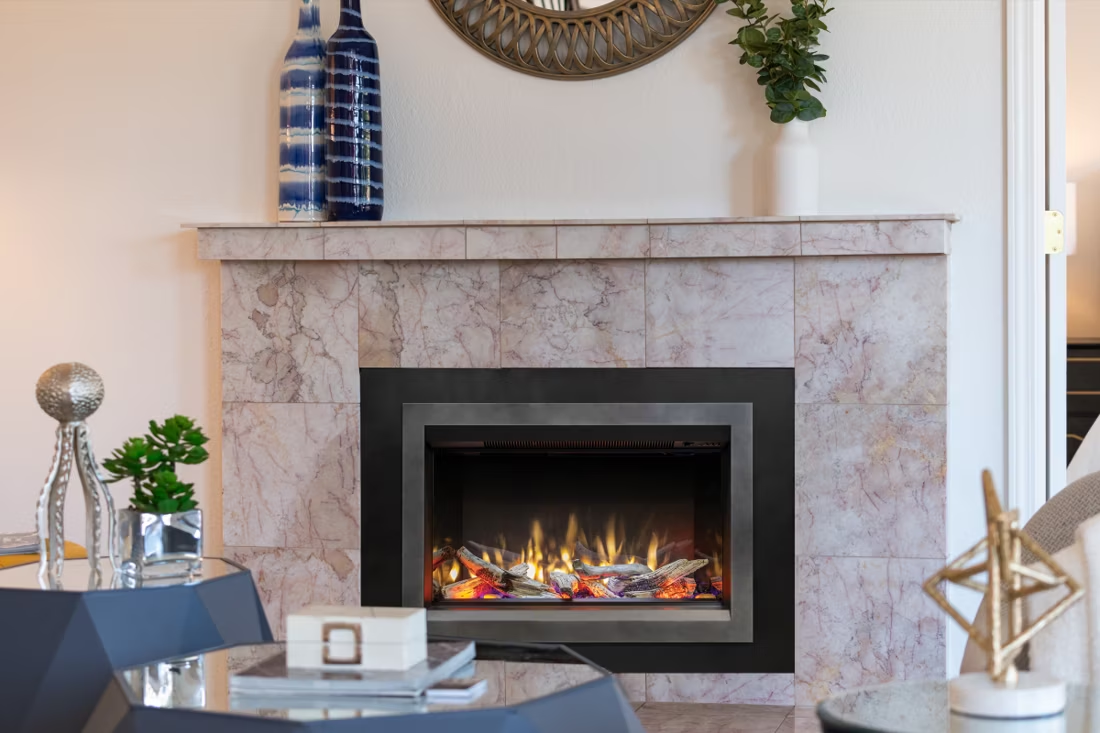
Electric units plug into a standard outlet, need no chimney, no gas line, and no combustion air, which makes them a practical fit for Cookeville condos, Tennessee Tech-area rentals, and finished basements throughout the county where running venting would be impractical or impossible. They won't out-heat a wood stove on a hard freeze night, but for a den, bedroom, or converted garage in Baxter or Algood, an electric insert delivers real supplemental heat and the look of a fire with a remote or wall switch—no permit, no cutting permit, no chimney sweep ever required.
Three steps. No salesperson until you're ready.
Tell us about your project
Your zip code, your situation, and the fuel you're leaning toward—or let the answers point you to one.
See what's actually available
The brands dealers within 100 miles genuinely carry—real options, never a catalog mirage.
Get your dealer & Project Guide
A trusted local dealer, plus the free Project Guide & Parts List that names every component of the job.
Frequently Asked Questions
How much does an electric fireplace installation cost in Putnam County?
Most electric fireplace and insert installations in Putnam County run $400 to $1,200, and that's typically the full project cost—not just the unit. A plug-in freestanding electric stove or a simple insert into an existing fireplace opening sits at the low end; built-in wall units that need minor electrical work (a new dedicated circuit or outlet relocation by a licensed electrician) push toward the higher end. Compare that to the $4,500-plus typical for a wood or gas installation in this area, and it's clear why electric is the go-to for secondary rooms and rental properties around Cookeville and Algood.
Do I need a permit to install an electric fireplace in Putnam County?
In most cases, no. Because electric fireplaces don't involve combustion, venting, or gas lines, they generally fall outside the building permit requirements that apply to wood stoves and gas inserts in Putnam County. If your installation requires new household wiring—a dedicated 20-amp circuit for a larger built-in unit, for example—an electrician may need to pull an electrical permit, which local dealers or electricians can handle directly. A simple plug-in insert or freestanding unit typically requires nothing beyond an outlet.
Will an electric fireplace actually heat my room, or is it just for looks?
Most electric fireplaces sold today include a real heating element—typically 4,600 to 5,000 BTU, roughly equivalent to a space heater—that can noticeably warm a single room. In Putnam County's zone 4A climate, with winter lows averaging around 27°F, that's usually enough to make a den, bedroom, or finished basement comfortable without running the furnace as hard. It won't heat a whole house the way a wood stove or gas insert can on a sub-freezing night, and most units let you run the flame effect with the heater off for pure ambiance in warmer months—useful in Cookeville's humid summers.
What's the difference between an electric insert and a freestanding electric stove?
An electric insert is built to slide into an existing fireplace opening—including old wood-burning masonry fireplaces common in older Cookeville and Baxter homes—and typically includes a surround or trim kit to finish the look. A freestanding electric stove sits on the floor like a traditional wood stove and can go virtually anywhere there's an outlet, including rooms with no fireplace at all, like a converted garage or a basement rec room. For homes with an existing but unused fireplace, an insert is the natural fit; for adding heat and ambiance to a room without one, a freestanding stove is simpler.
Can an electric fireplace be used as backup heat during a power outage?
No—this is the one real limitation to be honest about. Because electric fireplaces run entirely on household power, they go dark the moment the grid goes down, unlike a wood stove that keeps working through an ice storm outage. Putnam County does see occasional winter ice events that knock out power for a day or more. If backup heat during an outage matters to you, a wood stove or a gas unit with battery-backup ignition is the better choice; if your priority is a low-maintenance, no-venting fireplace for everyday ambiance and supplemental warmth, electric remains the simplest option.
Are electric fireplaces a good fit for Cookeville rentals and condos?
Yes, and it's one of the most common uses in the county. Because electric units need no chimney, no gas line, and no combustion venting, they're often the only fireplace option that's actually feasible in a Cookeville apartment, a Tennessee Tech-area rental, or a condo association with strict rules about exterior venting. Many are simple enough to unplug and take with you if you move, and landlords increasingly install them as a low-maintenance amenity that avoids the liability of a wood-burning unit.
How much does it cost to run an electric fireplace?
A typical electric fireplace on its heater setting draws around 1,500 watts, which at average Middle Tennessee electric rates costs roughly 15 to 20 cents per hour of heater use—a few dollars for an evening of use in a Baxter or Algood living room. Running just the flame effect without the heater draws only a small fraction of that, since the light itself uses very little power. It's considerably cheaper to operate than most people assume, though it's still supplemental heat, not a replacement for efficient central HVAC on the coldest nights.
Electric vs. gas fireplace—which is right for my Putnam County home?
Gas fireplaces produce more real heat, can run during power outages with the right ignition system, and give a more authentic flame—but they require venting or careful vent-free room sizing, plus a gas line or propane tank, pushing installed costs to $4,500 or more. Electric units need only an outlet, install in an afternoon for a few hundred to just over a thousand dollars, and work anywhere, including rooms with no chimney access at all. For a primary living space in a Cookeville home already on natural gas or propane, gas is often worth the investment. For a bedroom, basement, rental, or anywhere venting isn't practical, electric is the clear, budget-friendly answer.
Can I install an electric fireplace myself, or do I need a local dealer?
Many plug-in electric inserts and stoves are genuinely DIY-friendly—set the unit in place, plug it in, done. Where a local dealer earns their fee is in sizing the right unit for your room, fitting a built-in wall unit or insert cleanly into an existing fireplace opening, and coordinating any electrical work if you want a dedicated circuit or a flush-mounted look. For anything beyond a simple plug-in model, a trusted local dealer in the Cookeville area will also stand behind the installation and know which units hold up best.
Does an electric fireplace need a vent or chimney?
No—that's its superpower. An electric fireplace needs a wall and an outlet, period. No vent pipe, no gas line, no clearances to design around, which is why it works in bedrooms, offices, apartments, and walls where venting a gas or wood unit would be impractical or impossible. Installation is typically the simplest and least expensive of any fireplace type.
Can I put a TV above my fireplace?
Yes—with an asterisk. Fireplaces are hot and TVs don't like heat. Either put a mantel between them to deflect rising warmth, or choose a fireplace with heat-management technology that creates a cool zone on the wall above—the wall stays around 125 degrees, barely warm, while the room still gets full heat. If you like clean lines and don't want a mantel, heat management is the answer.
Can I install a fireplace myself?
If you're putting a fire in your house on purpose, it's best to work with an expert. Unless you're genuinely experienced in framing, gas line, vent pipe, and the national code on clearances to combustibles, have a professional do it—and ideally the same company that sells you the fireplace, so warranty, service, and liability all live under one roof.
Can a fireplace actually lower my heating bill?
Yes—by creating a comfort zone. A furnace heats every square foot of the house just to warm the one room you're in; a gas fireplace on low burns roughly a sixth of the gas a typical furnace does. Set the furnace around 55–60 degrees as a baseline, then heat the rooms your family actually uses. Families who heat this way commonly save $20–$60 a month.
Stove and Fireplace Dealers in Putnam County
Listings include WhyFire partner dealers, dealers we have verified as authorized for the brands we recommend, and established local businesses that carry hearth products. Every listing shows which one it is. The ones marked Preferred run on WhyFire's software, so they can show you real pricing and book your appointment right here. No manufacturer pays for placement. How we verify dealers →
Ap Hearth LLC
Middle Tn Natural Gas - Sparta
Spar Gas Inc.
Colligan Group Dba Frugal Mick
Get your Project Guide & Parts List for an electric fireplace in Putnam County.
Tell us about your room and we'll put together a free Project Guide & Parts List—the exact unit, parts, and a trusted local dealer near Cookeville to install it.
Find Your Fireplace →