
Pellet Stoves in Mount Juliet: An Uncommon but Real Option.
Mount Juliet's mild Middle Tennessee winters mean gas and electric handle most heating loads, but a small number of homeowners still choose pellet for supplemental heat or backup during ice storms. We'll help you find a dealer who actually carries them.
Every Project Starts From One of These Five Situations
Mild winters mean gas and electric do the heavy lifting.
Mount Juliet sits in Wilson County at just 573 feet of elevation, in Climate Zone 4A with an average winter low around 28°F and a fairly light heating season overall. That's a fraction of what a true cold-climate market sees—Duluth, MN faces a heating season more than twice as long and demanding in a typical winter—and it's a big part of why pellet stoves never became part of the standard building stock here. Newer subdivisions across Mount Juliet are built around central gas furnaces and electric heat pumps, and Wilson County has no national forest land or established firewood-cutting culture to support solid-fuel heating the way it does in colder, more rural parts of the country.
That said, pellet isn't unavailable—it's just niche. A handful of Mount Juliet homeowners install pellet stoves for supplemental zone heat in a bonus room, backup warmth during the ice storms that occasionally knock out power along the Middle Tennessee EMC grid, or simply because they moved from a colder state and want the appliance they're used to. Regional pellet brands including Lignetics, Hamer Pellet Fuel, and Greenway Renewable Energy do serve the mid-South, so fuel is sourceable—it just usually comes from a farm-supply store or online pallet delivery rather than a dedicated hearth shop on every corner.
Three steps. No salesperson until you're ready.
Tell us about your project
Your zip code, your situation, and the fuel you're leaning toward—or let the answers point you to one.
See what's actually available
The brands dealers within 100 miles genuinely carry—real options, never a catalog mirage.
Get your dealer & Project Guide
A trusted local dealer, plus the free Project Guide & Parts List that names every component of the job.
Frequently Asked Questions
How much does a pellet stove installation cost in Mount Juliet?
Expect somewhere in the $3,500 to $6,500 range for a typical freestanding pellet stove installation, including the unit, venting, and electrical hookup for the auger and blower. Because pellet stoves are uncommon in Wilson County, fewer local dealers stock them compared to gas or electric units, so it's worth getting two or three quotes—pricing can vary more here than in markets where pellet is the standard product line. Ask any installer you're considering how many pellet units they've actually installed versus gas or electric.
Is a pellet stove actually a good fit for Mount Juliet's climate?
For most homes, no—not as primary heat. With an average winter low around 28°F and a fairly light heating season overall, Mount Juliet's climate is mild compared to markets where pellet heat is standard equipment. A well-sized gas furnace or electric heat pump already covers the heating load efficiently for most houses here. Pellet stoves in Mount Juliet tend to make more sense as supplemental heat for one room, a hedge against winter power outages, or a preference carried over from living somewhere colder.
Where can I buy pellets locally in Mount Juliet?
Regional brands like Lignetics, Hamer Pellet Fuel, and Greenway Renewable Energy distribute through the greater Nashville area, so bagged pellets—typically $5 to $7 per 40-pound bag—are usually findable at farm-supply and hardware stores rather than a dedicated pellet retailer. Because demand is lower here than in colder states, don't expect the bulk-pallet selection you'd see in New England or the upper Midwest. Ordering a full pallet (about 50 bags) online for delivery is common practice for the few Mount Juliet households that heat with pellet regularly through the winter.
Do I need a permit to install a pellet stove in Mount Juliet?
Yes—pellet stove installations typically require a building permit through the City of Mount Juliet Building & Codes Department (or Wilson County Building Codes for unincorporated areas), covering the wall or roof venting and the dedicated electrical circuit the unit needs for its auger and blower. Fees for solid-fuel appliance permits generally run modest, in the same ballpark as other minor mechanical permits. Because so few Wilson County installers handle pellet units regularly, confirm with your dealer that they've pulled permits for this type of appliance before, not just gas or electric ones.
What's the difference between a pellet stove and a pellet insert?
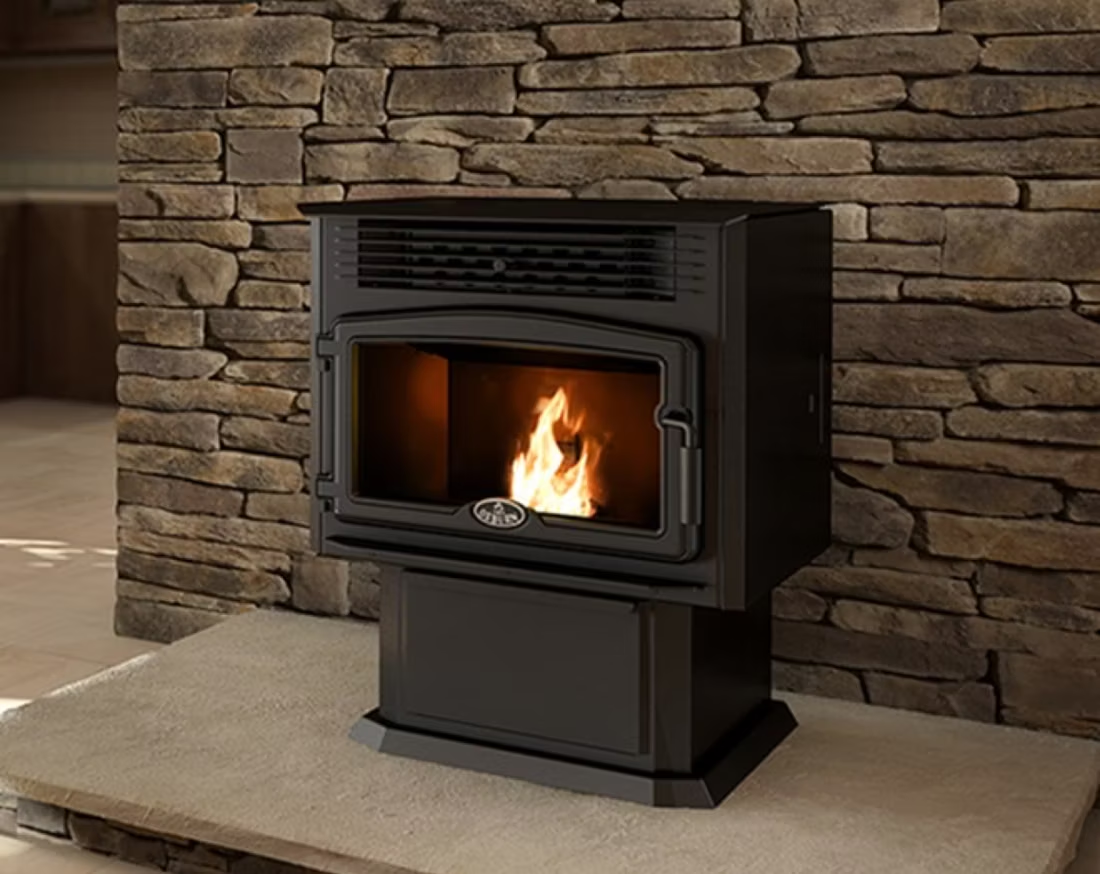
A pellet stove is a freestanding unit that sits on its own hearth pad and vents through a wall or existing chimney chase—it can go almost anywhere with the right clearances. A pellet insert is built to slide into an existing masonry fireplace opening, using a vent kit routed up through the old chimney. In Mount Juliet, where wood-burning fireplaces exist in some older homes but full wood heating never took hold, an insert can be a way to reactivate an unused fireplace opening without the fuel-handling and creosote concerns of burning cordwood.
Will a pellet stove keep working during a power outage?
No—this is the biggest tradeoff to understand before buying one. Pellet stoves rely on electricity to run the auger that feeds fuel and the blower that distributes heat, so when Middle Tennessee EMC service drops during an ice storm, the stove stops too, unless you've paired it with a battery backup or a generator. If backup heat during outages is your main goal in Mount Juliet, a battery-backed IPI gas fireplace is generally a more reliable choice than pellet, since it doesn't depend on continuous power to operate.
Pellet vs. gas—which makes more sense for a Mount Juliet home?
Gas is the more standard choice here, and it shows—natural gas service and propane are both well established across Wilson County, and gas fireplaces or inserts deliver instant, thermostat-controlled heat with none of the fuel storage or hopper-loading pellet requires. Pellet can still make sense if you specifically want the visual of a real flame fed by renewable fuel and don't mind refilling a hopper, but for most Mount Juliet homeowners weighing the two, gas wins on convenience and on the number of local dealers who actually service the equipment.
Pellet vs. electric—which is the simpler option?
Electric is simpler to install and live with. Middle Tennessee EMC serves Mount Juliet at a residential rate around $0.1176 per kWh, and an electric fireplace or insert plugs into an existing outlet with no venting, no fuel storage, and no ash to manage. Pellet requires a vent kit, a dedicated circuit, and a steady supply of bagged fuel sourced from farm-supply stores or online delivery. For homeowners who want ambiance and modest supplemental warmth without dealing with fuel logistics, electric is usually the lower-friction path in this climate.
What about wood heat instead—is that more common here?
Not really, and for similar reasons pellet is uncommon: Mount Juliet's mild winters, its suburban Nashville-metro building stock, and the lack of nearby national forest land for cutting permits mean wood heating never became mainstream in Wilson County. Local oak, hickory, maple, and pine show up far more often as recreational campfire wood or landscaping byproduct than as a home heating fuel. If you're drawn to solid-fuel heat generally, a pellet stove is actually the more practical of the two in Mount Juliet, since bagged fuel is easier to source locally than cut-your-own firewood.
Why is a fireplace insert so efficient?
An insert does two things: it seals the chimney completely, so you stop losing air you already paid to heat, and it radiates warmth into the room through the firebox and glass. Most add a heat-exchange fan that pulls cool room air underneath, wraps it around the hot firebox, and pushes it back out warm. Your home is more efficient before you've even lit the first fire.
What's the difference between an insert and a zero-clearance fireplace?
An insert is a fireplace that slides into a pre-existing wood-burning fireplace—if you don't have one, there's nothing to insert it into. A zero-clearance fireplace is built into a framed wall, which makes it the answer for remodels and new construction. Simple test: existing masonry fireplace means insert; blank or framed wall means zero-clearance.
Can I install a fireplace myself?
If you're putting a fire in your house on purpose, it's best to work with an expert. Unless you're genuinely experienced in framing, gas line, vent pipe, and the national code on clearances to combustibles, have a professional do it—and ideally the same company that sells you the fireplace, so warranty, service, and liability all live under one roof.
Does a fireplace add value to my home?
On average, a fireplace adds back to the home about the same amount you spent installing it. Add the monthly savings from heating the rooms you actually use instead of the whole house—often hundreds of dollars a year—and the value case is strong before you even count what a fire does for how your family uses the room.
Nearby Dealers
Hearth shops serving Mount Juliet and the surrounding area.
Pellet Brands Stocked Around Mount Juliet
Manufacturers will point you to the nearest stocking dealer.
Find your pellet stove in Mount Juliet.
Pellet is a niche choice in Mount Juliet's mild climate, but if it's the right fit for your home, we'll match you with a local dealer who actually stocks and installs pellet equipment—and send you a free Project Guide & Parts List with the exact parts, including the vent kit, for your project.
Find Your Fireplace →