
Pellet Heat for Morristown's Mild Appalachian Winters.
Pellet stoves aren't the default heat source in Hamblen County, but for the right home—a workshop, a basement, a backup heat plan—they can make sense. Here's an honest look, plus a path to a dealer who actually stocks them.
Every Project Starts From One of These Five Situations
A supplemental option, not the local default.
Morristown sits in climate zone 4A at about 1,338 feet, with a moderate heating season and an average winter low near 27°F—noticeably milder than the Appalachian ridgelines an hour east. That's cool enough for real heating bills, but not the kind of sustained deep-cold that pushes households toward biomass appliances the way it does in places like Duluth or Burlington. With natural gas broadly available and City of Morristown's municipal electric utility running a residential rate of about 12.7 cents/kWh, most Hamblen County homeowners default to gas fireplaces or electric heat rather than shopping for a pellet stove.
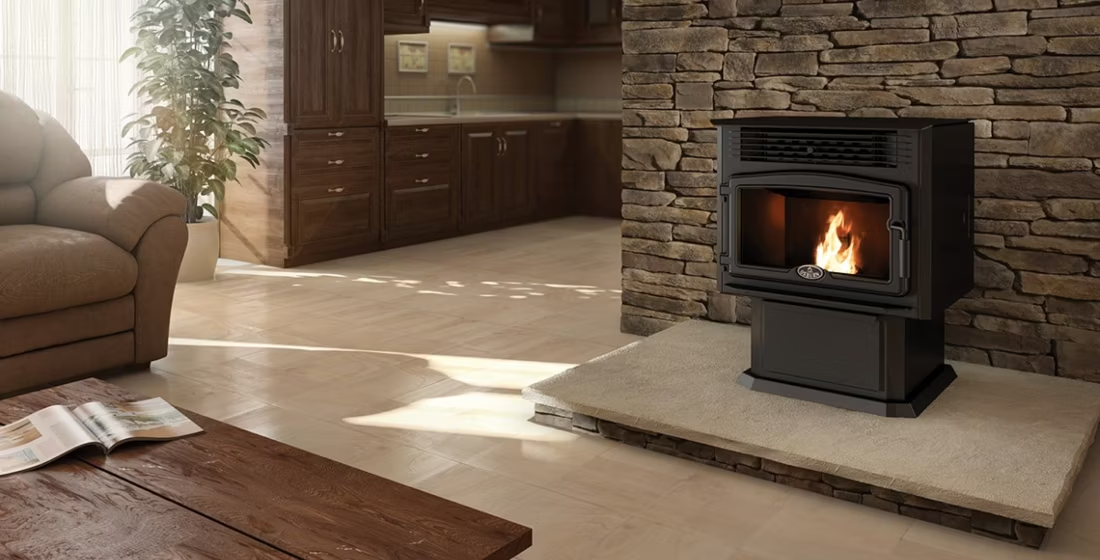
That said, pellet stoves haven't disappeared here—they just serve a smaller, more specific set of homeowners. Think detached workshops without gas service, finished basements that need supplemental heat, rural properties near the Nantahala-Pisgah National Forests where residents already think in terms of self-sufficient heat, or households that want a hedge against winter ice storms (with the caveat, covered below, that pellet stoves still need electricity to run). Regional suppliers like Lignetics, Hamer Pellet Fuel, and Greenway Renewable Energy distribute pellet fuel across the wider Southeast and Appalachian corridor, so sourcing bags isn't hard even though local retail demand for the stoves themselves is limited—which also means fewer installers locally have deep pellet-stove experience compared to gas.
Three steps. No salesperson until you're ready.
Tell us about your project
Your zip code, your situation, and the fuel you're leaning toward—or let the answers point you to one.
See what's actually available
The brands dealers within 100 miles genuinely carry—real options, never a catalog mirage.
Get your dealer & Project Guide
A trusted local dealer, plus the free Project Guide & Parts List that names every component of the job.
Frequently Asked Questions
Is pellet heat actually common in Morristown?
Not especially. With a moderate heating season and winter lows averaging 27°F, Morristown's climate doesn't demand the aggressive heat output that drives pellet stove adoption in colder regions. Natural gas is broadly available in Hamblen County and is the standard choice for most homeowners wanting a fireplace or supplemental heat, with electric heat covering the rest. Pellet stoves show up here in specific situations—detached buildings without gas lines, basements, or households wanting an alternative to their main HVAC system—rather than as a mainstream choice.
What does a pellet stove installation cost in Morristown?
Because pellet installs are less common locally than gas, there isn't a deep bench of Morristown-specific pricing data the way there is for gas fireplaces. Installers who do handle pellet stoves in this part of East Tennessee typically price in line with national norms—roughly $3,000 to $6,000 for a stove or insert including venting, depending on the unit and whether you're running a new vent through an exterior wall or into an existing chimney. Getting two or three quotes matters more here than in markets with more competition among pellet installers.
Where can I buy pellet fuel near Morristown?
Even though pellet stoves aren't the local default, pellet fuel itself isn't hard to find. Lignetics, Hamer Pellet Fuel, and Greenway Renewable Energy all distribute bagged pellets across the broader Southeast and Appalachian region, and farm supply stores and hardware retailers in Hamblen County typically stock at least one of these brands seasonally, especially heading into late fall. If your local retailer runs out mid-winter, ordering ahead in September or October is the safer bet since Morristown isn't a high-volume pellet market.
Do I need a permit to install a pellet stove in Hamblen County?
Yes—a new pellet stove installation typically requires a building permit through the City of Morristown or Hamblen County building department depending on where the property sits, along with an inspection of the venting once installed. Because pellet installers are less common here than gas contractors, it's worth confirming your installer is familiar with local permitting before work starts—some general contractors who mostly do gas or HVAC work haven't pulled a pellet-specific permit before and may need guidance on the process.
Will a pellet stove keep working during a power outage?
No, and this is the single most important thing to understand before choosing pellet heat in East Tennessee. Pellet stoves rely on an electric auger to feed fuel and a blower to distribute heat and exhaust—cut the power and the stove stops, full stop. That matters here because ice storms do occasionally knock out power in Hamblen County for extended stretches. If backup heat during outages is your actual goal, a battery backup or small generator sized for the stove's draw is worth budgeting for, or consider that a wood-burning option or vented gas fireplace with battery ignition may serve that specific need better than pellet.
What's the difference between a pellet stove and a wood stove for a Morristown home?
Both are less common here than gas, but for different reasons. A wood stove burns cordwood—oak, hickory, maple, and pine are all common species in this part of Tennessee, and permits for cutting on nearby Nantahala-Pisgah National Forest land run about $20 per cord, seasonally May through October. A pellet stove burns compressed wood pellets, is more automated (load the hopper, set a thermostat), and burns cleaner with less ash—but needs electricity to run, unlike wood. Given Morristown's milder winters, most homeowners who go the biomass route at all tend to pick whichever fits their building's venting situation and whether reliable off-grid operation actually matters to them.
Should I get a pellet stove or just install a gas fireplace instead?
For most Morristown homes, gas is the more practical answer, and it shows in how many local dealers actively install and service gas units compared to pellet. Gas fireplaces offer instant on-off heat, no fuel storage or hopper refilling, and—with the right ignition system—some models keep working during outages on battery backup, which pellet units cannot do. Pellet stoves make more sense when there's no gas line available to a specific space (a detached workshop or an addition), or when a homeowner specifically wants the lower operating cost of pellet fuel over propane in an area without natural gas service.
How much maintenance does a pellet stove need?
Pellet stoves need more frequent light maintenance than gas but less heavy-duty work than wood. Plan on emptying the ash pan every few days during regular use, cleaning the burn pot weekly to prevent clinker buildup, and a full annual service—cleaning the venting, checking the auger motor, and inspecting gaskets—done once a year, ideally before the start of winter. Because so few Morristown retailers specialize in pellet appliances, it's worth asking upfront whether your installer also offers this annual service, or whether you'll need to look toward Knoxville for a technician.
Are there any tax credits for installing a pellet stove?
Yes—biomass stoves with a thermal efficiency rating of 75% or higher (which covers most modern EPA-certified pellet stoves) qualify for the federal Energy Efficient Home Improvement tax credit, currently set at 30% of the cost of the unit and installation, up to an annual cap. This is a federal credit available regardless of state, so Tennessee homeowners are eligible the same as anyone else. Tennessee doesn't currently layer a state-level rebate on top, so the federal credit is the primary incentive to factor into your budget.
How often does a pellet stove need cleaning?
A clean pellet stove is a happy pellet stove. Plan on cleaning the burn pot about once a week when you're burning regularly—ash and clinkers gum up the air holes just like a pellet barbecue. Most pellet stove problems trace back to skipped cleaning that nobody explained up front. Some designs make it easy with a trapdoor burn pot: pull a lever and the gunk drops into the ash pan.
Are pellet stoves loud?
They make some noise—there are two fans running plus an auger motor that turns as it feeds pellets. But there's a real range: premium models are engineered quiet, and the best offer a whisper-quiet mode you can comfortably watch TV next to. If noise matters in your room, ask to hear a stove running before you buy—it's a five-minute test that saves years of annoyance.
Can a fireplace actually lower my heating bill?
Yes—by creating a comfort zone. A furnace heats every square foot of the house just to warm the one room you're in; a gas fireplace on low burns roughly a sixth of the gas a typical furnace does. Set the furnace around 55–60 degrees as a baseline, then heat the rooms your family actually uses. Families who heat this way commonly save $20–$60 a month.
Can I install a fireplace myself?
If you're putting a fire in your house on purpose, it's best to work with an expert. Unless you're genuinely experienced in framing, gas line, vent pipe, and the national code on clearances to combustibles, have a professional do it—and ideally the same company that sells you the fireplace, so warranty, service, and liability all live under one roof.
Nearby Dealers
Hearth shops serving Morristown and the surrounding area.
Professional Fireplace & Chimney Service
Pellet Brands Stocked Around Morristown
Manufacturers will point you to the nearest stocking dealer.
Find your pellet fireplace option in Morristown.
Tell us about your home and your goals, and we'll match you with a local dealer who actually installs pellet appliances in Hamblen County—plus a free Project Guide & Parts List with the vent kit and equipment your project needs.
Find Your Fireplace →