
Electric warmth for Morgan County homes—no chimney, no gas line, no permit hassle.
From Wartburg to Sunbright, Oakdale, and Deer Lodge, electric fireplaces bring clean supplemental heat to rooms a wood stove or propane furnace can't easily reach. Find the right unit and connect with a local dealer or electrician who can get it installed correctly.
Every Project Starts From One of These Five Situations
Simple heat for the rooms wood and propane don't reach.
Morgan County sits on the Cumberland Plateau in East Tennessee, with roughly 5,847 residents spread across Wartburg, Sunbright, Oakdale, Deer Lodge, and the surrounding hollows and ridgelines. Winters here are moderate by national standards—average lows around 29°F and about 3,732 heating degree days a year, placing the county in climate zone 4A—but plenty of homes still see hard freezes and ice storms that test whatever heat source they're running. Wood is the traditional backbone here; oak, hickory, maple, and pine are cut locally, including permit wood from the Cherokee National Forest at $20 per cord during the May-to-October season. But wood and propane don't always reach every corner of a house—a finished basement, a converted sunporch, a bedroom addition—and that's where electric fireplaces earn their place.
Most of unincorporated Morgan County has no adopted residential building code, so a plug-in electric fireplace unit generally doesn't require a permit—you plug it into a standard 120-volt outlet like any other appliance. Built-in electric inserts or wall units that need a dedicated 240-volt circuit are a different matter: that work should go through a licensed electrician, and any new circuit still has to meet National Electrical Code requirements even where the county hasn't adopted a broader building code. Because Morgan County's power comes through the local TVA-distributor cooperative rather than a large gas utility, electric heat is also simply the most universally available option in the county—every home has electric service, not every home has a gas line.
Three steps. No salesperson until you're ready.
Tell us about your project
Your zip code, your situation, and the fuel you're leaning toward—or let the answers point you to one.
See what's actually available
The brands dealers within 100 miles genuinely carry—real options, never a catalog mirage.
Get your dealer & Project Guide
A trusted local dealer, plus the free Project Guide & Parts List that names every component of the job.
Frequently Asked Questions
How much does an electric fireplace installation cost in Morgan County?
A basic plug-in electric fireplace or stove—the kind you set in front of an existing wall and plug into a standard outlet—typically costs $300 to $900 including the unit itself, with little to no installation labor. A built-in electric insert or a wall-mounted unit that requires a dedicated 240-volt circuit runs higher, generally $1,000 to $2,500 once you factor in the electrician's time to run new wiring and any framing or trim work. Homes further out from Wartburg—in Sunbright, Oakdale, or Deer Lodge—may see a small trip charge added by electricians and installers covering the wider county.
Can an electric fireplace actually heat a room, or is it just for looks?
Most electric fireplaces sold today include a real heating element—typically a 1,500-watt resistance heater or a heat-pump-style unit—capable of warming a single room of 400 to 1,000 square feet, which covers most bedrooms, additions, and living rooms in Morgan County's older farmhouses and newer manufactured homes alike. They won't replace a wood stove or a central propane furnace as whole-house heat, but as supplemental heat for a specific room—especially one with electric baseboard or no heat source at all—they perform well. Some units let you run the flame effect without the heater, which is useful in Morgan County's milder shoulder-season months when you want ambiance but not extra heat.
Do I need an electrician to install an electric fireplace?
For a small plug-in unit, no—it plugs into an existing 120-volt outlet just like a space heater or window AC unit, and most homeowners install these themselves in an afternoon. For a built-in insert, a wall-mounted unit, or any model that draws more than 1,500 watts continuously, a licensed electrician should run a dedicated circuit. This matters in Morgan County specifically because many older homes on the Plateau were wired decades ago and weren't built to handle a second major appliance load on an existing circuit—an electrician can confirm your panel has capacity before you buy a larger unit.
What's the difference between a plug-in electric fireplace and a built-in electric insert?
A plug-in electric fireplace or stove is a freestanding unit—set it against a wall, plug it in, and it's ready to go, with no venting or wiring changes needed. A built-in electric insert is designed to sit inside a wall cavity or an existing masonry fireplace opening, giving a cleaner, more permanent look, but it usually needs a dedicated circuit and sometimes minor framing work. For Morgan County homeowners converting an old, rarely-used wood fireplace into something lower-maintenance, an electric insert dropped into the existing masonry opening is a common and relatively affordable project.
Do I need a permit to install an electric fireplace in Morgan County?
In most of unincorporated Morgan County, there's no county-wide residential building code, so a standard plug-in electric fireplace doesn't trigger a permit requirement. Within the town limits of Wartburg, check with the town office before starting any electrical work, since municipal rules can differ from the surrounding county. Any new electrical circuit—for a hardwired insert or a larger built-in unit—should still be done to National Electrical Code standards regardless of whether a permit is formally required, and a licensed electrician will typically pull one if the local jurisdiction calls for it.
Will my electric fireplace work during a power outage?
No—and this is worth planning around in a rural county like Morgan, where ice storms on the Plateau can knock out power for a day or more. An electric fireplace, like any electric appliance, goes dark the moment the power does. This is one reason so many Morgan County households keep a wood stove or fireplace as their real backup heat, even if they run electric heat day-to-day for convenience in a bedroom or den. If backup heat during outages matters to you, an electric fireplace should be a supplement to—not a replacement for—a wood or propane appliance somewhere in the house.
What's the best electric fireplace for a Morgan County home?
For most homes here, a mid-size insert or freestanding stove in the 1,000-to-1,500-watt range covers a single room comfortably without straining an older home's electrical panel. Look for a model with a thermostat and multiple heat settings rather than a single on/off switch—that gives you more control for Morgan County's swing seasons, when a 29°F morning can turn into a 55°F afternoon. If you're placing the unit in a finished basement or an addition with limited insulation, ask a local dealer about heat output in BTUs relative to the room's square footage rather than relying on wattage alone.
Electric vs. wood—which is right for my home?
Wood remains the primary or backup heat source for a lot of Morgan County households, especially with oak, hickory, and maple cut locally and Cherokee National Forest permits running just $20 per cord. Wood also keeps working when the power doesn't. Electric fireplaces can't match that resilience, but they win on convenience—no wood to split, stack, or haul, no ash to clean up, no venting to maintain, and instant heat at the flip of a switch or a phone app on newer models. Many Morgan County homes end up running both: wood for the living room and for storm backup, electric in a bedroom, sunroom, or basement where running a chimney isn't practical.
Where can I find electric fireplace dealers or installers near me in Morgan County?
Because Morgan County is small and rural, most residents look to hearth retailers and electricians based in Wartburg or in nearby Roane and Anderson County towns along Highway 27 and I-75, since the county itself doesn't have a large retail hearth showroom. A trusted local dealer can size the right unit for your room and, if you need a dedicated circuit, coordinate with a licensed electrician for the wiring—which matters more than it might seem, since a unit that's undersized for the room won't keep up, and one that's oversized on an old circuit can trip breakers repeatedly.
Does an electric fireplace need a vent or chimney?
No—that's its superpower. An electric fireplace needs a wall and an outlet, period. No vent pipe, no gas line, no clearances to design around, which is why it works in bedrooms, offices, apartments, and walls where venting a gas or wood unit would be impractical or impossible. Installation is typically the simplest and least expensive of any fireplace type.
Can I put a TV above my fireplace?
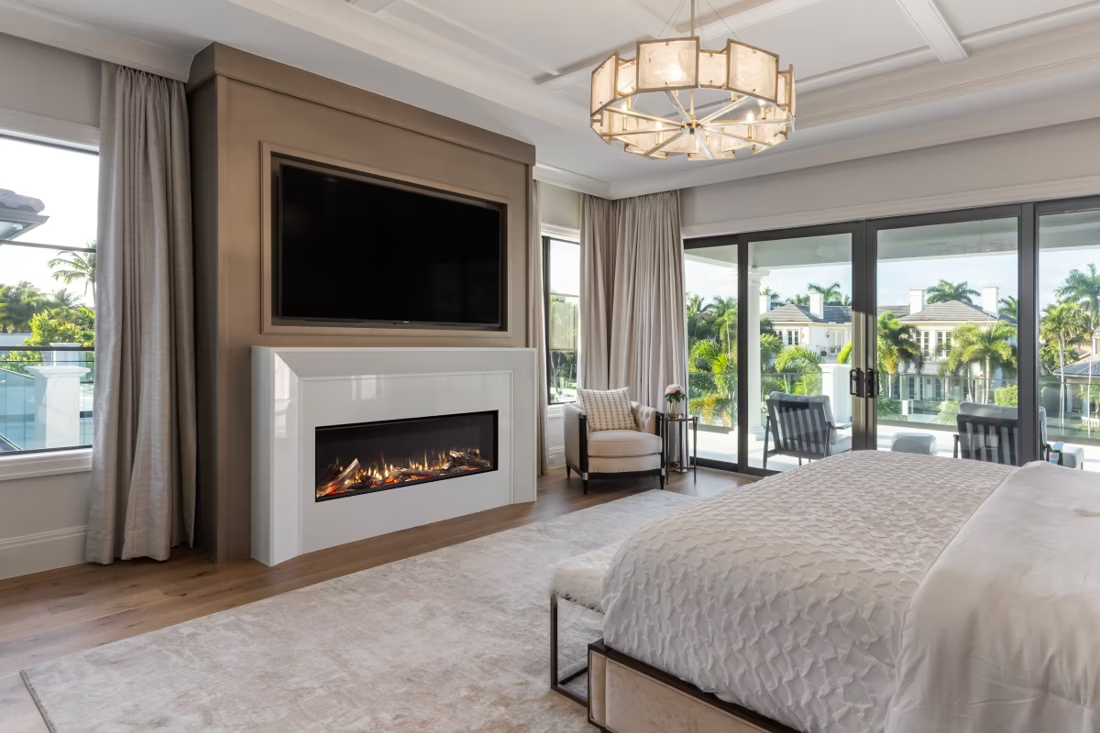
Yes—with an asterisk. Fireplaces are hot and TVs don't like heat. Either put a mantel between them to deflect rising warmth, or choose a fireplace with heat-management technology that creates a cool zone on the wall above—the wall stays around 125 degrees, barely warm, while the room still gets full heat. If you like clean lines and don't want a mantel, heat management is the answer.
How much should I budget for a fireplace?
For an average home—covering the fireplace, the vent pipe, and basic installation—a budget between $3,900 and $5,500 gives you a lot of options across wood, gas, and pellet. By the time you add finish work, gas line, and electrical, the average complete installation lands between $5,000 and $12,000 all-in. In a remodel or new build, a good rule is to put about 2.5% of the total project cost toward the fireplace.
Can I install a fireplace myself?
If you're putting a fire in your house on purpose, it's best to work with an expert. Unless you're genuinely experienced in framing, gas line, vent pipe, and the national code on clearances to combustibles, have a professional do it—and ideally the same company that sells you the fireplace, so warranty, service, and liability all live under one roof.
Stove and Fireplace Dealers in Morgan County
Listings include WhyFire partner dealers, dealers we have verified as authorized for the brands we recommend, and established local businesses that carry hearth products. Every listing shows which one it is. The ones marked Preferred run on WhyFire's software, so they can show you real pricing and book your appointment right here. No manufacturer pays for placement. How we verify dealers →
Southern Flame
Middle Tennessee Natural Gas
Tn Gas Company
Find your electric fireplace in Morgan County.
Tell us a bit about your home and we'll match you with the right electric fireplace or insert, plus a free Project Guide & Parts List—the exact parts and your recommended local dealer for your Morgan County project.
Find Your Fireplace →