
Warm Every Room From Wartburg to Sunbright.
Wood, gas, pellet, and electric fireplace resources for every community on Morgan County's stretch of the Cumberland Plateau. Find the right unit for your home and get matched with a trusted local hearth dealer.
Every Project Starts From One of These Five Situations
Cumberland Plateau heating in Morgan County, Tennessee.
Morgan County sits on the Cumberland Plateau at roughly 1,600 to 2,900 feet, with winters that are cold but not extreme—an average winter low near 29°F and a winter heating load that's a fraction of what a place like Bozeman, Montana sees in a typical winter. That still means a real heating season running from November into March, and it's long enough that plenty of Morgan County homes lean on wood heat: oak, hickory, maple, and pine are all common on local wood lots, and dense hardwoods like oak and hickory are prized for overnight burns in cold snaps. Residents who cut their own firewood on public land typically work through the Cherokee National Forest permit office for personal-use permits.
What you'll find on this hub: hearth retailers, service technicians, and fuel suppliers serving communities across the county—from the county seat in Wartburg out to Sunbright, Oakdale, Deer Lodge, and Coalfield. Pick your fuel below to see local dealers, typical installation costs, and recommended units for a Morgan County home, whether that's a farmhouse near Frozen Head or a cabin off one of the plateau's back roads.
Four fuels. One honest answer for Morgan County.
Three steps. No salesperson until you're ready.
Tell us about your project
Your zip code, your situation, and the fuel you're leaning toward—or let the answers point you to one.
See what's actually available
The brands dealers within 100 miles genuinely carry—real options, never a catalog mirage.
Get your dealer & Project Guide
A trusted local dealer, plus the free Project Guide & Parts List that names every component of the job.
Frequently Asked Questions
Which fuel works best for a home in Morgan County?
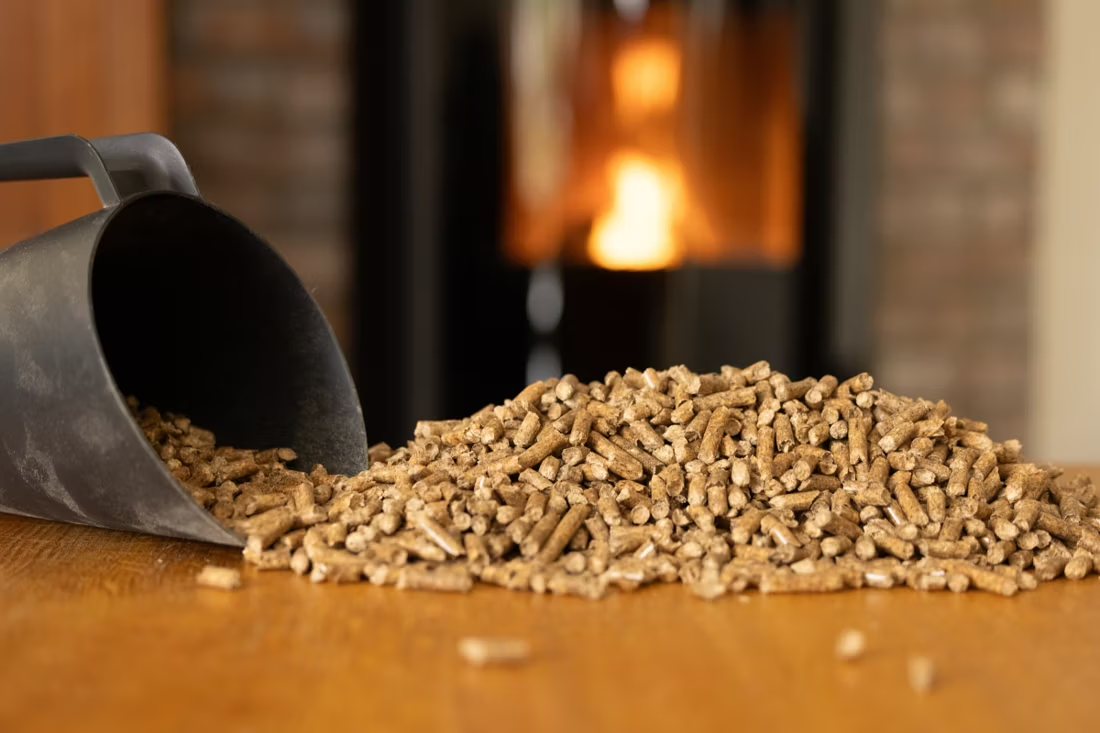
All four fuels are viable here, and the choice usually comes down to your home and priorities rather than the climate ruling anything out. Winters on the Cumberland Plateau are cold but moderate—an average low around 29°F and a heating season that runs from around November into March—so a well-sized wood stove burning oak or hickory can easily carry a home through the coldest stretches, and it's also the fuel of choice for anyone who wants heat during a power outage, which matters in a rural county like this. Propane is the practical gas option for most Morgan County addresses, since natural gas service is limited outside the larger towns. Pellet stoves work well here too, with regional supply from brands like Lignetics and Hamer Pellet Fuel keeping fuel accessible. Electric fireplaces are a solid supplemental choice for bedrooms, dens, or homes without a chimney, but they're not typically relied on as the sole heat source through a plateau winter.
Do I need a permit to install a fireplace or stove in Morgan County?
In most cases, yes. New wood stoves, inserts, gas fireplaces, and pellet stoves generally require a building permit, and any new gas line work needs a licensed gas fitter and a separate permit. Because Morgan County is largely rural, permitting runs through the local building department for your specific jurisdiction—Wartburg for in-town properties, the county building department for unincorporated areas outside city limits. Electric fireplaces usually don't require a permit unless you're doing a built-in installation with new wiring. Most local hearth retailers handle this paperwork as part of the installation, so you typically don't have to navigate it alone.
Can I cut my own firewood near Morgan County?
Many residents do. Personal-use firewood permits for public land in the region are issued through the Cherokee National Forest permit office, and with oak, hickory, maple, and pine all common on the plateau, self-cut wood is a real cost-saver for anyone running a wood stove as a primary or backup heat source. If you go this route, plan on seasoning hardwood like oak or hickory for at least six months to a year before burning—green wood burns dirty and inefficiently, especially in a stove sized for overnight burns.
Are there wood-burning restrictions in Morgan County?
No—Morgan County has no air quality non-attainment designation and no winter burn advisories like the inversion-driven restrictions you'll find in some western basin counties. That means wood heat here isn't subject to curtailment days or mandatory burn bans tied to air quality. The usual local rules around open burning of yard debris still apply, but installing and running a wood stove or insert for home heating isn't restricted the way it can be in more urbanized or geographically bowl-shaped counties.
How does installation and service work in a rural county like Morgan?
Most hearth retailers and service technicians covering Morgan County are based in or travel from nearby larger markets like Oak Ridge or Knoxville, since the county's population is under 6,000 and spread across towns like Wartburg, Sunbright, Oakdale, and Deer Lodge. Expect installers to quote travel time into their estimate for rural addresses, and it's worth scheduling annual chimney sweeps or gas inspections in late summer or early fall—before the plateau's first cold snap creates a backlog of service calls. Planning ahead is especially useful if you're relying on wood or pellet heat as your primary source through the winter.
What's the typical installation cost range across fuel types in Morgan County?
Costs here track close to regional Tennessee averages, sometimes a bit lower given the area's cost of living. Wood stove or insert installation typically runs $3,500 to $8,000, more if new chimney or hearth work is needed. Propane fireplace, insert, or stove installation generally runs $4,000 to $9,000, factoring in the propane line and venting. Pellet stove or insert installation typically falls in the $4,000 to $6,500 range. Electric fireplaces are the most affordable option, from $200 for a plug-in unit up to $2,500 for a built-in, with installation labor of $300 to $1,000 for anything beyond simple plug-and-play. See the county + fuel pages above for cost detail tied to specific local retailers.
Does a fireplace add value to my home?
On average, a fireplace adds back to the home about the same amount you spent installing it. Add the monthly savings from heating the rooms you actually use instead of the whole house—often hundreds of dollars a year—and the value case is strong before you even count what a fire does for how your family uses the room.
Can I install a fireplace myself?
If you're putting a fire in your house on purpose, it's best to work with an expert. Unless you're genuinely experienced in framing, gas line, vent pipe, and the national code on clearances to combustibles, have a professional do it—and ideally the same company that sells you the fireplace, so warranty, service, and liability all live under one roof.
Can a fireplace actually lower my heating bill?
Yes—by creating a comfort zone. A furnace heats every square foot of the house just to warm the one room you're in; a gas fireplace on low burns roughly a sixth of the gas a typical furnace does. Set the furnace around 55–60 degrees as a baseline, then heat the rooms your family actually uses. Families who heat this way commonly save $20–$60 a month.
What are the biggest mistakes people make buying a fireplace?
Five come up constantly: budgeting for the unit but not the full job (vent, gas line, electrical, finish work); drowning in options instead of starting from style and fuel; buying without an in-home preview; handing installation to a handyman instead of a pro; and giving up out of sheer indecision. Every one is avoidable with a clear plan—step one, step two, step three.
Stove and Fireplace Dealers in Morgan County
Listings include WhyFire partner dealers, dealers we have verified as authorized for the brands we recommend, and established local businesses that carry hearth products. Every listing shows which one it is. The ones marked Preferred run on WhyFire's software, so they can show you real pricing and book your appointment right here. No manufacturer pays for placement. How we verify dealers →
Southern Flame
Middle Tennessee Natural Gas
Tn Gas Company
Find your fireplace in Morgan County.
Pick your fuel below and we'll match you with a trusted local hearth dealer, plus a free Project Guide & Parts List tailored to your home.
Find Your Fireplace →