
Bring instant, ash-free warmth to your McMinn County home.
With winter lows averaging around 28°F and about 3,700 heating degree days a year, McMinn County doesn't need a wood-burning workhorse in every room. An electric fireplace or insert gives you real supplemental warmth and the look of a fire without a chimney, a gas line, or a mess to clean up. We'll match you with a local dealer who can size the right unit for your space.
Every Project Starts From One of These Five Situations
Mild winters, modern convenience.
McMinn County sits in climate zone 4A, with the Cherokee National Forest along its eastern edge and Athens as the county seat. Winters here are moderate by Appalachian standards—an average low around 28°F and roughly 3,700 heating degree days, far milder than cold-climate benchmarks like Duluth, MN, which sees close to three times that heating load. Plenty of McMinn County households still burn oak, hickory, and maple cut under $20-per-cord permits through the Cherokee National Forest, but for a den, a bonus room, a rental unit, or a bedroom that just needs to take the chill off, an electric fireplace is often the more practical answer than adding venting or a flue to a space that doesn't have one.
Most of McMinn County is served by Volunteer Energy Cooperative, part of the TVA distribution system, which means reliable grid power and electricity rates that keep an electric fireplace inexpensive to run for zone heating. There's no combustion, no emissions, and no permit hassle for a plug-in unit—a real advantage for renters, condo and HOA situations, or anyone who wants fireplace ambiance in a room without a chimney. A local dealer can also fit a built-in unit into an existing masonry opening if you're converting an old wood fireplace you no longer use.
Three steps. No salesperson until you're ready.
Tell us about your project
Your zip code, your situation, and the fuel you're leaning toward—or let the answers point you to one.
See what's actually available
The brands dealers within 100 miles genuinely carry—real options, never a catalog mirage.
Get your dealer & Project Guide
A trusted local dealer, plus the free Project Guide & Parts List that names every component of the job.
Frequently Asked Questions
How much does an electric fireplace installation cost in McMinn County?
A plug-in electric insert or freestanding unit that fits into an existing fireplace opening typically runs $300 to $1,500 installed, since no new wiring is usually required. A built-in wall unit or mantel package that needs a dedicated 120V or 240V circuit run by a licensed electrician typically lands between $1,500 and $4,000, depending on the unit, the wall opening work, and how far the new circuit has to travel. Local dealers around Athens and Etowah can walk you through both options during an in-home visit.
How big a room can an electric fireplace actually heat?
Most electric fireplaces top out around 1,500 watts, which realistically heats 400 to 1,000 square feet depending on insulation and ceiling height—enough for a den, bedroom, or open living area, but not a whole McMinn County house on its own. Given the county's relatively mild 3,700 heating-degree-day winters, an electric unit works well as the main heat source for a single well-insulated room, or as a supplement to central heat in the rest of the home. For anyone hoping to offset a bigger chunk of a whole-house heating bill, a wood or pellet appliance is usually the better fit—a local retailer can help you weigh both.
Do I need a permit to install an electric fireplace in McMinn County?
A simple plug-in electric fireplace that uses an existing outlet doesn't require a permit. If you're having a built-in unit installed with a new dedicated circuit, that electrical work typically needs a permit through the McMinn County Building Department, and it should be pulled by a licensed electrician regardless of who's doing the fireplace install. Most local dealers coordinate directly with an electrician so you're not left managing two separate contractors.
Electric vs. wood—which makes more sense for my McMinn County home?
Wood still makes sense for a lot of McMinn County households, especially with Cherokee National Forest cutting permits running about $20 per cord and oak and hickory readily available locally—it's real heat that keeps working when the power's out. Electric wins on convenience: no ash, no chimney, no cutting or hauling wood, and it can go in a room a wood stove never could, like a bedroom or a finished basement without a flue. Given the county's moderate winters, plenty of homes here end up with both—wood or a pellet stove for the main living space, electric for a secondary room where running a chimney doesn't pencil out.
Can an electric insert replace an old wood-burning fireplace I don't use anymore?
Yes—this is one of the more common projects local dealers handle in McMinn County. An electric insert slides into your existing masonry fireplace opening, usually with no chimney work needed since there's no venting involved. It's a straightforward way to reclaim a fireplace that's sat unused, get instant heat and flame effect at the flip of a switch, and skip the cost of chimney repair or relining that a wood or gas conversion would require.
Will my electric fireplace still work if the power goes out?
No—electric fireplaces need power to run, so they won't help during an outage. Volunteer Energy Cooperative's service through McMinn County is generally reliable, but ice storms do occasionally knock out power in East Tennessee for a day or more. If backup heat during outages matters to you, pair an electric fireplace in your main living space with a wood stove or a battery-capable gas unit elsewhere in the house, rather than relying on electric alone.
How much does it cost to run an electric fireplace day to day?
A typical 1,500-watt electric fireplace costs somewhere in the range of 15 to 25 cents per hour to run at full heat output, depending on current Volunteer Energy Cooperative rates—and most units let you run the flame effect alone, with the heater off, for pennies an hour. Compared to running a portable space heater or nudging up the whole-house thermostat, an electric fireplace is usually the cheaper way to warm a single room in a home with otherwise mild, 4A-climate winters.
What are my options for where an electric fireplace goes?
Three common setups: a plug-in insert that fits into an existing fireplace opening, a wall-mounted or recessed built-in unit framed into new construction, and a freestanding mantel package that looks like a traditional fireplace but needs no chimney at all. For McMinn County homes without an existing masonry fireplace, the mantel package or a recessed wall unit tends to be the easiest retrofit—a local dealer can advise based on your wall framing and whether you want a dedicated circuit.
Electric vs. pellet stove—which is the better fit?
Pellet stoves, using regional brands like Lignetics, Hamer Pellet Fuel, or Greenway Renewable Energy, put out real, sustained heat capable of warming a whole living area—but they still need electricity to run the auger and blower, and they require a vent through the wall or roof plus regular pellet deliveries or storage. Electric fireplaces need no venting at all and can go almost anywhere, but they're realistically a supplemental heat source, not a whole-home solution. In McMinn County's milder winters, a lot of homeowners find electric is plenty for a den or bedroom, while pellet makes more sense if you're trying to meaningfully cut a central heating bill.
Can I put a TV above my fireplace?
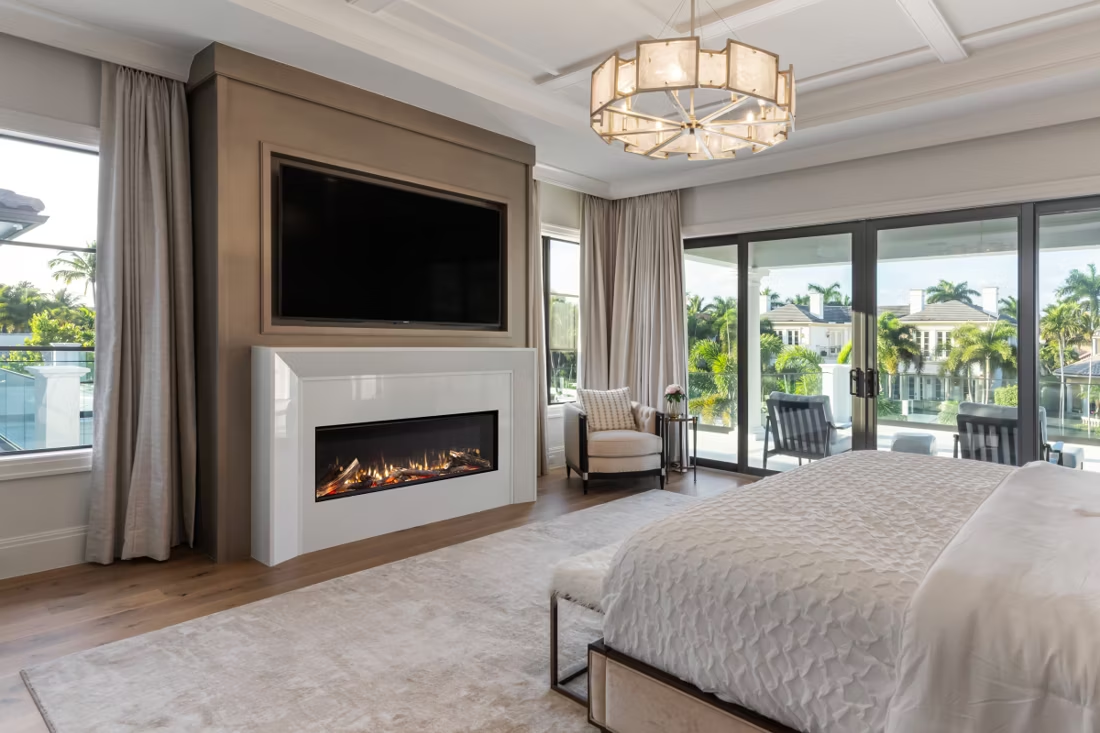
Yes—with an asterisk. Fireplaces are hot and TVs don't like heat. Either put a mantel between them to deflect rising warmth, or choose a fireplace with heat-management technology that creates a cool zone on the wall above—the wall stays around 125 degrees, barely warm, while the room still gets full heat. If you like clean lines and don't want a mantel, heat management is the answer.
Do electric fireplaces actually produce heat?
Yes—most put out around 4,800–5,000 BTUs from a standard outlet, which comfortably warms a bedroom, office, or den as a comfort-zone heater. What they won't do is carry a whole house the way wood, gas, or pellet can. Think of electric as ambiance-first with honest supplemental heat: flames on with no heat in July, flames plus warmth in January.
Can a fireplace actually lower my heating bill?
Yes—by creating a comfort zone. A furnace heats every square foot of the house just to warm the one room you're in; a gas fireplace on low burns roughly a sixth of the gas a typical furnace does. Set the furnace around 55–60 degrees as a baseline, then heat the rooms your family actually uses. Families who heat this way commonly save $20–$60 a month.
How much should I budget for a fireplace?
For an average home—covering the fireplace, the vent pipe, and basic installation—a budget between $3,900 and $5,500 gives you a lot of options across wood, gas, and pellet. By the time you add finish work, gas line, and electrical, the average complete installation lands between $5,000 and $12,000 all-in. In a remodel or new build, a good rule is to put about 2.5% of the total project cost toward the fireplace.
Stove and Fireplace Dealers in McMinn County
Listings include WhyFire partner dealers, dealers we have verified as authorized for the brands we recommend, and established local businesses that carry hearth products. Every listing shows which one it is. The ones marked Preferred run on WhyFire's software, so they can show you real pricing and book your appointment right here. No manufacturer pays for placement. How we verify dealers →
Middle Tn Natural Gas - Dayton
Englands Woodstove Store
Tri-State Heating And Air Conditioning
Southern Flame
Find your electric fireplace in McMinn County.
Tell us a bit about your home and we'll match you with the right electric fireplace, insert, or built-in unit—plus a free Project Guide & Parts List and a trusted local dealer to install it.
Find Your Fireplace →