
Electric heat that installs in an afternoon, not a season.
No chimney, no gas line, no combustion venting—just a dedicated circuit and real supplemental warmth for McMinn County winters. Find the right unit and connect with a trusted local dealer.
Every Project Starts From One of These Five Situations
Mild winters, modest heating loads—where electric fits the math.
Athens sits in the Tennessee Valley at just under 1,000 feet, in climate zone 4A with a moderate winter heating season and winter lows that average around 28°F. That's a real heating season, but nothing like the sub-zero stretches you'd see in a place like Duluth or Fargo—most McMinn County homes handle the bulk of their heating with a central heat pump or HVAC system and only need extra warmth in specific rooms during the coldest snaps. That's exactly the job an electric fireplace or insert is built for.
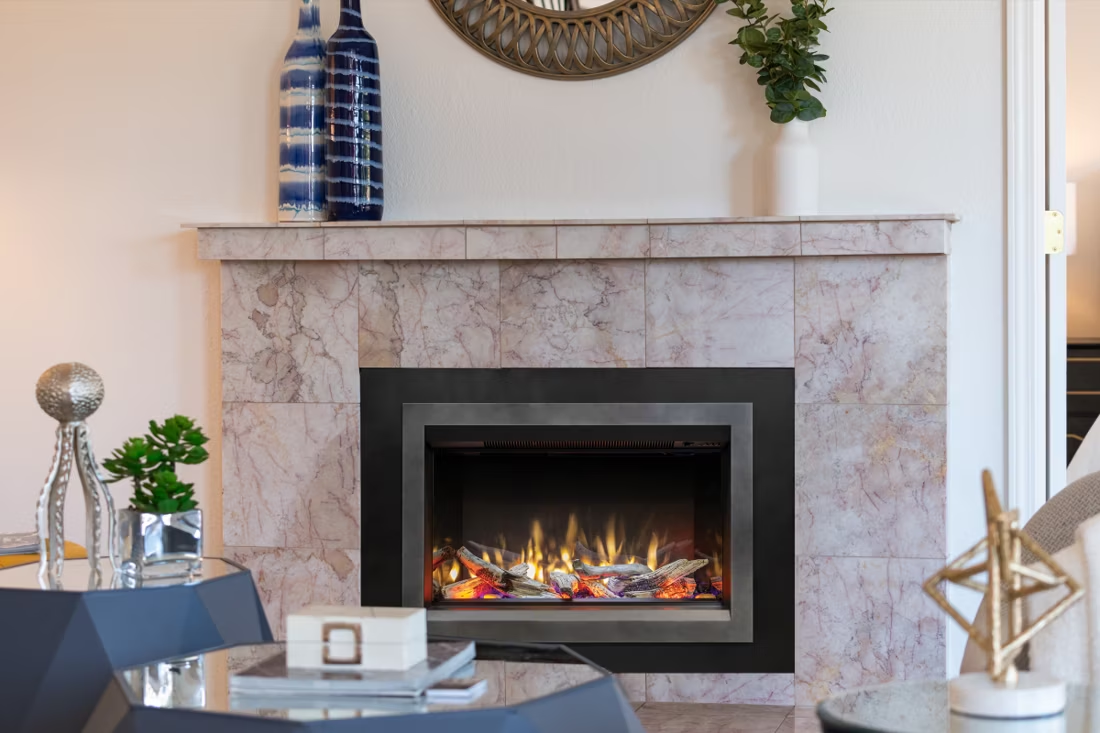
Athens Utility Board serves residential customers here at roughly $0.1177 per kWh, which is inexpensive enough that running a 1,500-watt electric insert a few hours a night in a bedroom or den barely moves the needle on your bill. Unlike a wood stove or gas insert, there's no chimney to sweep, no gas line to run, and no venting to size—an electrician sets a dedicated circuit if the unit needs one, and you're done. For homeowners who want the look and zone-heat function of a fireplace without touching combustion appliances or Cherokee National Forest cutting permits, electric is the low-friction option in Athens.
Three steps. No salesperson until you're ready.
Tell us about your project
Your zip code, your situation, and the fuel you're leaning toward—or let the answers point you to one.
See what's actually available
The brands dealers within 100 miles genuinely carry—real options, never a catalog mirage.
Get your dealer & Project Guide
A trusted local dealer, plus the free Project Guide & Parts List that names every component of the job.
Frequently Asked Questions
How much does it cost to install an electric fireplace in Athens?
Plug-in and wall-mounted electric fireplaces that use a standard outlet typically run $300 to $1,000 installed, since there's no venting or gas work involved. Built-in electric inserts or wall units that need a dedicated 120V or 240V circuit run higher, generally $1,200 to $2,500, once an electrician is factored in. Compare that to a wood or gas install in McMinn County, which often requires chimney work, gas line runs, or masonry modifications—electric is consistently the least invasive and least expensive category to install in an Athens home.
Will an electric fireplace actually heat a room in Athens winters?
Yes, for the job it's meant to do. Most electric inserts put out about 5,000 BTU (roughly 1,500 watts), which comfortably heats a 400 to 1,000 square foot room depending on insulation and ceiling height. Given Athens's moderate winter heating season and winter lows averaging around 28°F, that's plenty for zone heating a den, bedroom, or finished basement. What it won't do is replace your central heat pump on a hard freeze night—think of it as targeted supplemental warmth for the room you're actually sitting in, not a whole-home heating system.
Electric vs. wood—which makes more sense for my Athens home?
Wood has deep roots in McMinn County—oak, hickory, maple, and pine are all common locally, and Cherokee National Forest issues cutting permits for about $20 per cord during the May-to-October season. Wood heat also keeps working during a power outage, which matters when East Tennessee ice storms take down lines. Electric fireplaces can't do that—no power means no heat, no matter how nice the flame effect looks. But electric wins on convenience: no cutting, hauling, ash cleanup, or chimney inspections, and no smoke or creosote to manage. If backup heat during outages matters to you, pair an electric unit in your main living space with a wood stove or insert elsewhere in the house.
Electric vs. gas—which is the better fit in Athens?
Natural gas service is limited in much of McMinn County, so most gas fireplace installs here run on propane, which means a tank, a gas line, and ongoing fuel deliveries. Electric skips all of that—you're working with wiring an electrician already knows how to run, not a fuel supply chain. Gas still has the edge for higher heat output and for homeowners who want a fireplace that works during a power outage. But if you want the simplest possible install with the lowest ongoing hassle, and you're using the fireplace mainly for supplemental zone heat and ambiance rather than primary warmth, electric is usually the more practical call in Athens.
Do I need a permit to install an electric fireplace in Athens?
A plug-in electric fireplace that uses an existing outlet generally doesn't require a permit. If your installer is adding a new dedicated circuit or doing any wiring modifications, that electrical work typically needs a permit through the City of Athens Building Department or the McMinn County Building Department, depending on your address. Any licensed electrician handling the install should pull this automatically—it's a much lighter lift than the building and gas permits required for wood or gas installations.
What size or wattage electric fireplace do I need?
Most residential electric inserts and built-ins top out around 1,500 watts (about 5,000 BTU), which is the standard output regardless of price point—what changes between models is the cabinet size, flame realism, and features, not the heating capacity. For a single room in an Athens home, one standard unit is almost always enough given the area's moderate 4A climate. If you're trying to heat an open-concept space or a large great room, talk to a local dealer about whether a single unit will keep up or whether you're better served pairing it with your existing heat pump.
What does it cost to run an electric fireplace at Athens Utility Board rates?
At Athens Utility Board's residential rate of roughly $0.1177 per kWh, a standard 1,500-watt electric fireplace costs about 18 cents an hour to run on high heat. Used for five hours an evening, that's under a dollar a day and roughly $25 to $30 a month during the heating season—noticeably cheaper than most people expect. Most units also let you run the flame effect alone with the heater off, which draws only a few watts and costs almost nothing if you just want the ambiance without the heat.
Can I put an electric insert into my existing masonry fireplace?
Yes, and it's one of the most common electric projects in older Athens homes with existing wood-burning fireplaces that no longer get used. An electric insert slides into the firebox opening, plugs into a nearby outlet (or a new outlet run behind the surround), and requires no venting, liner, or chimney work at all—unlike converting to gas. It's a same-day project in most cases and it lets you keep the existing mantel and surround while retiring a chimney that may need repair work anyway.
Will my electric fireplace work during a power outage?
No—this is the honest tradeoff with electric heat. Unlike a wood stove or a gas fireplace with battery-backup ignition, an electric fireplace simply won't run without utility power. In McMinn County, where winter ice storms occasionally knock out Athens Utility Board service for a day or more, that's worth planning around. Homeowners who want a real outage backup typically keep a wood stove or insert as their primary or secondary heat source and use electric for everyday convenience and zone heating in rooms away from the main hearth.
Do electric fireplaces actually produce heat?
Yes—most put out around 4,800–5,000 BTUs from a standard outlet, which comfortably warms a bedroom, office, or den as a comfort-zone heater. What they won't do is carry a whole house the way wood, gas, or pellet can. Think of electric as ambiance-first with honest supplemental heat: flames on with no heat in July, flames plus warmth in January.
Can I put a TV above my fireplace?
Yes—with an asterisk. Fireplaces are hot and TVs don't like heat. Either put a mantel between them to deflect rising warmth, or choose a fireplace with heat-management technology that creates a cool zone on the wall above—the wall stays around 125 degrees, barely warm, while the room still gets full heat. If you like clean lines and don't want a mantel, heat management is the answer.
How much should I budget for a fireplace?
For an average home—covering the fireplace, the vent pipe, and basic installation—a budget between $3,900 and $5,500 gives you a lot of options across wood, gas, and pellet. By the time you add finish work, gas line, and electrical, the average complete installation lands between $5,000 and $12,000 all-in. In a remodel or new build, a good rule is to put about 2.5% of the total project cost toward the fireplace.
Does a fireplace add value to my home?
On average, a fireplace adds back to the home about the same amount you spent installing it. Add the monthly savings from heating the rooms you actually use instead of the whole house—often hundreds of dollars a year—and the value case is strong before you even count what a fire does for how your family uses the room.
Nearby Dealers
Hearth shops serving Athens and the surrounding area. Every listing shows whether it is a WhyFire partner, a dealer we have verified as authorized for the brands we recommend, or a local business carrying hearth products. No manufacturer pays for placement. How we verify dealers →
Middle Tn Natural Gas - Dayton
Southern Flame
Englands Woodstove Store
Electric Service in Athens
An electric fireplace's heater draws about 1,500 watts—pennies per hour at local rates.
Athens Utility Board
Find your electric fireplace in Athens.
Tell us a bit about your home and we'll match you with a trusted local dealer and a free Project Guide & Parts List—a plan for your electric fireplace project in Athens, right down to the parts and the dealer we recommend.
Find Your Fireplace →