
Keep Your Family Warm and Safe—No Matter What
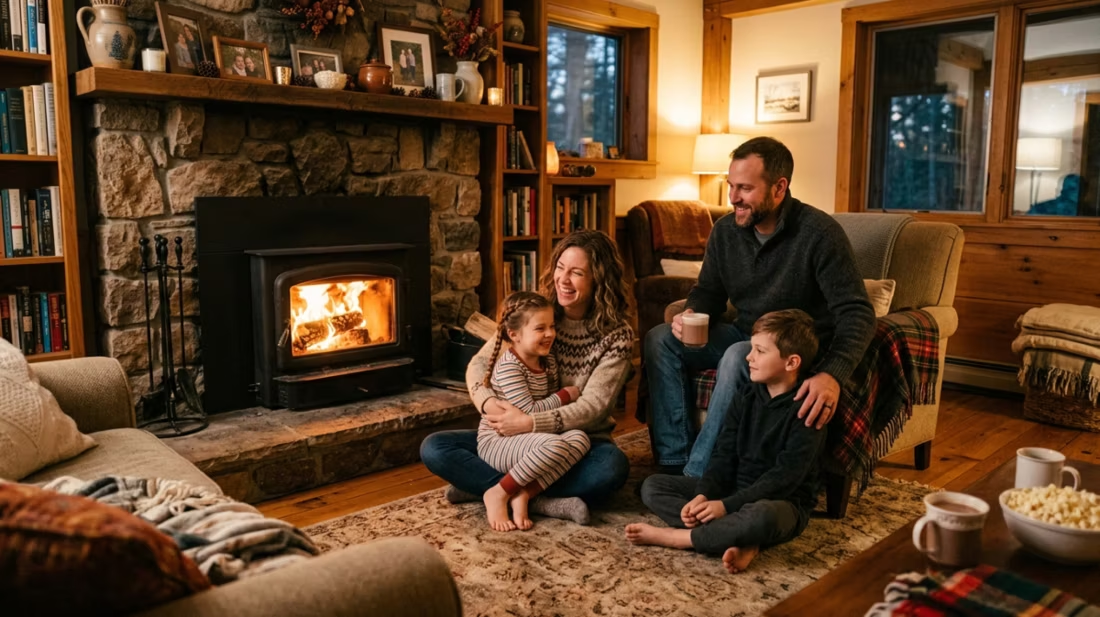
Wilson County winters rarely demand a wood stove to survive, but plenty of homeowners want one anyway—for ice-storm backup, or the smell of an oak fire on a cold night. We'll match you with a trusted local dealer who installs it right.
Every Project Starts From One of These Five Situations
Here, wood heat is the backup plan, not the main one.
Lebanon sits at 597 feet in the Nashville Basin, in a climate zone (4A, mixed-humid) where the winter low averages a mild 28°F and the whole heating season adds up to about 3,802 heating degree days—less than half of what a place like Duluth, Minnesota racks up. Most Wilson County homes heat with natural gas or electricity, and Middle Tennessee E M C's residential rate of roughly $0.1176/kWh keeps electric heat affordable enough that a wood stove is rarely a household's primary heat source anymore.
That doesn't mean wood is irrelevant. Wilson County has excellent firewood on its doorstep—oak, hickory, and maple that split clean and burn hot, plus softer pine for kindling—and Middle Tennessee's occasional February ice storms knock out power for days at a time, which is exactly when a properly installed wood stove earns its keep. There's also no air quality non-attainment issue here, no winter inversion, no burn curtailment days to track—if you want a wood stove for ambiance, a den, or a backup heat source, nothing about local air quality rules stands in the way. It's simply a smaller, more deliberate category of buyer than in colder or smokier parts of the country, and that's the honest starting point.
Three steps. No salesperson until you're ready.
Tell us about your project
Your zip code, your situation, and the fuel you're leaning toward—or let the answers point you to one.
See what's actually available
The brands dealers within 100 miles genuinely carry—real options, never a catalog mirage.
Get your dealer & Project Guide
A trusted local dealer, plus the free Project Guide & Parts List that names every component of the job.
Frequently Asked Questions
How much does a wood stove installation cost in Lebanon?
For a home with an existing masonry fireplace, a wood insert typically runs $3,000 to $6,000 installed. A freestanding stove in a room without a chimney—where a new Class A chimney has to be run through the roof or an exterior wall—usually lands between $4,500 and $8,500 once venting, a hearth pad, and clearances are accounted for. Because wood is a smaller category of installs here compared to gas or electric, it's worth getting a firm in-home quote from a local dealer rather than assuming a national average applies to your house.
Is wood heat actually common in Lebanon, TN?
Not as a primary heat source—most Wilson County homes run on natural gas or electric furnaces, and with Middle Tennessee E M C's residential rate under 12 cents per kWh, there's rarely a strong economic case for switching to wood full time. Where wood stoves do get installed here, it's usually one of three reasons: a homeowner wants a hedge against the multi-day power outages that come with Middle Tennessee's occasional ice storms, they've inherited a farmhouse with an old open fireplace they want to make actually functional, or they simply want the ambiance of a real fire. All three are legitimate reasons—just don't expect wood to be the dominant heating conversation in this market the way it is out West.
What size wood stove do I need for a Lebanon home?
Because most installs here are supplemental rather than whole-home heat, a small to mid-size stove (rated for 800 to 1,500 square feet) covers the majority of Wilson County requests—enough to comfortably heat a den, great room, or open-concept main floor during a cold snap or outage. Whole-home wood heating is uncommon given the area's mild 28°F average winter low, so oversizing for worst-case cold is rarely necessary the way it would be in a harsher climate. A local dealer can walk your specific floor plan and insulation level before you buy.
Wood stove or wood insert—which fits my house?
If you already have a masonry fireplace—common in Wilson County's older homes near downtown Lebanon—a wood insert is almost always the better move. It slides into the existing firebox, uses a stainless liner run up your current chimney, and turns a fireplace that loses most of its heat up the flue into a genuine heat source. A freestanding stove makes more sense in newer construction or a room with no existing chimney, since it can be placed almost anywhere with the right clearances and a new Class A pipe run.
Do I need a permit to install a wood stove in Lebanon?
Yes—new wood-burning installations require a building permit through the City of Lebanon or Wilson County building department, depending on where your property sits, and the stove itself needs to meet current EPA emissions standards. Most local hearth dealers handle the permit paperwork as part of the install. The good news for Lebanon specifically: there's no air quality non-attainment designation and no seasonal burn curtailment to navigate, so once the stove is installed and inspected, you're free to burn whenever you like without checking an advisory first.
What's the best wood stove for Middle Tennessee's climate?
Given Lebanon's mild winters—3,802 heating degree days and a 28°F average low, nowhere close to the sustained sub-zero stretches that justify a 20-plus-hour catalytic burn—a mid-size non-catalytic stove is usually the right call rather than a large catalytic unit built for extreme cold. Models like the Drolet Escape or a Pacific Energy Alderlea T4 give you strong output for a den or main living area without oversizing for a climate that rarely demands it. If you're buying primarily for ice-storm backup rather than daily use, ease of operation and quick startup matter more than ultra-long burn times.
How often should my chimney be inspected in Lebanon?
The CSIA recommends an annual inspection for any wood-burning appliance, and that holds even for a stove used mainly for backup heat or occasional ambiance fires. Lebanon's humid summers can actually accelerate certain kinds of chimney deterioration compared to drier climates, so an annual check before burning season—typically September or October—is worth keeping on the calendar even for light users. If your stove only sees a handful of fires a year, don't assume that means you can skip years between sweeps.
Where does firewood come from around Lebanon?
Oak, hickory, and maple are the backbone of local firewood, with pine mostly used for kindling—all four species grow throughout Wilson County and split and season well. Unlike wood-heat regions out West, there's no Forest Service cutting-permit system here; most Lebanon firewood comes from tree services, land-clearing operations, and small local sellers rather than public land permits. One local note: the cedar at nearby Cedars of Lebanon State Forest is scenic and distinctive, but cedar burns fast and throws sparks, so it's a poor primary firewood choice—stick to seasoned oak or hickory for your main supply.
Wood vs. gas or electric—which makes sense for my Lebanon home?
For most Wilson County households, gas or electric is the practical everyday choice—natural gas offers instant, thermostat-controlled heat, and Middle Tennessee E M C's electric rate keeps whole-home electric heat reasonably affordable. Wood earns its place in a different category: it keeps working when an ice storm takes the power grid down for days, it doesn't depend on utility service at all, and it gives you the option of a real fire on a cold evening without running the furnace. Many Lebanon homeowners end up with both—gas or electric for daily comfort, a wood stove or insert as backup heat and ambiance.
Why is my open fireplace making my house colder?
Open fireplaces suck—literally. As the fire burns, it consumes air your furnace already paid to heat and pulls it out through the chimney, so the house is actually colder after the fire goes out than before you lit it. An insert fixes this: it seals the chimney, puts fixed glass across the front, and turns that hole in your house into a real heat source.
Why is a fireplace insert so efficient?
An insert does two things: it seals the chimney completely, so you stop losing air you already paid to heat, and it radiates warmth into the room through the firebox and glass. Most add a heat-exchange fan that pulls cool room air underneath, wraps it around the hot firebox, and pushes it back out warm. Your home is more efficient before you've even lit the first fire.
What is an in-home preview and do I need one?
It's a visit where a hearth professional measures your space, confirms the model you picked actually works in your home, and walks the specs—framing, gas line, venting, finish work—before anything is ordered. Some details you just can't know until you see the house. Never make a down payment without one; it's the single most-skipped step that burns buyers.
Does a fireplace add value to my home?
On average, a fireplace adds back to the home about the same amount you spent installing it. Add the monthly savings from heating the rooms you actually use instead of the whole house—often hundreds of dollars a year—and the value case is strong before you even count what a fire does for how your family uses the room.
Nearby Dealers
Hearth shops serving Lebanon and the surrounding area.
Find your wood stove in Lebanon, TN.
Tell us about your home and your reason for wanting wood heat—backup power, ambiance, or an old fireplace you want working again—and we'll match you with a trusted local Lebanon dealer and send over a free Project Guide & Parts List with the exact parts, vent kit, and recommended installer for your project.
Find Your Fireplace →